
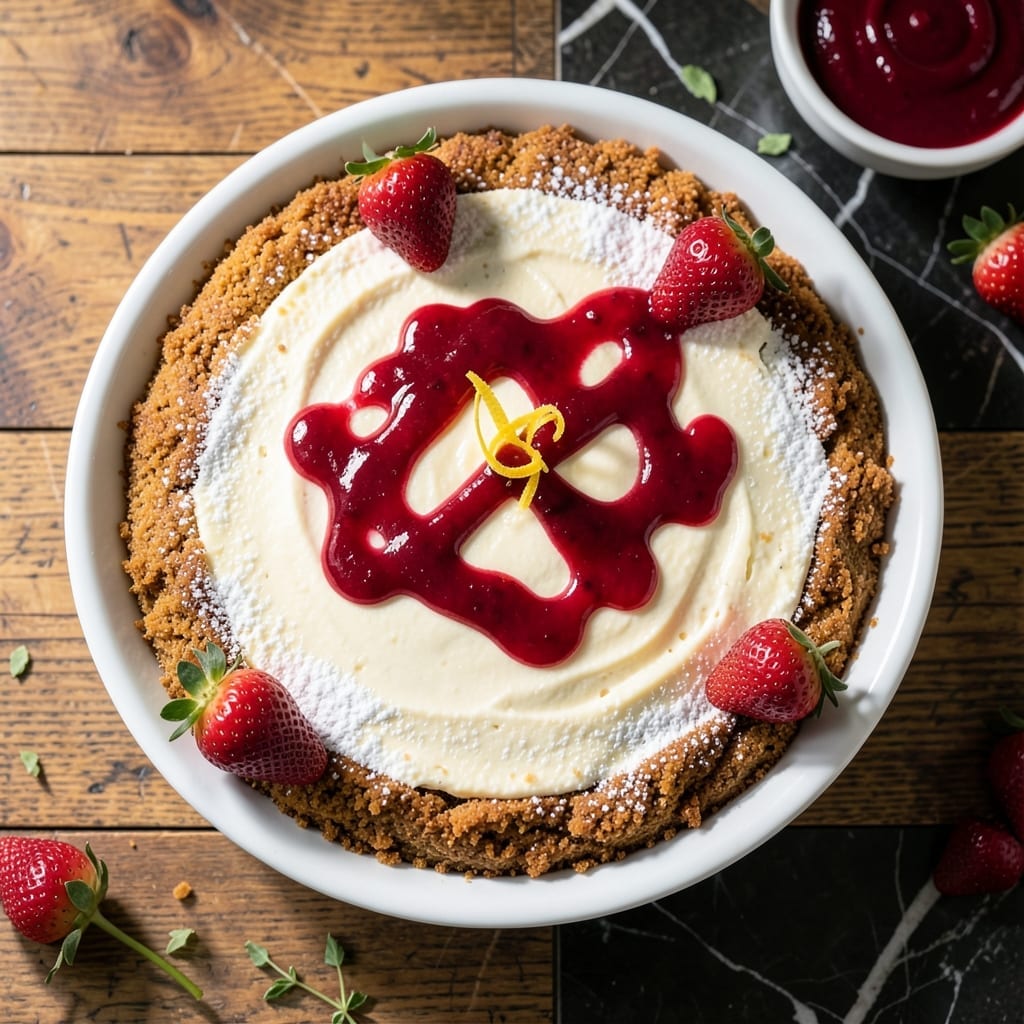
This is the classic cheesecake you remember from childhood—rich, creamy, and perfectly balanced with a buttery graham cracker crust. I’ve refined this recipe to deliver that signature New York style texture without the common pitfalls of cracking or sinking.
The secret lies in the technique: room temperature ingredients, precise mixing, and a water bath that ensures even baking. The graham crust adds that nostalgic crunch while the filling stays velvety smooth from edge to center.
What emerges from the oven is a tall, creamy cheesecake with a golden crust and that unmistakable dense yet light texture. It’s the kind of dessert that commands attention at any gathering.
Serve it plain or with your favorite fruit topping for a timeless finish.
Ingredients for Southern Living Cheesecake
Rich cream cheese, buttery graham crust, and a few pantry staples bring this classic to life.
| Ingredient | Amount | Notes |
|---|---|---|
| Graham Cracker Crumbs 🍪 | 2 cups | Fine crumbs, about 18 full sheets |
| Granulated Sugar 🍚 | ¼ cup | Divided for crust and filling |
| Unsalted Butter 🧈 | ½ cup | Melted for crust binding |
| Cream Cheese 🧀 | 4 packages | 8 oz each, room temperature |
| Vanilla Extract 🌿 | 2 tsp | Pure for best flavor |
| Large Eggs 🥚 | 5 whole | Room temperature, separate yolks if needed |
| Sour Cream 🥛 | 1 cup | Full-fat for creaminess |
| All-Purpose Flour 🌾 | 2 tbsp | For structure in filling |
| Salt 🧂 | ¼ tsp | Fine sea salt preferred |
| Lemon Juice 🍋 | 1 tbsp | Freshly squeezed for brightness |
| Heavy Cream 🥛 | ¼ cup | Optional for extra richness |
The cream cheese is non-negotiable here. Philadelphia brand is the gold standard—full-fat, block style, not the spreadable kind in a tub. Room temperature is key (leave it out for at least 2 hours). Graham crackers? Honey Maid or store brand both work, but avoid the cinnamon variety. Most supermarkets carry the pre-made crumbs, but crushing whole sheets gives you better texture control.
No sour cream? Full-fat Greek yogurt does the trick in a pinch. Out of vanilla? Vanilla bean paste adds those pretty speckles. The flour stabilizes the filling—cornstarch at half the amount works too. Eggs are doing most of the heavy lifting, so don’t skimp on the count. And yes, the crust pre-baking step matters (don’t skip it).
Cheesecake needs at least 4 hours in the fridge to set, but overnight is even better. Wrap leftovers tightly—good for 5 days refrigerated or 2 months frozen. Always bring it to room temperature before slicing for cleaner pieces.
Why You’ll Love This Recipe
- No Fuss Base: The graham cracker crust comes together in 5 minutes with just crumbs, sugar, and melted butter—I don’t even need to turn on the oven for that part.
- Creamy Dreamy: That rich, velvety cream cheese filling with a hit of vanilla is the kind of indulgence that makes you pause mid-bite.
- Crowd Pleaser: I’ve served this at potlucks, birthdays, and even a random Tuesday—it disappears every single time.
- Keeps Like a Champ: Honestly, it tastes even better the next day, and I love having leftovers that actually improve with time.
Step-by-Step Instructions for Classic Cheesecake With Graham Cracker Crust
This is the method I rely on for that perfect creamy texture and buttery crust every time.
Step 1: Make the Graham Cracker Crust
Preheat your oven to 350°F. In a medium bowl, combine the 2 cups Graham Cracker Crumbs with 0.25 cup Granulated Sugar. Pour in the 0.5 cup Unsalted Butter (melted) and stir until the crumbs are evenly moistened and resemble wet sand.
Dump the mixture into a 9-inch springform pan and press it firmly into the bottom and about 1 inch up the sides. I use a measuring cup to pack it down tightly—this prevents crumbling when you slice later. Bake for 8-10 minutes until the edges are light golden brown and the crust is set.
Let the crust cool completely on a wire rack while you prepare the filling. This step is crucial—adding hot filling to a warm crust will make it soggy.
Step 2: Beat the Cream Cheese Until Smooth
In a large bowl with an electric mixer, beat the 4 packages Cream Cheese on medium speed for 3-4 minutes until completely smooth and creamy. Scrape down the sides of the bowl frequently with a rubber spatula to ensure even mixing.
Add the remaining 0.25 cup Granulated Sugar and beat for another 1-2 minutes until fully incorporated. The mixture should look fluffy with no visible sugar granules. Now add the 2 tsp Vanilla Extract, 0.25 tsp Salt, 1 tbsp Lemon Juice, and 2 tbsp All-Purpose Flour, mixing just until combined.
Step 3: Incorporate Eggs and Dairy Carefully
Add the 5 whole Large Eggs one at a time, mixing on low speed just until each egg is incorporated. Be careful not to overbeat—this introduces too much air, which can cause cracks in your finished cheesecake.
Finally, mix in the 1 cup Sour Cream and 0.25 cup Heavy Cream on low speed until the batter is smooth and silky. The batter should be thick but pourable. Pour it over the cooled crust and smooth the top with a spatula.
Step 4: Bake and Cool for Perfect Texture
Place the springform pan in the preheated 350°F oven and bake for 50-60 minutes. The edges should be set but the center should still have a slight wobble when you gently shake the pan—this is normal and ensures a creamy, not dry, texture.
Turn off the oven and crack the door open 1-2 inches. Let the cheesecake cool inside for 1 hour. This gradual cooling prevents cracking. After an hour, remove it from the oven and let it cool completely at room temperature for another 1-2 hours.
Step 5: Chill Thoroughly Before Serving
Once completely cooled, cover the pan with plastic wrap and refrigerate for at least 4 hours, but overnight is ideal. Chilling is non-negotiable—it sets the texture and makes the cheesecake sliceable.
When ready to serve, run a thin knife around the edge of the pan to loosen it, then release the springform ring. Slice with a hot, wet knife (dip it in hot water and wipe dry between cuts) for clean portions. Serve chilled with your favorite toppings or enjoy it plain for that classic taste.
Pro Tips For Making Southern Living Cheesecake
- Room Temp Cream Cheese: Pull your cream cheese out 2 hours before baking—cold blocks blend unevenly and leave lumps no matter how hard you beat them.
- Press Crust Firmly: Pack the graham cracker crumbs into the pan with the bottom of a glass, not just a spoon. I learned this the hard way after my first cheesecake had a crust so loose it crumbled when sliced.
- Skip Overmixing: Once the cream cheese is smooth, stop mixing. Overbeating after adding eggs incorporates too much air, which leads to cracks on the surface.
- Water Bath Works: Wrap the springform pan in foil and bake it in a water bath—sounds fussy, but it prevents the edges from baking faster than the center and keeps the top crack-free.
Pro Cooking Tips for This Recipe
Room Temperature Matters
All your dairy ingredients—cream cheese, eggs, and sour cream—must be at room temperature before mixing. I take mine out 2 hours ahead. Cold cream cheese creates lumps that never fully incorporate, leading to a grainy texture. 🌡️
Mixing Technique
Beat the cream cheese alone first for 3-4 minutes until silky smooth. Scrape the bowl often. When adding eggs, mix each one just until it disappears—overbeating adds air that causes cracks. Use low speed for all dairy additions.
Water Bath Secret
Wrap your springform pan in heavy-duty foil, then place it in a larger pan with 1 inch of hot water. This gentle, even heat prevents cracks and ensures the edges don’t overbake. I’ve never had a cracked cheesecake since adopting this method.
Baking Visual Cues
Bake at 350°F until the edges are set but the center has a 2-inch wobble. This “jiggle” is perfect—it means the center will finish setting as it cools. Resist the urge to overbake; that’s how dry, dense cheesecakes happen. 💡
Cooling Process
Turn off the oven, crack the door 1-2 inches, and let it cool inside for 1 hour. This slow cooling prevents sudden temperature changes that cause cracks. Then cool completely at room temperature before refrigerating.
Slicing Pro Tip
Use a hot, wet knife for each cut—dip in hot water and wipe dry between slices. This gives you those clean, professional-looking pieces every time. Run a thin knife around the edge before releasing the springform ring.
Nutrition Facts
Frequently Asked Questions
Why use room temperature ingredients?
Cold cream cheese creates lumps that never fully blend, resulting in a grainy texture. Room temperature ingredients mix smoothly for that signature creamy consistency.
Can I skip the water bath?
Skipping the water bath risks uneven baking and cracks. The gentle, moist heat prevents the edges from overbaking while the center cooks through perfectly.
How do I prevent cracks on the surface?
Avoid overmixing the batter and don’t overbake. The center should have a slight 2-inch wobble when done. Cooling gradually in the oven also helps.
What’s the best way to store leftovers?
Wrap tightly in plastic and refrigerate for up to 5 days. For longer storage, freeze for 2 months. Always thaw in the fridge overnight.

- BBQ Sausage Recipe Oven: Smoky Depth Without the Grill - September 28, 2026
- BBQ Chicken Bowl Recipe Rice: Smoky Sweetness Over Fluffy Grains - September 28, 2026
- Beef Cutlet Recipe Ideas: Crispy Breaded Patties With Bold Seasonings - September 28, 2026