
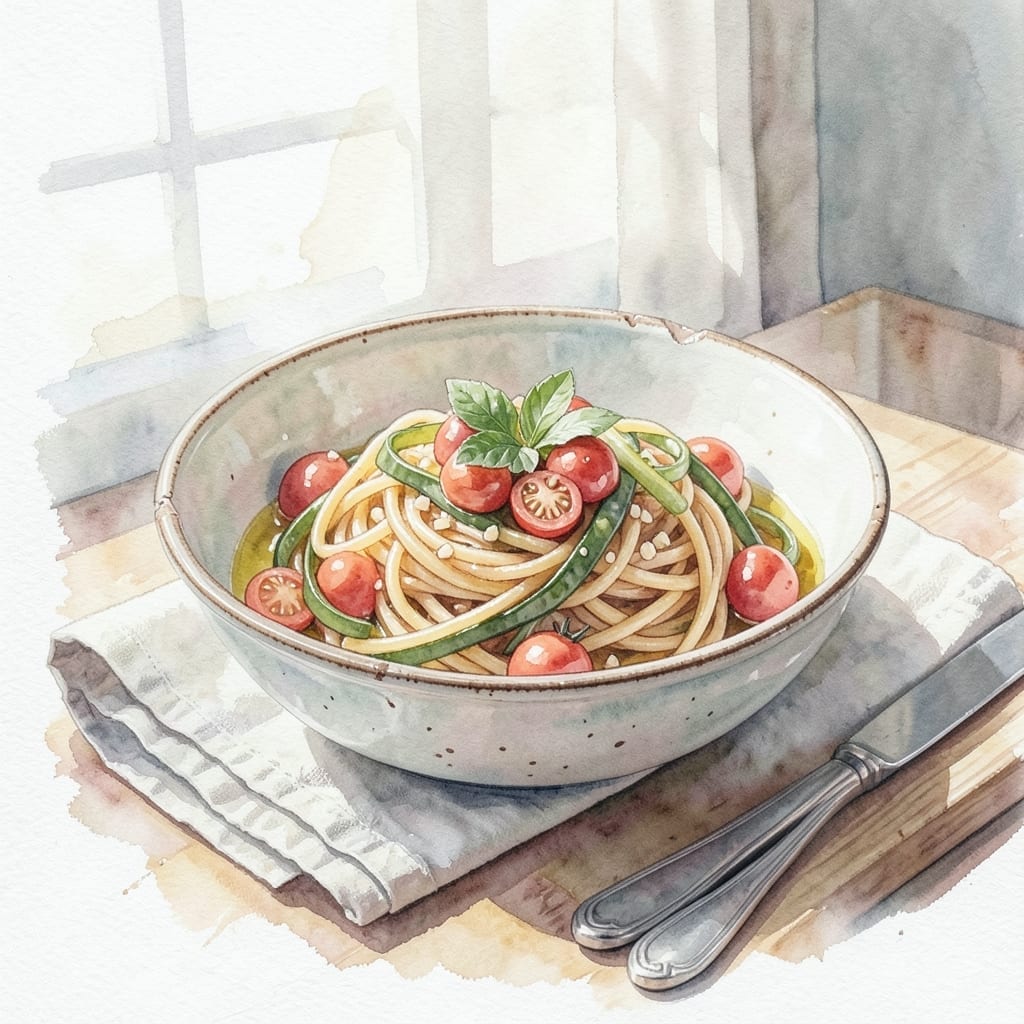
This garden-fresh spaghetti delivers vibrant, meat-free satisfaction in just 20 minutes. I’ve refined this recipe to highlight peak seasonal vegetables while keeping the process streamlined for busy weeknights.
The key is sautéing fresh produce until just tender, then tossing it with al dente pasta and a light, garlicky sauce. Simple ingredients come together quickly, but the flavors taste anything but rushed.
You’ll get perfectly cooked noodles coated in a bright, herby sauce with crisp-tender vegetables in every bite. It’s a restaurant-quality dish that proves vegetarian meals can be hearty and satisfying.
Ready in the time it takes to boil water, this pasta is ideal for quick dinners or impromptu gatherings. Here’s how to make it.
Ingredients for Spaghetti Recipe Veg
Bright, seasonal vegetables and pantry staples create this vibrant pasta dish quickly.
| Ingredient | Amount | Notes |
|---|---|---|
| Spaghetti 🍝 | 12 oz | Dried, uncooked, al dente texture |
| Extra-Virgin Olive Oil 🫒 | ¼ cup | Divided for cooking and finishing |
| Garlic Cloves 🧄 | 4 cloves | Minced for maximum flavor |
| Cherry Tomatoes 🍅 | 2 cups | Halved for even cooking |
| Zucchini 🥒 | 2 whole | Thinly sliced into half-moons |
| Red Bell Pepper 🌶️ | 1 whole | Diced into 1/4-inch pieces |
| Fresh Basil Leaves 🌿 | ½ cup | Loosely packed, chopped |
| Fresh Flat-Leaf Parsley 🍃 | ¼ cup | Chopped for garnish |
| Parmesan Cheese 🧀 | ½ cup | Freshly grated from wedge |
| Red Pepper Flakes 🌶️ | ½ tsp | Adjust for heat preference |
| Salt 🧂 | 1 tsp | Diamond Crystal kosher preferred |
| Black Pepper 🌶️ | ½ tsp | Freshly ground for best flavor |
| Lemon Zest 🍋 | 1 tsp | Finely grated for brightness |
The Parmesan should be Parmigiano-Reggiano from a wedge—pre-grated lacks the depth and texture. For vegetables, farmers market produce delivers superior flavor, but grocery store options work well if you select firm, unblemished items. The zucchini should have smooth, shiny skin (a sign of freshness). Whole Foods or Trader Joe’s often have the best selection of organic options.
No zucchini? Yellow squash or eggplant makes a great substitute (peel the eggplant first). Short on fresh herbs? Dried basil at one-third the amount works, though fresh is ideal. The tomatoes can be swapped for sun-dried tomatoes (rehydrate in warm water first). For a nutty depth, add toasted pine nuts—Costco has them at a good price.
Cooked pasta holds well for 3-4 days in the fridge, though the vegetables are best fresh. Store leftovers in airtight containers with a drizzle of olive oil to prevent drying. This dish doesn’t freeze well due to the fresh vegetables, but the sauce base can be prepped ahead.
Why You’ll Love This Recipe
- One Pot Wonder: I toss everything in a single pan—spaghetti, zucchini, tomatoes—and let the garlic-infused oil work its magic.
- Sunburst in a Bowl: The cherry tomatoes burst into sweet tanginess while the zucchini soaks up that garlicky olive oil.
- Weeknight Hero: Honestly, it’s my Tuesday lifesaver—ready before the kids finish their homework.
- Pennywise Pasta: Between us, the veggies stretch the meal so far my wallet barely notices.
Step-by-Step Instructions for Garden-Fresh Pasta
This method delivers vibrant, restaurant-quality results with minimal effort and maximum flavor.
Step 1: Prepare the Vegetables and Aromatics
Begin by prepping all your produce. Halve the 2 cups cherry tomatoes and set them aside. Thinly slice the 2 whole zucchini into half-moons, ensuring even thickness for consistent cooking. Dice the 1 whole red bell pepper into ¼-inch pieces for uniform texture.
Mince the 4 cloves garlic cloves finely to release their full flavor. Chop the 0.5 cup fresh basil leaves and 0.25 cup fresh flat-leaf parsley, keeping them separate for layering flavors later. This mise en place approach guarantees a smooth cooking process without frantic chopping mid-recipe.
Step 2: Cook the Spaghetti Al Dente
Bring a large pot of salted water to a rolling boil. Add the 12 oz spaghetti and cook according to package instructions, subtracting 1 minute to achieve perfect al dente texture. Stir occasionally to prevent sticking, and start testing for doneness at the 8-minute mark.
Before draining, reserve 1 cup of pasta water—this starchy liquid will help emulsify your sauce. Drain the pasta but do not rinse; the surface starch is essential for sauce adhesion. Return the pasta to the pot off heat and toss with 1 tablespoon extra-virgin olive oil to prevent clumping while you prepare the vegetables.
Step 3: Sauté the Vegetables to Perfection
Heat 3 tablespoons extra-virgin olive oil in a large skillet over medium-high heat until it shimmers. Add the red bell pepper and cook for 3 minutes until it begins to soften. Add the zucchini and cook for another 3-4 minutes until both vegetables achieve a slight caramelization at the edges.
Reduce heat to medium, add the minced garlic and 0.5 tsp red pepper flakes, stirring constantly for 30 seconds until fragrant. Immediately add the halved cherry tomatoes, 1 tsp salt, and 0.5 tsp black pepper. Cook for 2-3 minutes until the tomatoes soften and release their juices.
Step 4: Combine and Finish with Fresh Elements
Add the cooked spaghetti to the skillet with the vegetables. Toss everything together over medium heat for 1-2 minutes, adding reserved pasta water as needed to create a light, silky sauce that coats the strands. You should use about ½ cup of the reserved water.
Remove from heat and stir in the chopped basil, 0.5 cup parmesan cheese, and 1 tsp lemon zest. The residual heat will gently wilt the basil and melt the cheese. Taste and adjust seasoning if needed. Finish with a drizzle of the remaining extra-virgin olive oil and the chopped parsley for a fresh, vibrant garnish.
Step 5: Serve Immediately for Optimal Texture
Transfer to serving plates while still warm. The pasta should glisten with a light sauce, with vegetables distributed evenly throughout. Each bite should offer a balance of tender pasta, sweet tomatoes, and the slight bite of pepper and garlic.
The lemon zest brightens the dish, while the parmesan adds a salty depth. Serve with additional grated cheese on the side for those who prefer a stronger cheesy flavor. This dish is best enjoyed immediately while the vegetables retain their vibrant color and texture.
Pro Tips For Making Spaghetti Recipe Veg
- Salt the Pasta Water: Use at least 1 tablespoon of salt per liter of water—this is the only chance to season the spaghetti itself. I learned this the hard way after too many bland bites.
- Slice Zucchini Thin: Cut it into ¼-inch half-moons so it cooks quickly and doesn’t turn mushy. Sounds tedious, but it actually changes the outcome.
- Watch the Garlic: Cook the garlic on medium-low heat until just golden, not brown. Burnt garlic turns bitter and ruins the dish.
- Save Some Pasta Water: Before draining, reserve about ½ cup of the starchy water—it helps the sauce cling to the spaghetti. My grandmother swore by this, and she was right.
Troubleshooting Perfect Results
Mushy Vegetables
If your veggies turn mushy, you likely overcooked them. The bell pepper needs just 3 minutes head start before adding zucchini. Use medium-high heat and pull them off when they’re crisp-tender. I always test a piece before combining with pasta. 🔥
Dry Sauce
For a silky sauce, never skip reserving pasta water. Add it ¼ cup at a time while tossing. The starch in the water creates emulsification with the olive oil. If it’s still dry, add more water and an extra drizzle of extra-virgin olive oil.
Bland Flavor
Season in layers: salt the pasta water, then the vegetables during cooking. The 1 tsp salt and 0.5 tsp black pepper are minimums—taste and adjust. Finish with Parmigiano-Reggiano and fresh herbs for complexity. Lemon zest adds that final bright note.
Sticky Pasta
Rinsing pasta washes away the starch needed for sauce adhesion. Instead, toss drained pasta with 1 tbsp olive oil while finishing the vegetables. Use a large skillet to give everything room to move and coat evenly.
Uneven Cooking
Cut vegetables uniformly: ¼-inch dice for bell pepper, ½-inch half-moons for zucchini. This ensures even cooking in the 3-4 minute sauté. Stir frequently and don’t overcrowd the pan—work in batches if needed.
Cheese Clumping
Remove from heat before adding 0.5 cup parmesan. The residual heat will melt it smoothly. If using pre-grated, toss with 1 tsp cornstarch first to prevent clumping. Always grate from a wedge for best texture. ✨
Nutrition Facts
Frequently Asked Questions
Can I use whole wheat pasta instead?
Yes! Whole wheat spaghetti works perfectly. Cook it for 1-2 minutes less than the package indicates, as it can turn mushy. The nutty flavor pairs beautifully with the fresh vegetables.
How do I make this gluten-free?
Swap in your favorite gluten-free spaghetti. Use corn-based or brown rice pasta for best texture. Boil for 1 minute less than directed and rinse briefly to remove excess starch.
Can I add spinach or other greens?
Stir in 2 cups baby spinach or chopped kale at the very end. The residual heat will wilt them in 30 seconds without overcooking. Adds extra color and nutrients.
What’s the best way to reheat leftovers?
Gently warm in a skillet with 1-2 tbsp water over medium heat. Cover for 1-2 minutes to steam the pasta back to life. Avoid microwaving, as it can make the vegetables soggy.

- BBQ Sausage Recipe Oven: Smoky Depth Without the Grill - September 28, 2026
- BBQ Chicken Bowl Recipe Rice: Smoky Sweetness Over Fluffy Grains - September 28, 2026
- Beef Cutlet Recipe Ideas: Crispy Breaded Patties With Bold Seasonings - September 28, 2026