
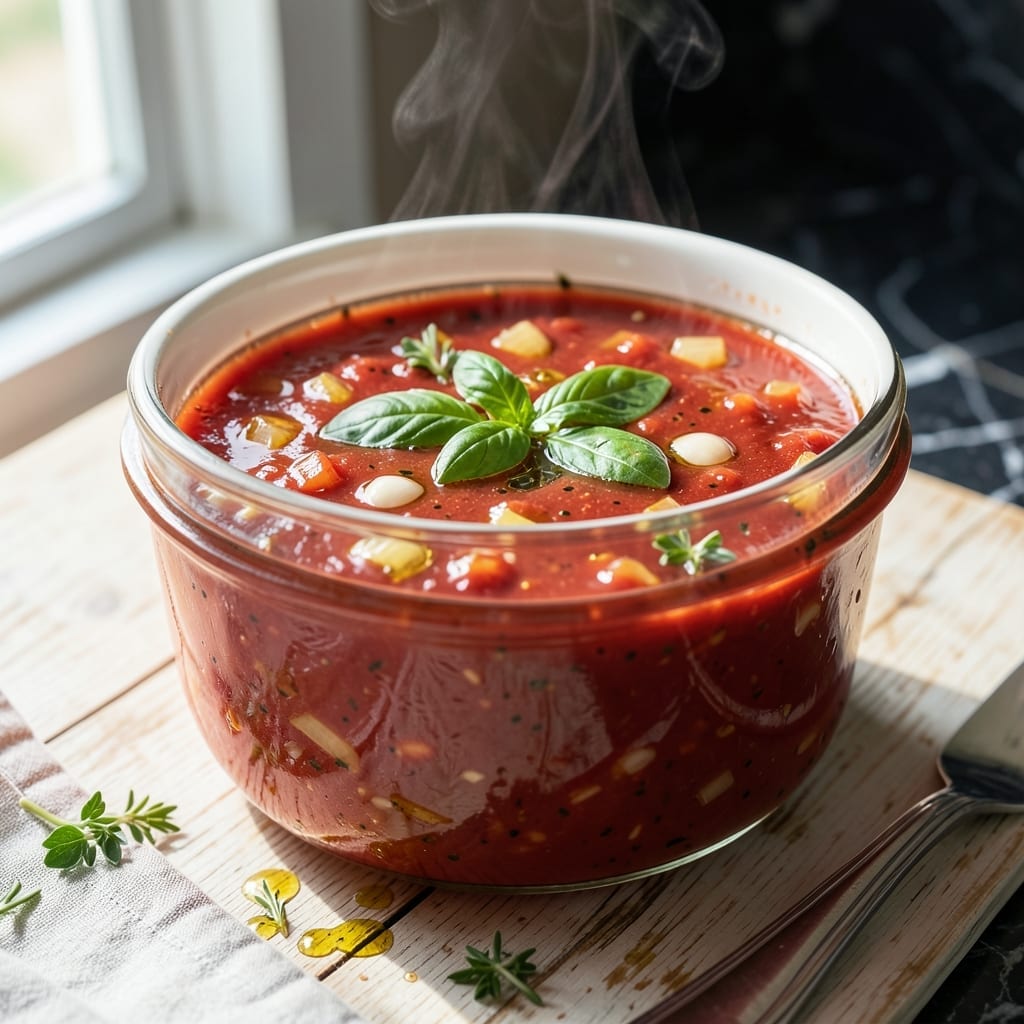
Preserving garden tomatoes at their peak transforms into a rich, restaurant-quality sauce that lasts all year. This method captures summer’s essence in every jar.
With simple ingredients and proper canning techniques, you’ll create a foolproof sauce that’s ready for pasta, pizzas, or stews whenever you need it.
Ingredients for Spaghetti Sauce Recipe for Canning
Nine ingredients capture summer’s bounty in a sauce ready for canning and year-round use.
| Ingredient | Amount | Notes |
|---|---|---|
| Roma Tomatoes 🍅 | 20 lb | Fresh, ripe, peeled and cored |
| Yellow Onions 🧅 | 3 whole | Medium-sized, finely chopped |
| Garlic Cloves 🧄 | 12 cloves | Peeled and minced |
| Extra-Virgin Olive Oil 🫒 | ½ cup | For sautéing aromatics |
| Fresh Basil Leaves 🌿 | 1 cup | Loosely packed, chopped |
| Fresh Oregano 🍃 | ½ cup | Leaves only, chopped |
| Canning Salt 🧂 | 2 tbsp | Non-iodized for preservation |
| Sugar 🍚 | ½ cup | Optional, balances acidity |
| Bottled Lemon Juice 🍋 | ½ cup | For acidity and safety |
Roma tomatoes are non-negotiable here—their low moisture and high acidity make them ideal for canning. Source from local farms or your own garden at peak ripeness (deep red, slightly soft). The onions and garlic should be fresh, not stored for months—look for firm bulbs with no sprouts. Extra-virgin olive oil from California Olive Ranch or a trusted import adds depth without overpowering.
No fresh herbs? Use dried basil and oregano at one-third the amount, but fresh really shines. Short on tomatoes? Supplement with San Marzano canned tomatoes (drained) for consistency. For a richer sauce, a splash of red wine (simmered off before canning) adds complexity. The sugar is optional—taste after cooking and adjust.
Process and can within 24 hours of picking for best flavor. Properly canned sauce keeps for 12-18 months in a cool, dark pantry. Always follow USDA canning guidelines to ensure safety—this isn’t the place to cut corners.
Why You’ll Love This Recipe
- One Pot Wonder: I can get this going with just a pot, some Roma tomatoes, and those basic pantry staples I always have on hand.
- Summer in a Jar: The fresh basil and garlic bring out the natural sweetness of the tomatoes—it’s like bottling up garden-fresh flavor.
- Freezer Ready: Honestly, I double the batch so I’ve got homemade sauce ready for quick pasta nights or lazy lasagnas.
- Pennywise Perfection: Roma tomatoes are cheap in bulk, and this makes so much sauce I end up gifting jars to neighbors.
Step-by-Step Instructions for Spaghetti Sauce for Canning
This tested method ensures safe, flavorful preservation while maintaining the garden-fresh character of the sauce.
Step 1: Prepare and Blanch the Roma Tomatoes
Begin by washing the 20 lb Roma Tomatoes thoroughly under cold running water. Core each tomato and score an “X” on the bottom of each. This scoring prevents the skins from bursting during blanching and makes them easier to peel afterward.
Prepare an ice bath in a large bowl and bring a stockpot of water to a rolling boil. Working in batches, blanch the tomatoes for 30-60 seconds until the skins begin to split. Immediately transfer them to the ice bath to stop the cooking process. The skins should slip off easily with your fingers or a paring knife.
Once peeled, quarter the tomatoes and set them aside in a large bowl. This preparation step ensures a smooth texture in the final sauce and removes any potential bitterness from the skins.
Step 2: Sauté Aromatics in Olive Oil
In a large, heavy-bottomed stockpot, heat the 0.5 cup Extra-Virgin Olive Oil over medium heat until it shimmers. Add the 3 whole Yellow Onions, finely chopped, and cook for 8-10 minutes, stirring frequently, until they turn translucent and begin to soften.
Add the 12 cloves Garlic Cloves, minced, and cook for an additional 1-2 minutes until fragrant. Be careful not to let the garlic brown, as it can become bitter. The onions and garlic form the flavor foundation of the sauce, so take your time to develop their sweetness.
Step 3: Simmer the Sauce with Herbs and Seasonings
Add the peeled and quartered Roma Tomatoes to the pot, stirring to combine with the aromatics. Bring the mixture to a gentle boil, then reduce the heat to low and let it simmer uncovered for 1-2 hours, stirring occasionally to prevent sticking.
As the sauce simmers, the tomatoes will break down and the liquid will reduce. After 30 minutes, stir in the 1 cup Fresh Basil Leaves and 0.5 cup Fresh Oregano, both chopped. Then add the 2 tbsp Canning Salt, 0.5 cup Sugar, and 0.5 cup Bottled Lemon Juice. The lemon juice is critical for safe canning, as it ensures the proper acidity level.
Continue simmering until the sauce reaches your desired thickness. For canning, a slightly thicker consistency works best, as it prevents separation during processing.
Step 4: Process the Sauce for Canning
Ladle the hot sauce into clean, sterilized pint or quart jars, leaving 1-inch headspace at the top. Remove any air bubbles by running a clean knife or bubble tool around the inside of each jar. Wipe the rims with a clean, damp cloth to ensure a proper seal.
Place the lids on the jars and screw on the bands until fingertip-tight. Process the jars in a boiling water canner for 35 minutes for pints or 40 minutes for quarts, adjusting for altitude if necessary. Start timing once the water returns to a full rolling boil after adding the jars.
After processing, carefully remove the jars and place them on a towel-lined countertop to cool. You should hear the satisfying “ping” of the lids sealing as they cool. Let the jars rest undisturbed for 12-24 hours before checking the seals and storing.
Pro Tips For Making Spaghetti Sauce Recipe For Canning
- Simmer Low and Slow: Cook your sauce at a gentle simmer for at least 2 hours—any higher heat and the tomatoes can scorch, leaving a bitter aftertaste. I learned this the hard way after ruining a batch by rushing it.
- Peel Those Tomatoes: Blanch Roma tomatoes in boiling water for 30 seconds, then shock in ice water to slip off the skins. Sounds tedious, but it prevents chewy bits in your canned sauce.
- Skip the Raw Garlic: Sauté garlic in olive oil until just golden before adding tomatoes—raw garlic can turn harsh during canning. After burning a few cloves, I finally figured out the timing.
- Add Basil Late: Stir in fresh basil leaves during the last 10 minutes of cooking. My grandmother swore by this, and she was right: it keeps the flavor bright and fresh in the jars.
Flavor Customization for spaghetti sauce recipe for canning
Herb Variations
Swap the fresh basil and oregano for 1 cup chopped parsley and 2 tbsp thyme for a brighter, more herbal profile. I love this combo with seafood dishes. Alternatively, use 2 tbsp rosemary for a piney, robust flavor that pairs well with hearty meats. 🌿
Spice It Up
Add 1 tsp red pepper flakes with the aromatics for a subtle kick. For serious heat, include 1 chopped jalapeño or ½ tsp cayenne. I often stir in 1 tbsp smoked paprika for a Spanish-inspired twist that works wonderfully in stews.
Umami Boosters
Stir in 2 tbsp tomato paste at the start for deeper richness. For meaty depth without meat, add ¼ cup nutritional yeast or 2 tbsp soy sauce. My secret weapon is 1 anchovy fillet melted into the oil—it disappears but adds incredible complexity.
Sweeter Notes
Balance acidity with ¼ cup grated carrots or ½ cup diced bell peppers sautéed with onions. A splash of balsamic vinegar adds sweet-tart depth. I sometimes include 1 diced apple for a subtle fruit note that kids love.
Regional Twists
For an Italian-American style, add 1 lb browned ground beef or Italian sausage. A French take might include herbes de Provence. My favorite is adding 1 cup chopped mushrooms for an earthy, meaty texture without meat. 💛
Frequently Asked Questions
How long does canned sauce last?
Properly canned sauce stays fresh for 12-18 months in a cool, dark pantry. Once opened, refrigerate and use within 5-7 days for best quality.
Can I skip the lemon juice?
No, the bottled lemon juice is essential for safety. It ensures proper acidity to prevent botulism. Never reduce or omit it, even with acidic tomatoes.
What if my jars don’t seal?
Check lids after 24 hours. Unsealed jars must be refrigerated and used within 1 week, or reprocess with new lids. Always test seals before storage.
Can I add meat to this sauce?
Yes, but brown meat separately and add to jars before processing. Use ground beef or Italian sausage for hearty flavor. Adjust processing time may be needed.
Nutrition Facts

- BBQ Sausage Recipe Oven: Smoky Depth Without the Grill - September 28, 2026
- BBQ Chicken Bowl Recipe Rice: Smoky Sweetness Over Fluffy Grains - September 28, 2026
- Beef Cutlet Recipe Ideas: Crispy Breaded Patties With Bold Seasonings - September 28, 2026