
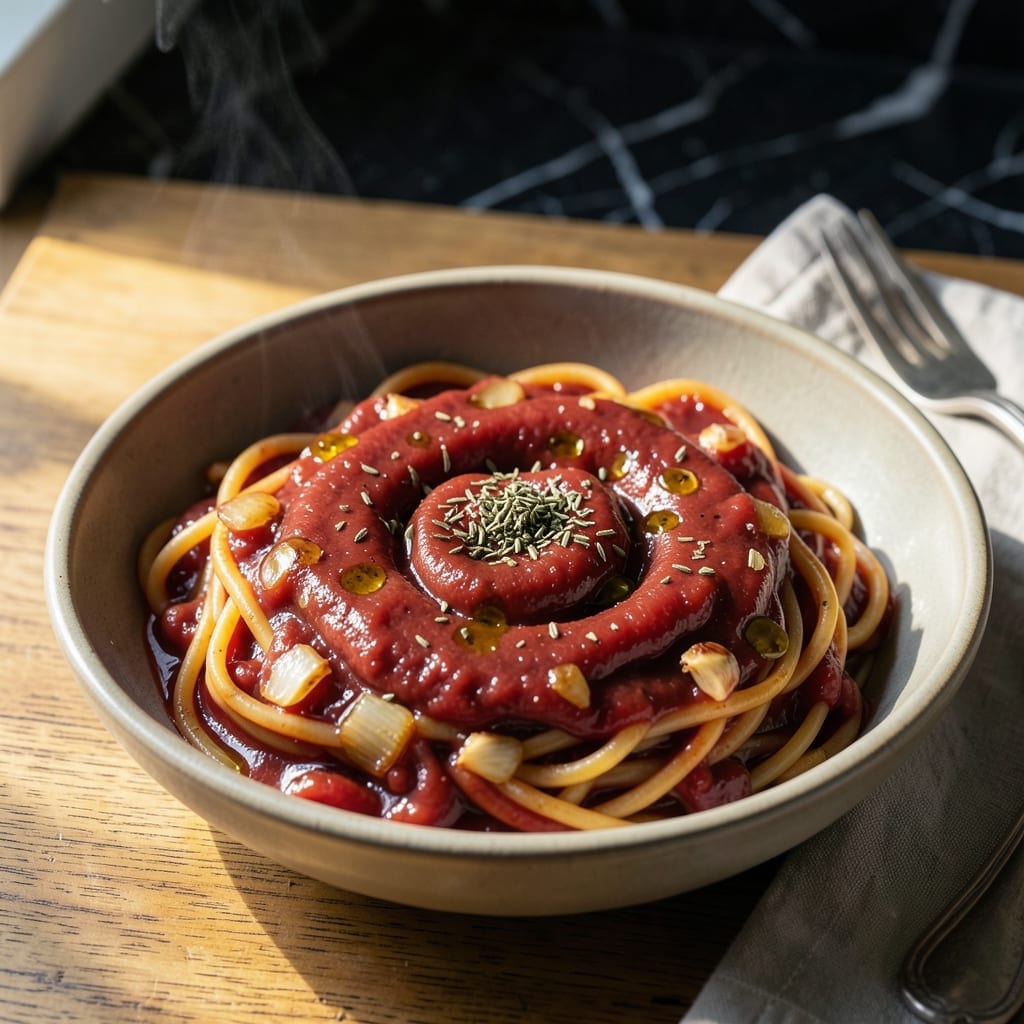
This meat-free sauce delivers the rich tomato flavor you crave without compromising on depth or complexity.
Using simple pantry staples and a slow simmer, this version achieves a bold, savory taste that rivals any traditional recipe.
Ingredients for Spaghetti Sauce Recipe No Meat
Ten pantry staples create a sauce with bold, savory depth that rivals any meat-based version.
| Ingredient | Amount | Notes |
|---|---|---|
| San Marzano Canned Tomatoes 🍅 | 28 oz | Whole peeled, hand-crushed |
| Extra-Virgin Olive Oil 🫒 | ¼ cup | High-quality, cold-pressed |
| Yellow Onion 🧅 | 1 whole | Finely diced for base |
| Garlic Cloves 🧄 | 6 cloves | Minced for depth |
| Tomato Paste 🍅 | 2 tbsp | Double-concentrated preferred |
| Dried Oregano 🌿 | 1 tsp | Mediterranean variety ideal |
| Dried Basil 🌿 | 1 tsp | Crushed by hand |
| Red Pepper Flakes 🌶️ | ½ tsp | Adjust to heat preference |
| Sea Salt 🧂 | 1 tsp | Fine grain for even distribution |
| Freshly Ground Black Pepper 🌶️ | ½ tsp | Coarse grind preferred |
The tomatoes are non-negotiable here. San Marzano canned tomatoes offer the perfect balance of sweetness and acidity—look for DOP certification on the label for authenticity. Whole Foods or Italian specialty stores typically carry the best selection. The olive oil should be robust and peppery; California Olive Ranch or Colavita are reliable brands. Fresh oregano works if you have it, but dried Mediterranean oregano provides more concentrated flavor.
Out of San Marzanos? Any high-quality canned tomato works, though the flavor may be slightly less complex. No fresh garlic? Garlic powder at one-third the amount can substitute, but fresh is ideal. Skip the pre-minced jarred garlic—it lacks the punch. Want more umami? Add 1 tsp soy sauce or a splash of balsamic vinegar. The red pepper flakes can be omitted for a milder sauce.
This sauce freezes beautifully for up to 6 months. Store in airtight containers with a thin layer of olive oil on top to prevent freezer burn. In the fridge, it keeps for 5-7 days. The flavors deepen over time, making leftovers even more delicious.
Why You’ll Love This Recipe
- One Pot Wonder: I just dump the San Marzano tomatoes, onion, garlic, and paste in a pot—no fancy steps, no mess.
- Deep Tomato Magic: The sweetness of those San Marzano tomatoes with the punch of garlic and paste? Ridiculously good.
- Meal Prep Hero: I make a double batch on Sunday and it fuels pasta, pizza, and soups all week.
- Pantry MVP: Five ingredients I always have on hand, and it costs less than takeout. Honestly, it’s my weeknight lifesaver.
Step-by-Step Instructions for Spaghetti Sauce No Meat
This method builds deep flavor through careful layering of aromatics and slow simmering.
Step 1: Sauté the Aromatic Base
Heat the 0.25 cup Extra-Virgin Olive Oil in a heavy pot over medium-low heat. Add the finely diced Yellow Onion and cook for 8-10 minutes, stirring occasionally, until the pieces become translucent and just begin to caramelize around the edges.
This slow cooking process develops the onion’s natural sweetness without browning. Watch for the edges to turn slightly golden—that’s your visual cue. The oil should gently shimmer but never smoke, which would impart bitter flavors to your sauce.
Step 2: Build Flavor with Garlic and Tomato Paste
Add the 6 minced Garlic Cloves to the pot and stir constantly for 30-45 seconds until fragrant but not browned. Garlic burns easily, so keep it moving to prevent bitterness.
Stir in the 2 tbsp Tomato Paste and cook for an additional 2 minutes. This step is crucial—the paste should darken slightly and adhere to the bottom of the pot, creating a fond that will dissolve into the sauce later. You’ll notice the color deepen from bright red to a richer, brick-like hue.
Step 3: Incorporate Tomatoes and Seasonings
Add the 28 oz San Marzano Canned Tomatoes, crushing them by hand as they go into the pot. Include all the juices for maximum flavor. Stir in the 1 tsp Dried Oregano, 1 tsp Dried Basil, 0.5 tsp Red Pepper Flakes, 1 tsp Sea Salt, and 0.5 tsp Freshly Ground Black Pepper.
Bring the mixture to a gentle simmer, then reduce the heat to low. The sauce should bubble lazily—vigorous boiling would cause it to splatter and break the tomatoes too much. You’ll see small, steady bubbles breaking the surface.
Step 4: Simmer to Develop Complexity
Partially cover the pot and let the sauce simmer for 45-60 minutes, stirring occasionally. This extended cooking time allows the flavors to meld and the tomatoes to break down completely into a thick, cohesive sauce.
As it cooks, the sauce will darken in color and reduce slightly. You’ll know it’s ready when it has a rich, deep red color and coats the back of a spoon. If it thickens too much before the time is up, add a splash of water to maintain the right consistency.
Step 5: Finish and Adjust Seasoning
Remove the sauce from heat and let it sit for 5 minutes to allow the flavors to settle. Taste and adjust seasoning if needed, though the careful layering of ingredients should have created a perfectly balanced sauce.
The finished product should have a velvety texture with visible flecks of onion and garlic. The aroma will be rich and inviting, with the tomato’s natural sweetness complemented by the earthy herbs and a subtle heat from the red pepper flakes.
Pro Tips For Making Spaghetti Sauce Recipe No Meat
- Sauté Onions Slow: Cook the yellow onion over medium-low heat for at least 8-10 minutes until translucent—I learned this the hard way after rushing and ending up with a harsh, raw bite in the sauce.
- Crush Tomatoes by Hand: Sounds weird, but it works: crushing the San Marzano tomatoes with your hands as you add them breaks them up better than any tool and releases more flavor.
- Bloom Tomato Paste: After the garlic, cook the tomato paste for 2-3 minutes in the olive oil until it deepens in color—this removes the raw taste and builds a richer base.
- Simmer Uncovered: Resist the urge to cover the pot; simmering uncovered for 30-45 minutes lets the sauce reduce and concentrate, giving it that thick, clingy texture you want on spaghetti.
Creative Variations of This spaghetti sauce recipe no meat
Roasted Garlic Variation
Swap the raw garlic for 8 roasted garlic cloves. Roast them at 400°F for 15 minutes until golden and caramelized, then mash into a paste. This adds a deep, sweet complexity that transforms the sauce into something truly special.
Creamy Tomato Style
Stir in ½ cup heavy cream or coconut milk during the final 10 minutes of simmering. This creates a luscious, velvety texture that clings beautifully to pasta. I love this version with pappardelle or fettuccine.
Spicy Arrabbiata Twist
Increase the red pepper flakes to 1½ tsp and add ½ tsp cayenne pepper. For extra heat, stir in 1 tbsp Calabrian chili paste with the tomato paste. The result is a fiery, bold sauce that wakes up your taste buds. 🌶️
Herb-Infused Version
Add 1 tbsp fresh rosemary and 2 tbsp fresh thyme tied in cheesecloth with the dried herbs. Remove the bundle before serving. This gives the sauce an aromatic, piney depth that pairs wonderfully with grilled vegetables.
White Wine Boost
Deglaze the pot with ½ cup dry white wine after cooking the tomato paste. The alcohol cooks off, leaving a bright acidity that balances the tomatoes’ sweetness. I prefer a crisp Pinot Grigio for this.
Mushroom Umami
Sauté 8 oz finely chopped cremini mushrooms with the onions. Their natural glutamates add a meaty depth without any actual meat. This variation is my go-to for impressing omnivore friends. 💪
Frequently Asked Questions
Can I use fresh tomatoes instead of canned?
Yes, but they need extra prep. Use 6-8 ripe Roma tomatoes, peeled and seeded. Simmer them down first to concentrate their flavor, as they contain more water than canned.
How do I make the sauce thicker?
Simmer uncovered for 10-15 extra minutes or mash the tomatoes more. For a quick fix, stir in 1 tbsp tomato paste and cook for 5 minutes.
What can I add for extra richness?
A splash of balsamic vinegar or 1 tsp soy sauce adds umami depth. Stir in either during the last 10 minutes of simmering.
Why does my sauce taste bitter?
Overcooked garlic or burnt tomato paste often causes bitterness. Always cook garlic on low heat and stir constantly. If it happens, a pinch of sugar can help balance it.
Nutrition Facts

- BBQ Sausage Recipe Oven: Smoky Depth Without the Grill - September 28, 2026
- BBQ Chicken Bowl Recipe Rice: Smoky Sweetness Over Fluffy Grains - September 28, 2026
- Beef Cutlet Recipe Ideas: Crispy Breaded Patties With Bold Seasonings - September 28, 2026