
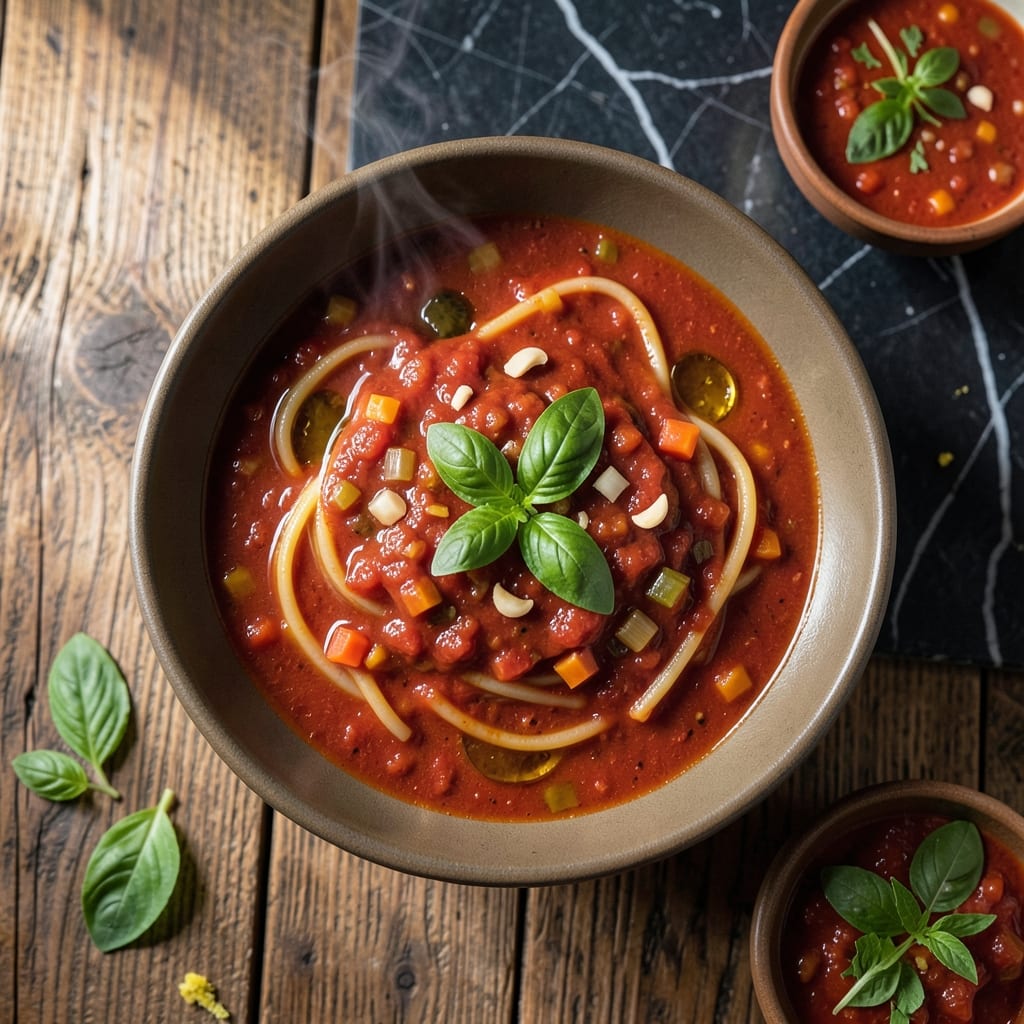
This spaghetti sauce transforms a simple can of tomato soup into a rich, velvety masterpiece that rivals any jarred version. I developed it during a pantry challenge when fresh tomatoes weren’t an option.
The secret lies in a 30-minute simmer with aromatic vegetables and herbs, which deepens the flavor far beyond its humble start. A splash of red wine adds complexity, while a pinch of sugar balances the acidity.
What emerges is a smooth, thick sauce that clings perfectly to pasta, with layers of savory depth. It’s the kind of homemade goodness that makes weeknight dinners feel special.
Double the batch and freeze for quick meals later. Here’s how to make it.
Ingredients for Spaghetti Sauce Recipe with Tomato Soup
Ten simple ingredients turn a can of soup into something extraordinary for your pasta.
| Ingredient | Amount | Notes |
|---|---|---|
| Tomato Soup 🍅 | 2 cans | 10.5 oz cans, undiluted |
| Olive Oil 🫒 | 2 tbsp | Extra-virgin preferred |
| Yellow Onion 🧅 | 1 whole | Finely diced |
| Garlic Cloves 🧄 | 4 cloves | Minced or pressed |
| Carrot 🥕 | 1 whole | Finely grated |
| Celery Stalk 🌿 | 1 whole | Finely diced |
| Dried Oregano 🍃 | 1 tsp | Crushed between fingers |
| Dried Basil 🌿 | 1 tsp | Crushed between fingers |
| Red Wine 🍷 | ¼ cup | Dry variety preferred |
| Granulated Sugar 🍚 | 1 tsp | Balances acidity |
The tomato soup base needs to be high-quality—Campbell’s or Progresso work well here (avoid the watery generic brands). I grab mine in bulk from Costco when I’m stocking up. The onions and carrots add natural sweetness, so use fresh ones if possible. Celery brings that subtle earthy depth that makes the sauce taste like it simmered all day.
No red wine? Beef or vegetable broth with a splash of balsamic vinegar gets you 90% there. Fresh herbs can replace dried at 3 times the amount, but dried work fine too. Out of oregano? Marjoram is a close cousin. If you’re skipping the wine entirely, add an extra pinch of sugar to compensate for the missing depth.
Sauce keeps in the fridge for up to 5 days and freezes beautifully for 3 months. I always make a double batch—portion into freezer bags, lay flat to save space. Thaw overnight in the fridge before reheating (the good stuff, not the microwave).
Why You’ll Love This Recipe
- One Pot Wonder: I just dump the tomato soup, sautéed onion, garlic, and grated carrot into a single pot—no complicated steps.
- Rich and Sweet: The tomato soup base with slowly cooked onion and carrot gives it a natural sweetness that’s way better than jarred sauce.
- Feeds the Family: I make a big batch on Sunday and it stretches over pasta, meatball subs, or even as a pizza topping all week.
- Pantry Hero: Honestly, I always have tomato soup and canned goods on hand, so this saves me from last-minute grocery runs.
Step-by-Step Instructions for Spaghetti Sauce With Tomato Soup
Here’s how I transform simple ingredients into a rich, restaurant-worthy sauce that clings perfectly to pasta.
Step 1: Build the Aromatic Base
Heat the 2 tbsp Olive Oil in a heavy pot over medium heat until it shimmers. Add the finely diced Yellow Onion and cook for 5-6 minutes, stirring often, until it turns translucent and just begins to caramelize at the edges.
Here’s the thing—don’t rush this step. The onion needs time to sweat and soften completely. I add the finely grated Carrot and finely diced Celery Stalk next, cooking for another 3-4 minutes until all vegetables soften and the mixture becomes fragrant. This trio forms the flavor foundation of your sauce.
Step 2: Bloom the Spices and Toast the Garlic
Add the 4 cloves Garlic Cloves to the pot and cook for 30 seconds, stirring constantly. I know it seems quick, but you want to bloom the garlic without letting it brown—burnt garlic turns bitter and ruins the whole dish.
Immediately stir in the 1 tsp Dried Oregano and 1 tsp Dried Basil, crushing them between your fingers as you add them. This releases their essential oils. Toast for 15-20 seconds until fragrant, then pour in the 0.25 cup Red Wine to deglaze, scraping up any browned bits from the bottom of the pot.
Step 3: Simmer and Develop Flavor
Pour in the 2 cans Tomato Soup and stir to combine. I use undiluted soup for maximum thickness and tomato intensity. Add the 1 tsp Granulated Sugar—this balances the natural acidity of the tomatoes and brings out their sweetness.
Bring the mixture to a gentle simmer, then reduce heat to low. Let it cook uncovered for 20-25 minutes, stirring occasionally, until the sauce thickens and develops a deep, rich color. You’ll notice the raw tomato smell disappears and is replaced by a complex, savory aroma.
Step 4: Adjust and Finish
Taste the sauce and adjust seasoning with salt and pepper as needed. Real talk: if it tastes flat, it probably needs more salt—trust your palate. The sauce should be thick enough to coat the back of a spoon but still pourable.
If it’s too thick, stir in a splash of pasta water later when combining with noodles. This sauce improves as it sits, so let it rest for at least 10 minutes before using. The flavors will meld together beautifully, creating that rich, velvety texture promised in the title.
Pro Tips For Making Spaghetti Sauce Recipe With Tomato Soup
- Sauté Onions Slow: Cook your yellow onions on medium-low for at least 8-10 minutes until soft and translucent—I learned this the hard way after rushing and ending up with a harsh, raw onion bite in the sauce.
- Grate the Carrot: Skip chopping and grate the carrot instead; it dissolves into the sauce faster, adding natural sweetness without noticeable texture.
- Bloom the Garlic: Add minced garlic to the olive oil for just 30 seconds before the tomato soup—any longer and it burns, turning bitter.
- Simmer Uncovered: Let the sauce reduce uncovered for 15-20 minutes to thicken properly; covering it traps steam and leaves you with a watery mess.
Troubleshooting This Dish
Sauce Too Thin
If your sauce seems watery after simmering, don’t panic. I often leave the pot uncovered for an extra 5-10 minutes—the excess liquid will evaporate naturally. Alternatively, mix 1 tbsp cornstarch with 2 tbsp cold water and stir it in, then simmer for another 2 minutes. 💡
Sauce Too Thick
Thick sauce can be fixed easily. Stir in ¼ cup water or beef broth at a time until reaching your desired consistency. I prefer using pasta water later when combining with noodles—it adds starch for better cling.
Remember, the sauce will thicken slightly as it cools too.
Bitter Taste
Bitterness often comes from overcooked garlic or onions. Next time, reduce the heat and cook them more gently. To fix now, stir in ½ tsp sugar or a pinch of baking soda—this neutralizes the bitterness without affecting flavor.
Lacking Depth
If your sauce tastes flat, it likely needs more salt or acid. Start with ¼ tsp salt, taste, then add a splash of red wine vinegar or lemon juice. I also like a dash of Worcestershire sauce for umami depth. 🌟
Herbs Taste Dusty
Dried herbs can sometimes taste stale. Always crush them between your fingers before adding to release their oils. If they still taste dull, add 1 tsp fresh basil or oregano at the end of cooking.
Fresh herbs brighten the flavor immediately.
Nutrition Facts
Frequently Asked Questions
Can I use cream of tomato soup instead?
Yes, but reduce the simmer time to 15 minutes to prevent curdling. The cream version will create a richer, slightly sweeter sauce.
How do I make it meatier?
Brown ½ lb ground beef or Italian sausage first, then drain excess fat before adding vegetables. This adds protein and depth to the sauce.
Can I skip the wine?
Replace with ¼ cup beef broth plus 1 tsp balsamic vinegar for similar complexity. The acidity balances the tomato flavor.
How long does it keep in the fridge?
Properly stored in an airtight container, it stays fresh for up to 5 days. Freeze for longer storage—it holds quality for 3 months.

- BBQ Sausage Recipe Oven: Smoky Depth Without the Grill - September 28, 2026
- BBQ Chicken Bowl Recipe Rice: Smoky Sweetness Over Fluffy Grains - September 28, 2026
- Beef Cutlet Recipe Ideas: Crispy Breaded Patties With Bold Seasonings - September 28, 2026