
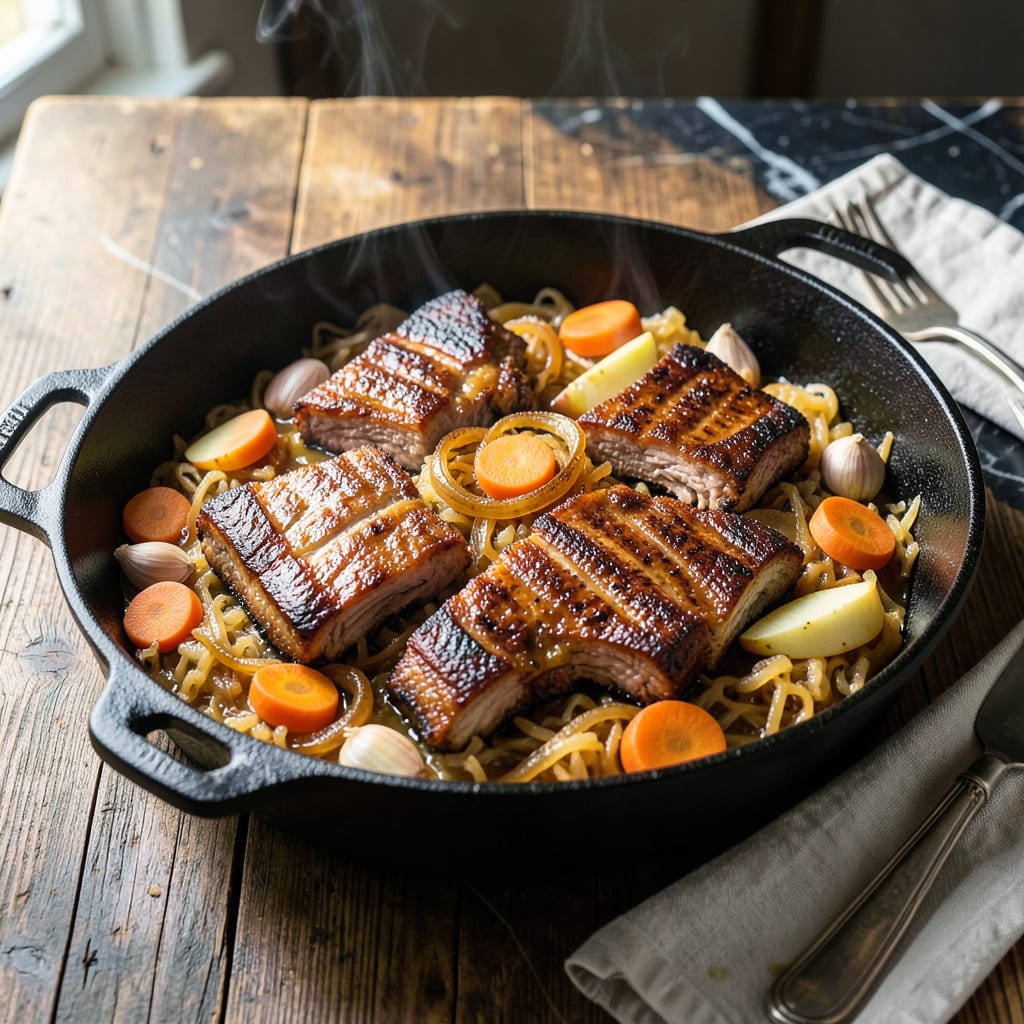
This recipe brings together tender spare ribs and tangy sauerkraut in a slow-cooked dish that honors German tradition. The low-and-slow method ensures the meat becomes fall-off-the-bone tender while the sauerkraut absorbs rich, smoky flavors.
With just a few simple ingredients and patient cooking, you’ll achieve a hearty meal with deep, balanced flavors. The combination of savory ribs and fermented sauerkraut creates a satisfying harmony that’s perfect for any gathering.
Ingredients for Spare Ribs and Sauerkraut
Tender ribs and tangy kraut come together for a hearty, traditional German meal.
| Ingredient | Amount | Notes |
|---|---|---|
| Pork Spare Ribs 🥩 | 2 ½ lb | Bone-in, cut into individual ribs |
| Sauerkraut 🥬 | 2 cups | Drained, rinsed if preferred |
| Onion 🧅 | 1 whole | Yellow or sweet, thinly sliced |
| Apple 🍎 | 1 whole | Peeled, cored, diced |
| Carrots 🥕 | 2 whole | Peeled, sliced into rounds |
| Garlic Cloves 🧄 | 4 cloves | Minced for depth of flavor |
| Juniper Berries 🌿 | 1 tsp | Lightly crushed for aroma |
| Bay Leaves 🍃 | 2 whole | Dried, for slow cooking |
| Black Peppercorns 🌶️ | 1 tsp | Whole or coarsely ground |
| Brown Sugar 🍚 | 2 tbsp | Light or dark, for balance |
| Apple Cider Vinegar 🍏 | ½ cup | For acidity and brightness |
| Beer 🍺 | 1 cup | Dark lager or amber ale |
| Dijon Mustard 🟡 | 1 tbsp | For tangy depth |
| Olive Oil 🫒 | 2 tbsp | For browning ribs |
| Salt 🧂 | 1 tsp | Kosher or sea salt preferred |
The spare ribs are the foundation here. Look for bone-in pork spare ribs with good marbling—this ensures the meat stays juicy during the long, slow cook. Most butchers or Whole Foods will sell them pre-cut into individual ribs, which saves prep time. If buying a whole rack, ask the butcher to cut it for you. Freshness is key—the meat should have a bright pink hue, not gray.
No beer on hand? Substitute with chicken or vegetable broth plus a splash of apple cider vinegar for similar depth. If you can’t find juniper berries (not always stocked in regular grocery stores), a pinch of caraway seeds works as a backup. The sauerkraut can be canned or bagged—rinsing it reduces the sourness if you prefer a milder flavor. Fresh apple adds natural sweetness, but pears work too.
This dish actually improves overnight. Store leftovers in an airtight container in the fridge for up to 4 days, or freeze for 3 months. Reheat gently on the stove with a splash of water to prevent drying. The flavors deepen beautifully, making it perfect for meal prep.
Why You’ll Love This Recipe
- Set It and Forget: I just brown the ribs, dump everything in one pot, and let it simmer while I do something else.
- Sweet-Tangy Magic: The apples and sauerkraut turn the sauce into this ridiculous sweet-sour balance that clings to the ribs.
- Feeds a Crowd: Between us, I’ve served this at Sunday dinner and game night—always disappears.
- Leftovers for Days: Honestly, it tastes even better the next day, and the ribs stay juicy for meal-prep lunches.
Step-by-Step Instructions for Spare Ribs and Sauerkraut
Master the technique for tender ribs and perfectly balanced sauerkraut with these proven steps.
Step 1: Sear the Pork Spare Ribs
Heat the 2 tbsp olive oil in a Dutch oven or heavy pot over medium-high heat until shimmering. Pat the 2.5 lb pork spare ribs dry with paper towels and season with the 1 tsp salt. Working in batches if needed, sear the ribs until deeply browned on all sides, about 3-4 minutes per side.
This step builds a flavorful fond in the pot that will enrich the braising liquid. Don’t rush the searing—proper browning creates the depth of flavor characteristic of this German tradition. Transfer the ribs to a plate and set aside.
Step 2: Build the Aromatic Base
In the same pot, add the 1 whole onion, 1 whole apple, 2 whole carrots, and 4 cloves garlic cloves. Sauté for 5-6 minutes until the vegetables soften and begin to caramelize. The natural sugars in the apple will help balance the acidity of the sauerkraut.
Stir in the 1 tsp juniper berries, 2 whole bay leaves, 1 tsp black peppercorns, and 2 tbsp brown sugar. Cook for 1 minute until the spices become fragrant. This aromatic foundation is crucial for the authentic flavor profile.
Step 3: Deglaze and Combine All Components
Pour in the 0.5 cup apple cider vinegar and 1 cup beer, scraping up any browned bits from the bottom of the pot. Add the 1 tbsp Dijon mustard and 2 cups sauerkraut, stirring to combine. The liquid should come to a gentle simmer before returning the pork spare ribs to the pot.
Nestle the ribs into the sauerkraut mixture, ensuring they are mostly submerged. The liquid should just cover the ribs—if it doesn’t, add a splash of water. This creates the ideal environment for slow cooking, allowing the flavors to meld and the meat to become fork-tender.
Step 4: Braise to Perfection
Cover the pot and reduce the heat to low. Simmer gently for 2 to 2.5 hours, turning the ribs occasionally to ensure even cooking. The ribs are done when the meat pulls away from the bone easily and is tender but not falling apart.
Check the liquid level periodically, adding a small amount of water if it reduces too much. The sauerkraut should absorb some of the liquid, becoming tender and infused with the rich flavors of the ribs and spices. This slow braise transforms the ingredients into a cohesive, flavorful dish.
Step 5: Rest and Serve
Once the ribs are fully cooked, remove them from the pot and set aside. Skim any excess fat from the surface of the sauerkraut mixture if desired. Return the ribs to the pot and let them rest in the warm liquid for 10 minutes to reabsorb some of the flavors.
Serve the ribs hot, ladled with plenty of the sauerkraut and braising liquid. Each bite should deliver the perfect balance of tangy sauerkraut, tender pork, and the warm spices that define this classic German preparation. The apple and beer notes will be subtle but present, adding complexity to every mouthful.
Pro Tips For Making Spare Ribs And Sauerkraut
- Parboil the Ribs: Simmer the spare ribs in water for 10-15 minutes first to remove excess fat and help tenderize them before braising with the sauerkraut.
- Rinse the Kraut: Drain and rinse the sauerkraut under cold water to reduce its sharpness—this balances the flavor without losing the tang.
- Skip the Overcrowding: I learned this the hard way—don’t pack the ribs too tightly in the pot or they’ll steam instead of brown, and the sauerkraut won’t cook evenly.
- Add Apple Late: Stir in the apple slices during the last 20 minutes of cooking to keep them from turning to mush while still infusing the dish with sweetness.
Wine and Beer Pairings for This Dish
White Wine Choices
For this dish, I love a crisp German Riesling—its bright acidity cuts through the richness while complementing the sauerkraut’s tang. Look for a dry or off-dry Kabinett from the Mosel region. A 5-ounce pour enhances every bite without overpowering the meal. 🍷
Red Wine Pairings
If you prefer red, a light-bodied Pinot Noir works beautifully. The Burgundy-style from Oregon or Germany’s Spätburgunder offers red fruit notes that pair well with pork. Serve slightly chilled at 55-60°F for the best experience.
Beer Selections
A German Märzen or Dunkel beer mirrors the dish’s origins perfectly. The malty sweetness balances the sauerkraut’s acidity, while the 5-6% ABV won’t overpower. I always keep a few Paulaner in my fridge for this exact pairing. 🍺
Non-Alcoholic Options
For a non-alcoholic pairing, try sparkling apple cider—its effervescence and sweetness mirror the dish’s apple notes. Or serve iced black tea with a lemon wedge for a refreshing contrast to the rich ribs.
Nutrition Facts
Frequently Asked Questions
Can I use a different type of rib?
Baby back ribs work too but may cook faster. Adjust braising time to 1.5-2 hours since they’re leaner. Spare ribs’ higher fat content keeps them moister during the long cook.
Why add apple to the dish?
The apple’s natural sweetness balances the sauerkraut’s tang. It also tenderizes the meat slightly during the 2-2.5 hour braise. Don’t skip it—it’s key to authentic flavor!
Can I make this in a slow cooker?
Yes! Brown ribs first, then transfer everything to the slow cooker. Cook on low for 6-7 hours or high for 4 hours. The results will be just as tender.
How do I fix overly sour sauerkraut?
Stir in 1-2 tsp extra brown sugar or a pinch of baking soda to neutralize acidity. The apple and beer in the recipe already help balance the flavor.

- BBQ Sausage Recipe Oven: Smoky Depth Without the Grill - September 28, 2026
- BBQ Chicken Bowl Recipe Rice: Smoky Sweetness Over Fluffy Grains - September 28, 2026
- Beef Cutlet Recipe Ideas: Crispy Breaded Patties With Bold Seasonings - September 28, 2026