
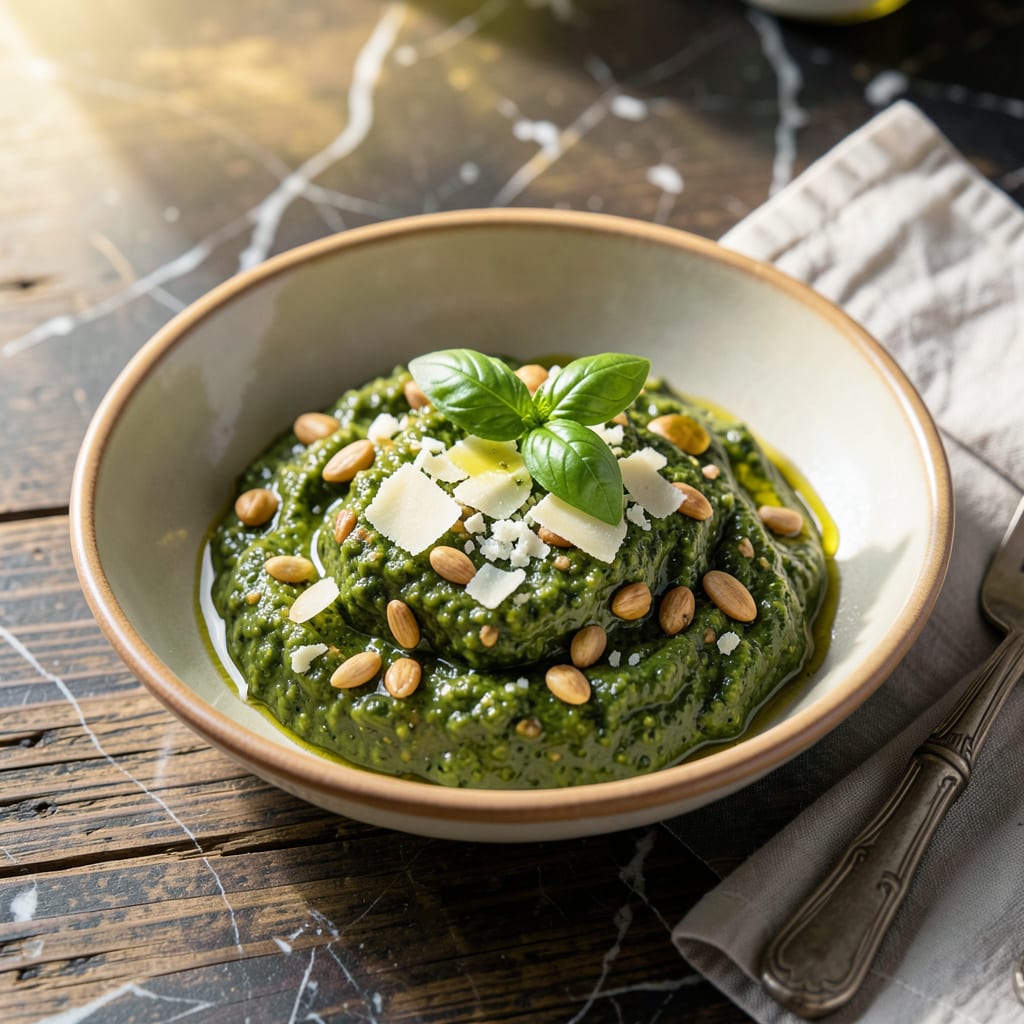
This pesto captures Stanley Tucci’s signature fresh, vibrant flavors with minimal effort. The blend of sweet basil, nutty parmesan, and rich pine nuts creates a sauce that elevates any dish.
Perfect for tossing with pasta, spreading on sandwiches, or using as a dip, this versatile condiment requires just a blender and 5 simple ingredients. The result is smooth, aromatic, and restaurant-quality.
Ingredients for Stanley Tucci Pesto
Bright basil, rich Parmesan, and toasted pine nuts create this vibrant, restaurant-quality sauce with ease.
| Ingredient | Amount | Notes |
|---|---|---|
| Fresh Basil Leaves 🌿 | 2 cups | Packed, stems removed |
| Parmesan Cheese 🧀 | ¾ cup | Freshly grated Parmigiano-Reggiano |
| Pine Nuts 🥜 | ½ cup | Toasted for nutty depth |
| Garlic Cloves 🧄 | 3 cloves | Peeled, roughly chopped |
| Extra-Virgin Olive Oil 🫒 | ¾ cup | High-quality, fruity profile |
| Fine Sea Salt 🧂 | ½ tsp | Adjust to taste preference |
| Freshly Ground Black Pepper 🌶️ | ¼ tsp | Or to taste |
The basil must be fresh and vibrant—look for bright green leaves without wilting at the market. Parmigiano-Reggiano is non-negotiable here; its aged, nutty complexity defines the flavor. For pine nuts, Trader Joe’s or Costco offer the best value without sacrificing quality. Toasting the pine nuts brings out their natural oils, which is essential for that signature Tucci depth.
No pine nuts? Walnuts or raw cashews make excellent substitutes with a slightly different but equally delicious profile. Short on basil? Stretch it with fresh spinach (up to half and half). For a sharper bite, Pecorino Romano can replace Parmesan at a 1:1 ratio. The olive oil should be robust—avoid light or refined varieties that lack character.
Pesto oxidizes quickly, so press plastic wrap directly onto the surface before sealing. Keeps for 1 week refrigerated or 6 months frozen in ice cube trays. Always bring to room temperature before using for the best flavor release.
Why You’ll Love This Recipe
- No Fuss Blending: I just toss everything in the food processor—basil, garlic, pine nuts, Parmesan—and let the olive oil work its magic.
- Garlicky Green Heaven: That first bite with the sharp garlic, nutty pine nuts, and fresh basil hitting all at once? Ridiculously good.
- Pasta Night Hero: I slather it on everything—pasta, sandwiches, even as a pizza base. Honestly, it’s my weeknight secret weapon.
- Fridge Lifesaver: Makes a big batch, keeps for days, and tastes just as bright drizzled over leftovers or avocado toast the next morning.
Step-by-Step Instructions for Stanley Tucci Style Basil and Parmesan Pesto
Master the technique for this vibrant sauce with precise attention to texture and balance.
Step 1: Toast the Pine Nuts to Nutty Perfection
Heat a dry skillet over medium-low heat. Add the 0.5 cup Pine Nuts and toast, stirring frequently, for 3-5 minutes until they turn light golden brown and emit a fragrant aroma. Watch closely as they can burn quickly.
Immediately transfer the toasted pine nuts to a plate to cool. This stops the cooking process and preserves their delicate crunch. Properly toasted pine nuts add a profound depth to the pesto that raw nuts simply cannot achieve.
Step 2: Pulse Aromatics Before Adding Basil
In a food processor, combine the 3 cloves Garlic Cloves, 0.75 cup Parmesan Cheese, and cooled 0.5 cup Pine Nuts. Pulse until finely chopped and well combined, about 15-20 one-second pulses. The mixture should resemble coarse sand.
Processing the garlic and nuts first prevents the basil from becoming bitter. The sharp garlic blades through the cheese and nuts efficiently, creating a uniform base for your pesto before introducing the delicate basil leaves.
Step 3: Incorporate Basil Leaves Gradually
Add the 2 cups Fresh Basil Leaves to the processor. Pulse in 5-6 short bursts initially, then scrape down the sides. Continue processing in 10-15 one-second pulses until the basil is finely chopped but not puréed. The pesto should have visible flecks of basil for texture.
Over-processing turns pesto into a dull green paste and releases bitter compounds from the basil. The ideal consistency shows the individual ingredients while maintaining a cohesive sauce. Stop when the mixture clings together but still has some texture.
Step 4: Emulsify with Olive Oil
With the processor running continuously, slowly drizzle in the 0.75 cup Extra-Virgin Olive Oil through the feed tube. This slow incorporation creates a stable emulsion that won’t separate. The pesto should become smooth and glossy, with a velvety texture.
High-quality olive oil is essential here—its fruity notes complement the basil’s freshness. The emulsion process transforms the mixture from a chunky blend into a luxurious sauce that clings beautifully to pasta or spreads smoothly on bread.
Step 5: Season and Rest for Optimal Flavor
Transfer the pesto to a bowl and stir in the 0.5 tsp Fine Sea Salt and 0.25 tsp Freshly Ground Black Pepper. Taste and adjust seasoning if needed. The flavors will meld and intensify as it rests.
Let the pesto sit at room temperature for 10-15 minutes before serving. This resting period allows the flavors to harmonize. For storage, press plastic wrap directly on the surface to prevent oxidation, which turns pesto brown. Properly stored, it keeps in the refrigerator for up to 5 days.
Pro Tips For Making Stanley Tucci Pesto
- Hand Chop Basil: Skip the food processor—chop the basil by hand with a sharp knife for a brighter, fresher flavor. I learned this the hard way after my first few batches tasted bitter from over-processing.
- Toast the Pine Nuts: Lightly toast the pine nuts in a dry pan for 2-3 minutes until golden. Sounds like a small step, but it actually changes the outcome by deepening their nutty flavor.
- Use Room Temp Cheese: Grate the parmesan when it’s at room temperature—it blends more smoothly into the pesto. Cold cheese can clump, and I was skeptical until I tried it.
- Drizzle Slowly: Add the olive oil in a thin, steady stream while mixing to emulsify the pesto properly. My grandmother swore by this, and she was right—it keeps the texture creamy, not oily.
Common Mistakes When Making stanley tucci pesto
Over-Processing the Basil
The most common mistake is letting the processor run too long. Basil releases bitter compounds when overworked, turning your bright green pesto into a dull brown paste. Pulse in 5-6 short bursts initially, then check the texture. You want visible flecks, not a smooth purée. 🌿
Skipping the Pine Nut Toast
Raw pine nuts lack depth and can taste waxy. Toast them in a dry skillet over medium-low heat for 3-5 minutes until golden and fragrant. This step unlocks their natural oils, adding that signature nutty richness to your pesto.
Adding Oil Too Quickly
Dumping all the olive oil at once causes separation. Instead, drizzle it slowly through the feed tube while the processor runs continuously. This creates a stable emulsion that clings beautifully to pasta. I use high-quality extra-virgin for the best flavor.
Using Pre-Grated Cheese
Pre-grated Parmesan contains anti-caking agents that make your pesto grainy. Always grate Parmigiano-Reggiano fresh—about 0.75 cup for this recipe. The difference in texture and flavor is noticeable, trust me.
Ignoring the Rest Period
Pesto tastes flat right after blending. Let it rest for 10-15 minutes at room temperature before serving. This allows the garlic to mellow and the flavors to meld. I often make it an hour ahead for maximum impact. 💫
Storing Improperly
Oxidation turns pesto brown quickly. Press plastic wrap directly onto the surface before sealing in an airtight container. This simple step preserves that vibrant green color and fresh flavor for up to 5 days in the fridge.
Nutrition Facts
Frequently Asked Questions
Can I use a different nut instead of pine nuts?
Walnuts or cashews work beautifully as 1:1 substitutes. They change the flavor slightly but still deliver that rich, nutty depth. Toast them first for best results.
How long will this pesto stay fresh in the fridge?
When stored properly in an airtight container with plastic wrap pressed directly on the surface, it stays vibrant for up to 5 days. The layer of oil on top helps prevent browning.
Why does my pesto turn brown so quickly?
Basil oxidizes when exposed to air. To prevent this, press plastic wrap directly on the pesto’s surface before sealing the container. This keeps it that perfect green color.
Can I freeze pesto for later use?
Yes! Portion it into ice cube trays, freeze solid, then transfer to a bag. It keeps for up to 6 months. Thaw in the fridge overnight before using.

- BBQ Sausage Recipe Oven: Smoky Depth Without the Grill - September 28, 2026
- BBQ Chicken Bowl Recipe Rice: Smoky Sweetness Over Fluffy Grains - September 28, 2026
- Beef Cutlet Recipe Ideas: Crispy Breaded Patties With Bold Seasonings - September 28, 2026