
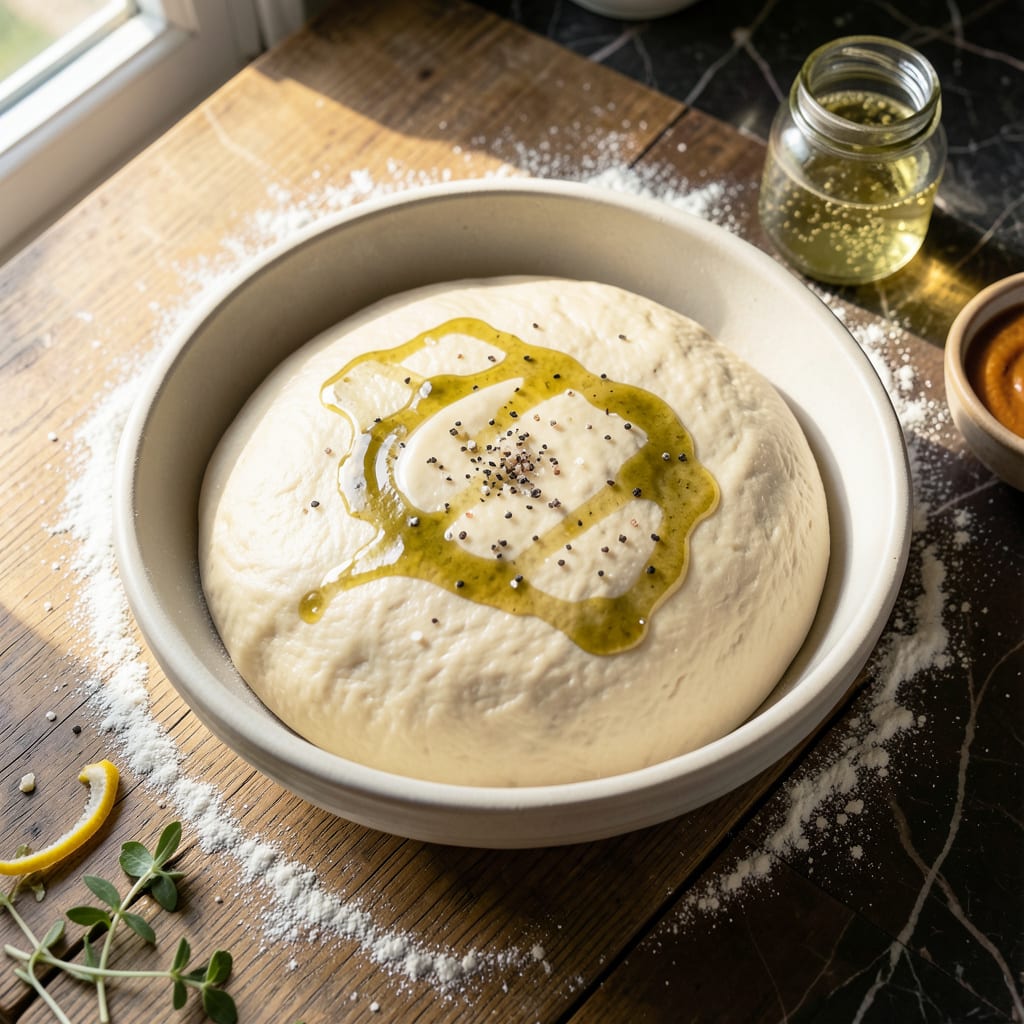
This Neapolitan-style dough delivers the chewy, airy crust that defines authentic Italian pizza. I’ve refined the process to achieve professional results at home with minimal effort.
The key is a slow rise in the refrigerator, which develops complex flavors and creates that signature open crumb structure. With just 5 ingredients and patience, you’ll master the foundation of great pizza.
Ingredients for Stanley Tucci Pizza Dough
Five simple ingredients create that signature Neapolitan chew you love at home.
| Ingredient | Amount | Notes |
|---|---|---|
| Bread Flour 🌾 | 3 ½ cups | High-protein for chewiness |
| Active Dry Yeast 🍞 | ¼ tsp | Instant yeast works too |
| Sea Salt 🧂 | 2 tsp | Fine grain preferred |
| Lukewarm Water 💧 | 1 ½ cups | 105-110°F for activation |
| Extra-Virgin Olive Oil 🫒 | 2 tbsp | For elasticity and flavor |
[recipeingredientscaler]
The flour is non-negotiable here. King Arthur Bread Flour is my go-to—high protein content (12-14%) gives you that perfect chewy bite. Bob’s Red Mill works too if that’s what your store carries. Yeast freshness matters more than brand—check the expiration date (yes, it has one) and store it in the freezer if you won’t use it within a few months. The water temp is everything—too hot kills the yeast, too cold takes forever to proof.
No bread flour? All-purpose in a pinch, but add an extra tablespoon to compensate for the lower protein. Instant yeast can replace active dry at 25% less quantity—no need to bloom it first. Out of olive oil? Any neutral oil works, but you’ll lose that Italian flair. The salt amount seems high, but it’s balanced by the long, slow rise (don’t skip this part).
The dough balls freeze beautifully for up to 3 months—just thaw overnight in the fridge. Fresh dough keeps 2-3 days in the refrigerator, improving with age. Portion into individual balls before storing for easy weekday pizzas.
Why You’ll Love This Recipe
- No-Fuss Mixing: I just dump the bread flour, yeast, and sea salt in a bowl, add lukewarm water and olive oil, and it comes together in minutes.
- That Olive Oil Magic: The extra-virgin olive oil gives it a rich depth you can taste in every bite—way better than store-bought dough.
- Weeknight Hero: Honestly, I make this on Sundays and stash it in the fridge for quick pizzas all week.
- Budget Stretch: Five simple ingredients, and it makes enough for two large pizzas—my wallet thanks me.
Step-by-Step Instructions for Neapolitan-Style Pizza Dough
Here’s my method for achieving that perfect chewy texture with minimal effort.
Step 1: Activate the Yeast in Lukewarm Water
In a large mixing bowl, combine the 0.25 tsp Active Dry Yeast with the 1.5 cups Lukewarm Water. I always test my water temperature first—it should feel just warm to the touch, about 105-110°F. Too hot and you’ll kill the yeast; too cold and it won’t activate properly.
Let this mixture sit for 5-10 minutes until it becomes slightly foamy on top. This visual confirmation tells you the yeast is alive and ready to work. If you don’t see any bubbles after 10 minutes, your yeast might be expired—start over with fresh yeast.
Step 2: Combine Dry Ingredients and Create the Dough
In a separate bowl, whisk together the 3.5 cups Bread Flour and 2 tsp Sea Salt. I prefer fine grain sea salt as it dissolves more evenly in the dough. Bread flour’s higher protein content is what gives this dough its signature chewiness.
Make a well in the center of your dry ingredients and pour in the yeast mixture and 2 tbsp Extra-Virgin Olive Oil. Using a wooden spoon, stir everything together until a shaggy dough forms. The olive oil adds both flavor and elasticity to your final crust.
Step 3: Knead Until Smooth and Elastic
Turn the dough out onto a lightly floured surface. Here’s where you’ll develop the gluten that gives this dough its structure. Knead for 8-10 minutes by hand, pushing the dough away from you with the heel of your hand, then folding it back over itself.
The dough is ready when it’s smooth to the touch and springs back when you press it with your finger. If it’s still sticky, add a little more flour, 1 tablespoon at a time, but be careful not to add too much—you want a slightly tacky dough for the best texture.
Step 4: First Rise Until Doubled in Size
Shape the dough into a ball and place it in a clean, lightly oiled bowl. Cover with a damp kitchen towel or plastic wrap. Let it rise in a warm, draft-free spot for 1.5-2 hours, or until doubled in volume.
I like to turn my oven on to its lowest setting for 2 minutes, then turn it off and place the bowl inside. This creates the perfect warm environment. The dough should look puffy and jiggle slightly when gently shaken.
Step 5: Divide, Shape, and Second Rise
Punch down the risen dough to release the air, then divide it into 4 equal portions (about 8 ounces each) for individual pizzas. Shape each portion into a tight ball by pulling the edges toward the center and pinching them together.
Place the balls on a lightly floured surface, cover again, and let rest for 30-60 minutes. This second rise relaxes the gluten, making the dough easier to stretch. Your dough is now ready to shape, top, and bake into that perfect Neapolitan-style crust.
Pro Tips For Making Stanley Tucci Pizza Dough
- Test the Yeast: I learned this the hard way—always bloom the active dry yeast in the lukewarm water with a pinch of sugar first. If it doesn’t foam after 5-10 minutes, your dough won’t rise.
- Use High-Protein Flour: Bread flour isn’t just a suggestion here; its higher protein content gives the dough that chewy, elastic structure Stanley’s recipe is known for.
- Skip Cold Water: Lukewarm water—around 105-110°F—is non-negotiable. Too hot kills the yeast, too cold slows fermentation, and both ruin the texture.
- Oil the Bowl Well: Coat the rising bowl with about 1 tablespoon of that extra-virgin olive oil before the first rise. It prevents sticking and adds a subtle richness to the crust.
Flavor Customization for This stanley tucci pizza dough
Herb-Infused Crust
Add 1 tbsp dried Italian seasoning or 2 tbsp fresh rosemary to your flour mixture for an aromatic twist. The herbs distribute evenly throughout the dough, infusing every bite with Mediterranean flavor. I love the subtle earthy notes this adds. 🌿
Garlic Lovers’ Version
Mix 3 minced garlic cloves into the water and yeast mixture before combining with dry ingredients. This creates a dough with a gentle garlic undertone that pairs perfectly with tomato-based sauces. The aroma while baking is incredible.
Spicy Kick
Incorporate ½ tsp red pepper flakes or 1 tsp Calabrian chili paste for a spicy dough that adds warmth to your pizza base. The heat subtly builds with each bite, complementing bold toppings like pepperoni or sausage. 🔥
Cheesy Surprise
Fold ½ cup grated Parmesan into the dough during the final kneading stage. This creates little pockets of cheesy goodness within the crust itself. The cheese melts beautifully, adding umami depth to every slice.
Sweet and Savory
Add 1 tbsp honey to the water mixture for a touch of sweetness that balances savory toppings. This works especially well with caramelized onions or prosciutto pizzas. The subtle sweetness enhances the dough’s natural flavor.
Whole Wheat Boost
Replace 1 cup of bread flour with whole wheat flour for a nuttier, heartier crust. The whole wheat adds fiber and a slightly denser texture while maintaining the chewiness. I recommend letting this version rise a bit longer.
Nutrition Facts
Frequently Asked Questions
Can I use all-purpose flour instead of bread flour?
Yes, but add an extra 1 tablespoon to compensate for lower protein. Bread flour’s higher protein creates that signature chew, but all-purpose works in a pinch. The texture will be slightly less elastic.
Why does the dough need a second rise?
The second rise relaxes the gluten, making the dough easier to stretch without tearing. It also enhances flavor development. Skip it, and your crust may be tough or dense.
How long can I refrigerate the dough?
Fresh dough keeps for 2-3 days in the fridge, improving with age. For longer storage, freeze individual balls for up to 3 months. Thaw overnight before using.
What if my yeast doesn’t foam?
If no bubbles appear after 10 minutes, your yeast may be expired. Always check the expiration date and store yeast in the freezer. Start fresh with active yeast for best results.

- BBQ Sausage Recipe Oven: Smoky Depth Without the Grill - September 28, 2026
- BBQ Chicken Bowl Recipe Rice: Smoky Sweetness Over Fluffy Grains - September 28, 2026
- Beef Cutlet Recipe Ideas: Crispy Breaded Patties With Bold Seasonings - September 28, 2026