
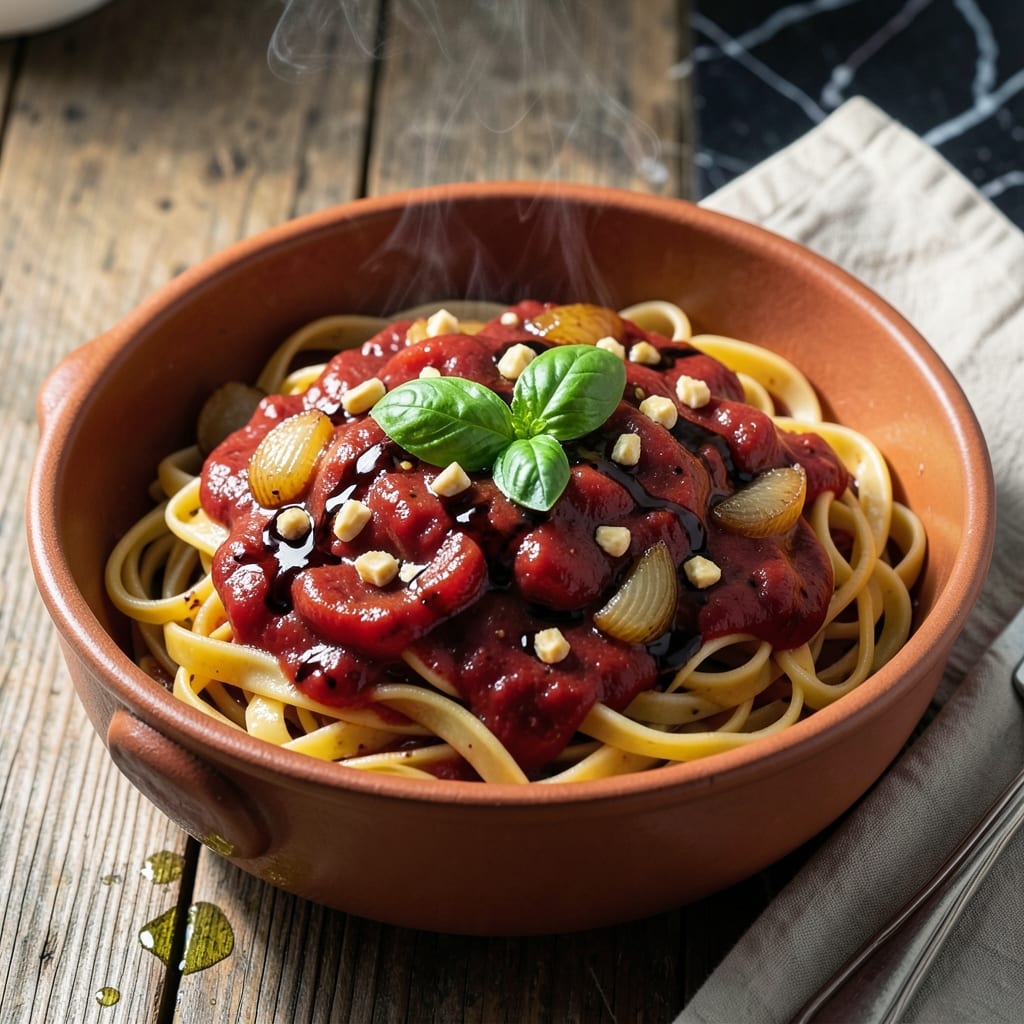
This vegetarian Sunday sauce delivers the same rich, slow-simmered depth as the traditional version, proving meat isn’t required for perfect flavor. The secret lies in building layers through caramelized onions and a long, gentle cook time.
I developed this recipe to honor the Italian tradition while making it accessible for plant-based meals. San Marzano tomatoes form the base, while fresh basil and garlic add aromatic complexity that develops beautifully over 3-4 hours of simmering.
What emerges is a thick, velvety sauce with concentrated tomato flavor and visible herb flecks throughout. The texture is luxurious enough to coat pasta generously, with a balance of sweetness and acidity that sings on its own.
The best part? This sauce freezes beautifully, so you can make a big batch and enjoy that slow-cooked taste whenever the craving strikes.
Ingredients for Sunday Sauce Recipe Without Meat
Rich, layered flavors start with San Marzano tomatoes and fresh herbs for this meatless classic.
| Ingredient | Amount | Notes |
|---|---|---|
| San Marzano Whole Peeled Tomatoes 🍅 | 28 oz | Canned, crushed by hand |
| Yellow Onions 🧅 | 2 whole | Large, thinly sliced for caramelizing |
| Extra-Virgin Olive Oil 🫒 | ½ cup | Divided for sautéing and finishing |
| Garlic Cloves 🧄 | 6 cloves | Minced for depth of flavor |
| Fresh Basil Leaves 🌿 | 1 cup | Loosely packed, torn by hand |
| Dry Red Wine 🍷 | 1 cup | Bold variety like Chianti |
| Tomato Paste 🍅 | 2 tbsp | For concentrated umami richness |
| Vegetable Stock 🥕 | 2 cups | Low-sodium preferred for control |
| Bay Leaves 🍃 | 2 whole | Dried, removed before serving |
| Dried Oregano 🌿 | 1 tsp | Crushed between fingers to release oils |
| Red Pepper Flakes 🌶️ | ½ tsp | Adjust for heat preference |
| Kosher Salt 🧂 | 1 ½ tsp | Diamond Crystal preferred for even seasoning |
| Black Pepper 🌶️ | ½ tsp | Freshly ground for best aroma |
| Granulated Sugar 🧈 | 1 tsp | Balances acidity of tomatoes |
The tomatoes are non-negotiable—San Marzano canned tomatoes from Italy (look for the DOP label) have the perfect sweetness and low acidity this sauce needs. Eataly or Whole Foods carry them, but most supermarkets have them in the international aisle. The onions should be yellow, not white—they caramelize better. I always use Diamond Crystal kosher salt (the flaky kind) because it dissolves evenly and seasons more precisely than table salt.
No wine? Substitute with additional vegetable stock plus 1 tbsp balsamic vinegar for depth. Fresh basil is ideal, but dried basil at one-third the amount works if that’s what’s on hand. If you’re out of tomato paste, simmer down 1/4 cup of the canned tomatoes until thick. The dried oregano can be swapped for fresh at triple the amount, but dried works better for long simmering.
This sauce keeps improving as it sits—store in the fridge for up to 5 days or freeze for 3 months. Portion into containers for easy pasta nights (it freezes flat in ziplock bags too). Always let it cool before refrigerating to preserve texture.
Why You’ll Love This Recipe
- One-Pot Simplicity: I just dump the San Marzano tomatoes, onions, and garlic in with olive oil and let it simmer—no fancy steps.
- Rich Tomato Depth: The sweetness of those whole peeled tomatoes with fresh basil? It’s like summer in a pot.
- Weeknight to Sunday: Honestly, I make this for quick dinners but it still feels special enough for company.
- Budget Stretcher: A few cans of tomatoes and pantry staples feed my family for days, with leftovers that taste even better.
Step-by-Step Instructions for Sunday Sauce Without Meat
Here’s the method I’ve perfected for a rich, deeply flavored tomato sauce.
Step 1: Build the Flavor Base with Onions and Tomato Paste
Heat ¼ cup of the Extra-Virgin Olive Oil in a heavy pot over medium-low heat. Add the thinly sliced Yellow Onions and cook for 15-20 minutes, stirring occasionally, until they turn deep golden brown and begin to caramelize.
Stir in the 2 tbsp Tomato Paste and cook for 2-3 minutes, which deepens its color to a rusty red. This step is crucial—it removes the raw taste and builds a concentrated umami foundation for the sauce.
Step 2: Bloom Aromatics and Deglaze with Wine
Add the minced 6 cloves Garlic Cloves, 1 tsp Dried Oregano (crushed between your fingers), 0.5 tsp Red Pepper Flakes, 1.5 tsp Kosher Salt, and 0.5 tsp Black Pepper. Cook for 1 minute until the garlic is fragrant but not browned.
Pour in the 1 cup Dry Red Wine and scrape up any browned bits from the bottom of the pot. Simmer for 5 minutes until the wine reduces by half. The liquid should look syrupy and smell richly aromatic.
Step 3: Simmer Tomatoes and Stock to Perfection
Add the 28 oz San Marzano Whole Peeled Tomatoes (crushed by hand), 2 cups Vegetable Stock, 2 whole Bay Leaves, and 1 tsp Granulated Sugar. Stir well and bring to a gentle simmer.
Reduce heat to low and let it cook uncovered for 1.5-2 hours, stirring occasionally. The sauce should reduce by about a third and develop a thick, velvety texture. The tomatoes will break down completely, and the flavors will meld into a harmonious richness.
Step 4: Finish with Basil and Olive Oil
Remove the Bay Leaves and discard. Stir in the torn 1 cup Fresh Basil Leaves and the remaining ¼ cup Extra-Virgin Olive Oil. Cook for an additional 5 minutes to allow the basil to infuse its aroma.
The sauce should now have a glossy finish and a deep, complex flavor. Taste and adjust seasoning if needed, though the balance of sweetness from the caramelized onions, acidity from the tomatoes, and richness from the olive oil should be just right.
Pro Tips For Making Sunday Sauce Recipe Without Meat
- Simmer Low and Slow: Keep the heat on low—just a gentle bubble—to let the San Marzano tomatoes break down and the flavors meld over at least 2 hours. I learned the hard way that rushing it with high heat just burns the onions and leaves the sauce tasting raw.
- Crush the Tomatoes: Use your hands to crush the whole peeled tomatoes as you add them to the pot. Sounds messy, but it actually changes the outcome by releasing more juices and creating a chunkier, more rustic texture.
- Skip the Garlic Press: Leave the garlic cloves whole and smash them lightly with the side of your knife instead. This prevents the garlic from turning bitter while still infusing the olive oil with its flavor.
- Add Basil Last: Stir in the fresh basil leaves during the last 10 minutes of cooking—any sooner and they’ll turn dark and lose their bright, sweet aroma. My grandmother swore by this, and she was right.
Wine and Beer Pairings for This Recipe
Italian Wine Pairings
This sauce was made for Italian reds. A bold Chianti Classico with its bright acidity and cherry notes cuts through the richness beautifully. I love Banfi Chianti Superiore—it’s affordable and widely available. 🍷
For a lighter option, Sangiovese from Tuscany offers similar acidity with red fruit flavors that complement the tomatoes. Look for Ruffino Aziano at your local store.
White Wine Options
If you prefer white, go for a full-bodied Vermentino from Sardinia. Its citrusy brightness and mineral notes refresh your palate between bites. Argiolas Costamolino is my go-to for under $20.
A crisp Pinot Grigio from Friuli works too, especially if you’re serving this sauce with seafood pasta. The Livon Pinot Grigio has the perfect balance of acidity and fruit.
Beer Pairings
Italian lagers like Peroni or Moretti are classic choices—their crisp, clean profile won’t compete with the sauce’s flavors. The effervescence helps cleanse your palate. 🍺
For craft beer fans, a Belgian-style witbier with citrus and coriander notes provides interesting contrast. Allagash White is an excellent domestic option.
Nutrition Facts
Frequently Asked Questions
Can I use fresh tomatoes instead of canned?
Yes, but use 8-10 lbs of ripe Roma tomatoes, peeled and crushed. Simmer longer as fresh tomatoes release more water. The flavor will be brighter but less concentrated than canned San Marzano.
How do I make this sauce richer without meat?
Add 1 cup of puréed roasted mushrooms or a parmesan rind while simmering. Both add deep umami without overpowering the tomato base. Remove the rind before serving.
Can I make this in a slow cooker?
Sauté onions and tomato paste first, then transfer to the slow cooker with remaining ingredients. Cook on low for 6-8 hours for best results.
Why did my sauce turn out watery?
Likely not simmered long enough. Uncover and cook at a gentle bubble for the full 1.5-2 hours. If still thin, remove the lid and simmer an additional 30 minutes.

- Recipe With Almond Flour: Gluten-Free Baking Made Simple - September 28, 2026
- Recipe for Mixed Vegetables: Colorful Medley With Bright Flavors - September 28, 2026
- Smothered Cabbage Recipe Louisiana: Cajun-Spiced Slow-Cooked Comfort - September 28, 2026