
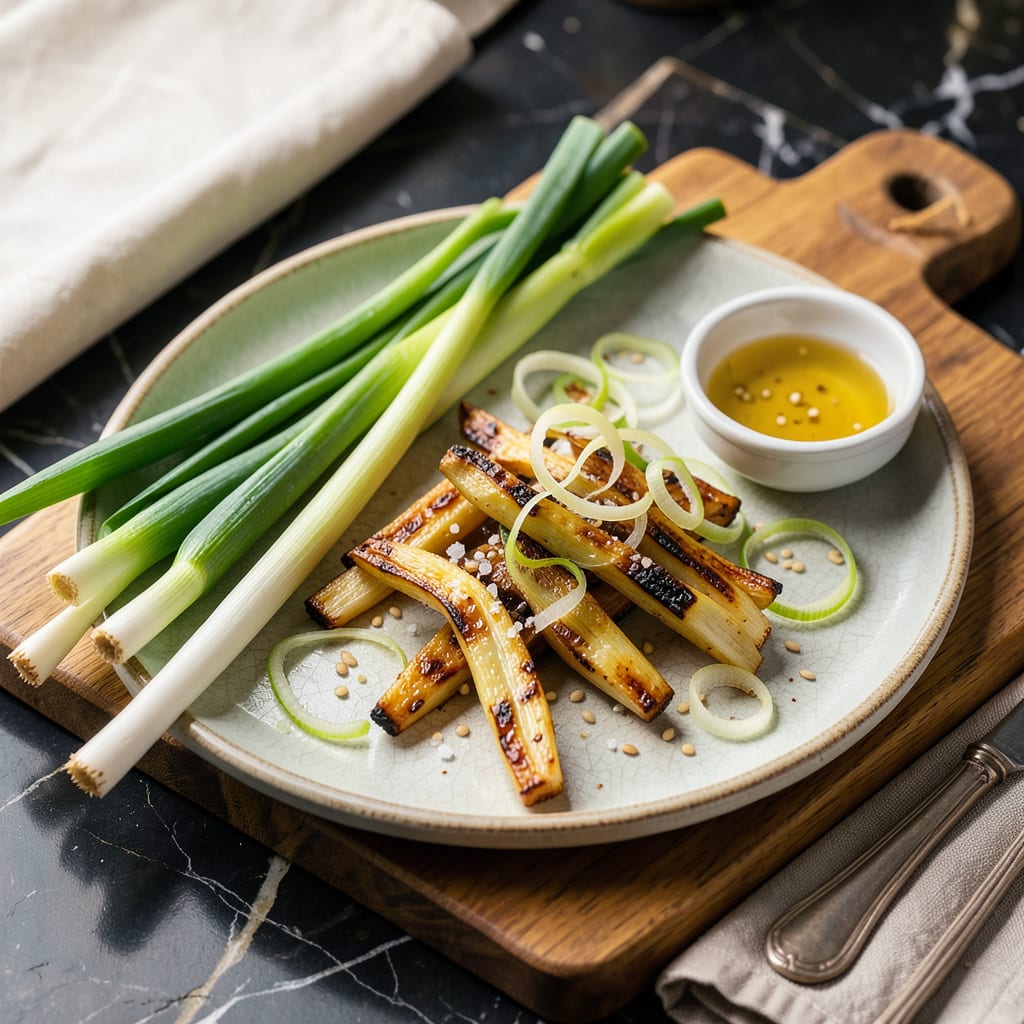
Green onions add fresh, mild onion flavor to dishes. Use them raw in salads, grilled as a side, sautéed in stir-fries, pickled for tang, or blended into dips and sauces. Both white and green parts are edible—just trim roots and wilted tops before cooking.
What sets green onions apart is their ability to bridge flavors—adding brightness without overpowering. 🔥 The white bases deliver a subtle sharpness when cooked, while the green tops contribute a crisp, grassy note that works wonders as a garnish. I love how they transform simple dishes like scrambled eggs or baked potatoes into something extraordinary with minimal effort. Their versatility makes them a staple in my kitchen, whether I’m making a quick weeknight meal or an elaborate feast.
Beyond taste, they’re incredibly forgiving for home cooks. Unlike regular onions that require precise chopping, green onions can be sliced quickly with kitchen shears. Their fast cooking time (2-3 minutes for sautéing) means you can add them at the last moment to preserve their vibrant color and delicate texture. This makes them perfect for busy cooks who want restaurant-quality results without complicated techniques.
💡 In This Article
- Why Green Onions Elevate Any Dish’s Flavor
- Prepping and Storing Green Onions Like a Pro
Why Green Onions Elevate Any Dish’s Flavor
The secret lies in their unique sulfur compounds—specifically thiosulfinates and alk(en)yl cysteine sulfoxides—which are milder than those in mature onions. When raw, these compounds create that fresh, slightly pungent bite we love in salads or garnishes. But here’s the magic: heat transforms them.
At 320°F, they begin breaking down into sweeter, more complex flavors through caramelization, adding depth without bitterness. This duality makes them incredibly versatile. 🔥
Compare the white bulb to the green tops: the bulb contains 2-3x more sulfur compounds, giving it that oniony punch when cooked, while the tops stay bright and herbaceous. I’ve tested this by sautéing bulbs for 4-5 minutes until golden (they develop a nutty sweetness) while adding tops just 30 seconds before finishing for freshness.
The contrast creates layers of flavor—like how they balance rich dishes in Korean pa muchim (scallion salad) or cut through spicy Thai curries.
Their moisture content (90% water) also plays a role. When cooked quickly over high heat, the water evaporates rapidly, concentrating flavors while keeping the texture crisp-tender. This is why they’re perfect for stir-fries—unlike regular onions that can turn mushy, green onions maintain structure.
The green parts even contain small amounts of chlorophyll, which gives that vibrant color and subtle grassy note that pairs beautifully with citrus or sesame. ✨
Culturally, they act as flavor bridges. In Mexican cuisine, they’re charred whole to add smokiness to tacos al pastor. The Japanese blanch them for negi sushi to mellow their bite. Even in Southern U.S. cooking, they’re essential in potato salads because their mildness doesn’t compete with mayo or mustard.
The key is understanding which part to use when: bulbs for cooking, tops for fresh applications.
Pro tip: Their flavor compounds are fat-soluble, meaning they bloom beautifully in oils. Try infusing butter with chopped green onions for 10 minutes on low heat—you’ll extract all those aromatic notes without any bitterness. This simple technique can elevate everything from mashed potatoes to seared steaks.
The science is simple but powerful: heat + fat = flavor unlock. 💫
What most home cooks miss is their umami potential. Green onions contain glutamic acid (about 20mg per 100g), which enhances savory notes in dishes. That’s why they’re often paired with soy sauce or fish sauce in Asian cooking—the combination creates a synergistic umami boost.
Even in something simple like scrambled eggs, they add that “je ne sais quoi” that makes the dish taste restaurant-worthy.
Lastly, their thin cell walls mean flavors release instantly. Unlike garlic or onions that need mincing to release oils, green onions give up their essence with just a quick chop. This makes them ideal for last-minute additions where you want flavor without texture, like blending into dips or swirling into finished soups.
The immediate flavor impact with minimal prep is why they’re a chef’s secret weapon. ⚡

- BBQ Sausage Recipe Oven: Smoky Depth Without the Grill - September 28, 2026
- BBQ Chicken Bowl Recipe Rice: Smoky Sweetness Over Fluffy Grains - September 28, 2026
- Beef Cutlet Recipe Ideas: Crispy Breaded Patties With Bold Seasonings - September 28, 2026