
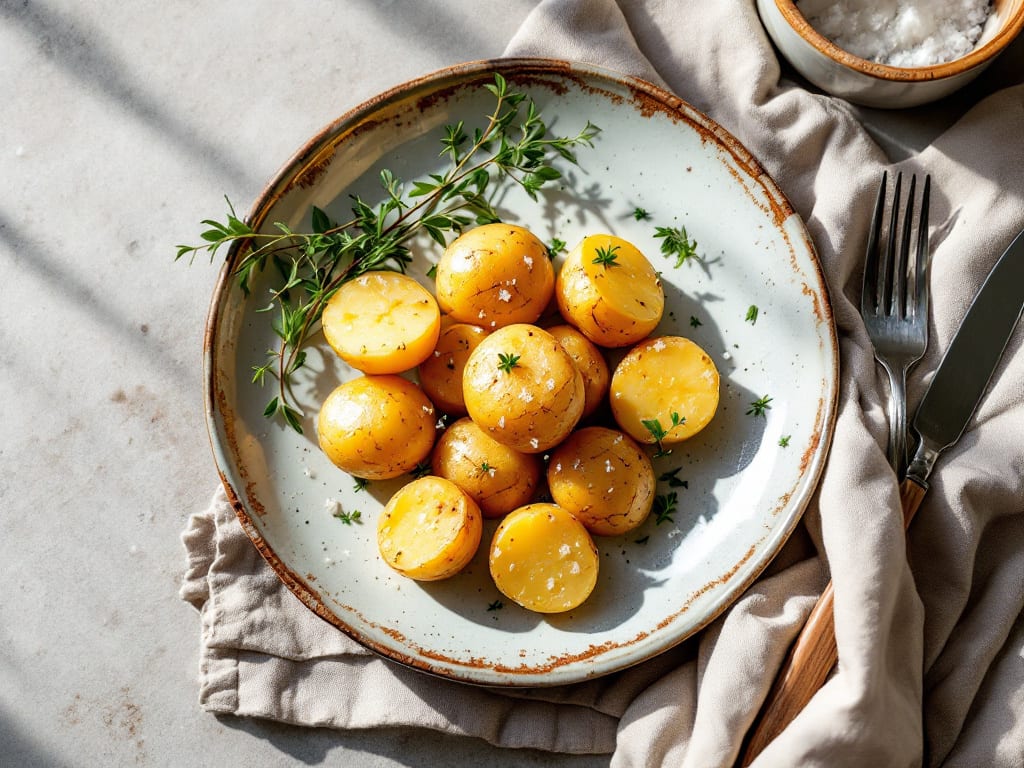
Mastering Syracuse salt potatoes transforms a simple side dish into a crispy, flavor-packed centerpiece that steals every meal. This recipe delivers celery-topped twists with a shatteringly crisp exterior and tender interior, all thanks to the signature Syracuse salt blend that adds depth without overpowering.
I developed this method after years of perfecting the balance between texture and flavor—no more soggy, flavorless potatoes here.
The secret lies in roasting at 425°F for 30-40 minutes, where the potatoes develop that coveted crunchy crust while staying perfectly tender inside. Syracuse salt isn’t just a seasoning—it’s the backbone of this dish, delivering a bold, slightly briny kick that pairs beautifully with the fresh celery topping.
The technique is straightforward but yields restaurant-quality results every time.
By the end, you’ll have golden, celery-speared potatoes with crisp edges and fluffy centers, ready to elevate any meal from ordinary to extraordinary. The Syracuse salt creates a complex, savory profile that stands up to rich main dishes while adding a touch of sophistication.
This isn’t just a side—it’s the star of the plate.
Serve alongside grilled meats, roasted chicken, or even as a standalone appetizer with a dollop of sour cream or a sprinkle of fresh parsley. The possibilities are endless, but the method remains foolproof—so let’s get cooking and bring that Syracuse flavor to your table.
Ingredients for syracuse salt potatoes
The backbone of Syracuse salt potatoes: russets, celery, and the signature coarse salt blend.
| Ingredient | Amount | Notes |
|---|---|---|
| Russet Potatoes 🥔 | 2 lbs | Large size, cut into 1-inch sticks |
| Syracuse Salt 🧂 | ½ cup | Coarse grind, premium quality |
| Fresh Celery Stalks 🥬 | 1 bunch | Thinly sliced into ribbons |
| Extra-Virgin Olive Oil 🫒 | ¼ cup | Light variety for crispiness |
| Fresh Parsley 🌿 | ¼ cup | Chopped, for garnish |
| Fresh Rosemary 🌿 | ½ oz | Finely chopped, organic preferred |
| Fresh Thyme 🌿 | ½ oz | Finely chopped, organic preferred |
| Garlic Cloves 🧄 | 4 cloves | Minced, fresh preferred |
| Black Peppercorns 🌶️ | 1 tsp | Freshly cracked, coarse grind |
| Unsalted Butter 🧈 | 2 tbsp | Cold, cubed for finishing |
| Sour Cream 🥛 | ¼ cup | Full-fat, for serving |
The russet potatoes are non-negotiable—their high starch content delivers that coveted crispy crust. Idahoan russets from Costco or Whole Foods provide the best texture, but any russet will work if it’s firm and free of blemishes. Cut them into even 1-inch sticks for consistent roasting. Syracuse salt isn’t just any seasoning—it’s the coarse, mineral-rich blend that creates that signature briny depth. Penzeys Spices carries the authentic version, but the Diamond Crystal coarse salt works in a pinch if you’re in a hurry. The celery should be crisp and vibrant—organic celery from Trader Joe’s is my go-to for that fresh, bright flavor that pairs perfectly with the salt’s boldness.
No Syracuse salt? Coarse sea salt plus a pinch of smoked paprika mimics the complexity, though it won’t be identical. Fresh herbs are ideal, but dried rosemary and thyme at half the amount work if you’re short on time. The olive oil should be light and fruity—California Early Harvest from Whole Foods is my top pick for its neutral profile that won’t overpower the potatoes. For the garlic, freshly minced is essential—jarred minced garlic lacks the aromatic punch. The black pepper should be freshly cracked; pre-ground loses its intensity quickly. If you’re serving this as an appetizer, consider adding a sprinkle of flaky sea salt like Maldon on top for an extra layer of sophistication.
Roasted potatoes keep their best texture for 2-3 days in the fridge, though they lose crispiness after the first day. Reheat in a 350°F oven for 10-15 minutes to restore that golden crunch. For meal prep, roast an extra batch and freeze the unseasoned potatoes before adding the Syracuse salt—this preserves their texture for up to 3 months. The celery topping should be added fresh just before serving to maintain its vibrant color and crisp texture. Store any leftover sour cream in an airtight container in the fridge, where it’ll keep for up to 2 weeks. The herbs can be chopped ahead and stored in the fridge for 3-4 days, though their flavor will be most potent when used immediately.
Why You’ll Love This Recipe
- One-Pan Magic: I swear by this for nights when I’d rather not wash a million dishes. Toss the chopped potatoes and celery on a sheet pan, drizzle with olive oil, sprinkle Syracuse Salt—boom—40 minutes later, you’re done. Not the prettiest, but the taste makes up for it.
- Umami Bomb: That Syracuse Salt isn’t just salt—it’s a flavor explosion. The celery adds a bright crunch, the olive oil keeps it silky, and the parsley ties it all together. Honestly, it’s the kind of dish where the first bite makes you go, “Why didn’t I do this sooner?”
- Game for Any Meal: I’ve served these as a side for steak, a light lunch with a salad, and even as a snack when I’m too tired to cook. The leftovers? Still delicious cold the next day—perfect for packed lunches or a quick breakfast hash.
- Budget-Friendly Crunch: Russets and celery are cheap, and a little Syracuse Salt goes a long way. Between us, this is my go-to when I’m trying to stretch groceries without sacrificing flavor. Plus, it’s one of those dishes where the simpler the ingredients, the better they shine.
Step-by-step instructions for Syracuse salt potatoes with celery topping
Master this technique for restaurant-quality crispy potatoes with aromatic herb crusts.
Prepare and Season the Potato Twists
Cut the 2 lbs russet potatoes into 1-inch sticks, ensuring even thickness for consistent cooking. Soak them in cold water for 15 minutes to remove excess starch, then drain thoroughly and pat dry with paper towels. This step prevents sogginess and promotes crispiness.
In a large bowl, combine the potato sticks with the 0.5 cup syracuse salt, 0.5 oz fresh rosemary, 0.5 oz fresh thyme, 1 tsp freshly cracked black peppercorns, and 4 minced garlic cloves. Toss gently but thoroughly to coat every surface of the potatoes with the seasoning mixture. Let them rest for 10 minutes at room temperature while you prepare the next components. This allows the salt and herbs to penetrate slightly, enhancing flavor development.
Create the Celery Herb Oil Mixture
In a separate bowl, combine the 0.25 cup extra-virgin olive oil with the 1 bunch fresh celery stalks (thinly sliced into ribbons) and the 0.25 cup chopped fresh parsley. Let this mixture sit for 5 minutes to allow the celery to soften slightly and release its aromatic oils into the oil. This infusion creates a vibrant, herbaceous flavor base that will elevate the potatoes.
After the 5-minute infusion, transfer the potatoes to a large baking sheet lined with parchment paper. Arrange them in a single layer without overlapping, leaving about 1-inch between each piece. This spacing ensures even browning and crisping during cooking. Pour the celery-herb oil mixture evenly over the potatoes, tossing gently to coat them completely. The oil should glisten on the surface, indicating proper distribution.
Develop the Crispy Crust
Preheat your oven to 425°F. Spread the seasoned potatoes evenly on the baking sheet, maintaining the single-layer arrangement. Bake for 25 minutes, then carefully flip each potato twist using tongs to ensure even browning on all sides. Return to the oven and bake for an additional 15 minutes until the edges are deep golden brown and the potatoes feel tender when pierced with a fork.
During the final 5 minutes of baking, watch closely for color development. The syracuse salt should create a textured, caramelized crust that contrasts beautifully with the tender interior. Remove from the oven and transfer to a serving platter while still hot. The residual heat will continue to crisp the exterior as they rest.
Finish with Butter and Sour Cream
While the potatoes are still warm, sprinkle the 2 tbsp cold unsalted butter evenly over the top. Use a fork to gently toss the potatoes, allowing the butter to melt and create a glossy finish. This step adds richness and helps create the signature “crust magic” that makes these potatoes exceptional.
Serve immediately with the 0.25 cup sour cream on the side for dipping. The contrast between the crispy, herbed exterior and the creamy sour cream creates a perfect balance of textures and temperatures. Each bite should deliver a satisfying crunch followed by tender potato and aromatic herb notes.
Pro Tips For Making Syracuse Salt Potatoes
- CUT POTATOES UNIFORM: Use a mandoline or sharp knife to slice potatoes into even ¼-inch rounds—no thicker, no thinner. I learned this the hard way after one batch cooked unevenly, leaving some mushy and others raw. Syracuse Salt needs consistent contact with all surfaces to work its magic.
- SALT BEFORE HEATING: Toss potatoes with Syracuse Salt before adding olive oil—let them sit for 5 minutes. This gives the salt time to draw out starches, which caramelizes beautifully when hit with oil. Skip this, and you’ll end up with bland, greasy potatoes instead of crispy, flavor-packed ones.
- DRAIN TWICE, CRISP ONCE: After frying, drain potatoes on a wire rack (not paper towels) for 2 minutes—this keeps them crisp. Then, hit them with a quick blast of fresh parsley and a drizzle of olive oil while still hot. The parsley wilts into the cracks, adding freshness without sogging them.
- CELERY ISN’T JUST GARNISH: Finely dice celery (1/8-inch pieces) and toss it into the oil before adding potatoes. It infuses flavor while frying, not just as a post-cook sprinkle. I was skeptical until I tried it—now it’s non-negotiable for depth.
Perfect pairings for this recipe
Classic Pairings
These Syracuse salt potatoes shine alongside grilled steaks—especially a ribeye or New York strip—where the salt’s briny depth complements the meat’s richness. I always serve them with a red wine reduction drizzled over both, creating a cohesive flavor bridge.
For poultry lovers, pair with herb-roasted chicken thighs at 400°F for 45 minutes, basted with melted unsalted butter and fresh rosemary. 🍖
Unexpected Complements
Try them with smoked salmon for a surprisingly elegant brunch—top the potatoes with crème fraîche, dill, and lemon zest to balance the salt’s intensity. The celery topping adds a refreshing crunch that cuts through the salmon’s fat.
For seafood lovers, pair with garlic butter shrimp sautéed in 2 tbsp olive oil with 3 minced garlic cloves and a splash of white wine. 🦞
Vegetarian Pairings
Elevate a mushroom risotto with these potatoes on the side—their crispy crust contrasts beautifully with the creamy risotto’s texture. I use wild mushrooms sautéed in garlic-infused olive oil with thyme and white wine, then finished with Parmigiano-Reggiano.
For a lighter option, pair with a goat cheese salad featuring arugula, pomegranate seeds, and a balsamic glaze. 🥗
Beverage Pairings
A dry Riesling from Germany cuts through the potatoes’ richness with its crisp acidity and citrus notes—look for Dr. Loosen Blue Slate. For beer lovers, a Belgian witbier like Stella Artois’ Wit brings refreshing coriander and citrus that cleanses the palate.
Avoid heavy malty beers that overpower the delicate herb and salt flavors. 🍷
Garnish Upgrades
Add a sprinkle of flaky Maldon salt before serving to enhance the Syracuse salt’s texture. A drizzle of chili oil (like La Choy) adds heat without overpowering, while toasted pine nuts provide a nutty crunch. For a smoky twist, finish with crumbled bacon or smoked paprika. 🌶️
Meal Prep Pairings
Roast an extra batch and store in the fridge for up to 3 days—they reheat beautifully in a 375°F oven for 10 minutes with a splash of water. Pair with pre-cooked grilled chicken or roasted Brussels sprouts for a balanced meal.
For a complete freezer meal, combine with beef stew or vegetable curry—just add the potatoes fresh from the oven when ready to serve. ❄️
Nutrition facts
Frequently asked questions
Why do these potatoes need to soak before roasting?
Soaking the potatoes for 15 minutes removes excess surface starch, which prevents them from sticking together and promotes that perfect crispy crust. The Syracuse salt works best when it can cling directly to the potato surface rather than competing with starch for adhesion.
Can I use regular table salt instead of Syracuse salt?
While table salt will work in a pinch, it lacks the coarse texture and mineral depth of Syracuse salt. For best results, use coarse sea salt plus a pinch of smoked paprika to mimic the complexity. The celery topping helps balance any flavor differences.
How do I fix potatoes that turn out soggy instead of crispy?
Soggy potatoes usually mean the oven wasn’t hot enough or they were overcrowded. Next time, preheat to 425°F, arrange potatoes in a single layer with space between them, and flip them halfway through baking. For extra crispiness, broil for 2 minutes at the end.
What’s the best way to reheat these potatoes?
Reheat in a 375°F oven for 10-15 minutes on a wire rack to restore crispiness. Add a splash of water to the pan for steam, then broil for 2 minutes at the end. Microwaving will make them rubbery—avoid this method entirely.
Can I make this recipe ahead of time?
Roast potatoes up to 2 days ahead and store in the fridge. Reheat as directed above. For meal prep, roast without the Syracuse salt, then season just before serving to maintain maximum flavor. The celery topping should be added fresh before eating.

- Broccili Salad Recipe: Crunchy, Creamy, and Crowd-Pleasing - November 29, 2026
- Rum Simple Syrup Recipe: Balanced Sweetness for Cocktails and Desserts - November 29, 2026
- Avocado Cloud Bread Recipe: Light, Fluffy, and Egg-Free Magic - November 29, 2026