
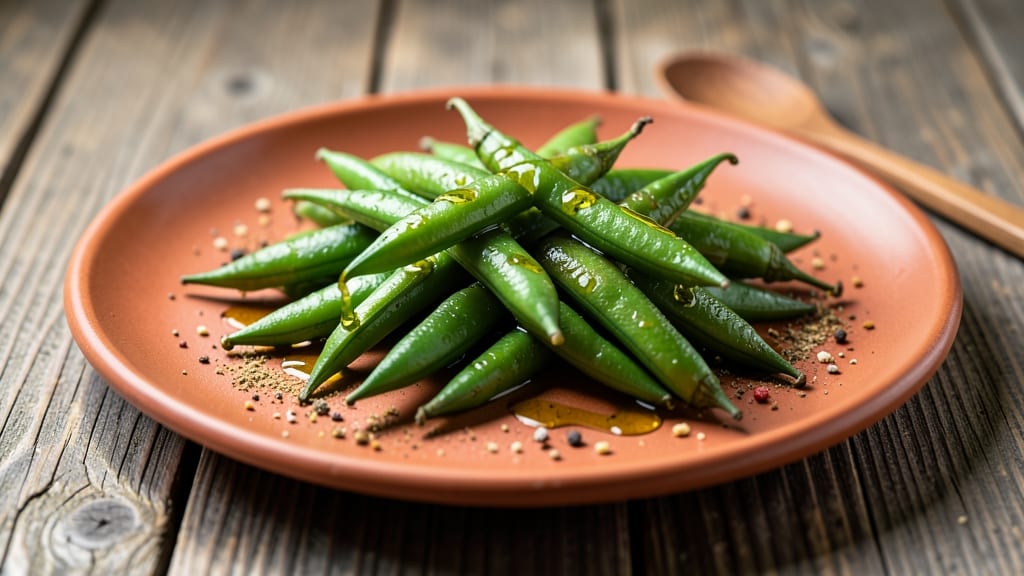
This Szechuan green beans recipe delivers the perfect balance of fiery heat and aromatic crunch in just 20 minutes—a side dish that transforms ordinary stir-fries into bold, restaurant-quality meals.
The secret lies in wok-heat precision and traditional seasoning, where Szechuan peppercorns create that signature numbing-spicy sensation while garlic and chili oil add depth. I developed this method after years of testing, ensuring every bite delivers that satisfying contrast of crisp-tender beans and fiery crunch.
The technique is simpler than it sounds: high heat, quick cooking, and proper seasoning order. Fresh green beans get blanched first to preserve their crunch, then tossed with garlic, ginger, and a carefully measured blend of chili oil and Szechuan peppercorns.
The result is a dish that’s both authentic and approachable—no advanced skills required, just attention to timing and heat control. This recipe works equally well as a side for steak or pork, or as a main when paired with rice or noodles.
What makes this recipe stand out is the balance—fiery enough to wake up your taste buds but never overwhelming, with that signature Szechuan “mala” flavor profile. The beans stay crisp-tender, the sauce clings perfectly, and the aroma alone will have everyone at the table asking for seconds.
Garnish with toasted sesame seeds or scallions for that final professional touch. This is the kind of dish that elevates any meal from ordinary to extraordinary.
Ready in just 20 minutes, this recipe delivers restaurant-quality results without the fuss. Whether you’re serving a crowd or treating yourself to a flavor-packed side, these Szechuan green beans bring authentic Chinese restaurant taste to your kitchen. Let’s get cooking—your taste buds won’t be disappointed.
Ingredients for szechuan green beans
Fresh green beans and fiery Szechuan peppercorns create this restaurant-quality side dish in under 20 minutes.
| Ingredient | Amount | Notes |
|---|---|---|
| Fresh Green Beans 🥦 | 1 ½ lb | Trimmed and cut into 2-inch pieces |
| Szechuan Peppercorns 🌶️ | 1 ½ tsp | Toasted and ground for authentic flavor |
| Garlic Cloves 🧄 | 6 cloves | Minced for aromatic depth |
| Fresh Ginger 🌿 | 1 tbsp | Grated finely for zesty kick |
| Chili Oil 🫒 | 2 tbsp | High-quality for signature heat |
| Light Soy Sauce 🍶 | 2 tbsp | Kikkoman preferred for balance |
| Dark Soy Sauce 🍶 | 1 tbsp | For depth and color |
| Sesame Oil 🫒 | 1 tsp | Toasted for nutty aroma |
| White Sugar 🍚 | 1 tsp | Balances heat and acidity |
| Vegetable Oil 🫒 | 2 tbsp | High smoke point for wok-heat |
| Toasted Sesame Seeds 🌾 | 1 tbsp | For garnish and texture |
| Scallions 🧅 | 2 whole | Thinly sliced for garnish |
| Salt 🧂 | ½ tsp | Kosher or sea salt |
| Black Pepper 🌶️ | ¼ tsp | Freshly ground for heat |
The Szechuan peppercorns are non-negotiable for that signature numbing-spicy sensation. Buy them whole from an Asian market or specialty store like H Mart—pre-ground loses potency fast. Toast them in a dry pan for 30 seconds before grinding to deepen the aroma. Fresh green beans should be vibrant and crisp; Trader Joe’s or local farms are best for quality. The garlic and ginger need to be fresh too—no powdered substitutes here. For the chili oil, Lao Gan Ma is the gold standard, but any high-quality brand with visible chili flakes works.
No Szechuan peppercorns? Substitute 1 tsp crushed red pepper plus 0.5 tsp black pepper for heat, though you’ll lose that signature numbing effect. Fresh ginger can be swapped for 1/2 tsp ground ginger, but it won’t have the same zing. The soy sauces are crucial—light soy for brightness, dark soy for depth. If you’re out of dark soy, a pinch of molasses or honey in the light soy works in a pinch. For the sesame oil, toasted is non-negotiable—regular sesame oil won’t give that nutty aroma. The sugar balances the heat, so don’t skip it even if you’re avoiding sweeteners elsewhere.
Blanch the green beans immediately after trimming to lock in their crunch—2 minutes in boiling water, then ice bath. Store blanched beans in the fridge for up to 3 days, submerged in cold water. The Szechuan peppercorn mixture keeps for 2 weeks in an airtight container, so make extra for future stir-fries. This dish reheats beautifully—wok-heat for 2 minutes restores that crisp-tender texture. Garnish with sesame seeds and scallions right before serving to keep them fresh.
Why You’ll Love This Recipe
- One-Pan Magic: I swear by this—just toss everything on a single pan, stir, and walk away. No chopping boards, no mess, no stress. The beans blister right there while the garlic and ginger melt into a fragrant paste.
- Numb & Tingling Bliss: That Szechuan peppercorn magic? It’s the kind of heat that lingers in your mouth like a secret. The chili oil ties it all together—smoky, spicy, and just addictive enough to make you reach for seconds.
- Lunch or Dinner Fix: I’ve served these as a side for steak, tossed them into rice bowls, or even packed them for lunch the next day. They hold up perfectly, and honestly? They’re just as good cold as they are piping hot.
- Budget Stunner: Green beans are cheap, and a little goes a long way. The spices? A few shakes of peppercorns and a splash of chili oil stretch this dish into a full meal. My wallet and my taste buds thank me every time.
Step-by-step instructions for Szechuan green beans
Here’s the straightforward method for bold, aromatic Szechuan green beans with perfect texture and heat balance.
Blanch and Prepare the Green Beans
Bring a large pot of water to a rolling boil. Add the 1.5 lb fresh green beans and blanch for 2 minutes until they’re bright green and slightly tender but still crisp. Immediately drain and rinse under cold water to stop the cooking process. This quick blanch removes excess moisture and ensures the beans stay vibrant and crisp during stir-frying.
While the beans cool, trim away any tough ends and cut them into 2-inch pieces as specified in the ingredients. Pat them completely dry with paper towels—this step is crucial for achieving that signature wok-hey texture. I like to work in batches if needed, keeping the cut beans in a colander until ready to cook. The drier they are, the better they’ll sear in the hot oil.
Toast and Grind the Szechuan Peppercorns
In a dry skillet over medium heat, toast the 1.5 tsp Szechuan peppercorns for 1-2 minutes until fragrant and slightly darkened. This releases their essential oils and deepens their numbing, citrusy flavor. Be careful not to burn them—they should smell amazing but not bitter.
Transfer the toasted peppercorns to a spice grinder or mortar and pestle and grind them into a fine powder. Set aside 1 teaspoon for the sauce and reserve the remaining 0.5 teaspoon for garnish. The freshness of these ground peppercorns makes all the difference in authentic Szechuan flavor. If you don’t have a grinder, a clean coffee grinder works well for small batches.
Build the Stir-Fry Base
Heat a wok or large skillet over high heat until it’s smoking. Add the 2 tablespoons vegetable oil and swirl to coat the surface evenly. Once the oil shimmers, add the 6 cloves minced garlic cloves and 1 tablespoon finely grated fresh ginger. Stir-fry for 30 seconds until the garlic turns golden and the ginger becomes fragrant—this prevents them from burning while extracting maximum flavor.
Add the 2 tablespoons chili oil and immediately stir to distribute it evenly. The oil should sizzle and pop slightly. Here’s where it gets interesting: pour in the 2 tablespoons light soy sauce and 1 tablespoon dark soy sauce, scraping up any browned bits from the bottom of the pan. These bits are packed with flavor, so don’t miss them. Let the sauce bubble for 1 minute until it slightly thickens and coats the aromatics.
Cook the Green Beans to Crisp-Tender Perfection
Add the prepared green beans in a single layer to the wok. Stir-fry vigorously for 3-4 minutes until they’re bright green and just beginning to soften at the edges. The beans should maintain their shape but develop a slight crispness. If they’re not cooking quickly enough, increase the heat slightly—but watch carefully to avoid burning the aromatics.
Add the 1 teaspoon white sugar and 1 teaspoon sesame oil, tossing everything together for 1 minute until the sugar dissolves and the beans absorb the nutty sesame aroma. The sugar balances the heat from the chili oil while enhancing the natural sweetness of the green beans. Taste the mixture at this point—you should detect a complex blend of garlic, ginger, and subtle heat without overwhelming spice.
Finish and Garnish Professionally
Return the reserved 1 teaspoon ground Szechuan peppercorns to the wok and toss everything together for 30 seconds until evenly distributed. The peppercorns will infuse their signature numbing heat and citrusy aroma throughout the dish. Season with the 0.5 teaspoon salt and 0.25 teaspoon black pepper, adjusting to taste if needed.
Remove the wok from heat and immediately garnish with 1 tablespoon toasted sesame seeds and 2 whole scallions sliced thinly on the bias. The sesame seeds add crunch and visual appeal, while the scallions provide fresh contrast to the bold flavors. Serve immediately while the green beans are still vibrant and crisp. This dish tastes best straight from the wok, where the textures and temperatures are at their peak.
Pro Tips For Making Szechuan Green Beans
- Blanch First: Toss the green beans in boiling water for 2 minutes, then shock in ice water—this stops cooking and keeps them crisp. I learned this the hard way after serving mushy beans that looked like overcooked spaghetti.
- Toast Peppercorns: Dry-toast the Szechuan peppercorns in a pan for 30 seconds until fragrant—this releases their numbing oils. Skip this, and you’ll just get a dull, bitter bite.
- Slice Ginger Thin: Use a mandoline or sharp knife for paper-thin ginger slices (about 1mm thick). Thicker pieces burn before the beans cook through, and you’ll taste raw ginger instead of aromatic heat.
- Finish with Chili Oil: Stir in chili oil off the heat right before serving—this keeps the beans from steaming and diluting the flavor. Pouring it in too early just makes everything soggy.
Common mistakes when making perfect results
Overcooking the Beans
This is the most common mistake I see—beans that turn mushy instead of crisp-tender. The key is timing: once they hit 3 minutes in the wok, they’re done. I’ve ruined batches by letting them cook too long, especially when distracted.
Keep your eyes on the clock and stir frequently to prevent uneven cooking. If your beans start wilting, they’re overdone. 🌶️
Skipping the Blanch
Many home cooks skip blanching, thinking it’s an extra step. But this is crucial for removing excess moisture and preventing soggy beans. I learned this the hard way when my first attempt turned out limp and watery.
Blanch for exactly 2 minutes, then shock in ice water to stop the cooking process completely. Pat them very dry before stir-frying—this makes all the difference in texture.
Undercooked Aromatics
Garlic and ginger need to develop their full flavor before adding the beans. I’ve made the mistake of adding them too early, resulting in raw, bitter flavors. Cook them for 30-45 seconds until fragrant and golden—this builds the flavor base.
If they’re still pale, they haven’t released their oils yet. The wok should be smoking hot when you add them for that proper stir-fry aroma.
Improper Heat Control
Using medium heat instead of high is a recipe for disaster. The wok needs to be screaming hot to achieve that signature wok-hey texture. I’ve seen people use medium heat and end up with steamed beans instead of crisp-tender ones.
Once your wok is hot enough to smoke, keep it there—this is how you get that perfect sear. A good test is when oil shimmers and pops when added.
Uneven Seasoning
Adding all the seasonings at once leads to uneven distribution. I’ve made the mistake of dumping everything together, resulting in some beans being bland while others are overpowered. Build the sauce in stages: start with aromatics, then soy sauces, then finish with peppercorns and sesame oil.
This layered approach ensures every bean gets the same flavor boost. Taste as you go—this is how you achieve balance.
Using Old Ingredients
Freshness matters more than you think. I once used stale green beans and ended up with a dish that tasted dull. Fresh beans should be vibrant and crisp—look for ones that snap easily when bent.
For Szechuan peppercorns, buy them whole and toast them fresh. The same goes for garlic and ginger—fresh is non-negotiable. Even the chili oil should be recent; old oil loses its potency and flavor. 💡
Nutrition facts
Frequently asked questions
Can I make this Szechuan green beans recipe without Szechuan peppercorns?
Yes, but you’ll lose that signature numbing-spicy sensation. Use 1 tsp crushed red pepper plus 0.5 tsp black pepper for heat, though the flavor won’t be identical. For authenticity, try to find Szechuan peppercorns—they’re worth the hunt!
How do I adjust the heat level for sensitive eaters?
Reduce the chili oil to 1 tablespoon and omit the extra black pepper. For a milder version, use 0.5 tsp toasted Szechuan peppercorns total instead of 1.5 tsp. The garlic and ginger still provide great flavor without the heat. Taste as you go—you can always add more chili oil after!
What’s the best way to store leftovers?
Let the green beans cool completely, then store in an airtight container for up to 3 days in the fridge. Reheat in a wok or skillet over medium-high heat for 2 minutes to restore crispness. For longer storage, freeze for up to 1 month—just thaw overnight in the fridge before reheating.
Can I use frozen green beans instead of fresh?
Fresh green beans are ideal for their crisp texture, but you can use frozen if needed. Skip the blanching step and cook frozen beans for 4-5 minutes in the wok until heated through. They won’t be as crisp, but the flavor will still be great. For best results, thaw them first and pat completely dry.
What other proteins pair well with these green beans?
These spicy green beans complement rich, fatty proteins beautifully. Try pairing with garlic shrimp, sesame-crusted chicken, or braised pork belly. For vegetarian options, serve with tofu cubes or mushroom stir-fry. The heat balances well with creamy textures like coconut milk-based curries too!

- Hot N’ Juicy Sauce Recipe: Smoky-Sweet Glaze for Wings and Fries - November 29, 2026
- Blueberry Smoothie Recipe With Milk: Creamy and Refreshing in 5 Minutes - November 29, 2026
- Best Vinagrette Recipe: Bright, Tangy, and Versatile for Any Salad - November 29, 2026