
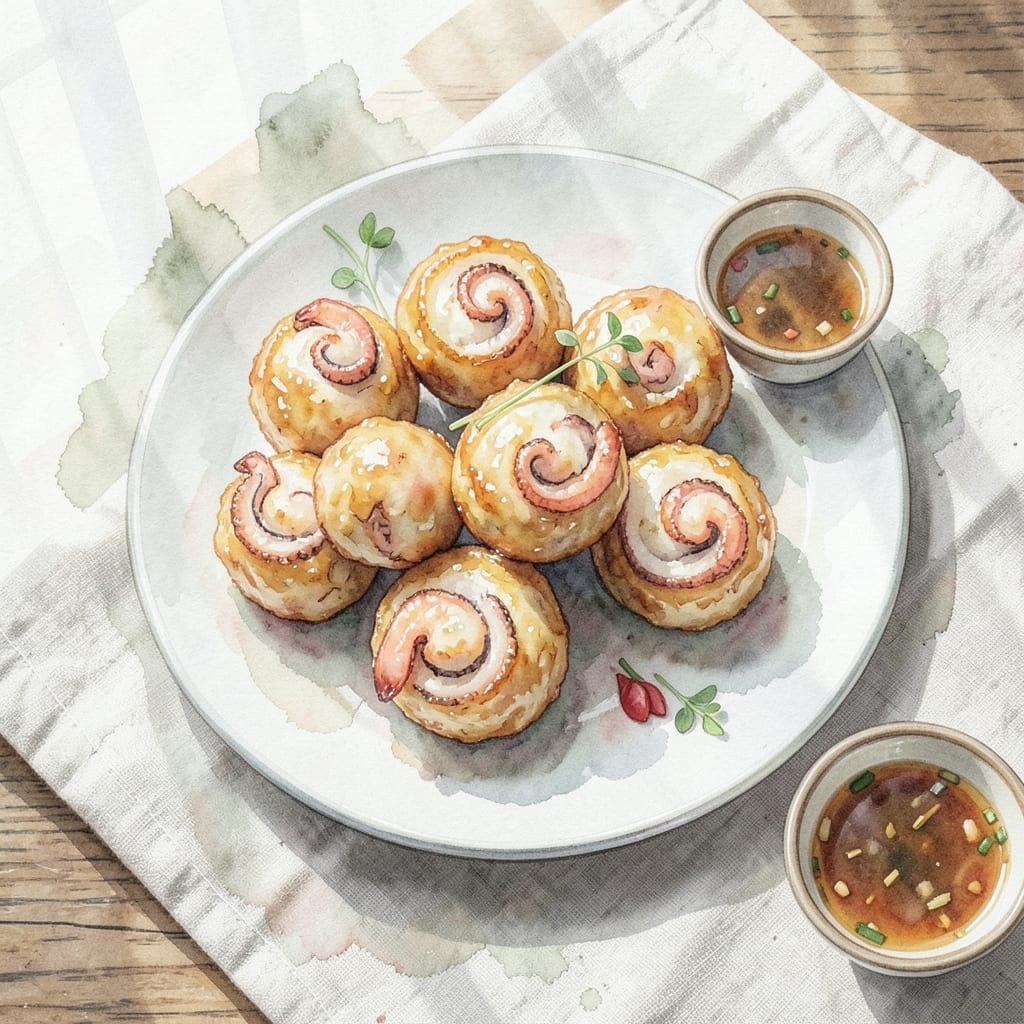
Making takoyaki without a traditional pan is easier than you think. This microwave method delivers crispy results with minimal effort and no special equipment.
I developed this approach after realizing most home cooks don’t own a takoyaki pan. The key is using microwave-safe molds and a two-step cooking process for that signature texture.
The secret lies in pre-cooking the batter before adding fillings, ensuring even heat distribution. This prevents the common issue of raw centers that often plagues microwave cooking.
You’ll achieve golden, crispy takoyaki balls with tender interiors, all while keeping cleanup simple. The method works with standard pescatarian fillings like octopus or shrimp.
Ingredients for Takoyaki Recipe Without Pan
No special pan needed—just these ingredients for crispy, golden takoyaki at home.
| Ingredient | Amount | Notes |
|---|---|---|
| All-Purpose Flour 🌾 | 1 ½ cups | Sifted for smooth batter |
| Dashi Stock 🍜 | 1 ¼ cups | Hot, for authentic flavor |
| Large Eggs 🥚 | 2 whole | Room temperature, beaten |
| Soy Sauce 🫒 | 1 tbsp | Low-sodium preferred |
| Cooked Octopus 🐙 | ½ lb | Diced into small pieces |
| Cooked Shrimp 🦐 | ½ lb | Peeled, chopped |
| Green Onions 🧅 | 3 whole | Thinly sliced, whites and greens separated |
| Tenkasu 🍤 | ½ cup | Tempura scraps, crumbled |
| Pickled Ginger 🌸 | 2 tbsp | Finely chopped |
| Takoyaki Sauce 🍯 | ½ cup | For drizzling |
| Japanese Mayonnaise 🥛 | ¼ cup | Kewpie brand preferred |
| Bonito Flakes 🍃 | 2 tbsp | For garnish |
| Vegetable Oil 🫒 | 2 tbsp | For greasing molds |
| Baking Powder 🧂 | 1 tsp | For light, airy texture |
| Nori Seaweed 🌊 | 1 sheet | Cut into thin strips |
The octopus and shrimp are non-negotiable for that authentic taste. Asian grocery stores usually carry pre-cooked octopus in the frozen section—thaw and dice it yourself. For dashi stock, instant dashi granules work in a pinch (just dissolves in hot water). The tenkasu adds that perfect crunch, so don’t skip it. I grab mine from H Mart or any well-stocked international aisle.
No octopus? Imitation crab sticks work surprisingly well. Shrimp can be swapped for scallops or squid. If you’re vegetarian, try shimeji mushrooms or cheese (though that’s a whole different vibe). The takoyaki sauce is key—Otafuku or Okonomiyaki sauce are solid brands. For the mayo, Kewpie is the only choice (it’s sweeter and creamier than regular mayo).
Batter keeps in the fridge for 12 hours if you prep ahead. Cooked takoyaki balls freeze for up to 1 month—reheat in the toaster oven for best crispiness. Always keep bonito flakes in the freezer to extend shelf life.
Why You’ll Love This Recipe
- No-Fuss Cooking: I just mix flour, dashi, and eggs—no special pan or gadgets needed.
- Umami Bomb: That first bite of crispy batter and tender octopus drenched in soy sauce? Ridiculously good.
- Party Starter: Honestly, these disappear faster than I can make them at gatherings.
- Budget Winner: Cooked octopus stretches further than I expected, and the ingredients are all pantry staples.
Step-by-Step Instructions for Takoyaki Without a Pan
This microwave method delivers crispy results with minimal effort and no special equipment.
Step 1: Prepare the Takoyaki Batter
In a large bowl, whisk together the 1.5 cups all-purpose flour and 1 tsp baking powder until fully combined. The baking powder ensures a light, airy texture that mimics traditional takoyaki. Make a well in the center and add the 2 whole large eggs, followed by the 1.25 cups hot dashi stock and 1 tbsp soy sauce.
Whisk vigorously until the batter is smooth and lump-free. You’re aiming for a consistency similar to heavy cream—thick enough to coat the back of a spoon but still pourable. Let the batter rest for 5 minutes to allow the flour to fully hydrate.
Step 2: Mix in Filling Ingredients
Stir in the 0.5 lb diced cooked octopus, 0.5 lb chopped cooked shrimp, thinly sliced 3 whole green onions, 0.5 cup crumbled tenkasu, and 2 tbsp finely chopped pickled ginger. Distribute these evenly throughout the batter so every bite is packed with flavor.
Here’s the thing—don’t overmix at this stage. A few gentle folds are all you need to incorporate the fillings without breaking them down. The pieces should remain distinct and visible in the batter, ensuring that textural contrast that makes takoyaki so satisfying.
Step 3: Microwave in Greased Molds
Lightly grease microwave-safe silicone molds or small ramekins with the 2 tbsp vegetable oil. Pour the batter into each mold, filling them about ¾ full. This leaves room for the takoyaki to expand as they cook.
Microwave on high power for 2-3 minutes until the edges are set but the centers are still slightly soft. Then, using a fork or small spoon, carefully turn each takoyaki ball over in its mold. Microwave for another 1-2 minutes until the centers are fully cooked and the exterior looks firm and slightly puffed.
Step 4: Crisp and Finish
For that essential crispy texture, transfer the cooked takoyaki to a wire rack and place it under a broiler set to high for 2-3 minutes. Watch closely—they should turn golden brown and develop a slight crust. This step mimics the crisping that happens in a traditional takoyaki pan.
Let them cool for 1-2 minutes before serving. The texture should be crispy on the outside with a tender, almost custardy interior studded with your fillings.
Step 5: Assemble and Garnish
Transfer the takoyaki to a serving plate and drizzle generously with the 0.5 cup takoyaki sauce. Then, using a spoon or squeeze bottle, add zigzags of 0.25 cup Japanese mayonnaise over the top. Sprinkle with 2 tbsp bonito flakes—they’ll dance from the residual heat—and finish with thin strips of 1 sheet nori seaweed.
Serve immediately while hot and crispy. Each bite should deliver a perfect balance of savory, slightly sweet, and umami flavors with that signature contrast of textures.
Pro Tips For Making Takoyaki Recipe Without Pan
- Chill the Batter: After mixing flour, dashi, and eggs, let the batter rest in the fridge for 20-30 minutes—this prevents the takoyaki from spreading too thin when cooking without a pan.
- Dice Octopus Small: Cut the cooked octopus into tiny, uniform pieces (about 1/4 inch) so they cook evenly and stay suspended in the batter instead of sinking.
- Skip Overmixing: I learned this the hard way—stir the batter just until combined, or the takoyaki will turn dense and chewy instead of light and fluffy.
- Use Nonstick Surface: If you’re not using a pan, a well-oiled nonstick skillet or even a silicone mat works best to prevent sticking when shaping the takoyaki.
Make-Ahead Tips for Leftovers
Prep Ahead Batter
Mix your batter the night before—whisk 1.5 cups all-purpose flour, 1 tsp baking powder, 2 eggs, 1.25 cups dashi, and 1 tbsp soy sauce and store in the fridge. The flavors meld beautifully overnight, saving you 10 minutes on cooking day.
Chill Fillings
Dice 0.5 lb octopus and 0.5 lb shrimp up to 24 hours ahead. Keep them in separate containers to maintain freshness. Slice 3 green onions and chop 2 tbsp pickled ginger just before mixing into the batter to preserve their crisp texture.
Freeze Cooked Balls
After broiling, let takoyaki cool completely before freezing on a tray. Once solid, transfer to a ziplock bag for up to 1 month. This prevents them from sticking together while keeping their shape intact. 💡
Reheat Like a Pro
For best results, reheat frozen takoyaki in a toaster oven at 375°F for 8-10 minutes. This restores the crispy exterior better than a microwave. If using a microwave, go for 30-second intervals on 50% power.
Sauce Storage
Mix 0.5 cup takoyaki sauce and 0.25 cup Japanese mayo in a small jar. Store in the fridge for up to 1 week. The flavors deepen over time, making your next batch even more delicious.
Garnish Prep
Cut 1 sheet nori into thin strips and store in an airtight container. Keep 2 tbsp bonito flakes in the freezer to maintain freshness. Sprinkle both just before serving for maximum visual appeal.
Nutrition Facts
Frequently Asked Questions
What can I use instead of silicone molds?
Small ramekins or even an ice cube tray work well. Just ensure they’re microwave-safe and greased with vegetable oil.
Why do my takoyaki stick to the molds?
This happens if the molds aren’t greased enough. Use 2 tbsp oil and apply it thoroughly, including the sides. Let the batter rest for 5 minutes to thicken slightly before pouring.
Can I skip the broiler step?
You can, but the texture won’t be as crispy. The broiler on high for 2-3 minutes gives that signature golden crust. Without it, they’ll be more cake-like.
How do I know when they’re fully cooked?
Look for firm, puffed edges and no raw batter in the center. A toothpick inserted should come out clean. Total microwave time is usually 3-5 minutes.

- BBQ Sausage Recipe Oven: Smoky Depth Without the Grill - September 28, 2026
- BBQ Chicken Bowl Recipe Rice: Smoky Sweetness Over Fluffy Grains - September 28, 2026
- Beef Cutlet Recipe Ideas: Crispy Breaded Patties With Bold Seasonings - September 28, 2026