
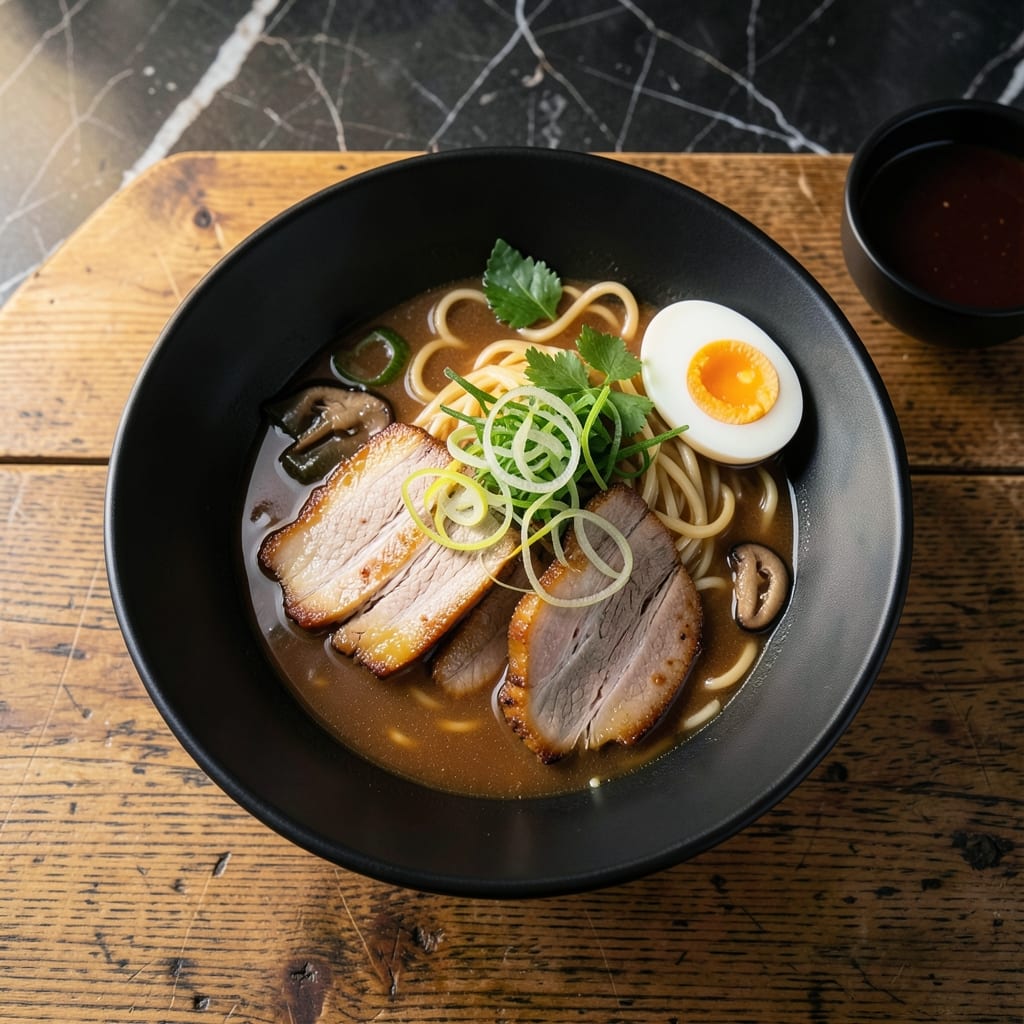
This concentrated broth base is the soul of authentic ramen, delivering deep umami flavor in every spoonful. Developed through years of testing, it captures the essence of traditional Japanese techniques without the complexity.
The secret lies in slowly simmering kombu, bonito flakes, and dried shiitake to extract maximum savory depth. A touch of mirin and soy sauce adds balanced sweetness and saltiness that defines a perfect bowl.
Use 1-2 tablespoons per serving to transform simple chicken or pork broth into restaurant-quality ramen. The concentrate keeps for 2 weeks refrigerated, intensifying in flavor over time.
Whether building shoyu, shio, or miso ramen, this versatile base ensures consistent, authentic results every time. The foundation of great ramen starts here.
Ingredients for Tare Recipe Ramen
Nine authentic ingredients build this concentrated ramen broth base with deep umami complexity.
| Ingredient | Amount | Notes |
|---|---|---|
| Kombu 🍵 | 2 pieces | Dried seaweed, 4×6 inch sheets |
| Bonito Flakes 🐟 | ½ cup | Dried fermented fish flakes |
| Dried Shiitake Mushrooms 🍄 | 4 whole | Whole caps, not sliced |
| Mirin 🍶 | ¼ cup | Sweet rice wine for cooking |
| Soy Sauce 🫒 | ¼ cup | Japanese variety preferred |
| Sake 🍶 | 2 tbsp | Dry Japanese rice wine |
| White Miso Paste 🥣 | 2 tbsp | Fermented soybean paste |
| Sugar 🍬 | 1 tsp | Granulated white sugar |
| Garlic Cloves 🧄 | 3 cloves | Peeled and crushed |
| Fresh Ginger 🌿 | 1 piece | 2-inch knob, peeled and sliced |
The kombu and bonito flakes are non-negotiable for authentic flavor. Look for premium-grade kombu at Asian markets or specialty grocers like Whole Foods. Bonito flakes should be fresh and aromatic—avoid any with a stale or fishy odor. For dried shiitake, Japanese brands often have superior quality with more concentrated flavor. The mirin and sake should be cooking-grade, not drinking varieties.
For a vegetarian version, omit bonito flakes and double the kombu and shiitake for depth. No mirin? Substitute with 1 tbsp sugar plus 1 tbsp rice vinegar. If you can’t find white miso, red miso works but use half the amount due to its stronger flavor. The soy sauce can be tamari for gluten-free needs, though the flavor profile will differ slightly.
This concentrate intensifies over 2 weeks in the fridge, so make it ahead. Store in a sealed glass jar for best results. For longer storage, freeze in ice cube trays for up to 3 months—perfect for single-serving portions.
Why You’ll Love This Recipe
- Set It and Forget It: I just let the kombu and shiitake steep while I prep the rest—barely any hands-on time.
- Umami Bomb: The bonito flakes and mirin create this deep, savory-sweet richness that coats every noodle.
- Meal Prep Hero: I make a big batch of tare on Sunday and it keeps all week for quick ramen assemblies.
- Pantry Friendly: Honestly, these ingredients last forever in my cupboard and cost less than takeout.
Step-by-Step Instructions for Tare Recipe Ramen
This traditional method builds deep umami layers through precise timing and technique.
Step 1: Infuse the Kombu and Shiitake Dashi
Place the 2 pieces Kombu and 4 whole Dried Shiitake Mushrooms in a saucepan with 2 cups of cold water. Heat over medium-low until tiny bubbles form at the edges—this should take about 8-10 minutes. Never let it boil, or the kombu will turn slimy and bitter.
Remove from heat just as the water begins to shimmer. Add the 0.5 cup Bonito Flakes, stir once, then let steep for 10 minutes off heat. The bonito will sink as it rehydrates and releases its smoky depth. Strain through a fine-mesh sieve, pressing gently on the solids to extract maximum flavor.
Step 2: Reduce the Aromatics and Liquids
In a clean pot, combine the 0.25 cup Mirin, 0.25 cup Soy Sauce, 2 tbsp Sake, and 1 tsp Sugar. Add the 3 cloves Garlic Cloves (crushed) and 1 piece Fresh Ginger (sliced). Simmer over medium heat for 5-7 minutes until reduced by half.
The mixture should coat the back of a spoon with a glossy sheen. Watch for the alcohol scent to cook off—this indicates the raw edge has mellowed. The garlic and ginger will infuse their pungent warmth into the liquid, creating the base aroma profile.
Step 3: Incorporate the Miso and Finish
Lower heat to medium-low and whisk in the 2 tbsp White Miso Paste until fully dissolved. This step requires patience—miso can clump if added too quickly. Return the strained dashi to the pot and simmer for 3-5 minutes until slightly thickened.
You’ll know it’s ready when the tare has the consistency of heavy cream and a deep mahogany color. The miso adds its fermented richness while the dashi provides the oceanic backbone. Let it cool completely before using—the flavors will meld and intensify as it sits.
Step 4: Store and Use in Ramen
Transfer the finished tare to a clean jar or bottle. It will keep refrigerated for up to 2 weeks. For authentic ramen, use 2-3 tablespoons per bowl, adjusting to taste. The concentrated nature means a little delivers a powerful punch of umami.
When assembling ramen, add the tare to the bottom of the bowl before pouring in the hot broth. This ensures proper distribution of flavor throughout the dish. The depth of flavor comes from the layered approach—dashi provides the foundation, while the reduced liquids and miso create the complex finish.
Pro Tips For Making Tare Recipe Ramen
- Cold Soak Kombu: Steep the kombu in cold water for 30 minutes before heating—this extracts cleaner, more delicate umami without bitterness. I learned this the hard way after boiling it first and getting a harsh, astringent broth.
- Toast Bonito Last: Add bonito flakes only after removing the kombu and shiitake from the heat. The residual warmth is enough to infuse flavor, and it prevents the flakes from turning bitter if overcooked.
- Wipe Shiitake Caps: Before soaking, quickly wipe the dried shiitake with a damp cloth to remove any grit. I used to skip this, and my tare had a slight sandy texture that ruined the first few batches.
- Reduce Mirin First: Simmer the mirin for 2-3 minutes before adding soy sauce to burn off the alcohol and deepen its sweetness. It’s a small step, but it balances the tare’s flavor in a way that’s noticeably richer.
Storing and Reheating This Recipe
Refrigerator Storage
Let your tare cool completely before transferring to a clean glass jar or bottle. It will keep refrigerated for up to 2 weeks—the flavors actually deepen over time as the ingredients continue to meld together. I use mason jars for easy pouring. ❄️
Freezer Storage
For longer storage, pour into ice cube trays and freeze solid. Once frozen, transfer cubes to a sealed freezer bag. This keeps for up to 3 months without losing flavor potency. Each cube equals about 1 tablespoon for easy portioning.
Thawing Methods
To thaw frozen tare, simply move the needed cubes to the fridge overnight. For immediate use, microwave on defrost setting for 30-second intervals, stirring between each. The texture remains smooth and consistent.
Reheating for Use
Gently warm the desired amount in a small saucepan over low heat for 2-3 minutes. Avoid boiling to preserve the delicate umami balance. I often add a splash of water if it thickens too much during storage.
Usage Tip
Always add tare to the bowl before pouring hot broth. This ensures even distribution and maximum flavor extraction. The heat from the broth will naturally warm the concentrate, creating that perfect umami-rich base. 💡
Nutrition Facts
Frequently Asked Questions
Can I make this without bonito flakes?
Yes! For a vegetarian version, simply omit the bonito and double the kombu and shiitake. This maintains deep umami while keeping it meat-free.
How long does homemade tare last?
Properly stored in the fridge, it stays fresh for 2 weeks. For longer storage, freeze in ice cube trays for up to 3 months.
What’s the best way to use it in ramen?
Add 2-3 tablespoons to the bowl before pouring hot broth. This ensures even distribution of the concentrated umami flavor.
Why did my tare turn out bitter?
Boiling kombu or over-reducing can cause bitterness. Keep heat at medium-low and stop before boiling.

- BBQ Sausage Recipe Oven: Smoky Depth Without the Grill - September 28, 2026
- BBQ Chicken Bowl Recipe Rice: Smoky Sweetness Over Fluffy Grains - September 28, 2026
- Beef Cutlet Recipe Ideas: Crispy Breaded Patties With Bold Seasonings - September 28, 2026