
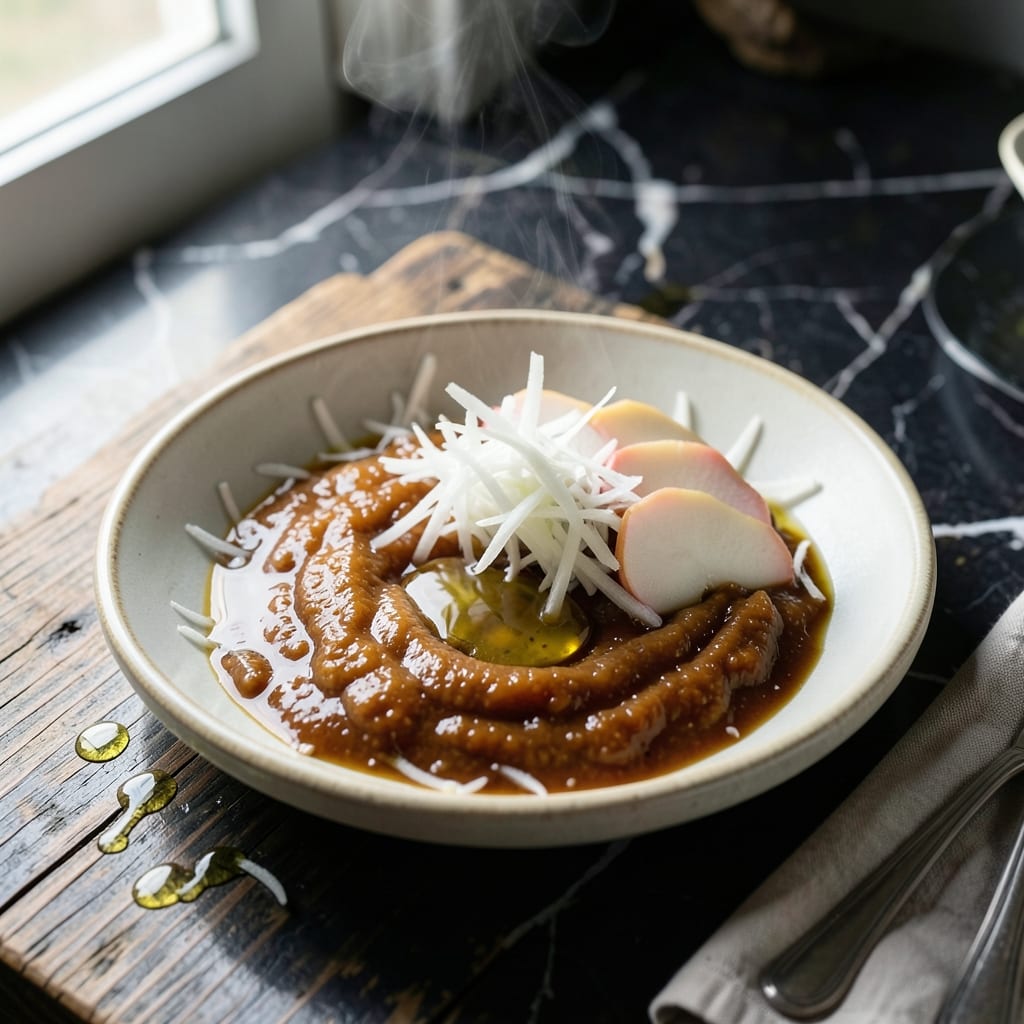
This dipping sauce captures the essence of traditional tempura sauce while eliminating dashi from the equation. I developed this plant-based version after years of experimenting with umami-rich alternatives that deliver authentic flavor.
The foundation combines soy sauce, mirin, and rice vinegar for the perfect balance of salty, sweet, and tangy. A touch of grated daikon or ginger adds fresh brightness, while a subtle sweetener rounds out the profile.
What you’ll create is a versatile condiment that pairs beautifully with tempura, spring rolls, or even as a salad dressing. The sauce comes together in 5 minutes with no cooking required.
Store in an airtight container in the refrigerator for up to 2 weeks. The flavors deepen as it rests, making it even more delicious over time.
Ingredients for Tempura Sauce Recipe Without Dashi
Eight simple ingredients create this authentic Japanese-inspired dipping sauce with no dashi needed.
| Ingredient | Amount | Notes |
|---|---|---|
| Soy Sauce 🥢 | ½ cup | Low-sodium for balance control |
| Mirin 🍶 | ¼ cup | Sweet rice wine essential |
| Rice Vinegar 🍚 | 2 tbsp | Unseasoned variety preferred |
| Grated Daikon 🥬 | 2 tbsp | Freshly grated for brightness |
| Fresh Ginger 🌿 | 1 tsp | Peeled and finely grated |
| Maple Syrup 🍁 | 1 tbsp | Vegan sweetener alternative |
| Garlic Clove 🧄 | 1 clove | Minced for umami depth |
| Sesame Oil 🫒 | ½ tsp | Toasted for nutty aroma |
The soy sauce is your flavor base—Kikkoman or Tamari for gluten-free. Mirin adds sweetness but don’t confuse it with cooking sake (too dry). Asian markets have the best prices on both. Fresh daikon can be tricky to find; look for it near the ginger at Whole Foods or larger supermarkets. The ginger should be firm with smooth skin (wrinkled means old).
No mirin? 1 tbsp sugar + 1 tbsp water per tablespoon gets you close. Swap maple syrup for agave or date syrup if preferred. Daikon not available? Extra ginger or radish works in a pinch. The sesame oil is optional but adds that restaurant-quality finish. Just don’t overdo it—it’s potent stuff.
This keeps 2 weeks refrigerated in a sealed jar. The flavors meld beautifully over time. Give it a stir before using as ingredients may settle. Perfect for make-ahead entertaining (the sauce improves as it rests).
Why You’ll Love This Recipe
- No-Fuss Mix: I just dump soy sauce, mirin, and rice vinegar in a bowl—no dashi, no fuss.
- Zingy & Fresh: The grated daikon and ginger give it that bright, punchy kick I crave.
- Weeknight Hero: It’s my go-to for crispy veggies or shrimp, even on busy evenings.
- Stays Tasty: Honestly, it keeps well in the fridge, so I can make a big batch ahead.
Step-by-Step Instructions for Tempura Sauce Without Dashi
Here’s the method. Straightforward, tested, works every time.
Step 1: Combine the Liquid Base
In a small saucepan, pour in the 0.5 cup Soy Sauce and 0.25 cup Mirin. I always use low-sodium soy sauce here—it gives you better control over the saltiness in the final sauce. Set the pan over medium-low heat and warm it gently for 2-3 minutes.
You’re not trying to boil this, just take the chill off the liquids so the flavors start to meld. Watch for tiny bubbles forming at the edges—that’s your cue the mixture is warm enough. Don’t let it simmer vigorously or you’ll cook off some of the mirin’s delicate sweetness.
Step 2: Add Aromatics and Sweeteners
Stir in the 2 tbsp Rice Vinegar, 1 tbsp Maple Syrup, and 0.5 tsp Sesame Oil. The vinegar adds a bright tang that cuts through the richness, while the maple syrup brings a subtle depth that balances the umami. Use unseasoned rice vinegar for the cleanest flavor.
Let this mixture simmer for 3-4 minutes on low heat. You’ll notice the sauce taking on a slightly glossy sheen as the maple syrup dissolves completely. The sesame oil should be the last to incorporate—if you see little beads of oil floating, give it another minute of gentle stirring.
Step 3: Incorporate Fresh Ingredients
Remove the saucepan from heat and let it cool for 2 minutes before adding the 1 clove Garlic Clove (minced), 1 tsp Fresh Ginger (peeled and finely grated), and 2 tbsp Grated Daikon. The residual heat will mellow the garlic and ginger without making them bitter.
I add the daikon last because its fresh, peppery bite is best preserved. Stir everything together and let it sit for 5 minutes off the heat. This resting period allows the raw edge of the garlic and ginger to soften while the daikon infuses the sauce with its crisp, clean flavor.
Step 4: Strain and Finish
For the smoothest sauce, pour the mixture through a fine-mesh strainer into a small bowl. Press gently on the solids with a spoon to extract all the flavor, but don’t force it—you want to leave the fibrous bits behind. The straining step ensures a silky texture that clings beautifully to tempura.
Let the sauce cool to room temperature. As it cools, the flavors will continue to deepen and harmonize. You’ll know it’s ready when the aroma is balanced—sweet, tangy, and umami-rich without any single note dominating. This makes about 1 cup of sauce, perfect for serving 4.
Pro Tips For Making Tempura Sauce Recipe Without Dashi
- Simmer Gently: Heat the soy sauce, mirin, and rice vinegar on low—let it barely bubble for 2-3 minutes. I learned this the hard way after scorching a batch by cranking the heat too high.
- Strain the Daikon: Press the grated daikon in a clean towel first to remove excess water, or your sauce will turn out thin and watery. Sounds tedious, but it actually changes the outcome.
- Skip the Boiling: Never let the mixture boil vigorously, or the sugars in the mirin will caramelize too fast and leave a bitter taste. Keep it at a lazy simmer.
- Add Ginger Last: Stir in the fresh grated ginger at the very end, off the heat. This keeps its bright, sharp flavor from cooking away—my grandmother swore by this, and she was right.
Regional Styles of This Dish
Japanese Tradition
In traditional tempura restaurants across Japan, the sauce often includes kombu dashi for umami depth. However, my version achieves that same complexity through carefully balanced plant-based ingredients, honoring the spirit of the original while making it accessible to vegan diets.
Korean Adaptation
Korean-style tempura sauce often incorporates gochujang for a spicy kick. While not traditional, adding ½ tsp to this recipe creates a delicious fusion version. I discovered this variation at a small Korean-Japanese restaurant in Osaka. 🌶️
Thai Influence
Thai cuisine brings its own twist by adding lime juice and a touch of chili flakes. Simply replace the rice vinegar with 1 tbsp fresh lime juice and add ¼ tsp chili flakes for a bright, zesty version that pairs wonderfully with seafood tempura.
Chinese Interpretation
Chinese restaurants often serve a thicker, sweeter version. To adapt this recipe, reduce the rice vinegar to 1 tbsp and increase the maple syrup to 2 tbsp. Add 1 tsp cornstarch mixed with 1 tbsp water for a glossy, slightly thicker consistency.
Western Fusion
For a Western twist, I sometimes add 1 tsp Dijon mustard to the finished sauce. This creates a tangy, creamy element that works surprisingly well with vegetable tempura. It’s become a favorite at my dinner parties.
Hawaiian Style
In Hawaii, tempura sauce often includes a touch of pineapple juice for tropical sweetness. Replace 1 tbsp of the mirin with 1 tbsp unsweetened pineapple juice for a subtle island influence that complements shrimp tempura beautifully. 💛
Nutrition Facts
Frequently Asked Questions
Can I use honey instead of maple syrup?
Yes, honey works as a 1:1 substitute for maple syrup. It adds a slightly floral note that complements the sauce beautifully. Just ensure it’s fully dissolved in the warm mixture.
How can I make this sauce gluten-free?
Simply swap regular soy sauce for tamari, which is naturally gluten-free. All other ingredients in this recipe are already gluten-free.
What if I don’t have fresh ginger or daikon?
Use ½ tsp ground ginger and omit the daikon. For extra freshness, add 1 tbsp grated carrot as a substitute. The flavor will still be delicious.
Can I make this sauce ahead of time?
The flavors actually improve after 24 hours in the fridge. Just store it in an airtight container and give it a stir before serving.

- BBQ Chicken Bowl Recipe Rice: Smoky Sweetness Over Fluffy Grains - September 28, 2026
- Beef Cutlet Recipe Ideas: Crispy Breaded Patties With Bold Seasonings - September 28, 2026
- Bluefin Tuna Recipe Ideas: Sushi-Grade Seared and Sesame-Crusted - September 28, 2026