
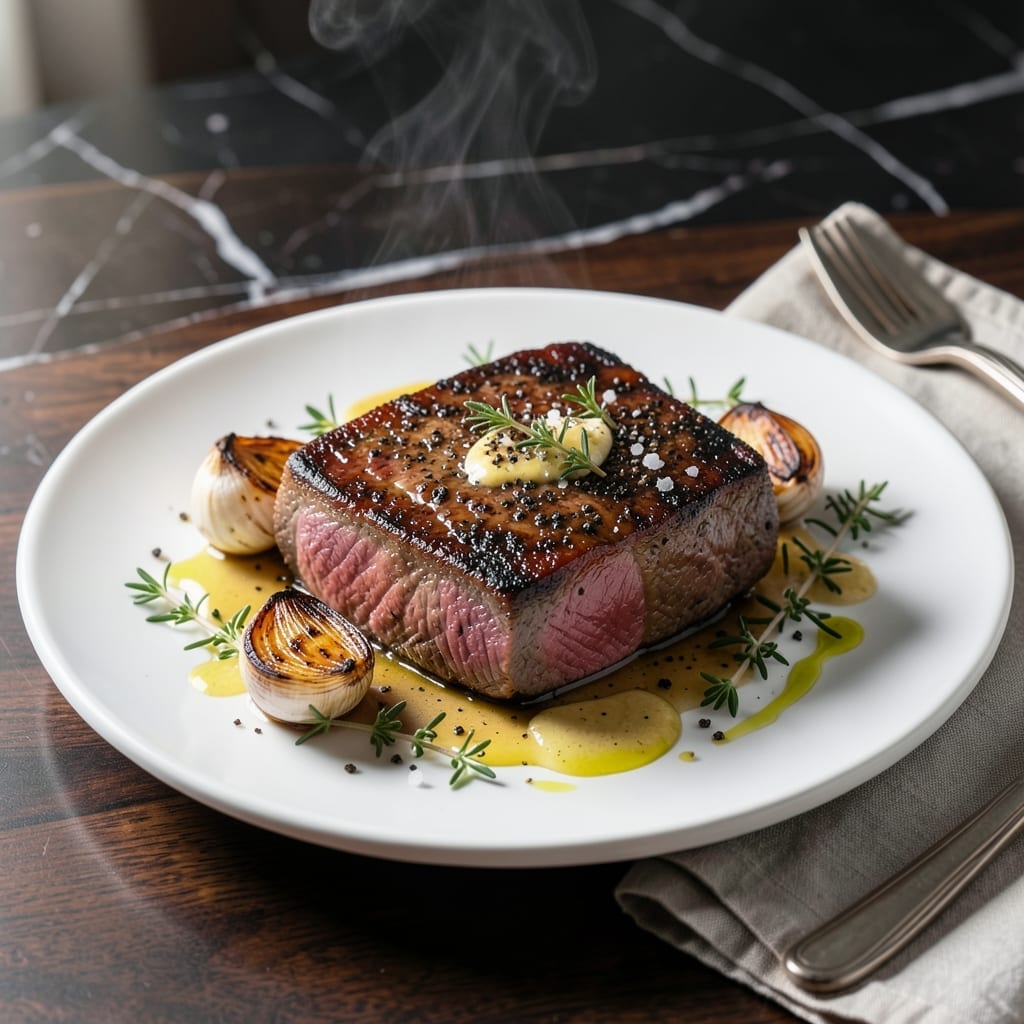
Achieving a tender center with a perfectly seared crust on tenderloin requires precision, not complexity. This method delivers professional results with minimal effort.
The key lies in temperature control—start with a screaming hot pan to create that golden crust, then finish in the oven for even cooking. A simple butter baste at the end adds rich flavor and shine.
What emerges is a steak with a deep brown exterior giving way to buttery-soft flesh inside. The contrast between crisp crust and melt-in-your-mouth center makes every bite exceptional.
Serve immediately with pan juices for maximum impact. This technique works for any special occasion or when you simply want to elevate a weeknight meal.
Ingredients for Tenderloin Steak
Precision ingredients for professional-level steak with minimal effort required.
| Ingredient | Amount | Notes |
|---|---|---|
| Beef Tenderloin 🥩 | 2 lb | Center-cut, trimmed of excess fat |
| Kosher Salt 🧂 | 1 ½ tsp | Diamond Crystal preferred for even distribution |
| Freshly Ground Black Pepper 🌶️ | 1 tsp | Coarse grind for texture |
| Unsalted Butter 🧈 | 4 tbsp | European-style for richer baste |
| Garlic Cloves 🧄 | 4 cloves | Lightly crushed, peeled |
| Fresh Thyme Sprigs 🌿 | 3 sprigs | Optional but recommended for aroma |
| Fresh Rosemary Sprigs 🌿 | 2 sprigs | Optional but recommended for aroma |
| High-Smoke-Point Oil 🫒 | 2 tbsp | Avocado or grapeseed oil preferred |
| Shallot 🧅 | 1 whole | Minced for pan sauce optional |
| Red Wine 🍷 | ½ cup | Dry variety for deglazing pan |
| Beef Stock 🥣 | ¼ cup | Low-sodium preferred for sauce |
The beef tenderloin must be center-cut for uniform thickness—this ensures even cooking from edge to center. Source from Whole Foods or a reputable butcher; look for bright red color with fine marbling. Diamond Crystal kosher salt is the professional choice due to its clean flavor and consistent grain size. The unsalted butter should be high-fat (82% or higher) for the richest baste.
No fresh herbs? Dried thyme and rosemary at one-third the amount work in a pinch, though fresh is superior. Substitute shallot with yellow onion if needed, but reduce quantity slightly as onion is more pungent. For the wine, any dry red like Cabernet Sauvignon works—avoid sweet varieties. If avoiding alcohol, use additional beef stock with 1 tsp balsamic vinegar for acidity.
Store tenderloin in the coldest part of your fridge, loosely wrapped, for up to 3 days. Bring to room temperature 1 hour before cooking for even doneness. Leftover cooked steak keeps 4 days refrigerated or freezes for 3 months (slice before freezing for easy portions).
Why You’ll Love This Recipe
- Five-Ingredient Magic: I love that this only needs beef tenderloin, salt, pepper, butter, and garlic—no complicated shopping list.
- Buttery Garlic Bliss: That first bite with the rich butter and roasted garlic? Ridiculously good.
- Dinner Party Star: It feels fancy enough for company but honestly takes less effort than most weeknight meals.
- Next-Day Luxury: Leftovers make the best sandwiches—tender slices on crusty bread with a little garlic butter drizzle.
Step-by-Step Instructions for Tenderloin Steak
Master the technique for a perfectly seared crust and buttery interior with these precise steps.
Step 1: Season and Prepare the Beef Tenderloin
Pat the 2 lb Beef Tenderloin thoroughly dry with paper towels. Even moisture prevents proper searing, so be meticulous. Season generously with the 1.5 tsp Kosher Salt and 1 tsp Freshly Ground Black Pepper, pressing the seasoning into the surface to ensure adhesion.
Let the meat sit at room temperature for 30-45 minutes before cooking. This step is critical for even cooking—cold meat seizes up and cooks unevenly. The surface should develop a slightly tacky texture, which helps create a better crust.
Step 2: Sear the Tenderloin to Develop a Crust
Heat the 2 tbsp High-Smoke-Point Oil in a heavy skillet over high heat until it shimmers but doesn’t smoke. Place the tenderloin in the pan and sear undisturbed for 3-4 minutes per side until a deep golden-brown crust forms.
Use tongs to rotate the meat, searing the sides as well. The crust should develop a rich, mahogany color. If the pan starts to smoke excessively, reduce the heat slightly. You’re building flavor layers through the Maillard reaction, so don’t rush this step.
Step 3: Baste with Aromatics for Added Depth
Reduce heat to medium and add the 4 tbsp Unsalted Butter, 4 cloves Garlic Cloves, 3 sprigs Fresh Thyme Sprigs, and 2 sprigs Fresh Rosemary Sprigs to the pan. Tilt the skillet and spoon the melted butter over the tenderloin continuously for 2-3 minutes.
The garlic should turn lightly golden but not burn. The herbs will infuse the butter, creating an aromatic baste that enhances the meat’s natural richness. This step adds complexity to the crust and keeps the surface moist.
Step 4: Rest and Prepare the Pan Sauce
Transfer the tenderloin to a cutting board and tent loosely with foil. Let it rest for 10-15 minutes—this allows the juices to redistribute, ensuring a moist, tender result. The internal temperature will rise by 5-10°F during resting.
While the meat rests, pour off excess fat from the skillet, leaving the browned bits. Add the minced 1 whole Shallot and sauté for 1-2 minutes until softened. Deglaze with the 0.5 cup Red Wine, scraping up the fond, then add the 0.25 cup Beef Stock. Simmer until slightly reduced.
Step 5: Slice and Serve with Pan Sauce
Slice the tenderloin against the grain into 1-inch thick portions. The center should be a rosy medium-rare (about 130-135°F internal temperature) for optimal tenderness. Pour the warm pan sauce over the slices just before serving.
Each bite should offer a contrast of the crisp, buttery crust and the velvety interior. The pan sauce ties everything together with its rich, wine-infused depth. Serve immediately while the meat is still warm.
Pro Tips For Making Tenderloin Steak
- Room Temp First: Pull the tenderloin out of the fridge 30-45 minutes before cooking—cold meat seizes up in the pan and cooks unevenly, no matter how hot your skillet is.
- Dry the Surface: Pat the steak bone-dry with paper towels before seasoning; even a little moisture steams the meat instead of searing it, and you’ll lose that buttery crust.
- Don’t Crowd the Pan: If your skillet isn’t big enough for the whole tenderloin without touching, sear it in batches or use two pans—steam from overcrowding turns your crust soggy.
- Baste with Butter: Tilt the pan in the last 2 minutes and spoon that melted butter, garlic, and juices over the steak repeatedly—it adds flavor faster than any marinade.
Essential Equipment for Great tenderloin steak
Heavy Skillet
I always reach for my 12-inch Lodge cast iron for searing—its even heat distribution and retention create the perfect crust. A heavy stainless steel skillet like All-Clad works equally well. Avoid nonstick pans as they can’t reach the necessary high heat. 🔥
Instant-Read Thermometer
A ThermoWorks Mk4 or similar model is essential for precision. I check the internal temp in multiple spots to ensure even cooking. Aim for 130-135°F for medium-rare perfection. This tool removes all guesswork and prevents overcooking.
Long Tongs
Use 12-inch locking tongs to safely flip and rotate the tenderloin without getting too close to the hot pan. I prefer the OXO Good Grips version for comfort. Never use a fork—it pierces the meat, letting precious juices escape.
Wooden Spoon
A sturdy wooden spoon is perfect for basting. I tilt the pan and spoon the melted butter continuously over the steak. The rounded edge helps collect all the aromatic butter and herbs for even distribution.
Cutting Board
Rest your steak on a large wooden cutting board—it provides a stable surface for slicing. I use a John Boos maple board that’s big enough to catch all the juices. The wood also adds a rustic touch to your presentation.
Meat Thermometer Probe
For oven finishing, I insert a leave-in probe thermometer like the ThermoWorks Smoke. This lets me monitor the temperature without opening the oven door. It beeps when the meat hits my target temp, ensuring I never overcook. 💡
Nutrition Facts
Frequently Asked Questions
How do I know when it’s done without cutting?
Use an instant-read thermometer inserted into the thickest part. 130-135°F is perfect for medium-rare. The meat will continue cooking while resting, rising another 5-10°F.
Can I use a different cut of beef?
Filet mignon works well as it’s from the same muscle. Avoid lean cuts like sirloin—they lack the fat content for proper searing and may dry out. Stick to well-marbled options for best results.
What if my pan isn’t oven-safe?
Sear in your stovetop pan, then transfer to a preheated 400°F oven in a baking dish. Finish cooking to desired internal temperature, checking after 10-15 minutes.
Why does my crust turn out pale?
Your pan likely wasn’t hot enough or the meat was moved too soon. Heat the pan until oil shimmers, then don’t touch the steak for 3-4 minutes to develop a proper crust. Patience is key!

- Blue Zone Recipe Ideas: Longevity-Boosting Meals for Vibrant Living - September 28, 2026
- Beefaroni Recipe With Tomato Soup: One-Pot Nostalgic Comfort - September 28, 2026
- Bread Recipe KitchenAid Mixer: Foolproof Loaf With Perfect Rise - September 28, 2026