
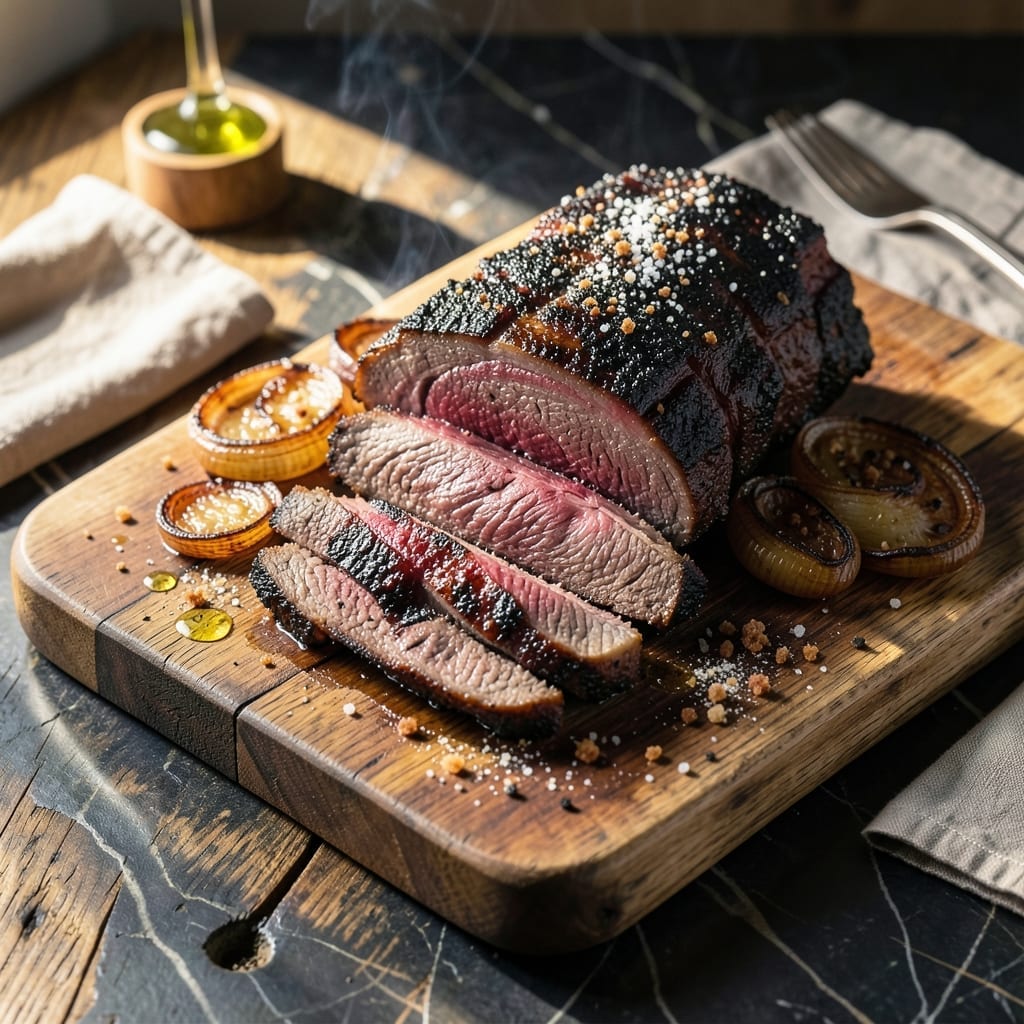
This is the brisket recipe that separates serious pitmasters from backyard enthusiasts. The key lies in patience—12 to 16 hours of low, steady smoke transforms a tough cut into a tender, flavor-packed masterpiece.
I developed this method after years of trial and error, learning that proper trimming and a simple salt-pepper rub often outperform complex spice mixes. The smoke does most of the work, but maintaining a consistent 225°F temperature is non-negotiable.
What emerges from the smoker is a beautiful bark encasing juicy, fall-apart meat with a deep red smoke ring. The resting period is just as crucial as the cooking—rush this step and you’ll lose precious moisture.
This isn’t a weekend project you can shortcut. But when you pull that first perfect slice apart with your fingers, you’ll understand why Texas brisket commands this level of dedication.
Ingredients for Texas Style Bbq Brisket
This is the ingredient list for a true Texas-style smoked brisket masterpiece.
| Ingredient | Amount | Notes |
|---|---|---|
| Beef Brisket 🥩 | 12 lb | Whole packer cut, untrimmed |
| Kosher Salt 🧂 | ½ cup | Diamond Crystal preferred |
| Coarse Black Pepper 🌶️ | ½ cup | Freshly ground for best bark |
| Brown Sugar 🍚 | ¼ cup | Optional for sweetness in rub |
| Garlic Powder 🧄 | 2 tbsp | Not garlic salt |
| Onion Powder 🧅 | 2 tbsp | Adds depth to rub |
| Paprika 🌶️ | 2 tbsp | Smoked or sweet variety |
| Yellow Mustard 🟡 | ½ cup | Binder for rub adhesion |
| Hickory Wood Chunks 🪵 | 8 lbs | Primary smoking wood |
| Oak Wood Chunks 🪵 | 4 lbs | Optional for complexity |
| Apple Cider Vinegar 🍏 | 1 cup | For spritzing during cook |
| Beef Tallow 🧈 | ½ cup | For moisture and flavor |
The brisket itself is non-negotiable—whole packer cut from a trusted butcher (I get mine at H-E-B or Central Market in Texas). Look for good marbling and a thick flat—at least 1.5 inches. The salt and pepper are your foundation; Diamond Crystal kosher salt is the gold standard here (it adheres better than Morton). Don’t skimp on the grind—freshly cracked black pepper makes all the difference in that signature bark.
Out of hickory? Pecan or post oak are great Texas alternatives. No yellow mustard for the binder? Olive oil or plain mustard works in a pinch. Want more heat? Add cayenne or chipotle powder to the rub. The apple cider vinegar spritz keeps the surface moist during that long cook—skip the water spray. If you can’t find beef tallow, unsalted butter works (but tallow’s the traditional choice).
Trim the brisket the night before smoking, then let it rest uncovered in the fridge. The rub can sit on the meat for 12-24 hours before cooking. Store leftover wood chunks in a dry place—they’ll last years. Once smoked, the brisket keeps in the fridge for 4-5 days or freezes beautifully for 3 months.
Why You’ll Love This Recipe
- Set It and Forget: That rub of salt, pepper, and brown sugar takes five minutes to pat on, then the smoker does all the work for hours.
- Smoky Sweet Crust: The sugar caramelizes into a dark, sticky bark that cracks when you slice into the brisket.
- Feeds the Block: I smoked one for my brother’s birthday and we were picking at leftovers for three days straight.
- Budget Stretcher: A whole packer brisket feeds eight easily, and the leftovers make killer tacos or chili the next week.
Step-by-Step Instructions for Texas Style BBQ Brisket
Follow my proven method and you’ll achieve competition-worthy results with perfect bark and tender meat.
Step 1: Trim and Season the Brisket
Start by trimming the 12 lb Beef Brisket fat cap to about ¼ inch thickness. I use a sharp boning knife for precision, leaving enough fat to protect the meat during the long cook while allowing smoke penetration. Remove any hard fat or silver skin from the lean side.
In a bowl, combine 0.5 cup Kosher Salt, 0.5 cup Coarse Black Pepper, 0.25 cup Brown Sugar, 2 tbsp Garlic Powder, 2 tbsp Onion Powder, and 2 tbsp Paprika. Rub the 12 lb Beef Brisket with 0.5 cup Yellow Mustard as a binder, then apply the rub generously on all sides, pressing it in firmly. Let it rest at room temperature for 1 hour.
Step 2: Prepare the Smoker and Begin Cooking
Preheat your smoker to 225-250°F using 8 lbs Hickory Wood Chunks as your primary fuel. I recommend adding 4 lbs Oak Wood Chunks for complexity. The smoker is ready when you see clean, thin blue smoke (not thick white smoke).
Place the brisket fat-side up on the smoker grates. This position allows the rendering fat to baste the meat as it cooks. Close the lid and maintain a consistent temperature. Resist the urge to peek—every time you open the lid, you add 15-20 minutes to your cook time.
Step 3: Monitor and Spritz During the Cook
After about 4 hours, begin spritzing the brisket every 45-60 minutes with a mixture of 1 cup Apple Cider Vinegar and water (50/50 ratio). This keeps the surface moist and builds a beautiful bark. I use a spray bottle for even application.
At around the 6-8 hour mark, when the internal temperature reaches 165-170°F, you’ll hit “the stall.” Don’t be alarmed—this is normal as moisture evaporates. Continue cooking until the brisket is probe-tender, which usually happens between 200-205°F.
Step 4: Wrap and Finish the Cook
Once the brisket is probe-tender, wrap it tightly in pink butcher paper (the “Texas crutch”). This helps power through the stall while preserving the bark. Return it to the smoker and continue cooking until the internal temperature reaches 200-205°F.
Remove the brisket and let it rest wrapped in a towel-lined cooler for at least 1 hour (I prefer 2 hours). This resting period allows the juices to redistribute. Before resting, you can brush the brisket with 0.5 cup Beef Tallow for added moisture and flavor.
Step 5: Slice and Serve
Unwrap the brisket and locate the grain direction. Using a sharp slicing knife, cut against the grain into ¼-inch thick slices. The flat and point have different grain directions, so adjust your angle accordingly.
Serve immediately while still warm. Each slice should have a dark, crispy bark on the outside and be tender enough to pull apart with a gentle tug. The brisket should be moist, smoky, and full of flavor, with a beautiful smoke ring just beneath the surface.
Pro Tips For Making Texas Style Bbq Brisket
- Trim the Fat: Leave a ¼-inch fat cap for flavor, but trim any thick or uneven sections—this prevents flare-ups and helps the rub penetrate evenly.
- Season Overnight: Coat the brisket with salt, pepper, brown sugar, and garlic powder the night before. I learned this the hard way—dry rub needs time to work its magic.
- Low and Slow: Keep your smoker or oven at 225°F and resist the urge to rush it. After burning a few briskets, I finally accepted that patience is non-negotiable.
- Rest Before Slicing: Wrap the brisket in foil and let it rest for at least 1 hour—yes, even if you’re starving. Slicing too soon sends all the juices running, and nobody wants dry brisket.
Regional Styles of These Flavors
Central Texas Style
This is the gold standard—simple salt and pepper rub with hickory or oak wood doing all the talking. The focus is on the meat, not the seasoning. I learned this method from a pitmaster in Lockhart, where they swear by 12-14 hour cooks at a steady 225°F. 🔥
East Texas Style
Here, they embrace a sweeter profile with brown sugar in the rub and often finish with a tomato-based sauce. The cook time is similar, but you might find more post oak in the smoke mix. I’ve had great results adding 2 tbsp of brown sugar to my standard rub for this variation.
South Texas Style
Influence from Mexican barbacoa shines here, with garlic and cumin joining the rub. Some pitmasters even use a mop sauce with vinegar and chili powder during the cook. The result is a brisket with a bit more heat and complexity.
West Texas Style
This style leans into a coarser grind on the pepper and sometimes includes chili powder for a bolder bark. The smoke is often heavier, using mesquite wood for a more intense flavor. I recommend using 1 tbsp of chili powder in the rub for an authentic touch.
North Texas Style
Here, they’re not afraid to experiment with injections or marinades to keep the meat moist. Some even add a touch of Worcestershire sauce to the binder. The cook process remains the same, but the prep can get a little more involved.
Competition Style
For judges, every detail matters—perfectly trimmed fat, a balanced rub, and a cook that hits 203°F internal temp precisely. The brisket is often wrapped in foil instead of paper to speed up the cook. I’ve seen teams add beef tallow in the wrap for extra richness.
Nutrition Facts
Frequently Asked Questions
What’s the best wood for smoking?
Hickory is the classic choice for authentic flavor. Post oak works great too, and many pitmasters use a 50/50 mix. Avoid mesquite unless you love strong, bold smoke.
How do I know when it’s done?
Use a probe thermometer—it’s done at 200-205°F internally and feels like butter when tested. The stall at 165-170°F is normal; just power through.
Can I use a gas grill instead of a smoker?
Yes, but you’ll need to set it up for indirect heat and add wood chips in a smoker box. Maintain 225-250°F and be prepared for a longer cook time.
Why rest the brisket before slicing?
Resting for 1-2 hours lets juices redistribute. Slice too soon and they’ll spill out, leaving dry meat. Wrap it in a towel inside a cooler to keep it warm.

- BBQ Sausage Recipe Oven: Smoky Depth Without the Grill - September 28, 2026
- BBQ Chicken Bowl Recipe Rice: Smoky Sweetness Over Fluffy Grains - September 28, 2026
- Beef Cutlet Recipe Ideas: Crispy Breaded Patties With Bold Seasonings - September 28, 2026