
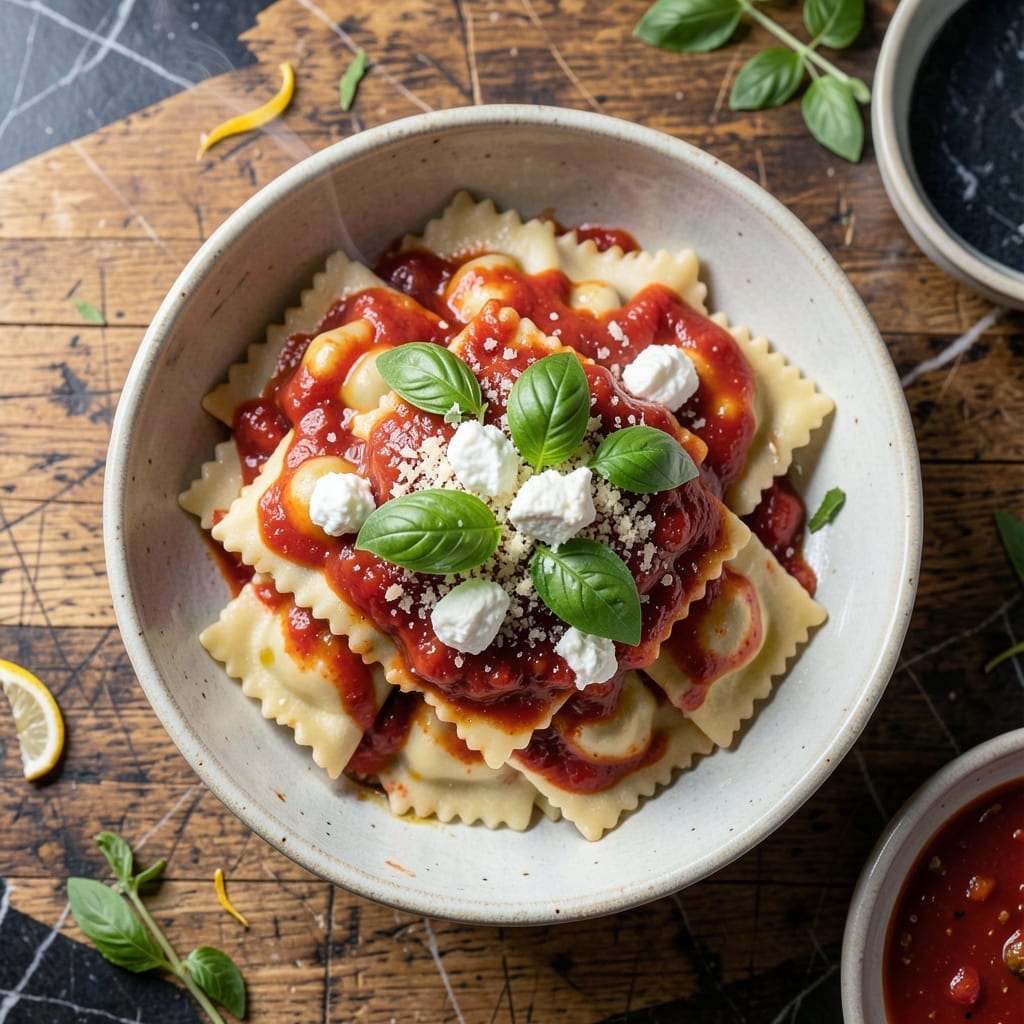
Making perfect homemade ravioli is simpler than you think. The secret lies in the pasta dough—thin, tender, and rolled just right.
I’ve tested countless fillings, but the best versions keep it simple: ricotta, parmesan, and fresh herbs for a light yet rich center. The key is sealing the edges tightly to prevent bursting.
Once cooked, these pillowy pockets float to the surface, ready in just 2-3 minutes. A quick brown butter sauce takes them to the next level.
Serve immediately for the best texture. This method ensures restaurant-quality results every time.
Ingredients for The Best Ravioli
Delicate dough and savory fillings come together for restaurant-quality results at home.
| Ingredient | Amount | Notes |
|---|---|---|
| All-Purpose Flour 🌾 | 3 cups | Plus extra for dusting |
| Large Eggs 🥚 | 4 whole | Room temperature preferred |
| Olive Oil 🫒 | 1 tbsp | Extra-virgin for richness |
| Salt 🧂 | ½ tsp | Fine sea salt for dough |
| Water 💧 | 2 tbsp | As needed for dough consistency |
| Ricotta Cheese 🧀 | 1 cup | Whole milk for creaminess |
| Parmesan Cheese 🧀 | ¾ cup | Freshly grated from block |
| Spinach 🥬 | 10 oz | Fresh, cooked and drained |
| Garlic Cloves 🧄 | 2 cloves | Minced finely for filling |
| Ground Nutmeg 🌰 | ¼ tsp | Freshly grated preferred |
| Black Pepper 🌶️ | ¼ tsp | Freshly cracked for filling |
| Lemon Zest 🍋 | 1 tsp | From medium lemon |
| Semolina Flour 🌾 | ½ cup | For dusting, prevents sticking |
The flour quality is paramount here. King Arthur all-purpose is my go-to for consistent results (the protein content is spot-on for pasta). For the filling, whole-milk ricotta makes a difference—lower-fat versions can turn grainy. Parmigiano-Reggiano is non-negotiable for authentic flavor; skip the pre-grated stuff. Fresh spinach should be bright green and crisp (avoid the pre-bagged kind if it looks wilted).
Substitutions are limited but possible. No ricotta? Cottage cheese blended smooth works in a pinch. Out of spinach? Swiss chard or kale (blanched and squeezed dry) can stand in. Skip the nutmeg if you must, but it adds that subtle warmth. For the dough, bread flour can be used, but the texture will be slightly chewier. Semolina for dusting is ideal, but all-purpose works too.
Dough can rest covered at room temperature for up to 2 hours. Filled ravioli freeze beautifully on a tray before cooking—transfer to a bag once solid for up to 3 months. Cook from frozen, adding just 30 seconds to the boiling time. Fresh ravioli keep in the fridge for 24 hours max.
Why You’ll Love This Recipe
- Minimal Ingredients: I love that it only needs flour, eggs, olive oil, salt, and water—no fancy grocery runs.
- Rich Homemade Taste: The olive oil in the dough makes it taste way better than store-bought.
- Freezer Friendly: I make a big batch and freeze extras for lazy dinners later.
- Budget Stretcher: A pound of flour and a few eggs feed my whole family for pennies.
Step-by-Step Instructions for Homemade Ravioli
This method delivers perfectly tender pasta with a rich, flavorful filling every time.
Step 1: Make the Pasta Dough
On a clean work surface, mound the 3 cups all-purpose flour and create a well in the center. Add the 4 whole large eggs, 1 tbsp olive oil, and 0.5 tsp salt to the well. Using a fork, gradually incorporate the flour into the wet ingredients until a shaggy dough forms.
Knead the dough by hand for 8-10 minutes until smooth and elastic. If it feels too dry, add the 2 tbsp water, 1 tablespoon at a time. Wrap the dough in plastic wrap and let it rest at room temperature for 30 minutes—this relaxes the gluten for easier rolling.
Step 2: Prepare the Spinach and Ricotta Filling
In a bowl, combine the 1 cup ricotta cheese, 0.75 cup parmesan cheese, 10 oz spinach (thoroughly drained and chopped), 2 cloves minced garlic cloves, 0.25 tsp ground nutmeg, 0.25 tsp black pepper, and 1 tsp lemon zest. Mix until fully combined.
The filling should be thick but spreadable. Taste and adjust seasoning if needed—this is your chance to ensure the flavor shines. Cover and refrigerate until ready to use. The lemon zest brightens the rich cheeses, while the nutmeg adds a warm, aromatic depth.
Step 3: Roll and Cut the Pasta Sheets
Divide the rested dough into 4 equal portions. On a surface dusted with 0.5 cup semolina flour, roll one portion through a pasta machine, starting at the widest setting and gradually thinning it to the second-to-last setting. The sheets should be thin enough to see your hand through them but not so thin they tear.
Lay the rolled sheet on a floured surface and repeat with the remaining dough. Keep the unused sheets covered with a damp towel to prevent drying. Use a 3-inch round cutter or a ravioli mold to cut circles from the pasta sheets—this size gives you a perfect bite with plenty of filling.
Step 4: Assemble and Seal the Ravioli
Place 1 teaspoon of the filling in the center of each pasta circle. Lightly brush the edges with water to help them stick. Lay a second pasta circle on top and press the edges firmly to seal, making sure no air pockets remain. For extra security, crimp the edges with a fork.
Arrange the finished ravioli on a baking sheet dusted with semolina flour. Don’t let them touch, or they’ll stick together. Cover with a clean kitchen towel until ready to cook. At this point, you can refrigerate them for up to 24 hours or freeze for longer storage.
Step 5: Cook the Ravioli to Perfection
Bring a large pot of salted water to a rolling boil. Add the ravioli in batches to avoid overcrowding. Cook for 2-3 minutes until they float to the surface and the pasta is tender but still slightly firm to the bite. Fresh pasta cooks much faster than dried, so keep an eye on them.
Use a slotted spoon to transfer the ravioli to a serving dish. Toss with your favorite sauce or simply drizzle with olive oil and a sprinkle of parmesan cheese. Serve immediately while hot—the delicate pasta is best enjoyed right away.
Pro Tips For Making The Best Ravioli
- Knead Just Enough: Work the dough until smooth, about 8-10 minutes by hand—any longer and the ravioli turn tough. I learned this the hard way after my first batch came out like hockey pucks.
- Rest the Dough: Let it sit covered for at least 30 minutes before rolling. Sounds weird, but it works: the gluten relaxes, making it easier to roll thin without springing back.
- Seal Tightly: Press the edges of each ravioli firmly with your fingers or a fork to prevent burst pockets during boiling. Skip this and you’ll be fishing filling out of the water.
- Use Semolina: Dust your work surface and ravioli with semolina flour instead of all-purpose—it prevents sticking and adds a nice texture. My grandmother swore by this, and she was right.
Serving Suggestions for the best ravioli
Simple Sauce Pairings
I love tossing these with a quick brown butter sauce—melt 4 tbsp butter until nutty, then add fresh sage leaves for an aromatic finish. The rich, toasty notes complement the ricotta filling perfectly.
Fresh Garnishes
A sprinkle of toasted pine nuts adds crunch, while fresh basil ribbons bring color and brightness. Grate extra Parmigiano-Reggiano over the top just before serving for a salty, umami boost.
Light Salad Accompaniment
A simple arugula salad with lemon vinaigrette cuts through the richness. I use 5 oz baby arugula and 2 tbsp olive oil for balance. The peppery greens contrast beautifully with the creamy filling. 🥗
Wine Pairing
A crisp Pinot Grigio from Friuli-Venezia Giulia is my go-to—its bright acidity cleanses the palate. For red lovers, a light Chianti Classico with its cherry notes works surprisingly well.
Bread for Soaking
Serve with warm garlic bread or a crusty ciabatta loaf to soak up every bit of sauce. I brush slices with garlic-infused olive oil and toast until golden. 💛
Family-Style Presentation
Arrange ravioli on a large platter with sauce pooled in the center. Garnish with microgreens for an elegant touch. This invites everyone to dig in and share the experience.
Nutrition Facts
Frequently Asked Questions
Can I use store-bought pasta sheets?
Yes, but fresh pasta sheets work best. Store-bought sheets are thicker and can result in chewier ravioli. If using them, reduce boiling time by 30 seconds to prevent overcooking.
How do I prevent ravioli from sticking together?
Dust the baking sheet and finished ravioli generously with semolina flour. Keep them in a single layer and avoid touching. Refrigerate uncovered until cooking.
Can I make ravioli ahead of time?
Refrigerate uncooked ravioli on a floured tray for up to 24 hours. For longer storage, freeze solid on a tray, then transfer to a bag for up to 3 months.
Why did my ravioli burst while cooking?
This usually means the edges weren’t sealed tightly or there were air pockets. Press edges firmly when assembling and ensure no air is trapped inside. Overfilling can also cause bursting.

- BBQ Sausage Recipe Oven: Smoky Depth Without the Grill - September 28, 2026
- BBQ Chicken Bowl Recipe Rice: Smoky Sweetness Over Fluffy Grains - September 28, 2026
- Beef Cutlet Recipe Ideas: Crispy Breaded Patties With Bold Seasonings - September 28, 2026