
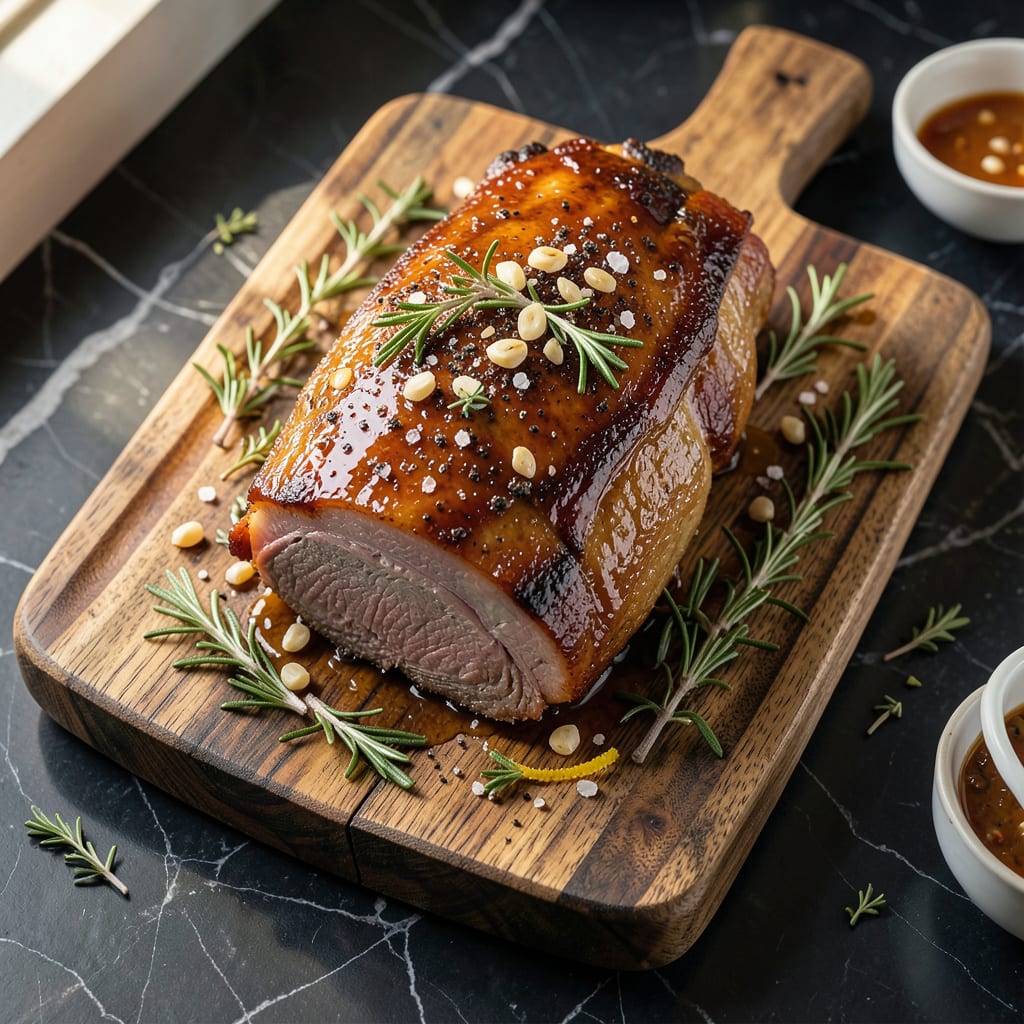
This standing rib roast delivers restaurant-quality results with a herb-crusted exterior and perfectly pink center. A proven technique ensures tender, flavorful meat every time.
The secret lies in a simple dry brine and precise roasting method. Ideal for holiday gatherings, this dish impresses without complicated steps. The herb crust adds aromatic depth to each slice.
Ingredients for The Best Standing Rib Roast
Prime beef, aromatic herbs, and a few pantry staples create this showstopping roast.
| Ingredient | Amount | Notes |
|---|---|---|
| Standing Rib Roast 🥩 | 5 lb | Bone-in, prime grade preferred |
| Kosher Salt 🧂 | 2 tbsp | Diamond Crystal brand recommended |
| Freshly Ground Black Pepper 🌶️ | 2 tsp | Coarse grind for texture |
| Dijon Mustard 🟡 | ¼ cup | Whole grain variety acceptable |
| Fresh Rosemary 🌿 | 3 tbsp | Finely chopped, stems discarded |
| Fresh Thyme 🍃 | 2 tbsp | Leaves stripped from stems |
| Fresh Garlic 🧄 | 6 cloves | Minced to fine paste |
| Extra-Virgin Olive Oil 🫒 | ¼ cup | High quality for crust |
| Unsalted Butter 🧈 | 4 tbsp | Softened to room temperature |
| Shallots 🧅 | 2 whole | Finely minced for crust |
| Dry Red Wine 🍷 | 1 cup | Full-bodied Cabernet Sauvignon |
| Beef Stock 🥣 | 1 cup | Low-sodium preferred |
The roast itself is non-negotiable—prime grade bone-in rib roast from a reputable butcher like Whole Foods or Local Butcher Shop ensures the marbling and flavor you need. Ask for the rib bones to be frenched (cleaned of meat) for presentation. The rosemary and thyme should be fresh and vibrant, not wilted. Avoid pre-minced garlic; fresh cloves provide the best aromatic impact for the herb crust.
No prime grade available? Choice grade works but may require more careful cooking. Out of fresh herbs? Dried at one-third the amount (but fresh is strongly preferred for this application). For the wine, any bold dry red works—Merlot or Malbec are excellent substitutes. The mustard can be swapped for whole grain if you prefer more texture in your crust.
Dry-brined roast can rest uncovered in the fridge for 12-24 hours. The herb paste can be made 4 hours ahead and refrigerated. Cooked leftovers keep 4-5 days refrigerated or freeze for 3 months. Always bring to room temperature before reheating to preserve moisture.
Why You’ll Love This Recipe
- I’ll be real: the sandwiches I make with the leftovers might be even better than the original meal.
- Set and Forget: I rub the roast with Dijon, rosemary, salt, and pepper, pop it in the oven, and let the oven do all the work while I relax.
- Crispy Herby Crust: The combination of Dijon and fresh rosemary creates a crust so flavorful, it’s the first thing everyone comments on.
- Holiday or Sunday Supper: This is my go-to for Christmas dinner, but honestly, it’s just as good on a regular weekend with the family.
Step-by-Step Instructions for Herb-Crusted Standing Rib Roast
This method delivers a showstopping centerpiece with a perfectly crisp crust and tender, juicy interior.
Step 1: Prepare the Herb Crust and Season the Roast
Combine the 3 tbsp fresh rosemary, 2 tbsp fresh thyme, 6 cloves fresh garlic, 2 tbsp kosher salt, and 2 tsp freshly ground black pepper in a small bowl. Finely mince the 2 whole shallots and add them to the mixture, stirring to blend evenly.
Pat the 5 lb standing rib roast completely dry with paper towels. This step is critical—any moisture will prevent the crust from adhering and crisping properly. Rub the roast all over with the 0.25 cup Dijon mustard, ensuring a thin, even layer.
Step 2: Apply the Crust and Sear the Roast
Press the herb mixture evenly onto all surfaces of the roast, creating a thick, uniform crust. The herbs should cling to the mustard base, forming a flavorful barrier that locks in juices. Drizzle the 0.25 cup extra-virgin olive oil over the crust and gently massage it in to help bind everything together.
Place the roast bone-side down in a roasting pan. Add the 4 tbsp unsalted butter to the top of the crust, letting it melt and seep into the herbs. This adds richness and promotes even browning as the roast cooks.
Step 3: Roast at High Heat for a Perfect Crust
Preheat your oven to 450°F. Roast the standing rib roast for 20 minutes at this high temperature to develop a deep, golden-brown crust. The initial blast of heat is essential for caramelizing the herb mixture and rendering the fat cap to crispy perfection.
After 20 minutes, reduce the oven temperature to 325°F. Insert a meat thermometer into the thickest part of the roast, avoiding the bone. Continue roasting until the internal temperature reaches 120-125°F for medium-rare, which should take approximately 1.5 to 2 hours depending on your oven.
Step 4: Rest and Prepare the Pan Sauce
Transfer the roast to a cutting board and tent loosely with foil. Let it rest for 20-30 minutes—this allows the juices to redistribute, ensuring every slice is moist and flavorful. The internal temperature will rise 5-10°F during this time, reaching the ideal 130-135°F for medium-rare.
Place the roasting pan on the stovetop over medium heat. Add the 1 cup dry red wine and deglaze, scraping up all the browned bits from the bottom of the pan. Simmer for 2-3 minutes until reduced by half, then add the 1 cup beef stock and simmer for another 5 minutes until slightly thickened. Strain and serve alongside the roast.
Pro Tips For Making The Best Standing Rib Roast
- Dry the Roast: Pat the standing rib roast completely dry with paper towels before seasoning—this guarantees a deep, crispy crust instead of steamed meat.
- Room Temp Start: Pull the roast out of the fridge 2 hours before cooking; I learned this the hard way after serving tough, unevenly cooked slices to dinner guests.
- Skip Cold Mustard: Let the Dijon mustard come to room temperature before brushing it on, so it spreads smoothly instead of clumping in cold streaks.
- Rest Longer: Tent it loosely with foil and let it rest 20-30 minutes after roasting—this keeps all those juices inside where they belong, not on your cutting board.
Storing and Reheating the best standing rib roast
Refrigerator Storage
Slice the roast into individual portions and transfer to airtight containers with some pan juices. Store at 40°F or below for up to 4-5 days. I always use glass containers to prevent any plastic absorption of flavors. ❄️
Freezer Storage
For longer storage, vacuum-seal slices or wrap tightly in heavy-duty foil and plastic wrap. Freeze for up to 3 months without quality loss. Label with the date—trust me, you’ll forget when you stored it!
Oven Reheating
Preheat oven to 325°F and place slices in a baking dish with a splash of beef stock. Cover with foil and warm for 15-20 minutes until reaching 130°F internally. This method preserves moisture beautifully. 🔥
Stovetop Reheating
For quick reheating, sear slices in a skillet over medium heat with 1 tbsp butter for 2-3 minutes per side. Baste with pan juices to keep the meat tender and flavorful.
Serving Leftovers
Reheat only what you’ll eat—repeated warming dries out the meat. Slice thinly against the grain for sandwiches or chop for hearty soups and stews. Always let it rest 5 minutes after reheating.
Nutrition Facts
Frequently Asked Questions
How long should it rest before slicing?
Let it rest for 20-30 minutes after removing from the oven. This allows juices to redistribute for moist, flavorful slices. Skipping this step can result in dry meat.
What’s the ideal internal temperature?
Aim for 120-125°F before resting. The temperature will rise to 130-135°F during resting, giving you perfect medium-rare. Use a meat thermometer for accuracy.
Can I use choice grade instead of prime?
Yes, but choice grade may require more careful cooking. It has less marbling than prime, so monitor the temperature closely to prevent dryness.
Why start at such a high oven temperature?
The initial 450°F blast creates a crisp, golden crust. After 20 minutes, reduce to 325°F to cook the interior evenly without over-browning.

- BBQ Sausage Recipe Oven: Smoky Depth Without the Grill - September 28, 2026
- BBQ Chicken Bowl Recipe Rice: Smoky Sweetness Over Fluffy Grains - September 28, 2026
- Beef Cutlet Recipe Ideas: Crispy Breaded Patties With Bold Seasonings - September 28, 2026