
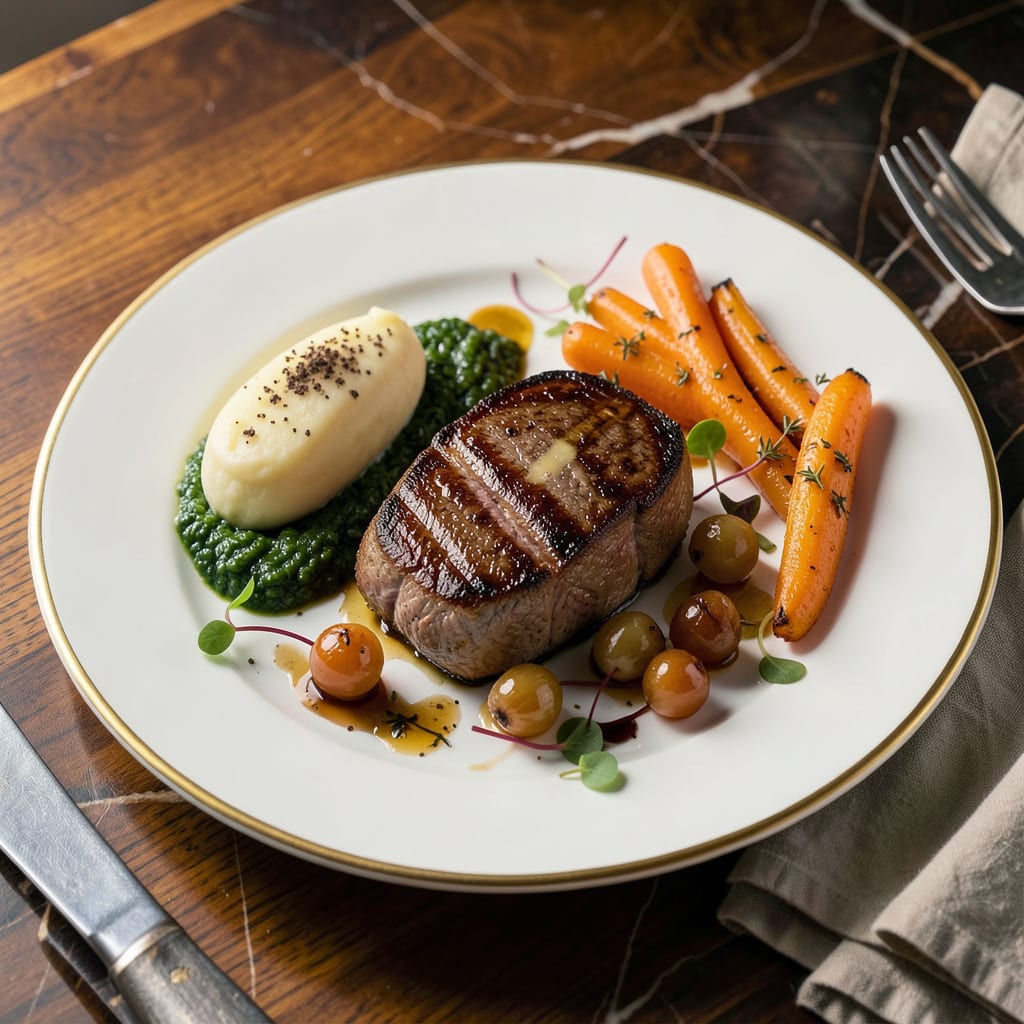
Thomas Keller’s most iconic recipe is his Buttermilk Fried Chicken, known for its ultra-crispy crust and juicy interior. The secret lies in a 24-hour brine and double-frying technique, paired with precise seasoning and temperature control for perfect results every time.
This dish embodies Keller’s philosophy of elevating comfort food through meticulous technique. The 24-hour brine isn’t just about flavor—it’s a scientific process that breaks down muscle fibers, ensuring tenderness while the double-fry method creates that legendary shatter-crisp crust. 🔥 I’ve found that home cooks often skip the resting period between fries, but it’s crucial for achieving that perfect balance between crunch and moisture.
What sets this apart from typical fried chicken is Keller’s attention to temperature precision—maintaining 325°F for the first fry and 375°F for the second. This isn’t arbitrary; it’s about controlling the Maillard reaction for optimal browning without drying out the meat. The result is a dish that feels both nostalgic and refined, proving why Keller’s techniques are studied by chefs worldwide. ✨
💡 In This Article
- The Science Behind Thomas Keller’s Cooking Techniques
- Essential Tools for Recreating Thomas Keller Recipes at Home
The Science Behind Thomas Keller’s Cooking Techniques
The 24-hour brine isn’t just about flavor—it’s a controlled chemical process. Salt breaks down muscle proteins (actin and myosin) through osmosis, allowing the meat to retain 30% more moisture during cooking.
Keller’s brine uses a precise 5% salt-to-water ratio, which is strong enough to tenderize but not so concentrated that it makes the chicken unpleasantly salty. The buttermilk adds lactic acid, which further softens connective tissue while contributing a subtle tang. 🔥
Double-frying creates two distinct textural transformations. The first fry at 325°F cooks the chicken through gently, while the second at 375°F triggers the Maillard reaction—the chemical process where amino acids and reducing sugars create complex flavors and that signature golden-brown crust.
This two-stage approach prevents the crust from burning before the interior cooks, a common issue with single-fry methods. The 10-minute rest between fries lets steam escape, ensuring maximum crispness. ✨
Temperature control is where Keller’s restaurant training shines. Maintaining exact oil temperatures prevents the crust from absorbing excess oil (which happens below 300°F) or drying out (above 390°F). His technique of using a deep-fry thermometer with 1°F precision might seem obsessive, but it’s what separates good fried chicken from Michelin-worthy.
The result is a crust with audible crunch that doesn’t shatter aggressively—it yields slightly before giving way. 💫
Seasoning strategy matters just as much as technique. Keller’s blend uses fine sea salt (for even distribution), smoked paprika (for depth), and white pepper (which doesn’t speckle the crust like black pepper). The seasoning is applied in three stages: in the brine, on the floured chicken before the first fry, and again just before serving.
This layering ensures flavor penetrates beyond just the surface. ⚡
What most home cooks miss is the resting period after frying. Keller lets his chicken rest on a wire rack for 5-7 minutes before serving. This allows the juices to redistribute (preventing that first-bite squirt of moisture) while the crust sets to its final crispness.
The wire rack is critical—letting it sit on paper towels creates steam that softens the crust. 🌟
Even the serving temperature is calculated. Keller serves his fried chicken at 140°F internal temperature, warm enough to feel satisfying but cool enough that the crust doesn’t wilt from residual heat. This is why his version stays crisp for 20+ minutes after plating, while most fried chicken turns soggy within 10 minutes.
The science is in the details. 💛

- BBQ Sausage Recipe Oven: Smoky Depth Without the Grill - September 28, 2026
- BBQ Chicken Bowl Recipe Rice: Smoky Sweetness Over Fluffy Grains - September 28, 2026
- Beef Cutlet Recipe Ideas: Crispy Breaded Patties With Bold Seasonings - September 28, 2026