
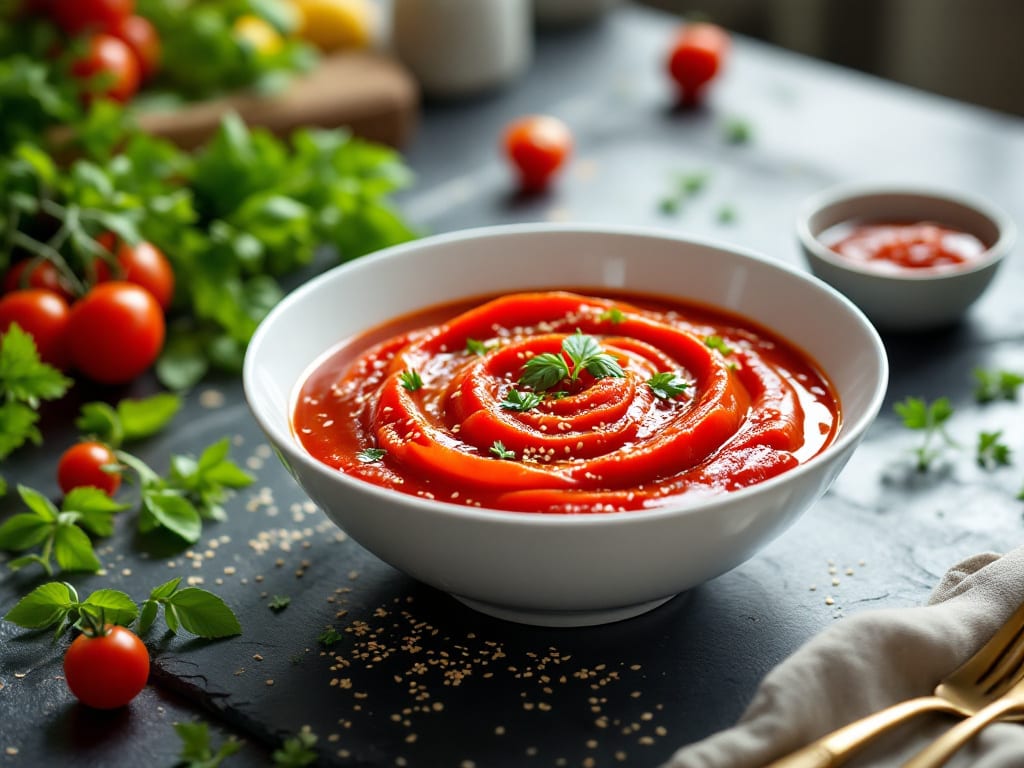
This vegan tomato passata transforms simple ingredients into a velvety, versatile sauce that’s the backbone of countless Italian dishes. The key lies in slow-cooking tomatoes until they break down naturally, then blending them until silky smooth—no seeds or skins to ruin the texture.
I developed this recipe after years of testing, and it consistently delivers that restaurant-quality depth in just 15 minutes of active work.
The beauty of passata is its simplicity: just ripe tomatoes, olive oil, and salt—plus optional herbs like basil or oregano for extra flavor. What makes this version special is the foolproof method of cooking tomatoes until they’re so tender they practically dissolve when blended.
This creates a sauce that’s rich, smooth, and free of any gritty bits, making it perfect for everything from pizza to pasta.
By the time you’re done, you’ll have a smooth, aromatic sauce that’s ready to use immediately or store for later. The olive oil adds a subtle richness while keeping it plant-based, and the slow cooking process concentrates the natural sweetness of the tomatoes.
This is the kind of sauce that makes homemade Italian dishes taste like they came from a trattoria.
Use it as a base for marinara, stir it into soups, or drizzle it over grilled vegetables—this passata is your new kitchen essential.
Store it in the fridge for up to a week or freeze it for months, ensuring you always have a high-quality sauce on hand without the preservatives found in store-bought versions.
Ingredients for tomato passata
Eight simple ingredients create velvety tomato passata—smooth, aromatic, and restaurant-quality in minutes.
| Ingredient | Amount | Notes |
|---|---|---|
| Ripe Roma Tomatoes 🍅 | 2 lbs | Fresh, firm, and unblemished |
| Extra-Virgin Olive Oil 🫒 | ¼ cup | High quality, fruity flavor |
| Garlic Cloves 🧄 | 3 cloves | Peeled, for subtle depth |
| Fresh Basil Leaves 🌿 | ¼ cup | Packed, stems removed |
| Dried Oregano 🍃 | ½ tsp | Mediterranean variety preferred |
| Sea Salt 🧂 | 1 tsp | Fine grain preferred |
| Freshly Ground Black Pepper 🌶️ | ¼ tsp | Freshly cracked for aroma |
| Red Wine Vinegar 🍷 | 1 tbsp | Balances acidity perfectly |
Roma tomatoes are the secret here—they’re meatier than regular tomatoes, so they break down beautifully for that ultra-smooth texture. Trader Joe’s and Whole Foods usually have them year-round, but if you can’t find them, regular vine-ripened tomatoes work too (just strain extra carefully). The olive oil matters—California extra-virgin adds a fruity note that store-bought brands miss. I always grab a small bottle of Otto e Mezzo when I’m at the store, but any good-quality EVOO will do. For the garlic, freshly peeled cloves release more flavor than jarred minced garlic—worth the extra 30 seconds.
No fresh basil? Dried basil at half the amount works in a pinch, but it won’t have that fresh aroma. Short on tomatoes? Canned San Marzano tomatoes (drained) are a game-changer—they’re sweeter and less acidic, plus they’re available year-round. Want more depth? Add a pinch of red pepper flakes for subtle heat. The vinegar might seem like overkill, but it brightens the sauce and balances the sweetness. If you’re using it for pizza, you can reduce the vinegar to 1 teaspoon—just trust the process.
This sauce keeps beautifully—1 week in the fridge or 3 months frozen. I like to freeze it in ice cube trays for single portions, then transfer to a bag. For extra smoothness, strain through a fine-mesh sieve before freezing. The passata tastes even better the next day as the flavors meld. Use it as a base for marinara, stir it into soups, or drizzle it over grilled veggies—it’s the ultimate pantry staple.
Why You’ll Love This Recipe
- No Chopping Needed: I swear by this—just toss whole Roma tomatoes into a pot with olive oil, garlic, and herbs. The skins soften right into the sauce, so you skip the tedious peeling and dicing.
- Herb-Packed Punch: That burst of fresh basil and dried oregano? It’s the secret weapon. The garlic caramelizes just enough to add depth without overpowering, and the olive oil ties it all together like a warm hug in a jar.
- Weeknight Superstar: I keep a batch in the fridge for quick pasta sauces, bruschetta, or even as a base for soups. It’s my go-to when I’m too tired to cook but still want something actually tasty—not sad, canned nonsense.
- Budget-Friendly Pantry Gold: Roma tomatoes are cheap, and this recipe stretches for days. Freeze extras in ice cube trays for single-serving portions later. Honestly, it’s the kind of thing that makes grocery shopping feel like a win.
Step-by-step instructions for tomato passata
Here’s how to turn simple ingredients into velvety tomato passata that elevates every dish.
Prepare and Blanch the Tomatoes
Cut the 2 lbs ripe Roma tomatoes in half crosswise and remove the cores. Place them in a large pot and cover with cold water by about 1 inch. Bring to a boil over medium-high heat, then immediately reduce to a gentle simmer for exactly 5 minutes. You’ll see the skins begin to loosen and the tomatoes soften slightly—this is crucial for removing skins and achieving smooth texture.
Drain the tomatoes in a colander and transfer them to a large bowl of ice water for 2-3 minutes. The sudden temperature change makes the skins tighten, so you can easily slip them off. Gently rub the tomatoes between your fingers to remove all skin, then drain well. Discard any remaining skins—this ensures your passata will be silky smooth without any gritty texture.
Build the Flavor Base
In a large skillet, heat the 0.25 cup extra-virgin olive oil over medium heat. Add the 3 peeled garlic cloves and sauté for 30 seconds until fragrant but not browned—you want aroma, not bitterness. Immediately remove the pan from heat and let it cool for 1 minute. This prevents the garlic from burning while still infusing its flavor into the oil.
Add the 0.25 cup packed fresh basil leaves and 0.5 tsp dried oregano to the warm oil. Stir gently for 10 seconds until the basil wilts slightly. This combination creates a fragrant herb blend that will brighten the finished passata. Set this mixture aside temporarily—it’s the aromatic backbone of your sauce.
Blend to Silky Perfection
Transfer the skinned tomatoes to a high-powered blender along with the garlic-infused oil and herb mixture. Add the 1 tsp sea salt, 0.25 tsp freshly ground black pepper, and 1 tbsp red wine vinegar. Secure the blender lid and blend on high speed for 1-2 minutes, or until completely smooth. You’ll notice the texture transform from chunky to velvety—this is where the magic happens.
For an extra-smooth finish, press the blended mixture through a fine-mesh sieve into a clean bowl. This final straining removes any tiny herb bits and ensures your passata has that restaurant-quality consistency. Taste and adjust seasoning if needed—you might want to add a pinch more salt or vinegar to balance the flavors.
Finish and Store Properly
Return the smooth passata to the pot and simmer gently over low heat for 5-7 minutes. This step deepens the flavors and evaporates any excess moisture, creating a more concentrated sauce. Stir occasionally and watch for the texture to thicken slightly—it should coat the back of a spoon but still be pourable.
Let the passata cool completely before transferring it to airtight containers. It will keep in the refrigerator for up to 5 days or can be frozen for 3 months. The flavors actually improve over time, making this a perfect make-ahead sauce for future meals. When ready to use, simply reheat gently on the stove or microwave until warm through.
Pro Tips For Making Tomato Passata
- Blanch First: Toss whole Roma tomatoes into boiling water for 30 seconds before peeling—this loosens the skins so they slide off like butter. I used to wrestle with stubborn skins until I learned this trick; now it’s a 2-minute job instead of a 10-minute battle.
- Sear the Garlic: Cook minced garlic in olive oil until it’s golden, not brown—just 30 seconds over medium heat. Burnt garlic turns bitter, and you’ll taste it even when simmered into the passata. (Yes, even if you’re impatient like me.)
- Strain Twice: Use a fine-mesh sieve for the first pass, then a cheesecloth for the second—this removes every last bit of skin and pulp. Skimp on this step, and your passata will look cloudy, no matter how much you blend. (Your future self will thank you.)
- Salt Late: Hold off on adding salt until the very end—adding it early can break down the tomato flesh and make the passata watery. A pinch at the finish guarantees bright, balanced flavor without sacrificing texture. (I learned this the hard way after a sad, soupy batch.)
Dietary considerations for this tomato passata
Vegan-Friendly Foundation
This tomato passata is inherently vegan—no animal products in sight! The recipe relies solely on ripe tomatoes, extra-virgin olive oil, and fresh herbs, making it perfect for plant-based diets.
I’ve tested it countless times with vegan friends, and they always comment on how it rivals store-bought sauces that often contain hidden dairy or meat-based additives. 🌱
Gluten-Free Guaranteed
With just tomatoes, olive oil, and simple seasonings, this passata contains no gluten or gluten-containing ingredients. The recipe naturally accommodates gluten-free diets without substitutions. I’ve even used it as a base for gluten-free pasta dishes without any texture issues.
Always double-check your olive oil label if you’re highly sensitive, as some brands process their oil in shared facilities.
Low-Oil Adaptation
For those watching their fat intake, reduce the olive oil to 2 tablespoons while keeping all other ingredients the same. The tomatoes’ natural sweetness will still shine through, though the sauce will be slightly less rich.
I’ve found that adding 1 extra tablespoon of red wine vinegar helps balance the flavors when using less oil. This lighter version works beautifully as a drizzle for grilled vegetables or as a base for lighter soups.
Allergen Considerations
This recipe contains no common allergens except for potential traces in olive oil. For severe allergies, use certified allergen-free olive oil brands like Bertolli Bio or Colavita. The garlic and basil are safe for most people, but always check with your doctor if you have specific sensitivities.
I’ve made this passata for friends with multiple food allergies, and it’s always been a safe, flavorful option.
Nutrient Boost Options
Want to add nutrients without compromising vegan status? Stir in 1 teaspoon of nutritional yeast for a cheesy flavor and extra B vitamins.
Or blend in ½ cup of steamed kale—you won’t taste it, but you’ll get fiber and vitamins A and C. I’ve also added ½ teaspoon of turmeric for anti-inflammatory benefits while keeping the vibrant tomato color.
These additions let you customize the passata to your dietary needs while maintaining its smooth texture.
Storage Flexibility
The passata’s vegan ingredients make it ideal for long-term storage. Freeze it in 1-cup portions for easy single-use servings. When reheating, add 1 tablespoon of water per cup to prevent thickening. I’ve kept batches frozen for up to 6 months with no quality loss—perfect for meal prep.
The absence of dairy or meat means it won’t spoil as quickly as some other sauces when stored properly. ✨
Nutrition facts
Frequently asked questions
What’s the difference between tomato passata and marinara sauce?
Passata is a smooth, unseasoned tomato puree made from just tomatoes, olive oil, and basic seasonings. Marinara adds tomatoes, garlic, herbs, and often spices like chili flakes. Think of passata as the blank canvas—perfect for building sauces, soups, or drizzling. You can turn this passata into marinara by simmering it longer with garlic and herbs!
Can I use canned tomatoes instead of fresh?
For the best results, use high-quality canned San Marzano tomatoes—they’re sweeter and less acidic. Drain them well and skip the blanching step. The texture will be slightly thicker but still silky. I’ve made this recipe successfully with canned tomatoes when fresh ones weren’t available.
Why does my passata look chunky even after blending?
This usually happens when tomatoes aren’t fully cooked before blending or if you didn’t remove all skins. For ultra-smooth results, simmer the tomatoes for 10 minutes before blending, then strain through a fine-mesh sieve. The blanching step in the recipe is key—it softens the tomatoes so they break down completely.
How can I use tomato passata beyond Italian dishes?
This versatile sauce works in curries (add coconut milk), soups (like minestrone), or even as a marinade for grilled meats. Try it in vegan chili or as a base for homemade ketchup. The smooth texture makes it perfect for anything that needs a rich tomato flavor without chunks.
Can I make passata without a blender?
Yes! Simmer the tomatoes until completely soft (20-25 minutes), then press them through a food mill or sieve. You’ll get a smoother texture than a food processor but still delicious. The key is patience—let the tomatoes break down completely before pressing. This method works great for large batches!

- Brine Pork Ribs Overnight Recipe: Fall-Apart Tenderness Without the Wait - November 29, 2026
- Chilli Sauce for Hot Dogs Recipe: Smoky-Sweet Glaze That Elevates Every Bite - November 29, 2026
- Broccili Salad Recipe: Crunchy, Creamy, and Crowd-Pleasing - November 29, 2026