
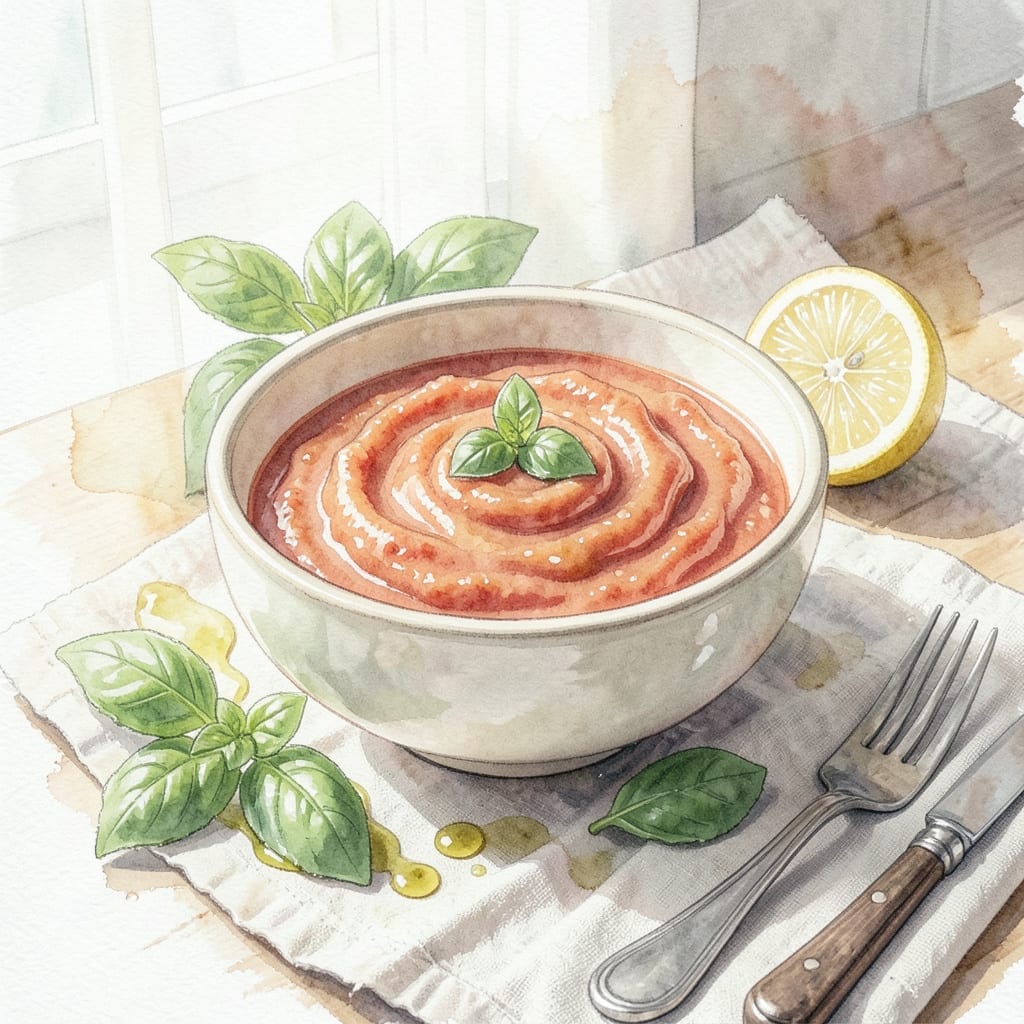
This tomato puree serves as the foundation for countless dishes, from rich pasta sauces to hearty soups.
I developed this method to create a smooth, concentrated base that captures the essence of fresh tomatoes. The process removes excess moisture while intensifying flavor, resulting in a versatile ingredient that enhances any recipe.
Whether you’re making marinara, chili, or curry, this puree delivers consistent quality and depth. It freezes beautifully, so you can preserve summer tomatoes for year-round use.
With just tomatoes and a touch of salt, you’ll have a pantry staple that elevates your cooking to professional standards.
Ingredients for Tomato Puree Recipe Ideas
Six simple ingredients transform into a versatile, professional-grade puree for endless dishes.
| Ingredient | Amount | Notes |
|---|---|---|
| Fresh Tomatoes 🍅 | 4 lb | Ripe, Roma or San Marzano preferred |
| Sea Salt 🧂 | 1 tsp | Fine grain, adjust to taste |
| Extra-Virgin Olive Oil 🫒 | 1 tbsp | Optional, for cooking process |
| Fresh Basil Leaves 🌿 | ¼ cup | Optional, for flavor depth |
| Garlic Cloves 🧄 | 2 cloves | Peeled, minced optional |
| Lemon Juice 🍋 | 1 tbsp | Freshly squeezed, for brightness |
The tomatoes are everything here. Roma or San Marzano varieties give you the best meat-to-seed ratio, meaning thicker puree with less cooking. Hit farmers markets in late summer for peak flavor, or use canned San Marzano tomatoes in winter—they’re consistently high quality. Don’t bother with those pale, mealy supermarket tomatoes out of season (they’ll taste watery no matter what you do).
Want to keep it ultra-simple? Skip the basil and garlic—the puree will still be delicious. No fresh tomatoes? High-quality canned tomatoes work perfectly, just drain most of the juice first. For a smoother texture, peel the tomatoes before cooking (blanch in boiling water, then ice bath). If you’re using a food mill, peeling isn’t necessary (it’ll handle the skins).
This freezes like a dream. Portion into ice cube trays for small batches, or 1-cup portions in freezer bags. Keeps in the freezer for 6-12 months—thaw in the fridge overnight or drop frozen cubes directly into hot soups or sauces.
Why You’ll Love This Recipe
- Minimal Effort: I just blitz fresh tomatoes with garlic and basil—no fancy techniques, just a blender and five minutes.
- Sun-Kissed Flavor: The olive oil and sea salt make the tomatoes taste like they came straight from an Italian garden.
- Pasta Night Hero: Honestly, it’s my secret weapon for quick dinners—toss with pasta, use in stews, or freeze for later.
- Budget Keeper: A handful of ripe tomatoes and pantry staples, and I’ve got a jar of sauce that costs pennies compared to store-bought.
Step-by-Step Instructions for Tomato Puree
Transform your fresh tomatoes into a smooth, versatile puree with this simple method.
Step 1: Prepare and Blanch the Tomatoes
Start by washing the 4 lb fresh tomatoes thoroughly under cold running water. Remove any stems and core the tomatoes by cutting a small cone-shaped piece from the top of each one. This step ensures no bitter pieces remain in your puree.
Bring a large pot of water to a rolling boil. While waiting, prepare an ice bath in a large bowl. Using a sharp knife, score a small “X” on the bottom of each tomato. This scoring helps the skins loosen during blanching for easier removal.
Carefully lower the tomatoes into the boiling water for 30-60 seconds until the skins begin to split at the scored areas. Immediately transfer them to the ice bath to stop the cooking process. The skins should slip off easily with your fingers or a paring knife.
Step 2: Remove Skins and Seeds
Once cooled, peel the tomatoes by gently pulling the skin away from the scored areas. The blanching makes this process nearly effortless. Discard the skins or compost them if you prefer.
Cut each peeled tomato in half horizontally (across the equator). Using your fingers or a small spoon, scoop out the seeds and gel into a bowl. I reserve these for stock or discard them, as they can add unwanted bitterness to the puree. The remaining tomato flesh should be firm and meaty.
Step 3: Process the Tomatoes
Place the peeled and seeded tomato halves in a blender or food processor. Add the 1 tsp sea salt to enhance the natural sweetness of the tomatoes. If you’re using the optional 1 tbsp extra-virgin olive oil, drizzle it in now—this adds richness and helps create a smoother texture.
For additional flavor depth, include the 2 cloves garlic cloves (peeled) and 0.25 cup fresh basil leaves. Pulse until the mixture reaches your desired consistency. I prefer a completely smooth puree, which takes about 1-2 minutes of blending, but you can leave it slightly chunky if you like texture.
Step 4: Finish and Store the Puree
Once blended, taste and adjust seasoning if needed. Stir in the 1 tbsp lemon juice to brighten the flavors and balance the natural acidity. This step makes a noticeable difference in the final taste, adding a fresh, vibrant note.
Transfer the puree to clean, airtight containers. It will keep in the refrigerator for up to 5 days or can be frozen for up to 6 months. For freezing, I recommend portioning it into ice cube trays first, then transferring the frozen cubes to a freezer bag for easy use in recipes later.
The finished puree should have a vibrant red color and a smooth, thick consistency. You’ll notice it has a concentrated tomato flavor that works beautifully as a base for sauces, soups, or any dish calling for tomato puree.
Pro Tips For Making Tomato Puree Recipe Ideas
- Blanch the Tomatoes: Drop tomatoes into boiling water for 30 seconds, then shock in ice water—peeling them is suddenly effortless. I learned this the hard way after struggling with a knife for 20 minutes.
- Salt the Puree Early: Add sea salt right after blending, not at the end. The flavor has time to meld, and you’ll use less salt overall.
- Skip the Overcooking: Simmer just until thickened, about 15-20 minutes. After burning three batches, I finally figured out that too long turns the puree bitter.
- Use Cold Water for Basil: Rinse basil leaves in cold water and pat dry before chopping—this keeps them vibrant and prevents wilting. Sounds weird, but it works.
Storing and Reheating tomato puree recipe ideas
Refrigerator Storage
Let your puree cool completely before transferring to airtight containers. I use glass jars with tight-fitting lids for the best seal. It will keep in the fridge for up to 5 days without losing freshness. ❄️
Freezer Storage
For longer storage, portion into ice cube trays or small freezer bags. Once frozen solid, transfer cubes to a labeled bag. This method preserves quality for 6-12 months at 0°F or below. I always date my bags for easy tracking.
Thawing Methods
Overnight thawing in the fridge is best for even results. For quick use, place the sealed container in a bowl of cold water. Avoid microwave thawing as it can create hot spots that degrade the puree’s texture.
Reheating Techniques
Gently warm the puree in a saucepan over low-medium heat for 5-7 minutes, stirring occasionally. Add a splash of water if it seems too thick. Never boil vigorously as this can break down the natural pectin.
For soups or stews, add frozen cubes directly to the hot liquid. They’ll melt quickly while infusing the dish with concentrated tomato flavor. 🔥
Nutrition Facts
Frequently Asked Questions
What dishes work best with this puree?
Use it as a base for pasta sauces, soups, or braised dishes. It adds depth to chili, curries, and even pizza sauce. The concentrated flavor works well in both quick meals and slow-cooked recipes.
Can I make this without a blender?
Yes! A food mill or fine-mesh sieve works for a smoother texture. Hand-crushing peeled tomatoes creates a rustic version with more texture. Both methods skip the seeds for the best results.
How do I adjust thickness for different recipes?
For thicker sauces, simmer the puree for 10-15 minutes to reduce. Thin it with water, broth, or cream for soups or stews. The natural pectin helps maintain body when cooked.

- BBQ Sausage Recipe Oven: Smoky Depth Without the Grill - September 28, 2026
- BBQ Chicken Bowl Recipe Rice: Smoky Sweetness Over Fluffy Grains - September 28, 2026
- Beef Cutlet Recipe Ideas: Crispy Breaded Patties With Bold Seasonings - September 28, 2026