
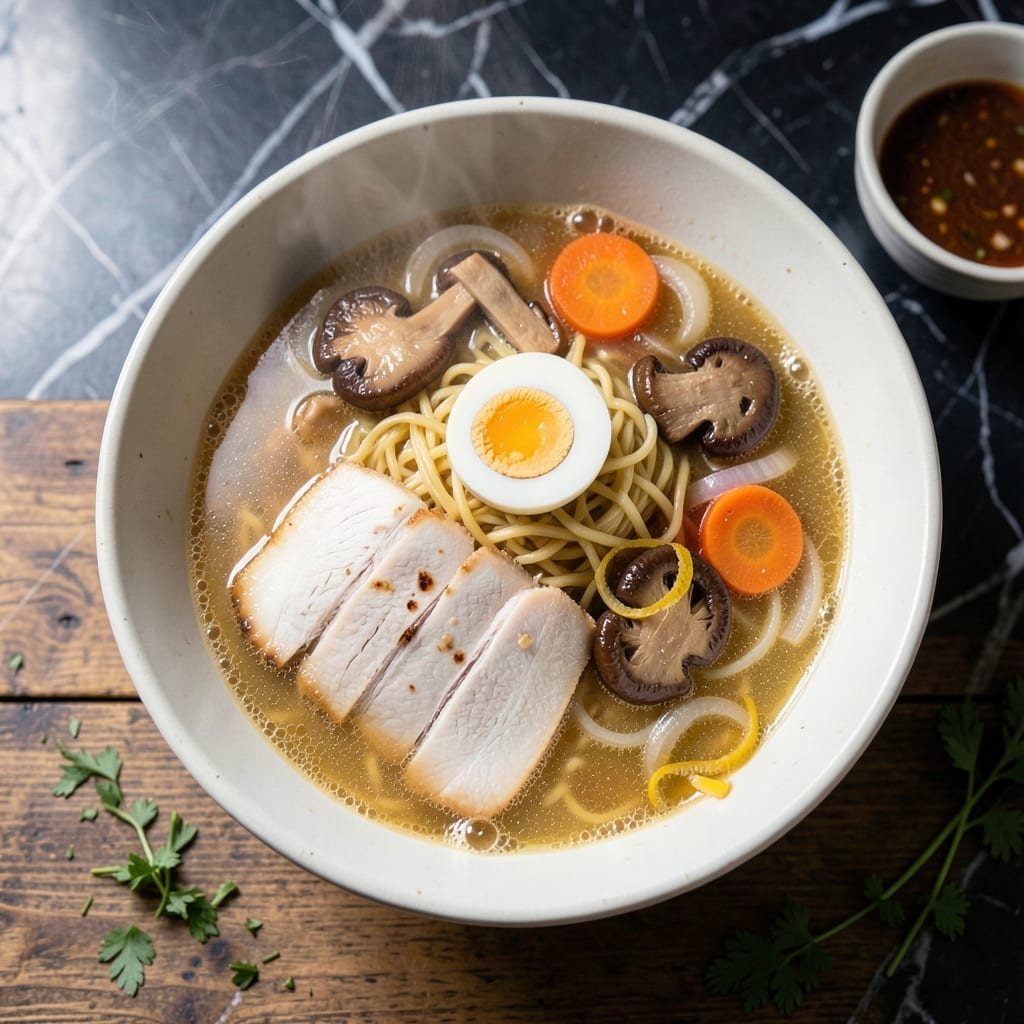
This traditional ramen delivers the authentic experience you’d find in a Tokyo shop, with a broth so rich it coats your spoon.
The chicken broth is simmered for hours with aromatic vegetables and bones, creating a tender base with deep umami flavor. Fresh noodles and carefully selected toppings complete the bowl.
What sets this apart is the layering of flavors – from the savory broth to the perfectly cooked noodles and garnishes. Each element is prepared with care to maintain authenticity.
Serve immediately while hot for the best experience. This is comfort in a bowl.
Ingredients for Traditional Chicken Ramen
Fresh noodles, rich broth, and perfect toppings make this bowl unforgettable. Simple but authentic.
| Ingredient | Amount | Notes |
|---|---|---|
| Chicken Bones 🍗 | 2 lb | Necks, backs, or wings for stock |
| Chicken Breast 🍗 | 1 lb | Boneless, skinless, sliced thin |
| Dried Shiitake Mushrooms 🍄 | ½ oz | For umami depth in broth |
| Onion 🧅 | 1 whole | Yellow or white, quartered |
| Carrots 🥕 | 2 whole | Peeled and chunked |
| Garlic Cloves 🧄 | 6 cloves | Smashed for broth infusion |
| Fresh Ginger 🌿 | 2 tbsp | Peeled and sliced |
| Green Onions 🧅 | 4 whole | Thinly sliced for garnish |
| Ramen Noodles 🍜 | 12 oz | Fresh or dried, uncooked |
| Soft-Boiled Eggs 🥚 | 4 whole | Marinated in soy if desired |
| Soy Sauce 🫒 | ¼ cup | Low-sodium preferred |
| Miso Paste 🥣 | 2 tbsp | White or red for flavor |
| Sesame Oil 🫒 | 1 tbsp | Toasted for aroma |
| Nori Sheets 🌿 | 2 sheets | Cut into strips for garnish |
| Bok Choy 🥬 | 2 whole | Baby or Shanghai variety |
The broth starts with chicken bones—necks and backs have the most gelatin. Whole Foods or an Asian market will have them if your regular store doesn’t. Don’t skip the shiitake mushrooms; they add that deep umami you’re after. For the chicken breast, look for air-chilled if you can find it—better texture. Fresh noodles are ideal, but dried works in a pinch (just check the cook time).
No dried shiitakes? Cremini or portobello stems add similar depth. Miso paste can be white or red—white is milder. If you’re out of sesame oil, toast some regular sesame seeds and steep in hot oil for 10 minutes. The eggs can be hard-boiled if you prefer firmer yolks. Nori sheets keep forever in the pantry, so grab a pack for future bowls.
Broth keeps 5 days in the fridge or freezes for 3 months. Noodles cook fresh, so don’t prep ahead. Slice the green onions and prep toppings just before serving—nothing wilts faster. Leftovers? Store noodles and broth separately to avoid mush.
Why You’ll Love This Recipe
- One Pot Magic: Most of the work is just letting the chicken bones and shiitakes simmer while I do other things.
- Deep Umami Bomb: The dried shiitakes and slow-cooked chicken bones create this rich, savory broth I could drink straight from the pot.
- Meal Prep Hero: I make a big batch on Sunday and portion it out for lunches all week—just add noodles when ready.
- Budget Stretcher: A whole chicken’s worth of bones and one breast gives me four generous servings without breaking the bank.
Step-by-Step Instructions for Traditional Chicken Ramen
Here’s the method I use to build layers of authentic flavor in every bowl.
Step 1: Build the Umami-Rich Broth Base
In a large stockpot, combine the 2 lb Chicken Bones, 1 whole Onion, 2 whole Carrots, 6 cloves Garlic Cloves, 2 tbsp Fresh Ginger, and 0.5 oz Dried Shiitake Mushrooms. Cover with 10 cups of cold water and bring to a boil over high heat.
Once boiling, reduce to a simmer and let it cook uncovered for 2-3 hours until the broth reduces by about a third and develops a deep, golden color. Skim off any foam that rises to the surface—this keeps your broth clear and clean. The aroma should be rich and savory, promising the depth of flavor to come.
Step 2: Slice and Marinate the Chicken Breast
While the broth simmers, slice the 1 lb Chicken Breast thinly against the grain. This ensures tenderness in every bite. Place the slices in a bowl and drizzle with 0.25 cup Soy Sauce and 1 tbsp Sesame Oil.
Let the chicken marinate for at least 15 minutes, or up to 1 hour in the refrigerator for deeper flavor. The soy sauce will give the chicken a beautiful color and savory taste, while the sesame oil adds a subtle nuttiness that complements the broth perfectly.
Step 3: Strain Broth and Add Miso
Strain the broth through a fine-mesh sieve into a clean pot, discarding the solids. Return the broth to medium heat and stir in the 2 tbsp Miso Paste until fully dissolved. Taste and adjust seasoning if needed—the miso should add a rich, fermented depth without overpowering the natural chicken flavor.
Keep the broth warm but not boiling. Boiling can make the miso bitter and cloud the broth. You want it hot enough to cook the noodles and chicken, but gentle enough to preserve all those beautiful flavors you’ve built.
Step 4: Cook Noodles and Chicken
Add the 12 oz Ramen Noodles to the simmering broth and cook according to package instructions, usually 3-4 minutes for fresh noodles or 4-5 minutes for dried. About 2 minutes before the noodles are done, add the marinated chicken slices.
The chicken will cook quickly in the hot broth—it’s done when it turns opaque and floats to the surface. This timing ensures both the noodles and chicken finish together, ready to be ladled into bowls.
Step 5: Assemble Bowls with Toppings
Divide the noodles and broth among four bowls. Top each with half of a soft-boiled egg, a few leaves from the 2 whole Bok Choy (lightly blanched in the broth if desired), and thinly sliced 4 whole Green Onions.
Cut the 2 sheets Nori Sheets into strips and arrange on top for a touch of oceanic umami. The egg yolks should be runny, ready to mix into the broth for extra richness. Serve immediately while everything is hot and the aromas are at their peak.
Pro Tips For Making Traditional Chicken Ramen
- Simmer Low and Slow: Keep your chicken bone broth at a gentle simmer, never a rolling boil—180-200°F for 8-12 hours extracts rich collagen without making the broth cloudy. I learned this the hard way after my first three batches turned out greasy.
- Toast the Mushrooms: Dry-toast your shiitake mushrooms in a pan for 2 minutes before adding liquid. Sounds weird, but it works: this deepens their umami flavor before they hit the broth.
- Skip the Cold Start: Par-cook your chicken breasts separately in the broth for 15 minutes, then remove them—this prevents the meat from turning stringy while the bones keep simmering. My grandmother swore by this, and she was right.
- Strain Twice: After the first strain through a colander, run the broth through a cheesecloth or fine-mesh sieve. This isn’t the prettiest method, but it’s the tastiest way to get that silky, restaurant-quality clarity.
Dietary Considerations for This Recipe
Gluten-Free Option
Swap regular ramen noodles for 12 oz gluten-free rice noodles or brown rice ramen. Brands like Lotus Foods or King Soba work well. Ensure your soy sauce is tamari to keep it gluten-free.
Lower Sodium Choice
Use low-sodium chicken broth as your base and reduce added soy sauce by half. Replace with coconut aminos for a milder, lower-sodium alternative. Taste as you go—you can always add more later.
Dairy-Free By Default
This recipe is naturally dairy-free since traditional ramen relies on umami from chicken, miso, and soy. Double-check your miso paste and nori sheets labels, as some brands add dairy derivatives.
Vegetarian Adaptation
Replace chicken bones with 8 cups vegetable broth and swap chicken breast for tofu or mushrooms. Use shiitake stems for extra depth. The miso and soy will still deliver that rich, savory flavor. 💪
Egg-Free Version
Skip the soft-boiled eggs and add extra bok choy or bean sprouts for texture. For protein, marinated tofu cubes work beautifully. The dish remains just as hearty and satisfying.
Nut Allergy Note
Traditional ramen is nut-free, but always verify your miso paste and sesame oil labels. Some brands process in facilities with nuts. When in doubt, stick to certified nut-free brands like Miso Master. 🥗
Nutrition Facts
Frequently Asked Questions
How long does the broth need to simmer?
Simmer the broth for 2-3 hours to develop deep, rich flavor. This allows the chicken bones and vegetables to release their gelatin and umami compounds fully.
What can I use instead of miso paste?
If you don’t have miso, use 1 tbsp soy sauce plus 1 tsp fish sauce for a similar umami boost. The flavor won’t be identical but will still be delicious.
Can I make the broth ahead of time?
Yes! The broth keeps for 5 days refrigerated or 3 months frozen. Reheat gently before adding noodles and toppings to serve.
Why are my noodles mushy?
Noodles overcook quickly in hot broth. Add them last and serve immediately. For leftovers, store noodles and broth separately to avoid sogginess.

- Blue Zone Recipe Ideas: Longevity-Boosting Meals for Vibrant Living - September 28, 2026
- Beefaroni Recipe With Tomato Soup: One-Pot Nostalgic Comfort - September 28, 2026
- Bread Recipe KitchenAid Mixer: Foolproof Loaf With Perfect Rise - September 28, 2026