
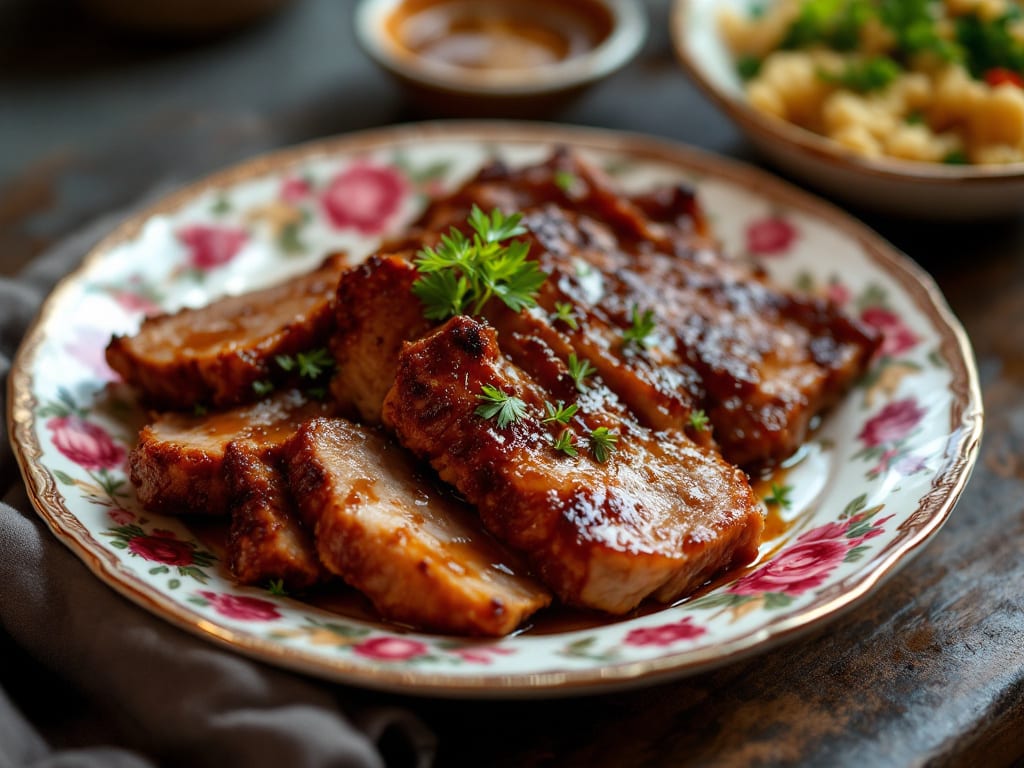
Slow-roasting pernil is how Puerto Rican families transform a simple pork shoulder into a celebration-worthy centerpiece, and this traditional recipe delivers exactly that—tender, spice-rubbed perfection with crackling golden skin.
The secret lies in the slow cook, where hours of low heat melt fat into juices that baste the meat from within, creating that signature moist yet crispy texture. I’ve perfected this method over years of family gatherings, where the aroma alone brings everyone running.
What sets this apart is the marinade—a balanced blend of adobo, oregano, garlic, and citrus that penetrates deeply while keeping the flavors bright, not overpowering.
The key is patience: letting the meat rest overnight in the marinade ensures maximum flavor absorption, and the 300°F oven guarantees even cooking without drying out. This isn’t just a dish; it’s a tradition that turns a humble cut of pork into something unforgettable.
By the time it emerges from the oven, your pernil will be fork-tender with crisp edges, glistening under a glossy crust that’s worth the wait.
Serve it sliced thick over arroz con gandules and tostones, where the juices soak into the rice and the spices harmonize with the island’s classic sides. The leftovers? Even better the next day, as the flavors deepen and the meat becomes irresistibly shreddable.
This recipe stays true to Puerto Rican roots while making it accessible for home cooks—no shortcuts, just the authentic method that’s been passed down for generations. Whether it’s for a fiesta or a Sunday family meal, this pernil will be the star of your table.
Let’s get started on the steps that bring it to life.
Ingredients for traditional puerto rican pernil
Authentic Puerto Rican flavors transform humble pork shoulder into unforgettable pernil through slow-roasting and citrus-spice harmony.
| Ingredient | Amount | Notes |
|---|---|---|
| Pork Shoulder (Bone-In) 🥩 | 6 lb | Center-cut, well-marbled preferred |
| Adobo Seasoning 🌶️ | ½ cup | Homemade or store-bought blend |
| Dried Oregano 🌿 | 2 tbsp | Mexican oregano preferred |
| Garlic Cloves 🧄 | 8 cloves | Peeled, minced for marinade |
| Orange Juice (Fresh) 🍊 | ½ cup | From 1-2 oranges, strained |
| Lime Juice (Fresh) 🍋 | ¼ cup | From 1-2 limes, strained |
| Olive Oil 🫒 | ¼ cup | Extra-virgin for richness |
| Kosher Salt 🧂 | 1 ½ tbsp | Diamond Crystal preferred |
| Ground Black Pepper 🌶️ | 1 tsp | Freshly ground for best flavor |
| Bay Leaves 🌿 | 4 whole | Dried, for infusion |
| Cumin Seeds 🌿 | 1 tsp | Toasted for deeper aroma |
| Fresh Cilantro 🌿 | ¼ cup | Chopped, for garnish |
| Fresh Orange Zest 🍊 | 1 tbsp | From 1 orange, for brightness |
The pork shoulder is the foundation, and center-cut with good marbling ensures both tenderness and flavor. Local butcher shops or Costco typically carry the best cuts—ask for bone-in to maximize juiciness. For adobo seasoning, Penzeys or local Latin markets offer the most authentic blends, but a homemade mix of chili powder, garlic powder, and salt works beautifully. The citrus components—freshly squeezed orange and lime juice—are non-negotiable; bottled versions lack the bright acidity needed to balance the rich pork. Toast your cumin seeds in a dry pan for 30 seconds before grinding to unlock their full aroma, a professional technique that elevates the dish from good to exceptional.
No Mexican oregano? Regular dried oregano at double the amount will suffice, though it lacks the distinctive earthy depth. Substituting bottled citrus juice? Add 1 tbsp extra sugar to compensate for lost brightness. For the olive oil, avoid light or refined varieties—they lack the fruity complexity needed to carry the marinade’s flavors. The bay leaves can be omitted if unavailable, but their subtle earthiness complements the citrus beautifully. When prepping garlic, roast it whole at 400°F for 10 minutes before mincing for a sweeter, more nuanced flavor profile. These small refinements ensure your pernil stays true to its Puerto Rican heritage while accommodating any pantry limitations.
Marinated pork shoulder keeps up to 2 days in the refrigerator, though flavor penetration improves with overnight marinating. Once roasted, the pernil maintains peak quality for 4 days refrigerated or 3 months frozen. For reheating, low oven (300°F) for 15 minutes preserves moisture better than microwave methods. The leftovers transform into arroz con pernil or pernil sandwiches, where the tender meat shines. Store unused marinade separately—it makes a fantastic braising liquid for beans or rice, maximizing every ingredient’s potential.
Why You’ll Love This Recipe
- One-Pan Magic: I swear by this—just slather the pork with adobo, garlic, and oregano, then let the oven do the work. No chopping, no fussing, and that bone-in shoulder stays juicy while the skin gets crispy enough to snap (my kids test it every time).
- Citrus-Kissed Crisp: That fresh orange juice? It’s the secret. The acid tenderizes the meat while cutting through the richness, leaving you with a caramelized crust that’s dangerously good. Honestly, I’ve tried shortcuts—none compare.
- Party in a Pan: This feeds a crowd without stress. I’ve served it at birthdays, holidays, and even a last-minute dinner for my boss’s family. The leftovers? Even better cold in sandwiches—trust me, it’s the ultimate make-ahead hero.
- Budget-Friendly Feast: Pork shoulder is cheap, and this recipe stretches it far. I’ve made it for $15 and fed eight people. Plus, the adobo and oregano are pantry staples—no specialty trips needed. (Yes, even on a Tuesday night.)
Step-by-step instructions for traditional Puerto Rican pernil
Here’s the method for authentic pernil—slow-roasted to juicy perfection with a signature crust.
Prepare the Pork Shoulder and Dry Brine
Remove the pork shoulder from the refrigerator and pat it completely dry with paper towels, including the cavity. This step is critical—any moisture prevents the seasoning from adhering properly and creates steam instead of a crispy bark. Place the shoulder on a wire rack set over a rimmed baking sheet to allow air circulation on all sides.
In a small bowl, combine the 0.5 cup adobo seasoning, 2 tablespoons dried oregano, 1.5 tablespoons kosher salt, 1 teaspoon ground black pepper, and 1 teaspoon cumin seeds. Rub this mixture evenly over the entire surface of the pork shoulder, pressing it into the meat so it penetrates. Pay special attention to the thickest parts of the shoulder where the seasoning tends to accumulate. Cover loosely with plastic wrap and refrigerate for 24 hours—this dry brining process ensures maximum flavor penetration and a perfect crust.
Create the Marinade and Infuse the Aromatics
In a medium bowl, whisk together the 0.5 cup fresh orange juice, 0.25 cup fresh lime juice, 0.25 cup olive oil, 8 minced garlic cloves, 4 whole bay leaves, and 1 tablespoon fresh orange zest. This marinade forms the flavor foundation for the pernil. Toast the 1 teaspoon cumin seeds in a dry skillet over medium heat for 1 minute until fragrant, then add them to the marinade.
Remove the pork shoulder from the refrigerator and let it sit at room temperature for 30 minutes before applying the marinade. This allows the meat to come to a consistent temperature for even cooking. Pour the marinade over the shoulder, coating it thoroughly, and let it marinate for an additional 2 hours at room temperature. The acidity in the citrus will begin tenderizing the meat while the aromatics infuse deeply.
Slow-Roast to Juicy Perfection
Preheat your oven to 300°F. Place the pork shoulder on a rack in a roasting pan, fat-side up, to allow the rendered fat to baste the meat during cooking. Roast uncovered for 4 hours, then reduce the heat to 275°F and continue cooking for an additional 3 to 4 hours, or until the internal temperature reaches 195°F when measured at the thickest part of the shoulder. This low-and-slow approach ensures the connective tissue breaks down completely, resulting in fork-tender meat.
Here’s the thing—patience is key. The pork shoulder should have a deep mahogany crust on the outside and a probe should slide in like butter with no resistance. If the crust starts to darken too quickly, tent the shoulder loosely with aluminum foil to prevent over-browning while maintaining the internal temperature. The rendered fat in the pan will create a self-basting effect, ensuring every bite is moist and flavorful.
Rest and Slice for Maximum Flavor
Once the pork shoulder reaches 195°F, remove it from the oven and transfer it to a cutting board. Tent loosely with aluminum foil and let it rest for 1 to 2 hours. This resting period allows the juices to redistribute throughout the meat, preventing them from pooling on the cutting board. The temperature will continue to rise to a safe 203°F during this time.
Slice the pork shoulder against the grain into ½-inch thick slices. The grain runs lengthwise along the muscle fibers, so cutting perpendicularly ensures each bite is tender. Garnish each serving with 0.25 cup chopped fresh cilantro just before serving to add a bright, fresh contrast to the rich, spiced meat. Serve immediately with traditional sides like mofongo or arroz con gandules to complete the Puerto Rican feast.
Pro Tips For Making Traditional Puerto Rican Pernil
- Trim the Fat First: Cut away the thick layer of fat from the pork shoulder before seasoning—it’s not just about looks. That fat can turn rancid during slow cooking and ruin the flavor, even if it’s bone-in. I learned this after one batch tasted off, and now I make sure to get it as close to the meat as possible without hitting the bone.
- Use Whole Oregano: Skip the pre-ground dried oregano if you can—whole leaves bloom better when cooked slowly. Crush them lightly between your fingers right before searing the pork, so they release their flavor in the marinade and crust. Yes, it’s a little extra work, but the difference is noticeable.
- Don’t Rush the Rest: Let the pork shoulder sit uncovered in the fridge for at least 4 hours after seasoning—overnight is even better. This isn’t just about flavor; it’s about letting the adobo and orange juice penetrate deep into the meat. I used to skip this, and the crust would always come off too easily.
- Sear Over High Heat: Get that pork shoulder screaming hot in a dry skillet before transferring it to the oven. The Maillard reaction needs real heat to kick in, and a quick sear on all sides locks in moisture while building a crust that won’t peel off later. Don’t be shy—let it brown deeply, even if it looks messy.
Regional styles of these flavors
San Juan-Style
In San Juan, pernil is often prepared with a touch of sweetness—some cooks add 1 tablespoon of brown sugar to the dry rub or even a splash of dark rum (about 2 tablespoons) to the marinade.
This variation, known as pernil dulce, balances the spice with a subtle caramelization during roasting. I’ve seen it served at Christmas gatherings, where the sweetness complements the savory depth. For authenticity, use local Puerto Rican rum like Don Q Añejo—its molasses notes elevate the dish. 🍹
Mountain Region (Cordillera)
The mountainous regions of Puerto Rico, like Utuado and Jayuya, lean into earthier flavors with additions like 1 teaspoon of ground annatto seeds (achiote) for a vibrant red hue and nutty undertones.
The marinade here often includes 1 chopped scallion and ½ cup of coconut milk for a creamier texture, reflecting the island’s tropical influences. This version is lighter but equally flavorful, perfect for weeknight meals.
The high altitudes also mean slightly longer roasting times—5-6 hours total—to account for cooler climates. 🏔️
Coastal (Ponce & Humacao)
Near the coast, fresh seafood elements sneak into pernil preparations. Some families add 1 diced bell pepper (red or yellow) and ½ cup of chopped cilantro directly to the marinade, along with a pinch of sea salt instead of kosher.
The proximity to the ocean also means lime juice takes center stage—¼ cup extra is common here. For a true coastal twist, serve the pernil with conch fritters or camarones a la plancha on the side. The briny notes from the seafood cut through the richness beautifully. 🌊
Modern Fusion Twist
For a contemporary take, I’ve experimented with smoked paprika (½ cup) in place of adobo and added 1 tablespoon of honey to the marinade for a smoky-sweet glaze.
After roasting, I brush the pernil with a mix of ½ cup apple cider vinegar and 2 tablespoons of maple syrup, then broil for 3-4 minutes to create a sticky, caramelized crust. This version pairs perfectly with mashed sweet potatoes or roasted Brussels sprouts for a fusion-friendly meal.
It’s a crowd-pleaser at modern Puerto Rican restaurants like Santaella in New York. 🔥
Vegetarian Adaptation
While not traditional, a jackfruit-based pernil can mimic the texture and absorb flavors beautifully. Use 4 cups of young green jackfruit in brine, drained and rinsed, as the base. Marinate it in the same citrus-spice blend for 12 hours, then roast at 350°F for 3-4 hours until tender.
The jackfruit’s fibrous nature holds up well to slicing, and the flavors become even more concentrated. Serve with black beans and avocado for a hearty, plant-based alternative. This version is a hit at vegan-friendly gatherings in San Juan. 🌱
Holiday Variations
During Three Kings Day (Día de los Reyes), pernil is often infused with cinnamon and cloves—½ teaspoon each—for a spiced twist. The marinade might also include ½ cup of pineapple juice to add a tropical sweetness.
For Christmas Eve (Nochebuena), some families wrap the pork shoulder in banana leaves before roasting, which imparts a subtle floral aroma. These variations reflect the island’s festive traditions while keeping the dish true to its roots. 🎄
Nutrition facts
Frequently asked questions
Why does traditional pernil require such a long cooking time?
The slow roasting process—up to 7-8 hours—is essential for breaking down the pork shoulder’s connective tissue into gelatin, which transforms tough meat into fork-tender perfection. This low-and-slow method also allows the fat to render slowly, basting the meat from within and creating that signature crispy exterior. The patience pays off with juicy, flavorful results that store-bought cuts can’t match.
Can I make pernil without overnight marinating?
While overnight marinating (at least 24 hours) is ideal for maximum flavor penetration, you can achieve good results with a 4-6 hour marinade at room temperature. Just ensure the pork sits uncovered in the fridge for 12 hours minimum before roasting. The citrus and spices will still infuse, though the texture may be slightly less tender. For a shortcut, use a meat tenderizer (like ½ cup pineapple juice) in the marinade to help break down fibers.
What’s the best way to tell when pernil is fully cooked?
Use a meat thermometer to check the internal temperature at the thickest part—it should reach 195-203°F. The probe should slide in like butter with no resistance. Visual cues include a deep mahogany crust and juices that run clear (not pink or bloody). If the crust darkens too quickly, tent loosely with foil to prevent over-browning while maintaining the internal temp. Pro tip: The meat will continue rising 10°F while resting, so pull it out at 195°F for perfect doneness.
How do I store and reheat leftover pernil?
Store pernil in an airtight container in the fridge for up to 4 days or freeze for 3 months. To reheat, slice against the grain and warm in a 300°F oven for 15-20 minutes with a splash of broth or water to keep it moist. Avoid microwaving—it dries out the meat. Leftovers make fantastic arroz con pernil or pernil sandwiches, where the flavors deepen overnight.
What sides pair best with Puerto Rican pernil?
The classic trio is arroz con gandules (rice with pigeon peas), tostones (twice-fried green plantains), and a simple ensalada de repollo (cabbage slaw). For a modern twist, serve with mofongo, black beans with sofrito, or even roasted sweet potatoes. The key is balancing the rich, spiced pork with bright, citrusy, or starchy sides that cut through the fat.

- Falafel Recipe Without Flour: Chickpea Blend That Binds Without a Grain - November 29, 2026
- Baked Breaded Eggplant Recipe: Crispy Parmesan-Crusted Perfection - November 29, 2026
- Deep Fried Donuts Recipe: Crispy Shells and Pillowy Cores - November 29, 2026