
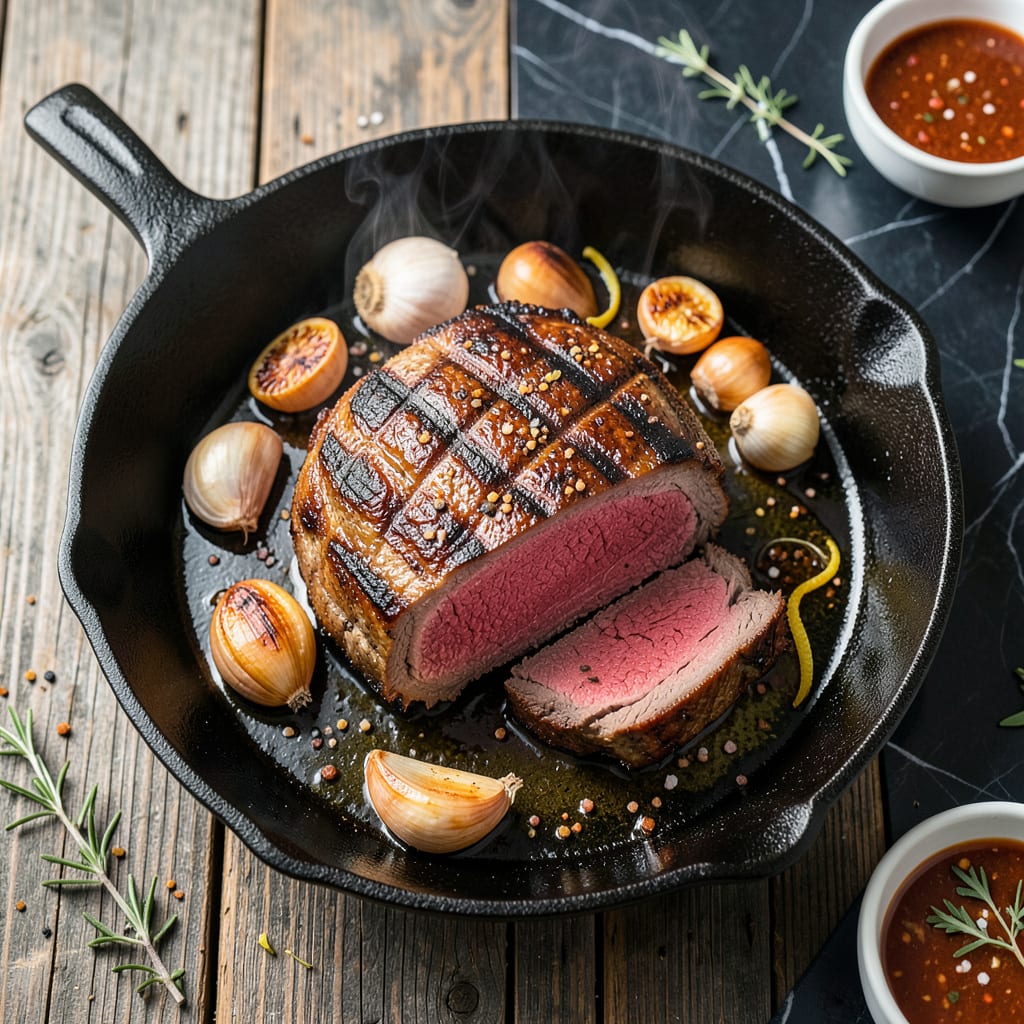
There’s nothing like a perfectly cooked tri tip with a smoky crust and juicy slices straight from the cast iron.
This method delivers a deep sear and tender center without complicated steps. The cast iron ensures even heat for a restaurant-quality result every time.
Ingredients for Tri Tip Recipe Cast Iron
A few quality ingredients transform this beef into a restaurant-worthy centerpiece with smoky depth.
| Ingredient | Amount | Notes |
|---|---|---|
| Tri Tip Roast 🥩 | 2 ½ lb | Well-marbled, trimmed of excess fat |
| Kosher Salt 🧂 | 1 ½ tbsp | Diamond Crystal preferred for even distribution |
| Coarse Black Pepper 🌶️ | 1 tbsp | Freshly cracked for maximum aroma |
| Garlic Powder 🧄 | 1 tbsp | Not garlic salt substitute |
| Onion Powder 🧅 | 1 tbsp | Fine grind for even coating |
| Smoked Paprika 🌶️ | 1 tsp | Adds depth to crust |
| Dried Thyme 🍃 | 1 tsp | Crushed between fingers to release oils |
| Dried Rosemary 🌿 | 1 tsp | Finely minced before measuring |
| Olive Oil 🫒 | 2 tbsp | High smoke point variety |
| Unsalted Butter 🧈 | 2 tbsp | For basting during searing |
| Fresh Garlic Cloves 🧄 | 4 cloves | Smashed for aromatics |
| Fresh Rosemary Sprigs 🌿 | 2 whole | For basting and garnish |
[recipeingredientscaler]
The tri tip is paramount here. Look for USDA Choice or Prime with abundant marbling—this fat renders during cooking, keeping the meat juicy. Most butchers will trim the roast for you if requested. Costco offers excellent pre-trimmed tri tips at a good price point. Avoid select grade cuts, as they lack the necessary fat content for optimal flavor and tenderness.
No smoked paprika? Regular paprika plus a pinch of chipotle powder works in a pinch. Fresh garlic can replace garlic powder at a 3:1 ratio (use 1 tbsp fresh for 1 tsp powder). If you can’t find tri tip, bottom sirloin is the closest substitute, though cooking time may vary slightly. The butter can be omitted for a leaner version, but it adds incredible richness to the crust.
Store the uncooked tri tip in the coldest part of your refrigerator for up to 3 days. For longer storage, vacuum-seal and freeze for 6-12 months. Let the meat sit at room temperature for 45 minutes before cooking for even doneness throughout.
Why You’ll Love This Recipe
- One Pan Magic: I toss the tri tip in the cast iron with just salt, pepper, and those powders—no marinade, no fuss.
- Crusty Perfection: That sear from the cast iron locks in juices while the garlic and onion powders form the most addictive crust.
- Feeds the Crew: I’ve served this for Sunday dinner and sliced leftovers thin for sandwiches all week. No complaints.
- Budget Hero: A single tri tip roast stretches farther than you’d think, and the seasonings are already in my pantry.
Step-by-Step Instructions for Tri Tip Cast Iron
Master the technique for a perfectly seared crust and tender, juicy meat every time.
Step 1: Season the Tri Tip Roast Liberally
Pat the 2.5 lb Tri Tip Roast completely dry with paper towels—this ensures a proper sear. In a small bowl, combine the 1.5 tbsp Kosher Salt, 1 tbsp Coarse Black Pepper, 1 tbsp Garlic Powder, 1 tbsp Onion Powder, 1 tsp Smoked Paprika, 1 tsp Dried Thyme, and 1 tsp Dried Rosemary.
Rub this dry brine mixture evenly over every surface of the roast, pressing firmly so the seasoning adheres. The roast should be fully coated with no bare spots. Let it sit at room temperature for 30-45 minutes to allow the salt to penetrate and the meat to cook more evenly.
Step 2: Preheat the Cast Iron and Sear the Roast
Place a heavy cast iron skillet over medium-high heat for 5 minutes until very hot. Add the 2 tbsp Olive Oil and swirl to coat the bottom of the pan. The oil should shimmer but not smoke.
Lay the tri tip roast in the skillet, fat-side down first. Sear undisturbed for 4-5 minutes until a deep, dark brown crust forms. Flip and sear the other side for another 4-5 minutes. The crust should release easily when it’s ready to turn—don’t force it.
Step 3: Baste with Aromatics and Finish Cooking
Reduce heat to medium. Add the 2 tbsp Unsalted Butter, 4 cloves Fresh Garlic Cloves (smashed), and 2 whole Fresh Rosemary Sprigs to the skillet. Tilt the pan slightly and use a spoon to baste the roast continuously with the melted butter, garlic, and rosemary for 2-3 minutes.
For medium-rare, cook until the internal temperature reaches 130-135°F on an instant-read thermometer. The butter will foam and brown slightly, infusing the roast with aromatic flavor. Remove the skillet from heat once the target temperature is reached.
Step 4: Rest and Slice Against the Grain
Transfer the tri tip to a cutting board and tent loosely with foil. Let it rest for 10-15 minutes—this allows the juices to redistribute, ensuring every slice remains moist. The internal temperature will rise 5-10°F during resting (carryover cooking).
To slice, locate the grain direction (visible as lines in the meat). Cut the roast in half where the grain changes direction, then slice each half ¼-inch thick perpendicular to the grain. This shortens muscle fibers, guaranteeing tender, juicy bites. Serve immediately while warm.
Pro Tips For Making Tri Tip Recipe Cast Iron
- Sear Hard First: Get your cast iron screaming hot before the tri tip hits the pan—I learned this the hard way after too many gray, steamed roasts. A full 2-3 minutes per side at high heat locks in the juices and builds that deep crust.
- Season Overnight: Salt the tri tip at least 12 hours before cooking, especially with kosher salt. The dry brine penetrates deep, and the garlic and onion powder stick better when the meat isn’t wet.
- Rest Before Slicing: After pulling it from the pan, tent the tri tip with foil and let it rest for 10 minutes—no peeking. I used to slice too soon and watched all those beautiful juices pool on the cutting board instead of staying in the meat.
- Slice Against Grain: Tri tip has two grain directions, so rotate the roast and slice perpendicular to the fibers. Sounds fussy, but it actually changes the outcome from chewy to tender every single time.
Serving Suggestions for This Dish
Plating Perfection
Arrange slices on a warm platter, fanning them slightly for visual appeal. I drizzle the reserved butter-garlic-rosemary pan juices over the meat for extra flavor. Garnish with fresh rosemary sprigs for a restaurant-worthy finish. 💫
Side Dish Pairings
Serve with garlic mashed potatoes to soak up those incredible juices. I love pairing it with roasted seasonal vegetables—try asparagus or Brussels sprouts tossed in olive oil and roasted at 400°F for 20 minutes.
Bread Options
A crusty sourdough or ciabatta makes the perfect companion. I toast slices and rub with a raw garlic clove for instant garlic bread. These breads hold up well to the rich pan juices without getting soggy.
Sauce Suggestions
Offer a simple chimichurri on the side—blend 1 cup parsley, 3 garlic cloves, ¼ cup olive oil, 2 tbsp red wine vinegar, and ½ tsp red pepper flakes. Or serve with a classic horsey sauce (mayo + prepared horseradish).
Wine Pairings
A bold Cabernet Sauvignon or Zinfandel stands up to the robust flavors. For white wine lovers, a buttery Chardonnay complements the dish beautifully. I prefer Napa Valley reds with their dark fruit notes. 🍷
Family-Style Service
Place the sliced tri tip on a large wooden board with all sides and sauces. This encourages sharing and creates a cozy, communal dining experience. I always include extra napkins—the juices are that good.
Nutrition Facts
Frequently Asked Questions
What’s the best way to know when it’s done?
Use a meat thermometer for accuracy. For medium-rare, pull it at 130-135°F—it’ll rise to 140°F while resting. The crust should be deep brown, not black.
Can I use a different cut of beef?
Bottom sirloin is the closest substitute, but it may cook faster. Avoid lean cuts like flank steak—they’ll dry out. Stick to well-marbled roasts for best results.
Why does my tri tip turn out tough?
Slicing against the grain is critical. Tri tip has two grain directions—cut it in half where the grain changes, then slice each piece perpendicular to the lines.
How do I get a better crust?
Pat the roast very dry before seasoning, and don’t move it during searing. Use medium-high heat and let the cast iron get very hot first.

- BBQ Sausage Recipe Oven: Smoky Depth Without the Grill - September 28, 2026
- BBQ Chicken Bowl Recipe Rice: Smoky Sweetness Over Fluffy Grains - September 28, 2026
- Beef Cutlet Recipe Ideas: Crispy Breaded Patties With Bold Seasonings - September 28, 2026