
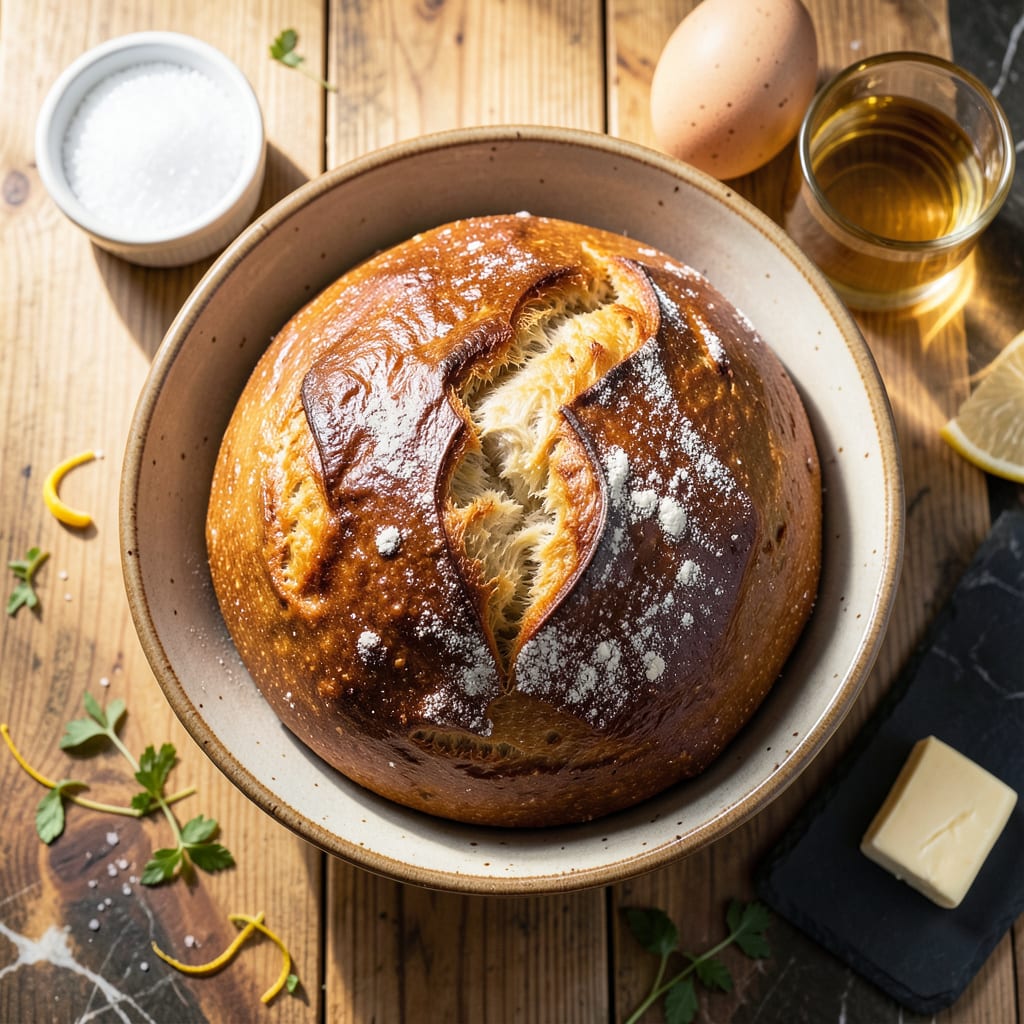
This Trinidadian bread brings island warmth to your kitchen with its soft pillowy texture and subtle spice.
I developed this recipe to capture the traditional flavors using simple ingredients and a foolproof method that works every time.
Ingredients for Trinidad Homemade Bread
Simple pantry staples and a few spices create this island-inspired loaf with ease.
| Ingredient | Amount | Notes |
|---|---|---|
| All-Purpose Flour 🌾 | 4 cups | Plus extra for dusting |
| Granulated Sugar 🍚 | ¼ cup | For activating yeast |
| Active Dry Yeast 🍞 | 2 ¼ tsp | One standard packet |
| Warm Water 💧 | 1 ¼ cups | 110°F to 115°F |
| Unsalted Butter 🧈 | ¼ cup | Melted and cooled |
| Large Egg 🥚 | 1 whole | Room temperature preferred |
| Ground Cinnamon 🌿 | 1 tsp | For island spice warmth |
| Ground Nutmeg 🌰 | ½ tsp | Freshly grated if possible |
| Salt 🧂 | 1 tsp | Fine sea salt preferred |
| Vegetable Oil 🫒 | 2 tbsp | For greasing bowl |
| Vanilla Extract 🌿 | 1 tsp | Pure extract recommended |
| Raisins 🍇 | ½ cup | Optional for texture |
The flour is the foundation here. King Arthur or Gold Medal all-purpose work beautifully—avoid bread flour as it changes the texture. Yeast freshness is critical; check the expiration date and store unopened packets in the freezer. For the warm water, a kitchen thermometer ensures 110°F to 115°F (too hot kills the yeast). The butter should be unsalted to control the salt content precisely, and Land O’Lakes or Kerrygold are reliable choices.
No raisins? Dried currants or chopped dates add similar sweetness. For a stronger spice profile, increase the cinnamon to 1.5 tsp. The nutmeg can be swapped for allspice at the same ratio. If you don’t have vanilla extract, almond extract at half the amount works—though the flavor shifts slightly. Eggs are key for softness, but 1/4 cup additional warm water plus a bit more flour can substitute in a pinch.
Store the cooled loaf in an airtight container at room temperature for up to 3 days. For longer storage, wrap tightly in plastic and freeze for up to 3 months. Slice before freezing for easy toasting later. The dough can also rest overnight in the fridge after its first rise, if needed.
Why You’ll Love This Recipe
- No-Fuss Dough: I just mix flour, sugar, yeast, and warm water—no fancy steps, and the butter makes it foolproof.
- Buttery Richness: That unsalted butter gives it a melt-in-your-mouth softness, with just the right hint of sweetness.
- Breakfast to Dinner: Honestly, it’s as good with jam at sunrise as it is soaking up curry at night.
- Pennywise Loaf: A few pantry staples, one rise, and I’ve got fresh bread for days without overspending.
Step-by-Step Instructions for Trinidad Homemade Bread
This method ensures a soft, pillowy loaf with the perfect balance of island spices and texture.
Step 1: Activate the Yeast and Prepare Wet Ingredients
In a small bowl, combine the 2.25 tsp active dry yeast, 0.25 cup granulated sugar, and 1.25 cups warm water at 110°F to 115°F. Stir gently and let it sit for 5-10 minutes until the mixture becomes foamy and the yeast is fully activated.
In a separate bowl, whisk together the melted and cooled 0.25 cup unsalted butter, large egg, 1 tsp vanilla extract, 1 tsp ground cinnamon, and 0.5 tsp ground nutmeg. This builds the flavor base for your loaf.
Step 2: Combine Wet and Dry Ingredients
In a large mixing bowl, add the 4 cups all-purpose flour and 1 tsp salt. Create a well in the center and pour in the activated yeast mixture and the prepared wet ingredients. Use a wooden spoon or dough hook to combine until a shaggy dough forms.
If using, fold in the 0.5 cup raisins at this stage, ensuring they are evenly distributed. The dough should be slightly sticky but manageable. If it feels too wet, add a tablespoon or two of flour, but avoid over-flouring.
Step 3: Knead the Dough to Develop Gluten
Turn the dough out onto a lightly floured surface and knead for 8-10 minutes by hand, or 5-6 minutes in a stand mixer fitted with a dough hook. You’re aiming for a smooth, elastic dough that springs back when gently pressed.
The dough is ready when it no longer sticks to your hands and passes the windowpane test—stretch a small piece thinly, and it should be translucent without tearing.
Step 4: First Rise Until Doubled in Size
Lightly grease a large bowl with 1 tbsp vegetable oil and place the dough inside, turning to coat it evenly. Cover the bowl with a damp kitchen towel or plastic wrap and let it rise in a warm, draft-free place for 1 to 1.5 hours, or until doubled in volume.
Pro tip: To speed up the rise, place the bowl in an oven that’s been preheated to 100°F and then turned off. This creates the ideal environment for the yeast to work its magic.
Step 5: Shape, Second Rise, and Bake to Golden Perfection
Punch down the risen dough to release excess air, then shape it into a loaf and place it in a greased 9×5-inch loaf pan. Cover and let it rise again for 45-60 minutes, or until the dough domes about 1 inch above the rim of the pan.
Preheat your oven to 375°F. Bake the loaf for 30-35 minutes, or until it’s golden brown and sounds hollow when tapped on the top. If the top browns too quickly, tent it loosely with aluminum foil.
Remove from the oven and let it cool in the pan for 10 minutes, then transfer to a wire rack to cool completely before slicing. This ensures the bread sets properly and doesn’t crumble when cut.
Pro Tips For Making Trinidad Homemade Bread
- Test Your Yeast: I learned this the hard way—always proof your active dry yeast in the warm water with a pinch of sugar first. If it doesn’t bubble within 5-10 minutes, your bread won’t rise.
- Use Room Temp Butter: After burning a few loaves, I finally figured out that softened unsalted butter mixes into the dough evenly, while cold butter leaves pockets of grease.
- Knead Until Smooth: Sounds weird, but it works: keep kneading until the dough stops sticking to your hands—usually 8-10 minutes. Under-kneading makes dense bread.
- Let It Double: My grandmother swore by this, and she was right: give the dough a full 1-2 hours to rise until it’s at least twice its size—rushing this step ruins the texture.
Perfect Pairings for This Dish
Island Beverages
Pair this loaf with Sorrel drink, a festive Trinidadian hibiscus tea spiced with ginger and cloves. Brew 1 cup dried sorrel in 4 cups water with 1 cinnamon stick for authenticity. Serve it chilled with a slice of lime. 💛
Breakfast Pairings
Slice and toast the bread for breakfast, then slather with guava jam or coconut jam—both are Caribbean staples. I love Matteo’s guava jam for its perfect sweet-tart balance. Add a sprinkle of toasted coconut flakes for extra texture.
Savory Accompaniments
For a hearty meal, serve warm slices with saltfish accra or callaloo. The bread’s subtle sweetness complements the salty, savory flavors beautifully. I often pair it with pepper sauce for a spicy kick.
Cheese and Spreads
Try it with Parmigiano-Reggiano or cream cheese for a simple snack. The cinnamon and nutmeg notes in the bread pair wonderfully with the sharpness of aged cheddar. Spread a thin layer of butter first for extra richness.
Sweet Treats
Transform leftover slices into French toast by soaking in a mix of 2 eggs, ½ cup milk, and 1 tsp vanilla. The spices in the bread elevate this classic dish. Top with maple syrup or fresh fruit. ✨
Nutrition Facts
Frequently Asked Questions
What makes this bread uniquely Trinidadian?
It’s all in the spices! The cinnamon and nutmeg give it that signature island warmth you won’t find in standard loaves.
Can I skip the raisins?
The raisins add texture but aren’t essential. Try dried currants or omit them entirely for a plainer loaf.
Why did my bread turn out dense?
This usually happens if the dough didn’t rise long enough. Ensure your yeast is fresh, water is 110°F–115°F, and give it the full 1–1.5 hours for the first rise.
How should I store leftovers?
Keep cooled bread in an airtight container at room temperature for up to 3 days, or freeze sliced for up to 3 months.

- BBQ Sausage Recipe Oven: Smoky Depth Without the Grill - September 28, 2026
- BBQ Chicken Bowl Recipe Rice: Smoky Sweetness Over Fluffy Grains - September 28, 2026
- Beef Cutlet Recipe Ideas: Crispy Breaded Patties With Bold Seasonings - September 28, 2026