
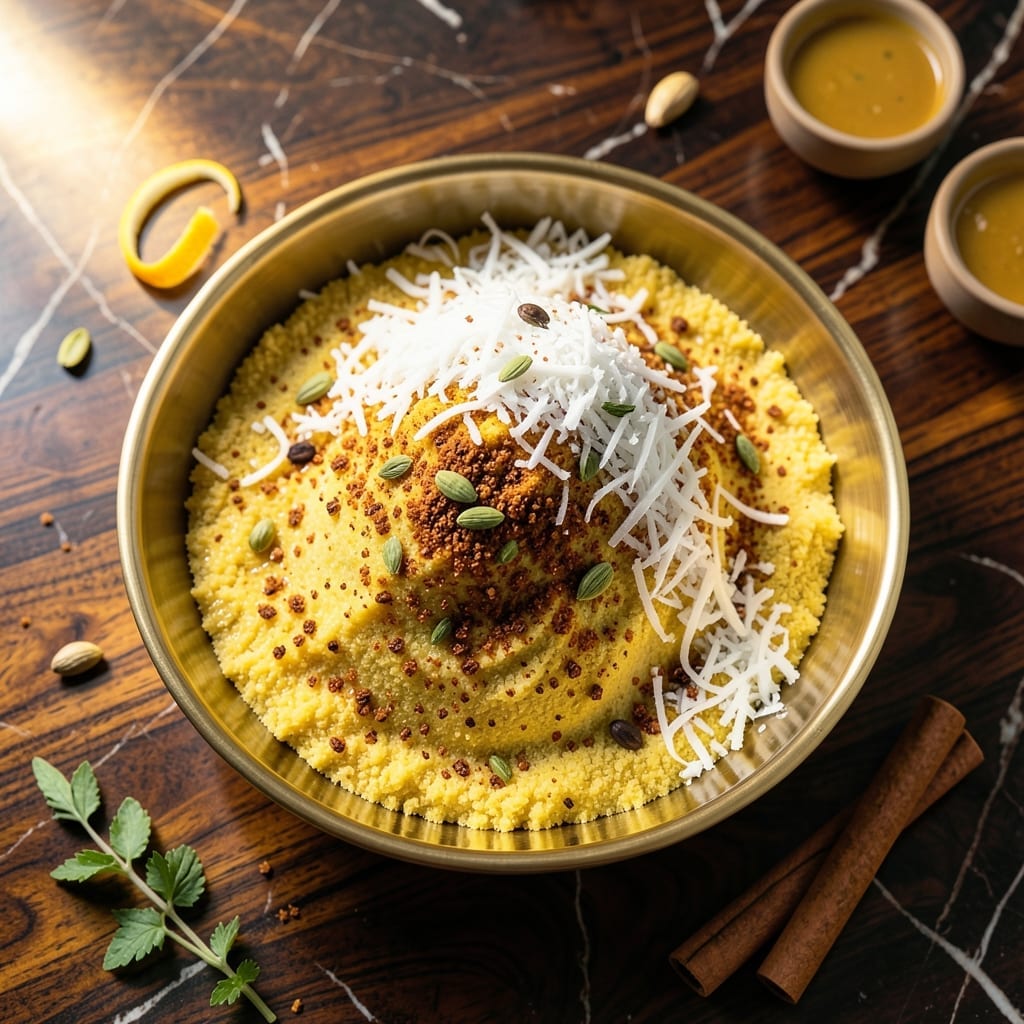
This classic Trinidadian treat brings together gram flour and coconut in a sweet, comforting dish that’s deeply rooted in cultural tradition. I’ve refined this recipe to capture the authentic texture and flavor that makes it a beloved staple.
The process is simple yet precise, combining toasted gram flour with fresh coconut and a touch of sugar for a balanced sweetness. The mixture is shaped into small balls and lightly fried to golden perfection, creating a delicate crispness outside and a tender center.
What makes this dish special is its versatility—enjoy it as a snack, dessert, or even a quick breakfast. The aroma of toasted coconut and gram flour is irresistible, evoking memories of home and celebration.
Ready in under 30 minutes, this recipe delivers a taste of Trinidad with every bite.
Ingredients for Trinidad Parsad
Toasted gram flour, fresh coconut, and warm spices create this beloved Trinidadian sweet.
| Ingredient | Amount | Notes |
|---|---|---|
| Gram Flour 🌾 | 2 cups | Also called besan or chickpea flour |
| Fresh Coconut 🥥 | 2 cups | Grated or finely shredded |
| Granulated Sugar 🍚 | ¾ cup | Adjust sweetness to taste |
| Ground Cinnamon 🌿 | 1 tsp | Freshly ground preferred |
| Ground Cardamom 🌿 | ½ tsp | Essential for authentic flavor |
| Vanilla Extract 💧 | 1 tsp | Pure extract for best flavor |
| Water 💧 | ¼ cup | As needed for binding |
| Vegetable Oil 🫒 | 2 cups | For deep frying |
| Salt 🧂 | ¼ tsp | Fine grain preferred |
| Rose Water 🌹 | 1 tsp | Optional for floral note |
| Orange Zest 🍊 | 1 tsp | Finely grated for brightness |
The gram flour is key here—look for bright yellow besan at Indian or Caribbean markets. Fresh coconut makes all the difference; if you can’t find whole, unsweetened shredded coconut works too (just soak it in warm water first). The cardamom and cinnamon should be fresh; Penzeys or a local spice shop will have the best quality. Avoid pre-ground spices if they’ve been sitting in your pantry for months.
No fresh coconut? Frozen shredded coconut (thawed and drained) is a solid backup. Rose water can be swapped for orange blossom water if that’s what you have. If you’re out of cardamom, a pinch of nutmeg adds warmth. The sugar amount is flexible—start with less if you prefer a subtler sweetness. For binding, water works, but coconut milk adds richness.
Store gram flour in an airtight container for up to 3 months. Fresh coconut keeps in the fridge for 1 week, or freeze grated coconut for 6 months. The fried parsad stays fresh at room temperature in a sealed container for about 5 days.
Why You’ll Love This Recipe
- One Bowl Wonder: I mix the gram flour, coconut, and spices in a single bowl—no fancy equipment, just my hands and a spoon.
- Warm Spice Hug: The cinnamon and cardamom hit just right with the coconut’s sweetness. Honestly, it’s like a cozy afternoon in every bite.
- Festival Ready: I bring this to Diwali gatherings, and it disappears first. Between us, it’s my secret potluck weapon.
- Stays Fresh: Leftovers? No problem. It keeps for days, and the flavors actually deepen. My daughter sneaks pieces straight from the tin.
Step-by-Step Instructions for Trinidad Parsad
This traditional method ensures perfect texture and authentic flavor in every bite.
Step 1: Combine Dry Ingredients
In a large mixing bowl, whisk together the 2 cups Gram Flour, 0.75 cup Granulated Sugar, 1 tsp Ground Cinnamon, 0.5 tsp Ground Cardamom, and 0.25 tsp Salt until evenly distributed. The gram flour should be free of lumps for a smooth final product.
This foundation creates the signature texture of the dish. The cinnamon and cardamom will release their aroma as you mix, signaling the spices are fresh and potent. The combination of these dry ingredients forms the base that absorbs the remaining wet components beautifully.
Step 2: Incorporate Wet Ingredients and Aromatics
Add the 2 cups Fresh Coconut, 1 tsp Vanilla Extract, 1 tsp Rose Water, 1 tsp Orange Zest, and 0.25 cup Water to the dry mixture. Stir with a wooden spoon until a thick, slightly sticky batter forms. The coconut should be evenly coated with the flour mixture.
The water binds everything together, while the rose water and orange zest add layers of fragrance. The vanilla extract enhances the sweetness without overpowering the delicate spice notes. If the batter feels too dry, add an additional 1-2 tablespoons water to reach the right consistency.
Step 3: Heat the Oil for Frying
Pour the 2 cups Vegetable Oil into a deep, heavy-bottomed pot and heat over medium heat until it reaches 350°F on a kitchen thermometer. The oil should shimmer but not smoke. This temperature ensures even cooking without burning the outside before the inside is done.
Maintain the oil temperature throughout frying. If it drops too low, the parsad will absorb excess oil and become greasy. Use a slotted spoon to test the oil readiness—when a small drop of batter sizzles immediately and floats to the surface, it’s ready.
Step 4: Fry to Golden Perfection
Carefully drop tablespoon-sized portions of the batter into the hot oil, being mindful not to overcrowd the pot. Fry in batches, turning occasionally, for 3-4 minutes until each piece is golden brown on all sides. The parsad will puff slightly as it cooks, creating an airy interior.
Use a slotted spoon to remove the fried parsad from the oil and transfer to a paper towel-lined plate to drain excess oil. The ideal parsad will have a crisp exterior with a tender, moist center. Allow the oil to return to 350°F between batches to maintain consistent results.
Step 5: Cool and Serve
Let the parsad cool for 5-10 minutes before serving. This brief rest allows the exterior to set while the interior remains soft and flavorful. The spices will mellow slightly, and the coconut will release its natural sweetness as it cools.
Serve warm or at room temperature. The parsad should have a slightly crisp shell that gives way to a tender, aromatic center with the unmistakable flavors of coconut, cinnamon, and cardamom. Store any leftovers in an airtight container at room temperature for up to 3 days.
Pro Tips For Making Trinidad Parsad
- Toast the Gram Flour: Cook it on medium-low heat for 8-10 minutes, stirring constantly—I learned this the hard way after my first batch tasted raw. The flour should turn a light golden brown and smell nutty.
- Grate Fresh Coconut: Skip the pre-shredded stuff; freshly grated coconut makes a real difference in texture and flavor. About 2 cups loosely packed is what you’ll need for the right consistency.
- Watch the Sugar Syrup: Resist the urge to walk away while the sugar dissolves. It should reach a one-thread consistency (220°F), or you’ll end up with a grainy or overly runny parsad.
- Bloom the Spices: Lightly dry-toast the cinnamon and cardamom for 30 seconds before adding liquids. Sounds weird, but it works—my grandmother swore by it, and she was right.
Dietary Considerations for This trinidad parsad
Vegetarian Friendly
This dish is naturally vegetarian, as it relies on gram flour and fresh coconut as its base. The combination of plant-based ingredients makes it a satisfying option for those following a meat-free diet. I love that it delivers protein and fiber without any animal products. 🌱
Gluten Free Option
Since gram flour is made from chickpeas, this recipe is inherently gluten-free. Just ensure your spices and coconut are sourced from dedicated gluten-free facilities to avoid cross-contamination. Always check labels if you have celiac disease or severe sensitivity.
Dairy Free
There’s no dairy in this traditional recipe, making it perfect for vegan or lactose-intolerant eaters. The richness comes entirely from the coconut and vegetable oil, so no substitutions are needed. It’s a naturally inclusive treat.
Nut Allergy Note
While coconut is technically a fruit, those with tree nut allergies should exercise caution, as cross-reaction is possible. If you’re highly sensitive, substitute unsweetened shredded coconut with an equal amount of oat flour for a nut-free version.
Sugar Adjustments
You can reduce the ¾ cup sugar by half or use alternatives like coconut sugar. The natural sweetness of the coconut balances the reduction well. For a sugar-free option, try monk fruit sweetener in a 1:1 ratio.
Lower Fat Option
To cut back on oil, bake the parsad at 375°F for 12-15 minutes instead of frying. Use a light spray of coconut oil on the baking sheet to prevent sticking. The texture will be denser but still flavorful. 💡
Nutrition Facts
Frequently Asked Questions
Can I use desiccated coconut instead of fresh?
Yes, but soak it in warm water for 10 minutes first to rehydrate. Drain well before using to avoid a dry texture. Fresh coconut gives the best flavor and moisture though.
What’s the best oil for frying?
Use an oil with a high smoke point like vegetable, sunflower, or coconut oil. They handle the 350°F heat without burning and add a neutral or complementary flavor.
How do I store leftovers?
Keep in an airtight container at room temperature for up to 3 days. For longer storage, refrigerate for up to 1 week or freeze for 1 month. Reheat in a 300°F oven for 5 minutes to restore crispness.
Why did my parsad turn out greasy?
This usually happens if the oil temperature was too low. Use a thermometer to maintain 350°F and avoid overcrowding the pot, which lowers the temperature. Drain on paper towels immediately after frying.

- BBQ Sausage Recipe Oven: Smoky Depth Without the Grill - September 28, 2026
- BBQ Chicken Bowl Recipe Rice: Smoky Sweetness Over Fluffy Grains - September 28, 2026
- Beef Cutlet Recipe Ideas: Crispy Breaded Patties With Bold Seasonings - September 28, 2026