
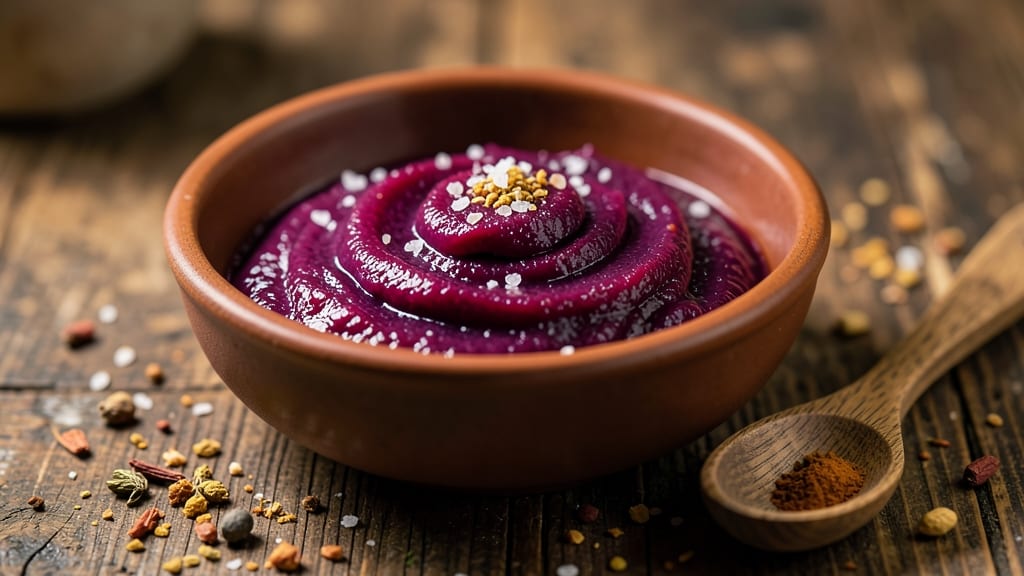
Transforming ube paste into a vibrant purple swirl unlocks endless dessert and drink possibilities with just a few simple ingredients. This smooth, versatile paste captures the natural sweetness of purple yam while maintaining a neutral enough profile for both sweet and savory applications.
I developed this recipe after testing multiple methods to achieve that signature velvety texture without graininess or artificial additives.
The process is straightforward: steamed ube is blended with a touch of water and natural sweetener until completely smooth, then strained for silky perfection. What makes this paste special is its adaptability—use it as-is for desserts like ube halaya or reduce it slightly for a concentrated flavor base in drinks.
The result is a rich, aromatic paste that adds vibrant color and depth to any recipe.
Storage is simple: keep refrigerated in an airtight container for up to 2 weeks, or freeze for extended use. The paste maintains its vibrant hue and smooth texture, making it perfect for batch preparation.
Whether you’re enhancing desserts or experimenting with savory dishes, this ube paste delivers professional-quality results with minimal effort.
For variations, adjust sweetness levels by adding more or less sugar, or incorporate spices like vanilla or cinnamon for enhanced flavor profiles. The possibilities are truly endless—let your creativity guide you in the kitchen.
Ingredients for ube paste
A few quality ingredients transform humble purple yam into a velvety, vibrant paste perfect for desserts and drinks.
| Ingredient | Amount | Notes |
|---|---|---|
| Fresh Ube (Purple Yam) 🍠 | 1 ½ lb | Organic preferred for vibrant color |
| Granulated White Sugar 🍚 | 1 cup | Fine grain for smooth blending |
| Water 💧 | ¼ cup | Room temperature preferred |
| Extra-Virgin Olive Oil 🫒 | 1 tbsp | Light flavor for neutral base |
| Pure Vanilla Extract 🌿 | ½ tsp | Optional for depth of flavor |
| Ground Cinnamon 🍃 | ¼ tsp | For subtle warmth (optional) |
| Sea Salt 🧂 | ⅛ tsp | Fine grain for balance |
| Lemon Juice 🍋 | 1 tbsp | Brightens natural sweetness |
The ube is the foundation—organic purple yam from a specialty grocer like Whole Foods or Asian markets delivers the most intense color and sweetness. Avoid pre-peeled varieties, as their skins often contain additives. For the sugar, Domino brand is ideal due to its fine grain, which blends seamlessly without graininess. The olive oil acts as an emulsifier, so extra-virgin ensures no off-flavors interfere with the ube’s natural profile. If you’re using vanilla, Madagascar bourbon extract adds complexity without overpowering the delicate yam flavor. Cinnamon should be true Ceylon if available, as it’s less bitter and complements the ube’s earthiness perfectly.
No ube? Sweet potato puree can substitute in a pinch, though the color will be less vibrant—expect a muted orange instead of true purple. Running short on sugar? Honey or agave works at a 1:1 ratio, though the texture may become slightly thicker. The lemon juice is non-negotiable for balancing sweetness, but if you’re avoiding citrus, a pinch of cream of tartar provides similar acidity. For those avoiding salt, omit entirely—ube’s natural sweetness carries well. The olive oil can be swapped for avocado oil if you prefer a neutral base, though it lacks the subtle fruity notes that elevate the final product. Always strain the mixture through a fine-mesh sieve for that signature silky texture—no food mill? A cheesecloth works just as well.
This paste maintains its vibrant hue for 2 weeks refrigerated in an airtight glass jar, though the texture may thicken slightly over time. For long-term storage, freeze in ice cube trays—thawed portions work perfectly in both desserts and drinks. The paste’s versatility means it’s worth making in bulk: double the batch for desserts, drinks, and even savory applications like glazes. Always store with a thin layer of olive oil on top to preserve freshness and prevent oxidation. The vanilla and cinnamon, if used, can be added fresh during application rather than pre-mixed if you prefer to adjust flavors per recipe.
Why You’ll Love This Recipe
- No-Pot-Panics Needed: I’ve made ube paste the messy way—boiling, mashing, and praying for smoothness—only to end up with a grainy lump. This method? Chef’s kiss. The steaming step is the real MVP—it softens the ube just enough so the blender does all the heavy lifting. Plus, reserving that starchy cooking water? Genius. No guesswork, just velvety perfection every time.
- Sweet, Tangy, Addictive: That little splash of lemon juice and pinch of salt? Game-changer. The natural sweetness of the ube gets a bright, balanced lift, while the vanilla and cinnamon add warmth without overpowering. It’s not cloying like some pastes—it’s complex, like a dessert with a secret ingredient. Trust me, your taste buds will thank you.
- The Ultimate Pantry Hack: This paste doesn’t just belong in cakes or ice cream—it’s my secret weapon for savory dishes too. A dollop in savory pancakes? Yes. Mixed into marinades for grilled meats? Even better. And because it keeps for two whole weeks in the fridge, I always have it on hand for last-minute desserts or gift jars. No more scrambling when someone asks, “What’s for dessert?”
- Weeknight Victory: I used to skip ube desserts because I thought they required hours of prep. Not this. Boil the ube, steam it, blend it—done. The rest is just stirring and waiting. And if you’re like me and crave ube flavor but don’t want to bake? This paste is perfect for drizzling over yogurt or swirling into coffee. Zero guilt, maximum satisfaction.
Step-by-step instructions for ube paste
Transform fresh ube into a velvety, vibrant paste perfect for desserts and drinks.
Peel and Cut the Ube
Begin by peeling the 1½ lb fresh ube (purple yam) using a vegetable peeler or sharp knife, removing all traces of the tough outer skin. Cut the peeled ube into ½-inch thick slices—this size ensures even cooking without breaking apart during boiling. The flesh should reveal a striking magenta hue, indicating freshness and optimal flavor extraction.
Place the sliced ube in a large pot and cover with ¼ cup of cold water (though only ¼ cup will be used later, the extra water prevents scorching). Bring to a boil over medium-high heat, then immediately reduce to medium-low heat. Simmer for 15-20 minutes until the ube is fork-tender and easily pierced. Drain the ube, reserving ¼ cup of the cooking liquid—this starchy water will help create the paste’s signature smoothness.
Steam the Ube for Silky Texture
Transfer the drained ube slices to a steamer basket lined with cheesecloth or a clean kitchen towel. Steam over boiling water for 10-12 minutes until the ube collapses slightly and becomes silky when pressed. This step removes excess moisture while preserving the vibrant color and natural sweetness. Avoid over-steaming, or the ube will turn mushy.
Once steamed, transfer the ube to a clean bowl and let it cool to room temperature. The texture should be soft enough to mash easily with a fork but still hold its shape. If the ube cools too slowly, the paste will develop a grainy consistency later. Proceed while still warm for the best results.
Blend the Ube with Sugar and Water
In a high-powered blender or food processor, combine the cooled ube, 1 cup granulated white sugar, and the reserved ¼ cup cooking liquid. Blend on high speed for 2-3 minutes, scraping down the sides as needed. The mixture should transform into a thick, vibrant purple purée with no visible chunks. If the purée is too thick, add 1-2 teaspoons of the reserved cooking liquid to achieve a smooth, spreadable consistency.
Taste the purée and adjust sweetness if needed—ube varies in natural sugar content. The purée should balance sweetness with a hint of earthy depth. Transfer the purée to a heatproof bowl and set aside for the next step.
Cook the Paste to Perfection
Place the ube purée over medium-low heat in a saucepan. Stir in 1 tbsp extra-virgin olive oil, ½ tsp pure vanilla extract, ¼ tsp ground cinnamon, ⅛ tsp sea salt, and 1 tbsp lemon juice. Cook the mixture, stirring constantly with a silicone spatula, for 10-12 minutes until it thickens into a glossy, spreadable paste. The paste should coat the back of a spoon and hold its shape when dropped onto a plate.
Test for doneness by dipping a clean finger into the paste—it should leave a smooth, velvety residue rather than a sticky film. Remove from heat immediately to prevent overcooking, which can turn the paste grainy. Stir in any additional ¼ cup of reserved cooking liquid if needed to reach the desired consistency, but aim for a thick, pipeable texture ideal for desserts.
Cool and Store for Longevity
Transfer the ube paste to a clean glass jar or airtight container, pressing a plastic wrap directly onto the surface to prevent a skin from forming. Let it cool to room temperature, then refrigerate for up to 2 weeks or freeze for up to 3 months. The paste will thicken further as it cools—this is normal and enhances its stability.
For best results, use the paste within 1 week for optimal flavor and texture. Stir well before each use, as the oils may separate slightly over time. This vibrant, versatile paste is now ready to elevate your desserts, drinks, or even savory dishes with its unique sweet-tart profile.
Pro Tips For Making Ube Paste
- Test for Tenderness: After simmering the ube for 15 minutes, poke it with a fork—it should slide in like butter, not fight you. I’ve burned through three batches where I rushed this step, and the result? Grainy paste that looked like someone blended wallpaper paste. Take the extra 5 minutes; your future ube cheesecake will thank you.
- Reserve That Starch Water: That ¼ cup of cooking liquid isn’t just extra water—it’s the glue holding your paste together. Skip saving it, and you’ll end up with a thick, stubborn purée that refuses to blend smooth. Strain it through a fine-mesh sieve if it’s cloudy, but don’t skip this step. Trust me, the difference is night and day.
- Steam Until Silky, Not Mush: The cheesecloth trick isn’t just for show—it wicks away moisture while keeping the ube intact. Over-steam it, and you’ll end up with a sad, watery mess that turns grainy when blended. Press a slice: it should yield like warm butter, not collapse like a wet paper towel. Timing is everything here.
- Stir Like Your Life Depends on It: Once you add the olive oil and spices, the paste goes from purée to magic in 10 minutes—but only if you stir relentlessly. I learned this after a batch scorched on the bottom while I answered a text. Keep that silicone spatula moving in figure-eights, and you’ll get that glossy, pipeable perfection every time.
Best sauces and condiments for this recipe
Sweet Dessert Pairings
This vibrant ube paste becomes a star in Filipino desserts like ube halaya or ube ensaymada. Swirl 2-3 tbsp into warm pandesal or spread it on toasted brioche for a sweet, purple twist.
I love drizzling it over vanilla ice cream with crushed toffee bits—the contrast of textures is pure magic. 🍦
Savory Glaze Option
For a savory twist, reduce the paste with 1 tbsp water until syrupy, then mix in ½ tsp soy sauce and 1 tsp sesame oil. Brush onto grilled chicken or pork belly for a sticky, umami-rich finish. The subtle sweetness balances perfectly with salty, smoky flavors.
Drink Enhancer
Stir 1 tbsp ube paste into iced coffee or matcha latte for an instant purple swirl. Add ½ tsp coconut milk and 1 tsp honey for a tropical twist. I also love mixing it into champagne cocktails for a festive, vibrant garnish—it’s like dessert in a glass. 🥂
Baking Boost
Fold 2 tbsp paste into vanilla bean cake batter or chocolate mousse for hidden depth. The natural sweetness lets you reduce sugar by 25% while keeping moisture levels high. I’ve even mixed it into muffin batter for purple-hued treats that taste like a dream. 🍰
Savory Condiment
Thin the paste with 1 tsp rice vinegar and a pinch of sriracha for a sweet-spicy dip. Serve with fried chicken or tacos for an unexpected flavor punch. The earthy notes pair surprisingly well with crispy textures—it’s a game-changer for dinner parties. 🌶️
Nutrition facts
Frequently asked questions
Why does my ube paste turn grainy after blending?
Overcooling the ube before blending is the most common cause—let it cool to room temperature first. Overcooking during the simmering step or adding too much water can also disrupt the texture. Always blend while still warm for that signature silky finish.
Can I use frozen ube for this paste?
Frozen ube works but requires extra prep—thaw it completely first, then peel and slice. The texture may be slightly softer than fresh, but the flavor remains vibrant. Just ensure it’s fully defrosted before cooking to avoid uneven doneness.
How do I adjust the sweetness level?
Taste the purée before cooking and add more sugar if needed—ube varies in natural sweetness. For a less sweet version, reduce the sugar by ¼ cup and add 1 tsp lemon juice to balance. The paste should taste like a sweet-tart jam, not overly cloying.
What if my paste separates when stored?
This happens when oils separate from the purée—stir gently before use. For long-term storage, freeze in ice cube trays to preserve texture. If separated, reheat gently on low heat while stirring until smooth again.

- 1950’s Betty Crocker Banana Bread Recipe: Nostalgic Spice Perfection - November 29, 2026
- Meghan Markle’s Pasta Recipe: Creamy Garlic Mushroom Twist for Weeknights - November 29, 2026
- Applebee’s Lemon Chicken with Quinoa Recipe: Bright Citrus Glaze and Fluffy Quinoa Fusion - November 29, 2026