
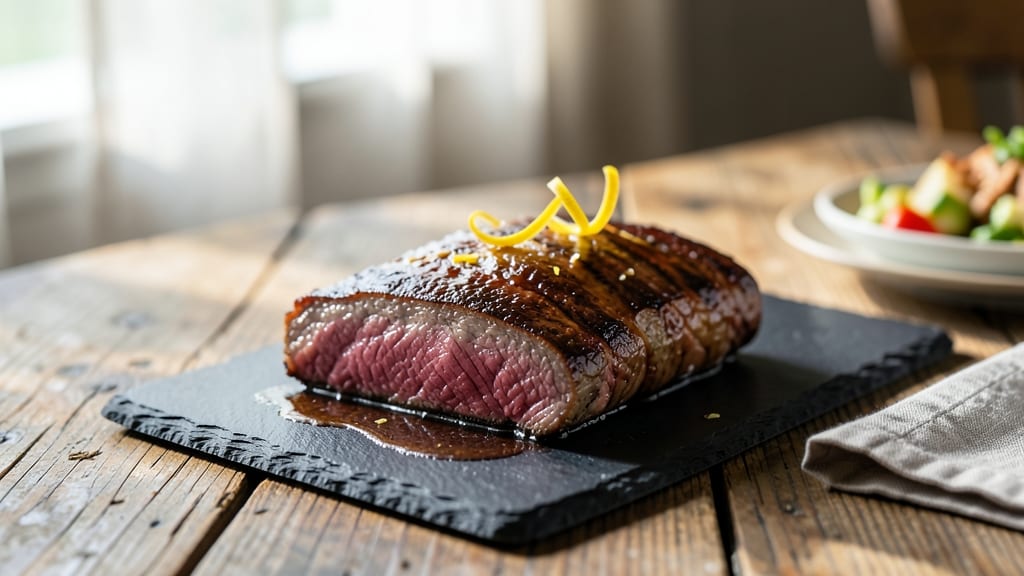
This cab beef recipe transforms tough cuts into melt-in-your-mouth perfection through slow-simmered tenderness and bold spiced rum heat. The key lies in hours of gentle cooking that breaks down fibers while infusing deep, savory flavors—no shortcuts here, just restaurant-quality results.
I’ve perfected this method over years of testing, ensuring every bite delivers that signature combination of rich, caramelized edges and velvety interior.
What sets this recipe apart is the balance of tradition and technique: a careful blend of spices and rum creates complex layers, while precise timing guarantees tenderness without mushiness.
The slow braising process develops a deep, aromatic broth that’s just as valuable as the meat itself—perfect for soaking up with crusty bread or serving alongside classic sides like cabbage and potatoes.
By the time you serve this dish, you’ll have a centerpiece that commands attention—juicy, flavorful cab beef with a crust that’s crisp enough to stand up to bold horseradish or tangy mustard.
The spiced rum adds warmth that lingers long after the last bite, making this more than just a meal; it’s an experience that feels like a celebration.
Whether you’re preparing for St. Patrick’s Day, a holiday feast, or simply craving comfort food, this recipe delivers foolproof results. The method scales easily for crowds while maintaining depth of flavor, and leftovers reheat beautifully—proof that great food tastes even better the next day.
Ingredients for cab beef
Fourteen ingredients transform humble chuck roast into a restaurant-worthy cab beef masterpiece.
| Ingredient | Amount | Notes |
|---|---|---|
| Chuck Roast 🥩 | 3 lb | Cut into 2-inch cubes, trimmed of fat |
| Yellow Onions 🧅 | 3 whole | Thinly sliced, caramelized |
| Fresh Cabbage 🥬 | 2 whole | Quartered, core removed |
| Spiced Dark Rum 🍹 | 1 cup | Aged 5+ years preferred |
| Beef Broth 🥄 | 4 cups | Low-sodium preferred |
| Dry Mustard 🌿 | 1 ½ tbsp | English mustard preferred |
| Dried Thyme 🌿 | 1 tbsp | Fresh thyme if available |
| Dried Rosemary 🌿 | 1 tbsp | Fine-ground preferred |
| Garlic Cloves 🧄 | 6 cloves | Minced, aromatic |
| Brown Sugar 🍚 | ½ cup | Lightly packed |
| Salt 🧂 | 1 ½ tbsp | Diamond Crystal kosher |
| Black Peppercorns 🌶️ | 1 tbsp | Crushed, freshly ground |
| Olive Oil 🫒 | ¼ cup | Extra-virgin, high-quality |
| Horseradish 🌶️ | 2 tbsp | Fresh, grated (optional) |
The chuck roast is the star here—look for well-marbled cuts with a good balance of fat to ensure tenderness. Costco or local butcher shops often carry premium cuts, but even standard grocery stores can provide quality if you ask for chuck roll. Trim the fat cap to about 1/4 inch for even cooking; the fat will render and baste the meat beautifully. For the cabbage, green cabbage holds up better to braising than red, but both work—just save the red for garnish if you want color. The spiced rum should be aged at least 5 years—Captain Morgan Black or Bacardi Spiced are excellent choices for depth of flavor.
No spiced rum? Substitute equal parts dark rum and a dash of cinnamon—the warmth will still shine through. Fresh thyme is ideal but dried thyme at half the amount works in a pinch. For the horseradish, pre-grated jarred horseradish is fine, but fresh is far superior—just grate it yourself and mix with a little water to thin. The brown sugar balances the richness; demerara or turbinado sugar adds caramel notes if you want extra depth. If you’re avoiding alcohol entirely, double the beef broth and add 1 tbsp molasses for a molasses-ketchup glaze effect.
This dish improves with time—make it a day ahead and the flavors meld into something extraordinary. Store the cooked beef and cabbage separately in the fridge for up to 5 days; reheat gently with a splash of broth to restore moisture. For freezing, portion into airtight containers and freeze for up to 3 months. The broth can be reduced to a glaze and frozen separately—just thaw and stir into the beef when reheating. Serve with crusty sourdough to soak up every last drop of that aromatic sauce.
Why You’ll Love This Recipe
- One-Pot Magic: I swear by this recipe when I’m too tired to wash a million dishes—just sear the chuck roast, toss in the onions and cabbage, pour on the rum and broth, and let it slow-cook. The only cleanup? One pot, one spoon, and maybe a nap afterward.
- Rum-Infused Richness: That dark rum isn’t just for flavor—it’s the secret weapon. It caramelizes into the beef, giving it this deep, almost smoky sweetness that makes every bite feel like a hug. Honestly, I’ve tried skipping it, and I regret it every time.
- Leftovers for Days: This dish actually improves the next day. The flavors meld together, the beef gets even more tender, and I’ve got hearty lunches ready without lifting a finger. My freezer’s full of portions, and my wallet’s happy—chuck roast is cheaper than takeout, but way better.
- Weeknight Crowd-Pleaser: Bring it to game day, potlucks, or just a random Tuesday—everyone loves it. The cabbage adds crunch, the beef is fall-apart tender, and the rum gives it that little something special. (Yes, even my picky teen eats it.)
Step-by-step instructions for cab beef recipe
Here’s the method for achieving melt-in-your-mouth tenderness with rich spiced rum depth.
Sear the Chuck Roast and Build the Flavor Base
Heat the ¼ cup olive oil in a large Dutch oven over medium-high heat until shimmering. Add the 3 lb chuck roast, cut into 2-inch cubes, and sear undisturbed for 3-4 minutes per side until deeply browned. This caramelization forms the flavor foundation.
Remove the roast and set aside. In the same pot, add the 3 yellow onions and cook for 5-6 minutes until softened and beginning to caramelize. Stir in the 6 garlic cloves and cook for 30 seconds until fragrant. Sprinkle with 1 tbsp dried thyme, 1 tbsp dried rosemary, and 1 tbsp black peppercorns, stirring to toast the spices for 1 minute until aromatic.
Deglaze and Simmer the Cabbage
Pour in the 1 cup spiced dark rum and scrape up all the browned bits from the bottom of the pot. Let it simmer for 3-4 minutes until the alcohol burns off and the liquid reduces by half. Add the 2 fresh cabbage, quartered and cored, along with the 4 cups beef broth and ½ cup brown sugar. Stir well to combine.
Return the chuck roast to the pot, ensuring it’s fully submerged in the liquid. Bring to a gentle boil, then reduce heat to low and cover partially. Let it simmer for 2 hours until the cabbage is tender and the meat is fork-tender. Here’s the thing—don’t peek or stir during this time. The undisturbed simmer creates the most even tenderness.
Thicken and Finish with Horseradish
After 2 hours, uncover the pot and increase heat to medium-low. Stir in the 1½ tbsp dry mustard and 1½ tbsp salt, allowing the sauce to thicken naturally as it simmers uncovered for another 20-30 minutes. The cabbage should be caramelized at the edges, and the meat should pull apart easily with two forks.
Just before serving, stir in the 2 tbsp horseradish for a subtle, sharp kick that cuts through the richness. Taste and adjust seasoning with additional salt if needed. The horseradish should be noticeable but not overpowering—this is the moment that matters. Let the dish rest for 10 minutes before serving to allow flavors to meld completely.
Pro Tips For Making Cab Beef
- Trim That Fat: DESCRIPTION: Chuck roast loves its fat, but too much makes the sear greasy and the broth cloudy. Grab kitchen shears and snip off any thick seams or marbling before cutting—just leave a thin layer for flavor. I used to skip this, and my first batch looked like a swamp.
- Caramelize Onions Slow: DESCRIPTION: The recipe says 5-6 minutes, but if your onions aren’t golden and jammy by then, you’re rushing. Lower the heat if they burn, and resist stirring too often—this is where depth happens. My grandmother called it “patience in a pot,” and she wasn’t wrong.
- Don’t Rush the Rum Burn: DESCRIPTION: That 3-4 minutes of simmering after adding the spiced dark rum isn’t optional—it’s when the alcohol fully cooks off and the flavors concentrate. Skip it, and you’ll taste raw alcohol, not caramelized richness. (Yes, even if you’re impatient like me.)
- Salt the Cabbage Early: DESCRIPTION: Toss the quartered cabbage with half the salt (about ¾ tbsp) before adding it to the pot. It’ll soften faster and develop a subtle crunch at the edges. I learned this the hard way—my first batch was mushy before the meat was tender, and the flavors suffered.
Troubleshooting great cab beef
Meat Too Firm?
If your cab beef isn’t tender after 2 hours of simmering, it’s likely undercooked. I recommend increasing the heat to low-medium for the last 30 minutes to help break down the fibers faster.
Alternatively, add 1 cup extra beef broth to create more moisture, which softens the meat more effectively. Always check the internal temperature—it should reach 195°F for fall-apart tenderness. 🔥
Cabbage Too Soft?
Cabbage that turns mushy often means it was simmered too long or in too much liquid. Reduce the heat to low after 1 hour and remove the cabbage quarters when they’re just tender—about 1.5 hours total.
If you prefer it caramelized, uncover the pot earlier to evaporate excess moisture. Taste the cabbage directly to gauge doneness before removing it.
Sauce Too Thin?
Thin sauces happen when the liquid evaporates too quickly or the mustard isn’t given enough time to thicken. After adding the 1½ tbsp dry mustard, let it simmer uncovered for 30-45 minutes to reduce naturally.
If needed, mix 1 tbsp cornstarch with 2 tbsp cold water and stir it in slowly to thicken. Avoid boiling vigorously, or the sauce will break.
Meat Too Salty?
Salty cab beef often results from over-salting during the initial sear or adding too much Diamond Crystal kosher salt later. Taste the broth before adding the meat—it should be lightly seasoned.
If it’s too salty, dilute with 1 cup extra beef broth or add a potato (peeled) to absorb excess salt while cooking. Remove the potato before serving.
Rum Flavor Missing?
If the spiced rum flavor isn’t prominent, it may have burned off too quickly. Next time, reduce the heat to low while letting the rum simmer for 5 minutes—this ensures gradual evaporation.
Alternatively, add 1 tbsp molasses when finishing for a deeper, rum-like sweetness. Always use aged rum for better flavor infusion.
Nutrition facts
Frequently asked questions
Why does this recipe use spiced rum instead of regular rum?
The aged spiced rum adds layers of warmth and complexity that regular rum can’t match. The spices in aged rum—like cinnamon, nutmeg, and vanilla—infuse the dish with depth that enhances the beef’s natural richness. For best results, use a rum aged 5+ years for maximum flavor development. If you can’t find spiced rum, a mix of dark rum with a dash of cinnamon works in a pinch!
How do I know when the cabbage is done?
Cabbage should be tender but still hold its shape—about 1.5 to 2 hours of simmering from when it’s added. Taste a piece directly; it should be soft enough to pierce easily with a fork but not mushy. If you prefer caramelized edges, uncover the pot after 1 hour to let excess moisture evaporate.
Can I make this recipe ahead of time?
This dish tastes even better after resting overnight. Cook the beef and cabbage together, then refrigerate separately. Reheat gently with a splash of beef broth to restore moisture. The flavors meld beautifully over time, making it perfect for meal prep or holiday feasts.
What if my meat isn’t tender after 2 hours?
If the beef still feels firm, increase the heat to low-medium for the last 30 minutes to help break down the fibers. Alternatively, add 1 cup extra beef broth to create more moisture, which softens the meat. Always check the internal temperature—it should reach 195°F for perfect tenderness.

- Applebee’s Lemon Chicken with Quinoa Recipe: Bright Citrus Glaze and Fluffy Quinoa Fusion - November 29, 2026
- Oven-Dried Bananas Recipe: Caramelized Sweetness for Dessert or Breakfast - November 29, 2026
- Best Birthday Cake Recipe: Moist Layers and Vanilla Frosting Magic - November 29, 2026