
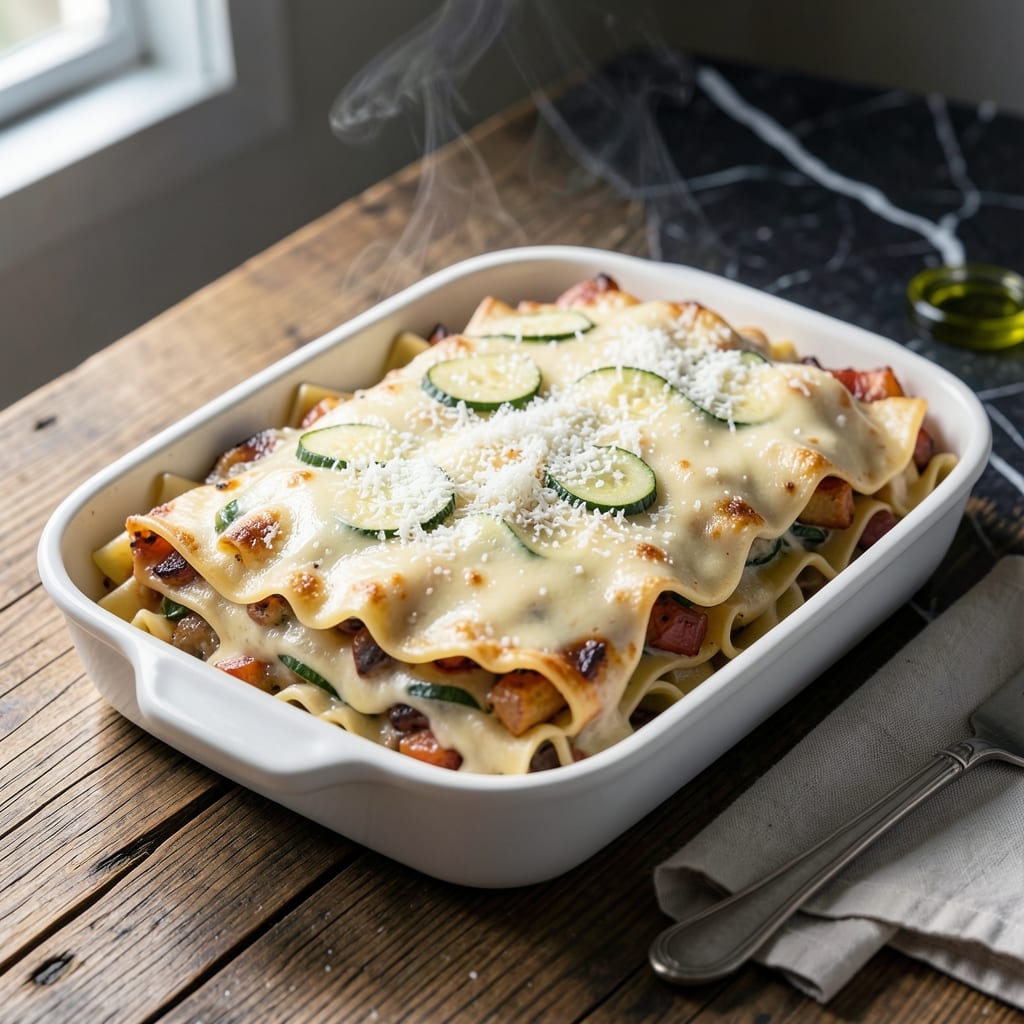
This vegetable lasagna elevates the classic with layers of creamy béchamel and fresh garden produce. Each bite delivers a perfect balance of tender pasta, rich white sauce, and vibrant vegetables.
The key is building the béchamel properly—slowly whisking in warm milk to create a velvety, lump-free sauce. Layering it with sautéed zucchini, spinach, and carrots ensures every forkful is packed with flavor and texture.
Baking at the right temperature melts everything together into a golden, bubbling casserole. The result is a dish that’s hearty yet light, with the white sauce adding a luxurious finish.
Serve it straight from the oven for a comforting meal that satisfies even the heartiest appetites. Here’s how to make it.
Ingredients for Vegetable Lasagna Recipe White Sauce
Layers of creamy béchamel meet garden-fresh vegetables in this hearty take on a classic.
| Ingredient | Amount | Notes |
|---|---|---|
| Lasagna Noodles 🍝 | 12 sheets | Oven-ready or no-boil preferred |
| Whole Milk 🥛 | 4 cups | Warm, for béchamel sauce |
| Unsalted Butter 🧈 | ½ cup | For roux base |
| All-Purpose Flour 🌾 | ½ cup | For thickening béchamel |
| Parmesan Cheese 🧀 | 1 ½ cups | Freshly grated from block |
| Zucchini 🥒 | 2 whole | Medium, thinly sliced |
| Fresh Spinach 🍃 | 10 oz | Baby spinach, roughly chopped |
| Carrots 🥕 | 2 whole | Peeled, julienned |
| Yellow Onion 🧅 | 1 whole | Finely diced |
| Garlic Cloves 🧄 | 3 cloves | Minced for sautéing |
| Nutmeg 🌰 | ¼ tsp | Freshly grated preferred |
| Salt 🧂 | 1 ½ tsp | Kosher or sea salt |
| Black Pepper 🌶️ | ½ tsp | Freshly ground |
| Ricotta Cheese 🧀 | 15 oz | Whole milk for creaminess |
| Mozzarella Cheese 🧀 | 2 cups | Shredded, low-moisture |
The béchamel is the foundation here. Whole milk and real butter create that velvety texture—don’t substitute with low-fat versions. Parmesan cheese should be freshly grated (the pre-shredded kind has anti-caking agents that make the sauce grainy). For the noodles, oven-ready saves time and eliminates the pre-boiling step. Most grocery stores carry them in the pasta aisle.
No zucchini? Eggplant or mushrooms work beautifully—just slice them thin so they cook through. Swap spinach for kale or Swiss chard (blanch it first to soften). If you can’t find nutmeg, a pinch of white pepper adds depth without heat. The ricotta can be replaced with cottage cheese (blend it smooth first), but whole-milk is key for that creamy finish.
Assemble the lasagna up to a day ahead—cover tightly and refrigerate. Bake straight from the fridge (add 10-15 minutes to the time). Leftovers keep 4-5 days in the fridge or freeze for 3 months. Reheat covered to keep the top from drying out.
Why You’ll Love This Recipe
- No-Fuss Layers: I skip the pre-boil—just layer dry noodles with the veggies and white sauce, and they cook perfectly in the oven.
- Creamy Dream: That velvety béchamel from butter, flour, and whole milk? It clings to every bite, and the Parmesan gives it that sharp, salty kick.
- Feeds My Crew: I make a big pan on Sunday, and it’s just as good for lunch the next day or a quick dinner midweek.
- Budget Stretcher: Honestly, it’s a full meal with just noodles, veggies, and pantry staples—no fancy ingredients needed.
Step-by-Step Instructions for Vegetable Lasagna with White Sauce
Here is the method. Straightforward, tested, delivers creamy layers every time.
Step 1: Prepare the Béchamel Sauce Base
In a medium saucepan, melt the 0.5 cup Unsalted Butter over medium heat. Once foaming subsides, whisk in the 0.5 cup All-Purpose Flour to form a smooth roux. Cook for 1-2 minutes, stirring constantly, until the mixture turns a pale golden color and smells slightly nutty.
This step creates the foundation for your creamy white sauce. The roux should bubble gently but not brown—if it darkens, you’ve overcooked it and the sauce may taste grainy. Remove from heat immediately if this happens.
Step 2: Build the Creamy Béchamel
Gradually whisk in the 4 cups Whole Milk, pouring in a thin stream while continuously stirring to prevent lumps. Return to medium heat and cook for 5-7 minutes until the sauce thickens enough to coat the back of a spoon.
Stir in 0.25 tsp Nutmeg, 1.5 tsp Salt, and 0.5 tsp Black Pepper. Add 1.5 cups Parmesan Cheese and whisk until fully melted. The sauce should be velvety smooth with no graininess from the cheese. Set aside to cool slightly while you prep the vegetables.
Step 3: Sauté the Vegetable Filling
In a large skillet, sauté the Yellow Onion and Garlic Cloves in a bit of the béchamel sauce until soft and fragrant, about 3-4 minutes. Add the Carrots and cook for another 2 minutes until slightly tender.
Stir in the Zucchini and cook for 2-3 minutes until just softened. Remove from heat and fold in the 10 oz Fresh Spinach until wilted. Season with a pinch of Salt and Black Pepper to taste. This mixture should be vibrant and slightly crisp—overcooking will make it mushy in the final dish.
Step 4: Assemble the Lasagna Layers
Spread a thin layer of béchamel in the bottom of a 9×13-inch baking dish. Add a layer of 12 sheets Lasagna Noodles—no need to pre-cook if using oven-ready. Spread half the 15 oz Ricotta Cheese over the noodles, followed by half the vegetable mixture and a third of the remaining béchamel.
Repeat the layers: noodles, remaining ricotta, remaining vegetables, another third of béchamel, and a final layer of noodles. Top with the last of the béchamel, then sprinkle evenly with the 2 cups Mozzarella Cheese. The top should look generously sauced but not soupy.
Step 5: Bake to Golden Perfection
Bake in a preheated 375°F oven for 35-40 minutes, covered with foil. Then remove the foil and bake for another 10-15 minutes until the top is golden brown and bubbling at the edges.
Let rest for 10 minutes before slicing—this allows the layers to set and prevents a runny presentation. The lasagna should have distinct layers with creamy sauce oozing slightly between them, and the cheese on top should be fully melted with spotty browning.
Pro Tips For Making Vegetable Lasagna Recipe White Sauce
- Pre-Cook Noodles: Boil lasagna noodles for 2-3 minutes less than package instructions—they’ll finish cooking in the oven and absorb the white sauce better.
- Warm the Milk: Heat whole milk gently before adding to the butter-flour roux to prevent lumps and create a silky bechamel every time.
- Salt the Sauce: Use more salt than you think in the white sauce, especially with unsalted butter—the Parmesan will balance it but the base needs seasoning.
- Rest Before Cutting: Let the lasagna sit for 15-20 minutes after baking so the layers set—slicing too soon turns it into a runny mess.
Health Benefits of vegetable lasagna recipe white sauce
Rich in Vegetables
This dish packs a variety of garden-fresh produce, delivering a powerful dose of vitamins A, C, and K. The spinach alone provides over 180% of your daily vitamin K needs per serving, essential for bone health and blood clotting. 💪
Heart-Healthy Fats
While it feels indulgent, the whole milk and cheeses in the béchamel provide beneficial fats. The Parmesan and mozzarella offer calcium and protein that support muscle and bone health without excessive saturated fat.
Fiber Boost
The combination of zucchini, carrots, and spinach adds significant dietary fiber—about 5-7 grams per serving. This aids digestion and helps maintain stable blood sugar levels, making the dish satisfying without being heavy.
Protein Without Meat
With ricotta, Parmesan, and mozzarella, each serving delivers around 20-25 grams of protein. This makes it a filling, meat-free option that keeps you energized. The protein also helps balance the carbs from the pasta layers.
Low in Calories
Compared to traditional lasagna, this version cuts calories by omitting ground beef while keeping the creamy texture. A typical serving contains about 400-450 calories, making it a lighter yet still indulgent choice. 🌱
Antioxidant-Rich
The carrots and spinach are packed with antioxidants like beta-carotene and lutein. These compounds help protect your cells from damage and support overall immune function.
Nutrition Facts
Frequently Asked Questions
Can I make the white sauce ahead of time?
Yes! Prepare the béchamel up to 2 days in advance and store it in an airtight container in the fridge. Reheat gently over low heat while whisking to restore its creamy texture.
Why did my sauce turn lumpy?
Lumps usually form if the milk is added too quickly or the roux isn’t fully cooked. Whisk constantly while pouring milk in a thin stream, and cook the roux until just golden. Strain if needed for silky results.
Can I use no-boil noodles?
Oven-ready noodles work perfectly—just ensure they’re fully covered with sauce in the baking dish. They’ll soften during baking at 375°F for 35-40 minutes.
How do I prevent a soggy lasagna?
Pat dry sautéed vegetables to remove excess moisture, and avoid overloading layers. Letting it rest for 10 minutes after baking helps set the structure before slicing.

- BBQ Sausage Recipe Oven: Smoky Depth Without the Grill - September 28, 2026
- BBQ Chicken Bowl Recipe Rice: Smoky Sweetness Over Fluffy Grains - September 28, 2026
- Beef Cutlet Recipe Ideas: Crispy Breaded Patties With Bold Seasonings - September 28, 2026