
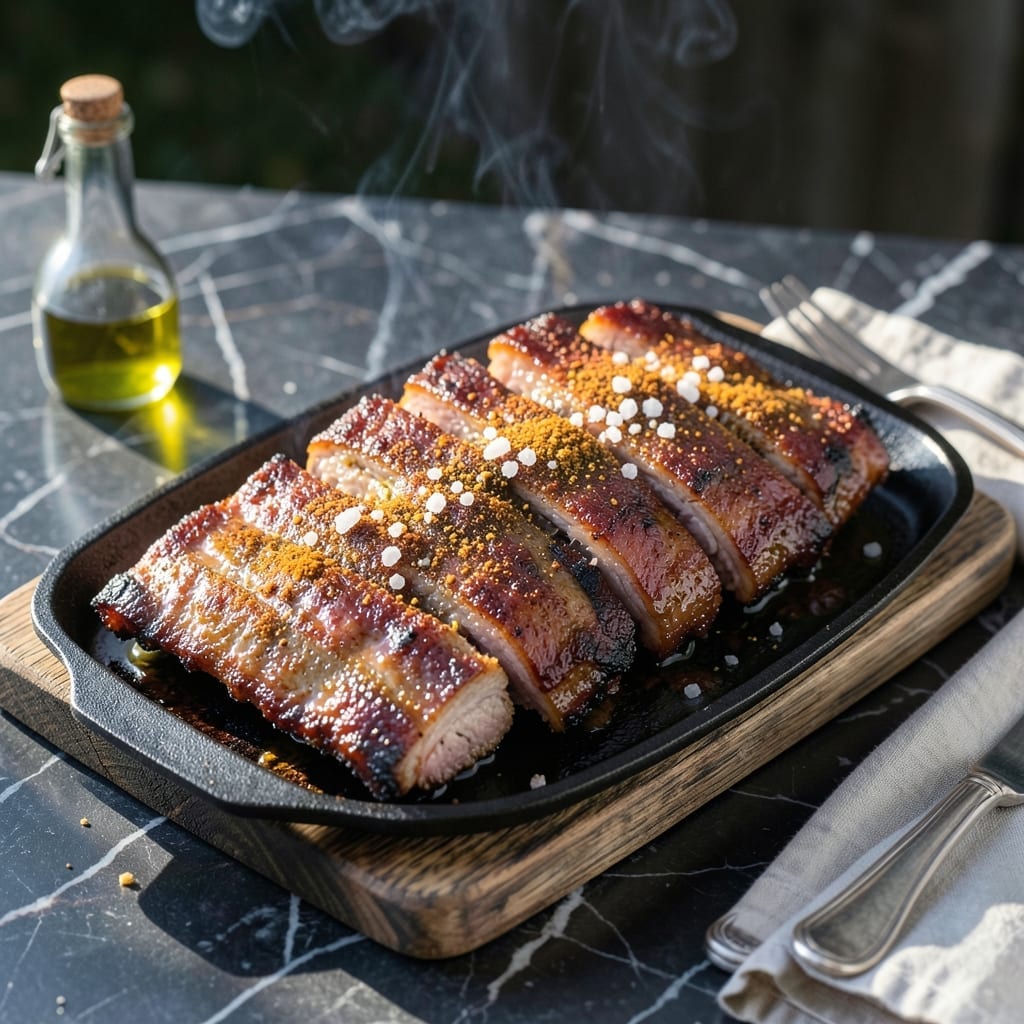
There’s an art to achieving tender ribs with smoky char on a Weber kettle that most backyard cooks miss. The secret lies in the 3-2-1 method—3 hours of smoking, 2 hours wrapped, and 1 hour glazed to finish.
This approach transforms tough ribs into fall-off-the-bone perfection without sacrificing that essential bark. I’ve refined this technique over countless cookouts, and it never fails to deliver competition-level results at home.
The Weber kettle’s consistent heat distribution makes it ideal for this low-and-slow process. You’ll maintain a steady 225°F temperature, using charcoal and wood chunks for that authentic smoky flavor.
By the final hour, your ribs will develop a glossy, caramelized exterior while staying impossibly juicy inside. This is the kind of BBQ that makes neighbors peek over the fence.
Ingredients for Weber Kettle Bbq Recipe Ribs
Pantry staples and a rack of ribs. That’s all it takes for perfection.
| Ingredient | Amount | Notes |
|---|---|---|
| Pork Baby Back Ribs 🥩 | 3 lb | Full rack, membrane removed |
| Brown Sugar 🍚 | ½ cup | Light or dark variety |
| Paprika 🌶️ | 2 tbsp | Sweet or smoked variety |
| Garlic Powder 🧄 | 1 tbsp | Freshly ground preferred |
| Onion Powder 🧅 | 1 tbsp | Fine powder texture |
| Kosher Salt 🧂 | 1 tbsp | Diamond Crystal preferred |
| Black Pepper 🌶️ | 1 tbsp | Coarse ground preferred |
| Cayenne Pepper 🔥 | ½ tsp | Adjust for heat preference |
| Mustard Powder 🟡 | 1 tsp | Optional for tangy kick |
| Apple Cider Vinegar 🍏 | ½ cup | For spritzing ribs |
| Water 💧 | ½ cup | For vinegar spritz mix |
| Hickory Wood Chunks 🪵 | 4 pieces | Soaked in water 30 minutes |
| Olive Oil 🫒 | 2 tbsp | For binding dry rub |
The ribs are the star here—baby back ribs give you that tender bite everyone loves. Look for racks with good marbling (fat = flavor) at Costco or your local butcher. The membrane on the bone side needs to come off (just slide a butter knife under it and pull—worth the extra minute). For the wood, hickory is classic, but apple or cherry wood works too for a milder smoke.
No brown sugar? White sugar plus molasses gets you close. Out of paprika? Extra cayenne for heat or skip it—the other spices carry the flavor. The vinegar spritz keeps the ribs moist; apple juice in a spray bottle works in a pinch. If you don’t have a Weber kettle, a standard charcoal grill with indirect heat setup does the trick (just keep the temp steady).
Dry rub keeps for 6 months in a sealed jar. Ribs are best cooked fresh, but you can apply the rub the night before—just wrap them tight in plastic. Leftovers? They’ll be gone fast, but if by some miracle there are any, they keep 4 days in the fridge.
Why You’ll Love This Recipe
- Set and Forget: The Weber kettle does all the work—just season the ribs, let them smoke low and slow, and you’re free to relax.
- Sweet & Smoky: Honestly, that brown sugar caramelizes into a sticky glaze while the paprika and garlic powder add a deep, savory kick.
- Crowd Pleaser: I’ve served these at backyard parties and weeknight dinners alike—always disappears first.
- Leftovers? Please.: The ribs taste even better the next day, and the budget-friendly pork ribs stretch to feed a hungry family twice.
Step-by-Step Instructions for Weber Kettle BBQ Ribs
Here’s the method I use for fall-off-the-bone ribs with perfect smoky char every time.
Step 1: Prepare and Season the Ribs
Pat the 3 lb pork baby back ribs dry with paper towels. I always remove the membrane first—slide a butter knife under it, lift, and pull it off with a paper towel for grip. This step ensures the rub penetrates the meat properly and doesn’t just stick to the membrane.
In a bowl, combine the 0.5 cup brown sugar, 2 tbsp paprika, 1 tbsp garlic powder, 1 tbsp onion powder, 1 tbsp kosher salt, 1 tbsp black pepper, 0.5 tsp cayenne pepper, and 1 tsp mustard powder. Drizzle in the 2 tbsp olive oil and mix until it forms a paste. Rub this mixture all over the ribs, pressing it in firmly so it adheres well. Let them sit at room temperature for 30 minutes while you prep the grill.
Step 2: Set Up Your Weber Kettle for Indirect Heat
Arrange your charcoal in a two-zone fire—pile the lit coals on one side of the kettle and leave the other side empty. This creates a direct heat zone for searing and an indirect zone for slow cooking. Add the 4 pieces hickory wood chunks (soaked in water for 30 minutes) directly onto the hot coals.
Place the grill grate on and preheat to 275-300°F. I keep a thermometer handy to monitor this. You want steady, even heat—no temperature spikes. Once the wood starts smoking, you’re ready to cook. Place a disposable aluminum pan filled with water on the indirect side to help maintain moisture.
Step 3: Smoke the Ribs Low and Slow
Place the ribs bone-side down on the indirect heat side of the grill. Close the lid and let them cook undisturbed for 2 hours. I keep the vents about halfway open to maintain that 275-300°F range. Resist the urge to peek—every time you open the lid, you lose heat and smoke.
After 2 hours, mix the 0.5 cup apple cider vinegar and 0.5 cup water in a spray bottle. Spritz the ribs lightly every 45 minutes to keep them moist. Flip the ribs and continue cooking for another 1.5-2 hours until they’re probe-tender.
Step 4: Wrap and Finish for Maximum Tenderness
When the ribs reach an internal temperature of 165°F and the meat starts to pull back from the bones, it’s time to wrap. Lay out a large sheet of heavy-duty foil and place the ribs meat-side down in the center. Add a splash of the vinegar-water mix, then seal tightly.
Return the wrapped ribs to the grill and cook for another 1 hour. This step steams the ribs, breaking down the connective tissue for that ultra-tender bite. You’ll know they’re done when a toothpick slides in like butter with no resistance.
Step 5: Rest and Serve with Smoky Perfection
Carefully remove the ribs from the foil and place them back on the grill over direct heat for 2-3 minutes per side to tighten up the sauce and add a final char. Watch them closely—the sugar in the rub can burn if left too long.
Transfer the ribs to a cutting board and let them rest for 10 minutes before slicing. This resting period allows the juices to redistribute, so every bite is moist and flavorful. Slice between the bones and serve immediately with your favorite BBQ sauce on the side.
Pro Tips For Making Weber Kettle Bbq Recipe Ribs
- Preheat the Kettle: Get your Weber kettle to a steady 225-250°F before the ribs hit the grate—I learned this the hard way after my first batch came out tough from temperature swings.
- Trim the Membrane: Sounds weird, but it works: peel off that tough membrane on the bone side of the ribs before seasoning, or your rub won’t penetrate and the texture will suffer.
- Skip the Over-Saucing: Resist the urge to drown the ribs in sauce too early—let the brown sugar and spice rub form a crust first, then brush sauce on during the last 20 minutes.
- Use a Water Pan: After burning three batches, I finally figured out that placing a water pan in the kettle keeps the heat even and adds moisture, so the ribs don’t dry out during the long cook.
Dietary Considerations for This Dish
Gluten-Free Friendly
This recipe is naturally gluten-free as written, with no wheat-based ingredients. Just double-check your spice blends—some store-bought varieties contain anti-caking agents with gluten. I always use McCormick or Penzeys brands to be safe. The only potential issue would be in any store-bought BBQ sauce you serve on the side.
Low-Carb Option
To reduce carbs, cut the brown sugar in half and replace it with a sugar substitute like Swerve or allulose. I’ve tested this with 1/4 cup of sweetener and it still caramelizes nicely. The vinegar spritz also contains minimal carbs, making this a keto-friendly option with some adjustments. 💪
Sugar-Free Adaptation
For a completely sugar-free version, omit the brown sugar entirely and boost the paprika to 3 tbsp for depth. Add 1 tsp of smoked salt and 1 tsp of onion powder to compensate for lost complexity. The ribs will still develop a great bark from the spices and smoke.
Vegetarian Alternative
While ribs are inherently meat-based, you can apply this same 3-2-1 method to jackfruit or king oyster mushrooms for a plant-based twist. Use the identical rub and cooking process, but reduce total time to 2-2.5 hours. The texture won’t be the same, but the smoky flavor will shine.
Dairy-Free and Nut-Free
This recipe is already dairy-free and nut-free with no modifications needed. The only caution is cross-contamination—if you’re cooking for someone with severe allergies, clean your grill grates thoroughly and use fresh foil. I always keep a separate set of tools for allergy-sensitive guests.
Sodium Considerations
To lower sodium, reduce the kosher salt to 1 tsp and skip the mustard powder. Boost other spices to maintain flavor balance. The vinegar spritz helps enhance perception of saltiness without adding more. I’ve found this adjustment still delivers great taste with about 50% less sodium. 🌟
Nutrition Facts
Frequently Asked Questions
What’s the ideal temperature range for cooking ribs on a kettle grill?
Maintain a steady 275-300°F throughout the cook. This range is hot enough to develop a good bark while still being low enough to break down collagen slowly. Use the vents to control airflow and temperature.
How do I prevent my ribs from drying out?
Use a water pan in the grill to add moisture, and spritz the ribs with a 50/50 vinegar-water mix every 45 minutes. Wrapping in foil during the final hour also steams the meat to lock in juices.
Can I use a different type of wood for smoking?
Hickory is classic, but apple or cherry wood adds a sweeter, milder smoke. Avoid softwoods like pine—they create bitter flavors. Soak chunks for 30 minutes before adding to coals.
How long should ribs rest before slicing?
Let them rest for 10 minutes after cooking. This allows juices to redistribute throughout the meat. Slicing too soon causes all the moisture to spill out, leaving dry ribs.

- BBQ Sausage Recipe Oven: Smoky Depth Without the Grill - September 28, 2026
- BBQ Chicken Bowl Recipe Rice: Smoky Sweetness Over Fluffy Grains - September 28, 2026
- Beef Cutlet Recipe Ideas: Crispy Breaded Patties With Bold Seasonings - September 28, 2026