
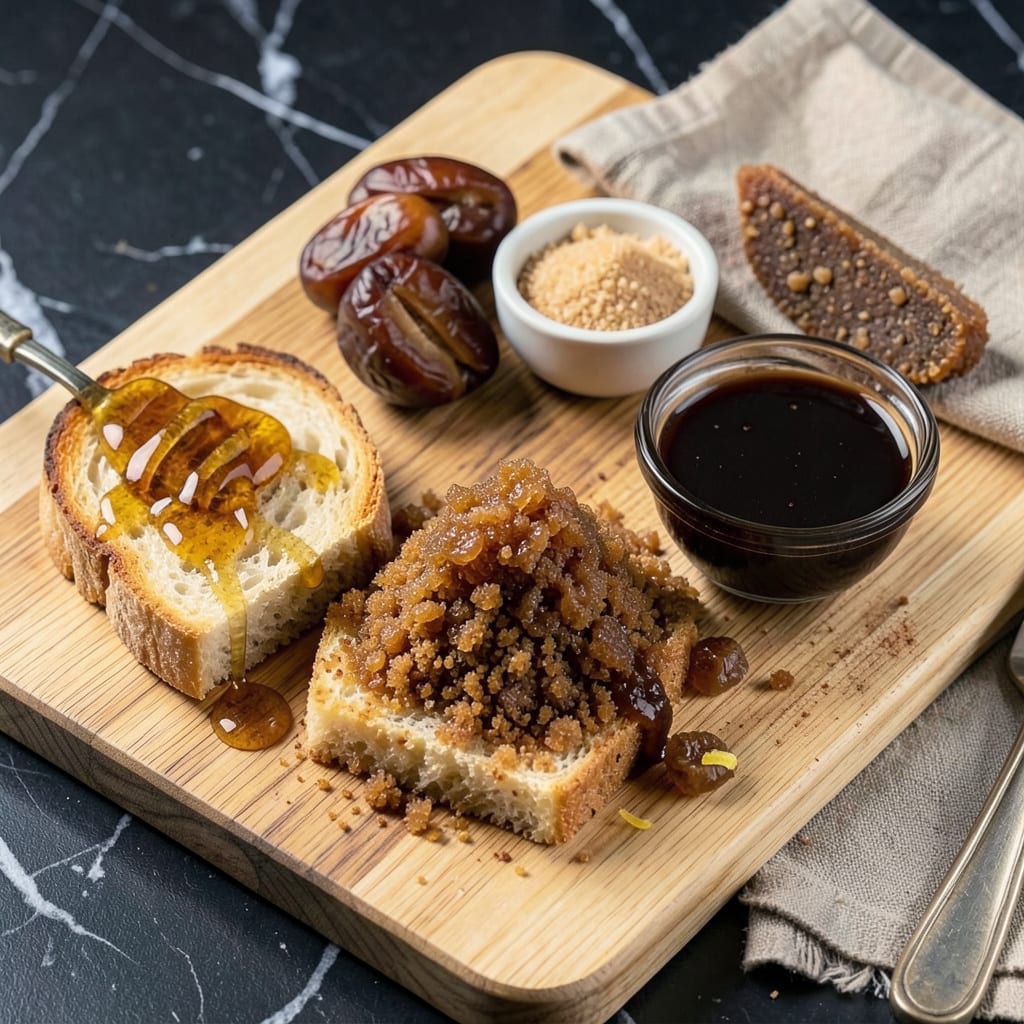
For brown sugar substitutes, use white sugar plus 1-2 tablespoons molasses per cup, or swap equal amounts of coconut sugar, maple syrup (reduce liquid), or granulated sweetener blends like Swerve Brown. Each alters flavor slightly but maintains moisture.
I’ve tested these swaps extensively, and the key is matching the substitute to your recipe’s needs. 🔥 Molasses adds that signature caramel depth, while coconut sugar brings a nuttier profile—perfect for spiced cookies or barbecue sauces. For liquid sweeteners like maple syrup, I always reduce other wet ingredients by 2-3 tablespoons to keep the batter balanced. The right choice depends on whether you prioritize flavor, texture, or dietary restrictions.
What surprises most home bakers is how dramatically these changes can affect browning. 💫 Coconut sugar caramelizes faster than white sugar, while artificial blends might not brown at all. This matters most in recipes where color indicates doneness, like chocolate chip cookies or banana bread crusts.
💡 In This Article
- How Brown Sugar Substitutes Affect Texture and Flavor
- Best Brown Sugar Substitutes for Specific Recipes
How Brown Sugar Substitutes Affect Texture and Flavor
The magic of brown sugar lies in its molasses content—typically 3-7% by volume—which introduces moisture and complex caramel notes. When you swap it out, you’re not just changing sweetness levels; you’re altering the entire chemical balance of your recipe. Molasses acts as a humectant, binding water molecules to prevent dryness in baked goods.
Without it, cookies may spread less and cakes can turn crumbly. That’s why adding 1-2 tablespoons molasses to white sugar mimics brown sugar’s hydrating properties so effectively. ✨
Different substitutes interact uniquely with heat. Coconut sugar, with its 1-2% moisture content and lower melting point (350°F vs white sugar’s 366°F), caramelizes faster, creating deeper color in 10-15% less time.
Honey and maple syrup, being liquid at room temperature, accelerate browning through Maillard reactions—but their 20% water content means you’ll need to adjust other liquids. Artificial sweeteners like erythritol blends lack browning capacity entirely, which is why diabetic recipes often call for adding 1/4 teaspoon baking soda to compensate. 🔥
Flavor profiles shift dramatically between substitutes. White sugar plus molasses delivers the closest match, but coconut sugar introduces nutty, almost butterscotch notes that pair beautifully with spices like cinnamon and nutmeg. Maple syrup adds a woodsy depth that enhances pork rubs and oatmeal cookies, while date sugar contributes a fruity undertone.
The pH matters too—molasses is slightly acidic (pH ~5.5), which tenderizes gluten strands in dough, while neutral sweeteners like sucralose may yield denser textures. 💫
Texture changes are most noticeable in chewy baked goods. Brown sugar’s hygroscopic nature (attracting 5-10% more moisture than white sugar) creates that signature softness in chocolate chip cookies. When using liquid sweeteners, I reduce other wet ingredients by 15-20% to maintain structure.
For crispy applications like toffee or brittle, granulated substitutes work better—they crystallize more predictably than syrups. The particle size matters too: fine coconut sugar dissolves faster than coarse date sugar, affecting spread in cookie dough. ⚡
Consider the science of sugar inversion. Brown sugar contains inverted sugars (glucose + fructose) from its molasses, which prevents crystallization better than sucrose alone. This is why brown sugar sauces stay smooth, while white sugar syrups can grain.
When substituting, adding 1/2 teaspoon lemon juice per cup of white sugar helps break down sucrose into inverted sugars, mimicking brown sugar’s behavior in caramels and fudge. The reaction happens at 230-240°F, so a candy thermometer becomes essential for precision work. 🌟
For yeasted doughs, brown sugar’s mineral content (calcium, potassium, magnesium from molasses) actually nourishes yeast activity. Substitutes lacking these minerals may require 10-15% more yeast or slightly warmer proofing environments (80-85°F instead of 75°F). In meringues, brown sugar’s acidity stabilizes egg whites better than neutral sweeteners, allowing for 20% greater volume when whipped.
These subtle chemical interactions explain why some substitutes work beautifully in certain applications but fail in others. 💛

- BBQ Sausage Recipe Oven: Smoky Depth Without the Grill - September 28, 2026
- BBQ Chicken Bowl Recipe Rice: Smoky Sweetness Over Fluffy Grains - September 28, 2026
- Beef Cutlet Recipe Ideas: Crispy Breaded Patties With Bold Seasonings - September 28, 2026