
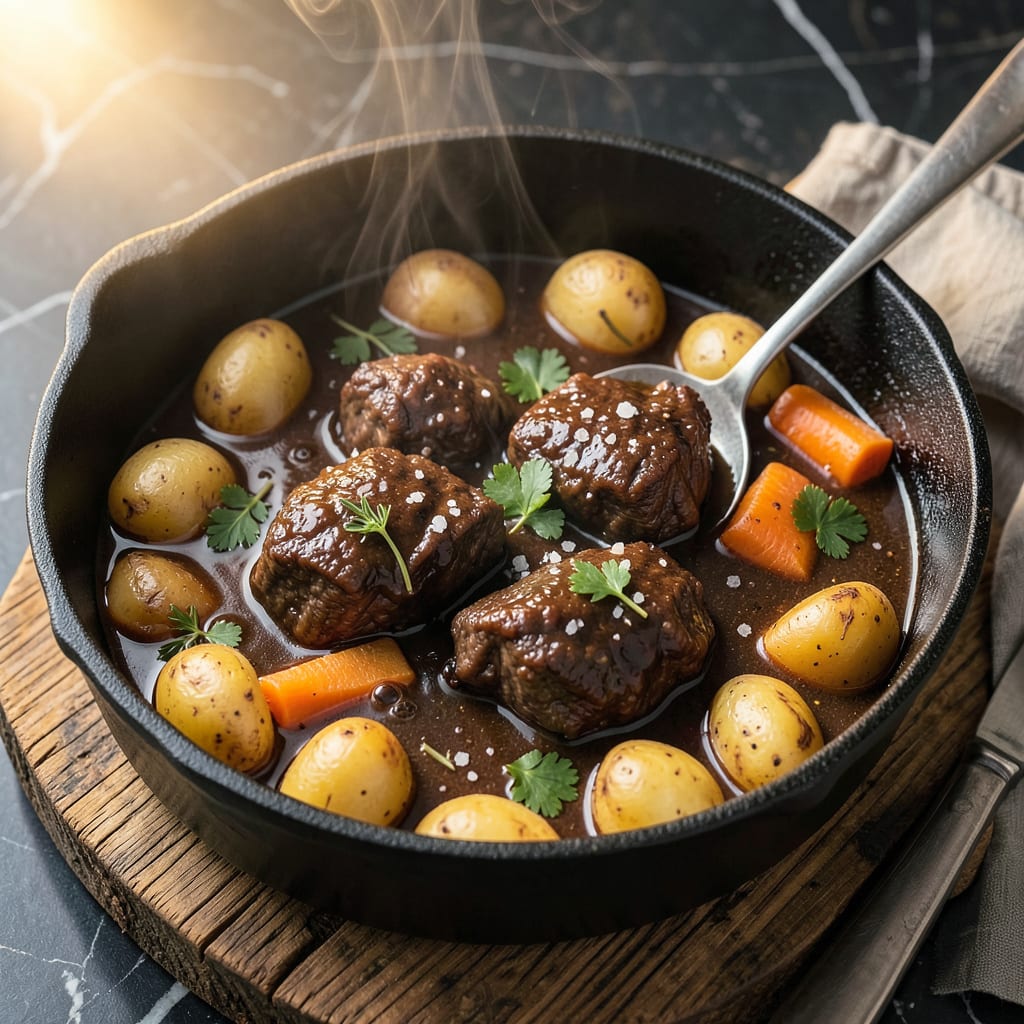
For a deep, malty flavor like Guinness, use dark stout alternatives (Murphy’s, Beamish), non-alcoholic stouts, or a mix of coffee + beef broth. For sweetness, try porter or chocolate milk with espresso.
I love experimenting with substitutes because they can transform a dish in unexpected ways. The roasted barley in Guinness creates that signature complexity, but you can mimic it by combining ingredients that bring both bitterness and richness. 🔥 For example, a splash of balsamic vinegar in your coffee-beef broth blend will add that tangy depth, while a pinch of cocoa powder in chocolate milk can enhance its malty character. The key is balancing these elements to match the original recipe’s flavor profile without overpowering it.
What’s fascinating is how different substitutes work better for specific dishes. Dark stouts shine in hearty beef stews where their boldness can stand up to long cooking times, while the chocolate milk-espresso combo might be your secret weapon in desserts like brownies or ice cream floats. I always recommend starting with smaller quantities and adjusting to taste—this way, you can fine-tune the flavor without committing to a full substitution upfront.
💡 In This Article
- Why Guinness Works in Recipes and How Substitutes Compare
- Best Guinness Substitutes for Specific Dishes
Why Guinness Works in Recipes and How Substitutes Compare
The magic of Guinness in cooking comes from its roasted barley content, which develops during the malting process at temperatures around 400-450°F. This creates pyrazines and melanoidins—compounds that deliver that signature toasty, coffee-like bitterness and deep umami character.
The stout’s slight acidity (pH ~4.1-4.3) also helps tenderize meats while balancing rich flavors in dishes like stews or braises.
Carbonation plays a surprising role too. When Guinness is added to batters or doughs, the CO₂ bubbles expand during baking, creating lighter textures in breads or cakes. For substitutes to work, they need to replicate this complexity.
Dark stouts like Murphy’s or Beamish come closest because they share the same roasted barley profile, though their alcohol content (typically 4-5% ABV) may evaporate differently during cooking.
Non-alcoholic stouts can mimic the flavor but lack the solvent properties of alcohol, which means they won’t extract flavors from other ingredients as effectively. That’s why I often recommend adding a splash of vinegar or lemon juice to these substitutes—it helps replicate Guinness’s acidity and enhances flavor extraction.
🔥 For example, 1 tablespoon of apple cider vinegar per cup of non-alcoholic stout can make a noticeable difference in stews.
The coffee-beef broth combination works because coffee contains many of the same bitter compounds (like chlorogenic acid) found in roasted barley. When combined with beef broth’s glutamates, it creates a synergistic umami effect.
However, this blend lacks Guinness’s caramel notes, which is why some cooks add a touch of molasses or brown sugar to round out the flavor profile.
Porters and chocolate milk-espresso mixes take a different approach by emphasizing sweetness over bitterness. Porters contain more caramelized malts, giving them a toffee-like quality that works well in desserts. The chocolate milk-espresso combo leverages lactose sugars and espresso’s bitterness to approximate Guinness’s flavor balance, though it’s better suited for sweet applications than savory dishes.
What most home cooks overlook is how cooking time affects substitute performance. Guinness’s flavors concentrate as alcohol evaporates, while non-alcoholic substitutes may become overly sweet or flat. For long-cooked dishes, I recommend reducing non-alcoholic substitutes by 20-25% first to intensify their flavors before adding them to the recipe. ✨

- BBQ Sausage Recipe Oven: Smoky Depth Without the Grill - September 28, 2026
- BBQ Chicken Bowl Recipe Rice: Smoky Sweetness Over Fluffy Grains - September 28, 2026
- Beef Cutlet Recipe Ideas: Crispy Breaded Patties With Bold Seasonings - September 28, 2026