
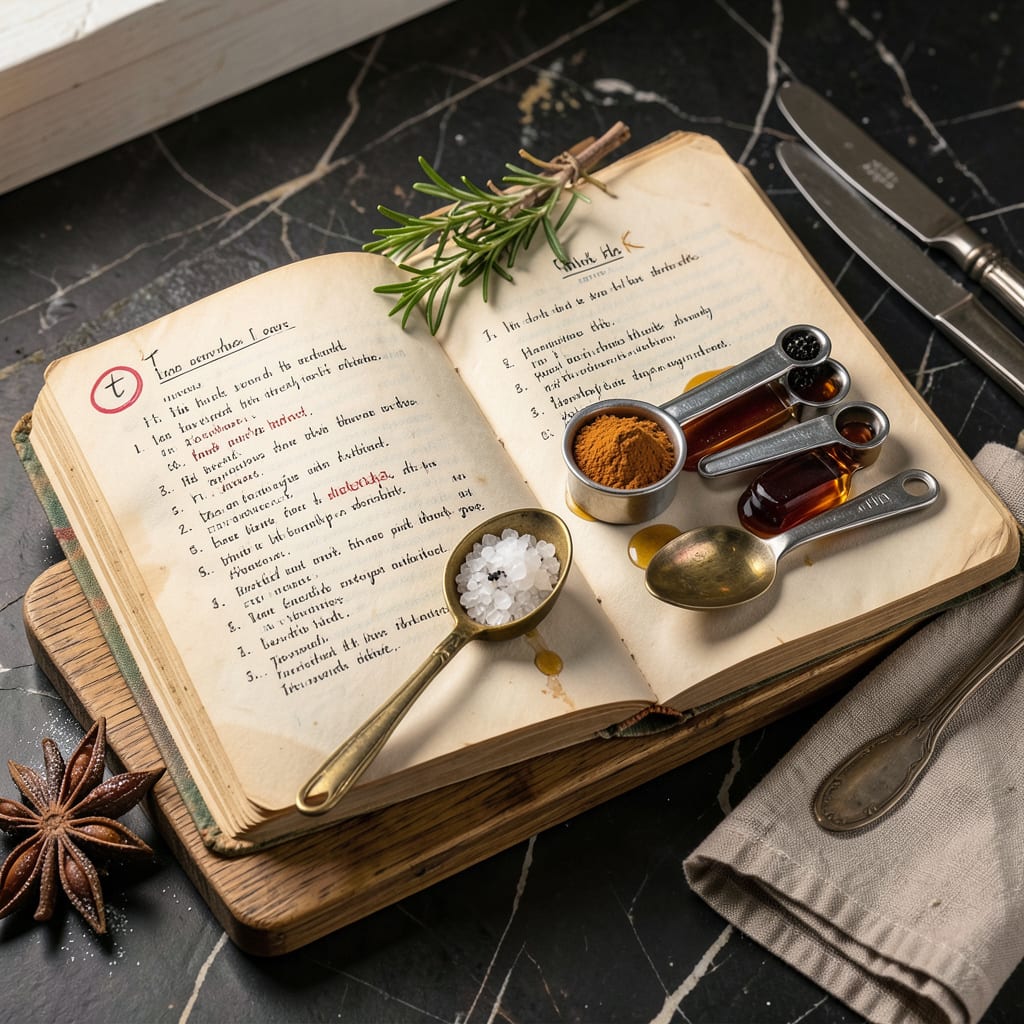
‘T’ in a recipe stands for teaspoon, a common kitchen measurement equal to 1/3 of a tablespoon or about 5 milliliters. Always use proper measuring spoons for accuracy in cooking and baking.
This abbreviation is part of a standardized system that helps streamline recipes and save space in cookbooks. 🔥 I’ve noticed that many home cooks overlook how critical precise measurements are—especially in baking where chemistry plays a major role. A single mismeasured teaspoon of baking powder can completely alter your cake’s texture. Professional kitchens rely on these abbreviations to maintain consistency across batches, which is why you’ll see them in everything from family recipes to Michelin-starred menus.
💡 In This Article
- Understanding Recipe Abbreviations and Symbols
- Essential Measuring Tools for Accurate Recipe Results
Understanding Recipe Abbreviations and Symbols
Recipe abbreviations like “t” for teaspoon emerged from practical necessity in 19th-century cookbooks. Publishers needed to conserve space while maintaining clarity, as printing costs were calculated by page count. This shorthand system became standardized when Fannie Farmer’s 1896 Boston Cooking-School Cook Book introduced precise measurements—revolutionizing American home cooking.
The abbreviation “t” specifically appears alongside other common shorthands like “T” (tablespoon), “c” (cup), and “oz” (ounce) to create a universal language across recipes.
The science behind these abbreviations lies in their ratio relationships. One teaspoon equals exactly 1/3 tablespoon or 1/6 fluid ounce, creating a mathematical consistency that’s crucial for chemical reactions in baking. For example, when a recipe calls for 1 t baking soda, it’s calculated to neutralize a specific amount of acid in buttermilk or vinegar.
This precision explains why professional bakers weigh ingredients—because volume measurements like teaspoons can vary by 10-15% depending on how you pack the spoon. ✨
Global variations add complexity to these abbreviations. While the US system uses 1 t = 5mL, Australian recipes often mean 4mL when they write “tsp,” and British recipes might use “tsp” for 5.9mL in older texts. I’ve seen this cause disasters when American cooks use UK recipes—imagine adding 20% more baking powder to your scones!
Modern digital recipes often include metric equivalents, but vintage cookbooks assume you know the regional standards. Always check the recipe’s country of origin before measuring.
The evolution of these symbols reflects changing kitchen technologies. Early 20th-century recipes assumed cooks would use “pinches” and “dashes,” but as measuring spoons became household staples in the 1950s, abbreviations like “t” gained prominence. Today’s digital recipes often hyperlink these abbreviations to conversion charts, but print cookbooks still rely on this shorthand.
The consistency matters most in professional kitchens where recipes might be scaled up 50x—imagine calculating 250 t of vanilla extract without a standardized system! 🔥
Common abbreviations you’ll encounter alongside “t” include:
- T or Tbsp: Tablespoon (3 t = 1 T)
- c: Cup (16 T = 1 c)
- pt: Pint (2 c = 1 pt)
- qt: Quart (2 pt = 1 qt)
- gal: Gallon (4 qt = 1 gal)
What most home cooks don’t realize is that these abbreviations also encode cooking techniques. When a recipe specifies “1 t salt, divided”, it’s telling you to use portions at different stages—perhaps ½ t in the dough and ½ t as finishing.
This precision matters in dishes like pie crusts where salt affects both flavor and gluten development. The next time you see “t” in a recipe, remember it’s not just shorthand—it’s part of a 200-year-old system designed to make your cooking more consistent and successful. 💫

- BBQ Sausage Recipe Oven: Smoky Depth Without the Grill - September 28, 2026
- BBQ Chicken Bowl Recipe Rice: Smoky Sweetness Over Fluffy Grains - September 28, 2026
- Beef Cutlet Recipe Ideas: Crispy Breaded Patties With Bold Seasonings - September 28, 2026