
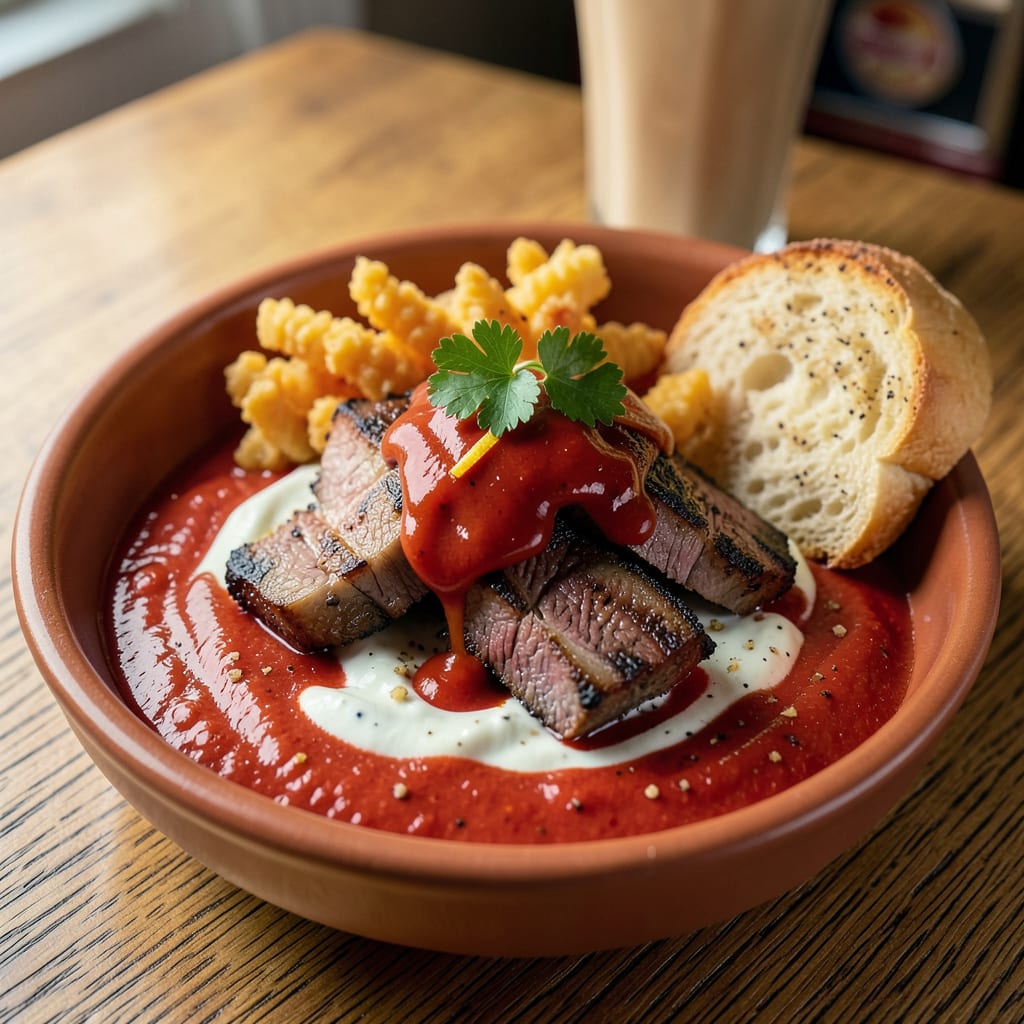
Arby’s Red Ranch Sauce blends classic ranch dressing with ketchup or tomato paste for a tangy, slightly sweet dip. Key ingredients include mayonnaise, buttermilk, garlic powder, onion powder, dill, parsley, and a tomato-based element for its signature red hue.
This sauce stands out because it bridges two flavor worlds—the creamy, herby profile of traditional ranch and the bold, fruity notes of tomato. 🔥 The buttermilk base adds a subtle tang that prevents the sauce from becoming overly sweet, while the dried herbs (particularly dill) introduce a fast-food-friendly brightness. What’s fascinating is how the tomato component transforms the sauce’s appearance and taste, making it versatile enough for dipping curly fries or drizzling over sandwiches.
Copycat versions often debate between ketchup and tomato paste for the red base, with each offering distinct results. Ketchup brings a touch of vinegar and spice, while tomato paste delivers a deeper, more concentrated tomato flavor. I’ve found that adjusting the ratio of these ingredients lets you fine-tune the sweetness and thickness to match your preference. ✨
💡 In This Article
- How Arby’s Red Ranch Sauce Gets Its Signature Flavor
- Step-by-Step Guide to Making Arby’s Red Ranch at Home
How Arby’s Red Ranch Sauce Gets Its Signature Flavor
The magic of this sauce lies in its carefully balanced acidity and creaminess. The buttermilk in ranch provides lactic acid (pH ~4.5), which cuts through the richness of mayonnaise while enhancing the tomato’s natural sweetness.
🔥 This acidity also activates the dried herbs—particularly dill and parsley—releasing their volatile oils for that fast-food tang you can’t quite put your finger on. The tomato component (whether ketchup or paste) adds umami depth through glutamates, creating a flavor profile that’s both familiar and uniquely Arby’s.
Copycat recipes reveal an interesting ratio debate: ketchup-based versions typically use 1/2 cup ketchup to 1 cup ranch, while tomato paste versions call for just 2-3 tablespoons paste blended with 1 cup ranch. Ketchup contributes 5-7% acetic acid (vinegar) and 20-25% sugar, making the sauce sweeter and thinner.
Tomato paste, with its concentrated 24-30% solids, delivers a deeper red color and more intense tomato flavor without added sweetness. The choice dramatically alters the final product’s viscosity and taste balance.
Dried herbs play a crucial but often overlooked role. Both dill and parsley contain terpenes like carvone and apiole, which become more pronounced when combined with acidic ingredients. 💫 These compounds create that “fast-food herb” aroma we associate with diner-style ranch.
The heat from freshly mixed sauce (typically 50-60°F when served) volatilizes these terpenes, making the herbal notes more noticeable than in refrigerated store-bought ranch.
Temperature affects flavor perception significantly. Served at Arby’s standard 40-45°F temperature, the sauce’s buttermilk acidity feels brighter, while the tomato sweetness becomes more subdued. This is why homemade versions often taste different—they’re typically served at room temperature (68-72°F), where the sugar molecules in tomato products become more perceptible, shifting the flavor balance toward sweetness.
Commercial versions also benefit from emulsifiers like xanthan gum (0.1-0.3% concentration), which create a uniformly creamy texture that clings perfectly to fries and sandwiches. 🌟 Without these stabilizers, homemade versions may separate slightly over time, though a 30-second blend with an immersion blender can mimic the commercial consistency.
The emulsification process traps air bubbles, giving the sauce its characteristic light, fluffy mouthfeel.
What most people don’t realize is that the sauce’s red hue comes from lycopene in tomatoes, but the specific shade depends on the tomato product’s processing. Ketchup-based versions appear more orange-red due to caramelized sugars, while tomato paste creates a deeper, brick-red color.
The difference is measurable: ketchup-based sauces reflect about 10% more light in the yellow spectrum, making them appear brighter to our eyes.
For those sensitive to texture, the particle size matters. Commercial versions strain out herb particles larger than 0.5mm, creating a perfectly smooth dip. 💛 You can replicate this at home by steeping dried herbs in warm buttermilk for 15-20 minutes, then straining through a fine-mesh sieve before mixing with other ingredients.
This extra step removes grit while infusing the liquid with herbal flavors.

- BBQ Sausage Recipe Oven: Smoky Depth Without the Grill - September 28, 2026
- BBQ Chicken Bowl Recipe Rice: Smoky Sweetness Over Fluffy Grains - September 28, 2026
- Beef Cutlet Recipe Ideas: Crispy Breaded Patties With Bold Seasonings - September 28, 2026