
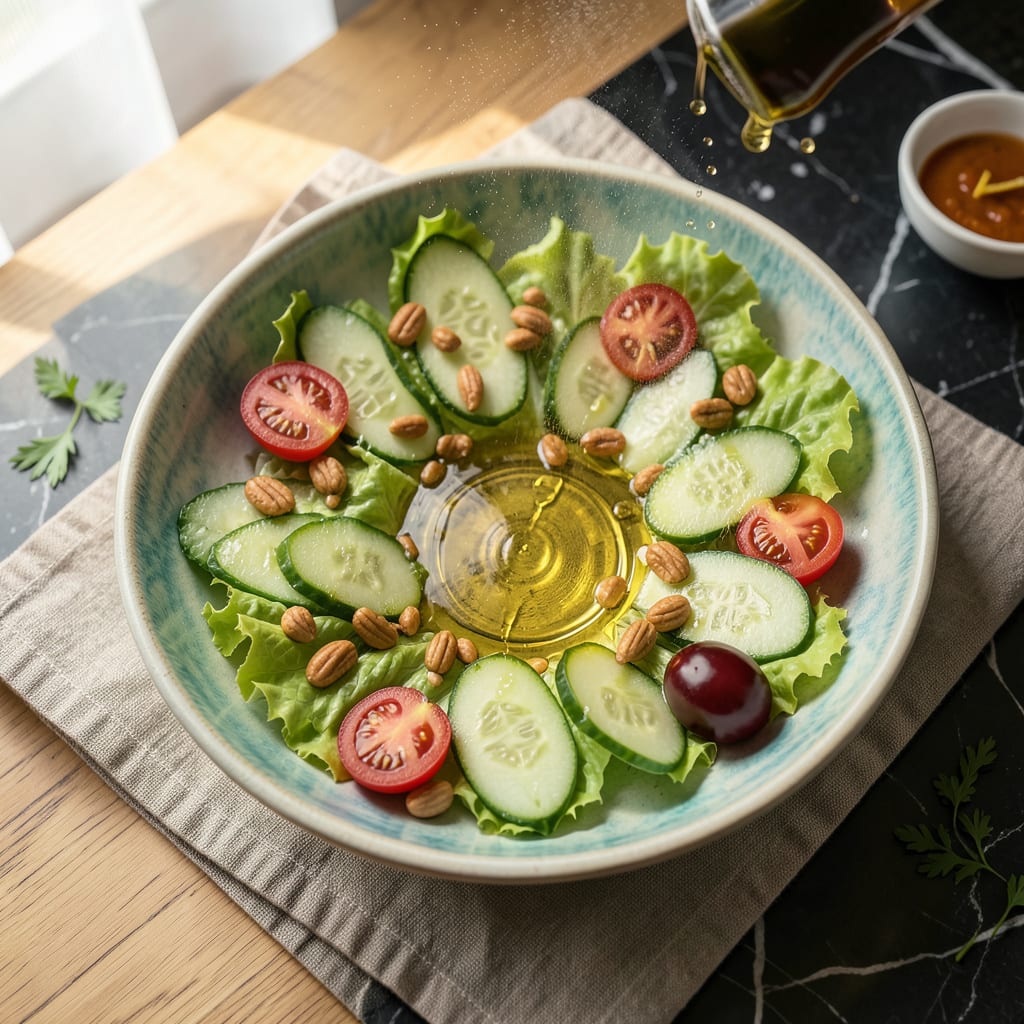
Salad oil is a neutral, lightly flavored vegetable oil used in dressings, marinades, and baking where a mild taste is preferred. Common types include canola, sunflower, or light olive oil, chosen for their high smoke points and clean finish.
When a recipe calls for this type of oil, it’s specifically asking for something that won’t overpower other ingredients. Think of it as the culinary equivalent of a blank canvas—it lets flavors like herbs, vinegars, and spices take center stage. 🔥 I always reach for it when making vinaigrettes or mayonnaise because its subtle nature ensures the acidity and seasonings shine through without competition.
What sets these oils apart is their refinement process, which removes strong flavors and impurities. This makes them ideal for delicate applications like cake baking or homemade salad dressings where consistency matters. The high smoke point (typically 400°F+) also means they won’t break down or develop bitter notes during cooking.
💡 In This Article
- Why Salad Oil Differs from Regular Cooking Oils
- Best Salad Oil Substitutes for Dressings and Cooking
Why Salad Oil Differs from Regular Cooking Oils
The secret lies in the refinement process. Salad oils undergo extensive filtering and deodorizing to strip away strong flavors, colors, and impurities. This creates a neutral base that won’t compete with other ingredients.
For example, canola oil is chemically extracted and bleached to remove its natural green tint and grassy notes, resulting in a pale, nearly flavorless product. 🔥
Smoke point is another game-changer. Most salad oils like sunflower or soybean oil have smoke points above 440°F, compared to unrefined oils like extra virgin olive oil (325°F) or sesame oil (350°F). This high threshold prevents breakdown during frying or sautéing, while maintaining a clean taste.
The molecular structure of these oils also contains fewer free fatty acids, which means less foaming and longer fry life in commercial kitchens.
In recipes, this translates to predictable results. When you make mayonnaise with salad oil, the emulsion stays stable because the oil’s uniform molecular size creates consistent droplets.
Try that with strongly flavored walnut oil, and you’ll taste the difference immediately—the nuttiness will dominate, and the emulsion might separate faster due to varying fatty acid chain lengths.
Texture matters too. Light olive oil (a common salad oil) has a viscosity of about 50-60 cP at room temperature, making it pour smoothly into dressings. Heavier oils like avocado oil (around 80 cP) can create a thicker mouthfeel that might not work in delicate vinaigrettes.
The refinement process also standardizes this viscosity across batches, ensuring your recipes turn out the same every time. ✨
Compare this to toasted sesame oil, which contains pyrazines that develop during roasting—these compounds create that distinctive nutty aroma but would completely overpower a simple lemon vinaigrette. Salad oils are specifically designed to avoid such flavor clashes, making them the secret weapon for chefs who want to control every element of their dish’s taste profile.
Even the color tells a story. High-quality salad oils appear nearly water-clear, with a maximum Lovibond color scale reading of 1.5 Red. This clarity isn’t just aesthetic—it indicates the removal of chlorophyll and carotenoids that could oxidize and turn rancid.
That’s why your homemade salad dressing stays fresh longer when made with proper salad oil versus an unrefined alternative. 💫

- BBQ Sausage Recipe Oven: Smoky Depth Without the Grill - September 28, 2026
- BBQ Chicken Bowl Recipe Rice: Smoky Sweetness Over Fluffy Grains - September 28, 2026
- Beef Cutlet Recipe Ideas: Crispy Breaded Patties With Bold Seasonings - September 28, 2026