
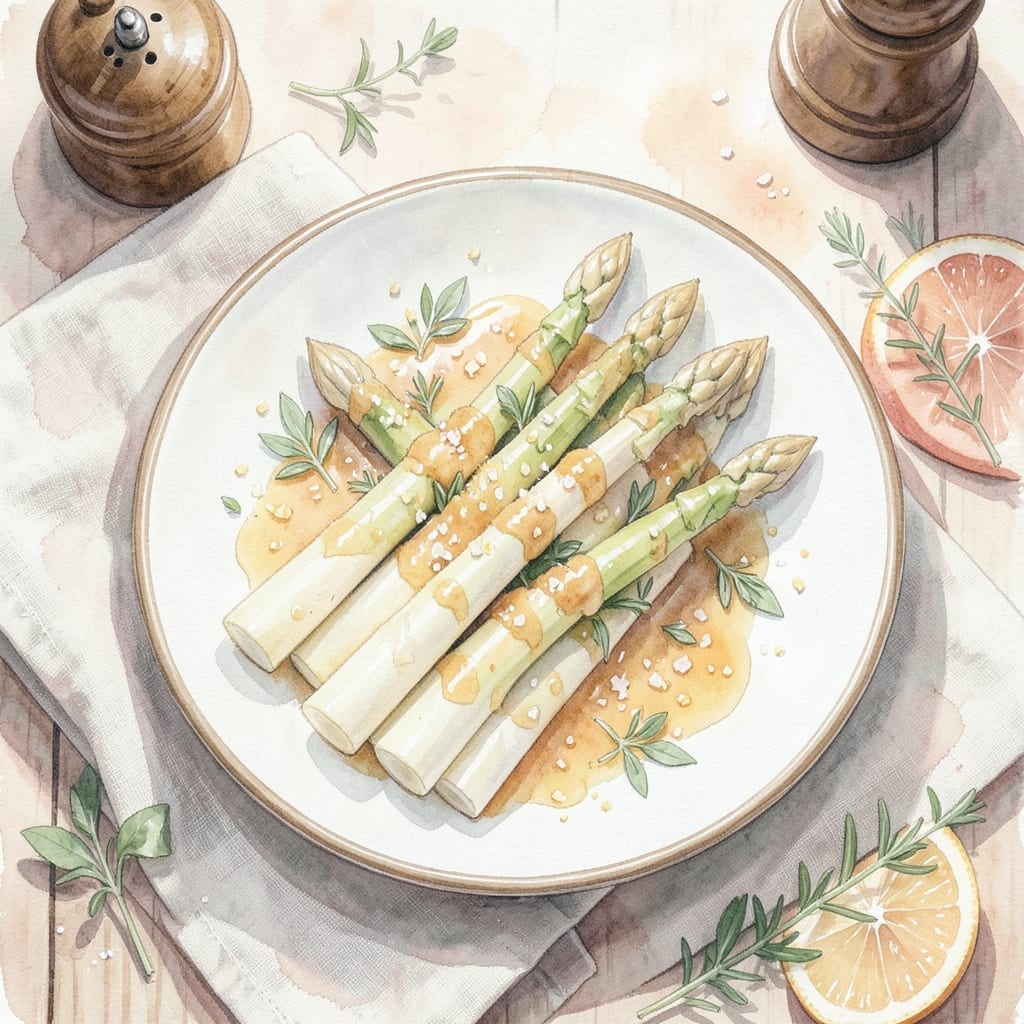
German white asparagus, or Spargel, is a springtime delicacy that demands proper preparation to honor its delicate flavor. This classic method involves careful peeling and gentle cooking to preserve its natural sweetness and tender texture.
The traditional approach requires simmering the asparagus in lightly salted water with a splash of lemon juice and a pinch of sugar. This simple technique enhances the vegetable’s natural flavor without overpowering it, resulting in a dish that’s both elegant and understated.
Serve with a rich hollandaise sauce or melted butter for the authentic experience. The asparagus emerges tender yet firm, with a subtle sweetness that pairs perfectly with the creamy sauce.
This preparation is a staple in German households during Spargel season, often accompanied by boiled potatoes or thinly sliced ham for a complete, satisfying meal.
Ingredients for White Asparagus Recipe German
Elegant spring ingredients for a classic German preparation with rich, creamy accompaniments.
| Ingredient | Amount | Notes |
|---|---|---|
| White Asparagus 🌱 | 2 lb | Fresh, thick spears preferred |
| Lemon 🍋 | 1 whole | Juiced for acidity |
| Granulated Sugar 🍚 | 1 tsp | Balances natural bitterness |
| Kosher Salt 🧂 | 2 tbsp | For cooking water |
| Unsalted Butter 🧈 | 4 tbsp | For hollandaise and serving |
| Large Egg Yolks 🥚 | 3 whole | Fresh, for hollandaise |
| White Wine Vinegar 🍷 | 1 tbsp | For hollandaise acidity |
| Freshly Ground White Pepper 🌶️ | ¼ tsp | Classic German seasoning |
| Yukon Gold Potatoes 🥔 | 1 lb | Peeled, for serving |
| Heavy Cream 🥛 | ½ cup | For hollandaise |
| Dijon Mustard 🟡 | 1 tsp | Emulsifies hollandaise |
| Fresh Chives 🌿 | 2 tbsp | Chopped, for garnish |
The asparagus quality is paramount. Thick white spears from specialty grocers or European markets yield the best texture. Look for firm, unblemished stalks with tightly closed tips. German Spargel season is brief—late April to June—so act fast when you spot them. The potatoes should be waxy varieties like Yukon Gold to hold their shape during boiling.
No white asparagus? Green asparagus works in a pinch (reduce cooking time by half). Lemon balm or tarragon can stand in for chives. For a lighter hollandaise, substitute half the butter with olive oil. If avoiding raw eggs, use pasteurized yolks or a blender hollandaise method that heats the eggs gently. The sugar can be omitted, but it balances the asparagus’s earthiness beautifully.
Peel asparagus just before cooking to prevent browning. Store upright in the fridge, wrapped in damp towels, for up to 3 days. Hollandaise holds at room temp for 1 hour—discard if separated. Boiled potatoes keep in water for 24 hours before serving.
Why You’ll Love This Recipe
- I’ll be real: cold white asparagus with a drizzle of butter is delicious the next day for lunch.
- One Pot Wonder: I just simmer the asparagus in salted water with sugar and lemon—no fuss, no multiple pans.
- Buttery Perfection: The melted butter soaks into the tender white asparagus, and the lemon adds that bright finish I crave.
- Elegant Yet Simple: Honestly, it feels fancy enough for Sunday dinner but unfussy enough for a weeknight.
Step-by-Step Instructions for Classic White Asparagus With Hollandaise
Master the German technique for preparing this seasonal delicacy with its signature creamy sauce.
Step 1: Prepare and Peel the White Asparagus
Rinse the 2 lb White Asparagus under cold water to remove any grit. Using a vegetable peeler, carefully remove the outer layer from the bottom two-thirds of each spear. The tips are delicate, so peel away from the tip toward the base to avoid snapping them.
Trim about ½ inch from the woody bottoms. As you work, place the peeled spears on a damp paper towel to prevent them from drying out. This peeling step is essential—white asparagus has a tougher skin than green, and removing it reveals the tender flesh beneath.
Step 2: Cook the Asparagus in Salted Water
Fill a large pot with enough water to cover the 2 lb White Asparagus completely. Add the 2 tbsp Kosher Salt and 1 tsp Granulated Sugar, then bring to a boil over high heat. The sugar balances the asparagus’s natural bitterness, a classic German touch.
Once boiling, reduce heat to medium and carefully add the asparagus. Simmer for 10-12 minutes until the spears are tender but still firm when pierced with a knife. Use tongs to transfer them to a warm platter, keeping them tightly wrapped in a clean kitchen towel to retain heat.
Step 3: Prepare the Hollandaise Sauce
In a heatproof bowl, whisk the 3 whole Large Egg Yolks, 1 tbsp White Wine Vinegar, and 1 tsp Dijon Mustard until smooth. Place the bowl over a pot of barely simmering water, ensuring the bottom doesn’t touch the water.
Whisk constantly as you slowly drizzle in the 4 tbsp Unsalted Butter, melted and slightly cooled. Continue whisking until the sauce thickens and becomes pale and creamy. Remove from heat, then stir in the 0.5 cup Heavy Cream and 0.25 tsp Freshly Ground White Pepper. If the sauce feels too thick, thin it with a splash of warm water.
Step 4: Boil the Potatoes and Serve
Peel and quarter the 1 lb Yukon Gold Potatoes, then boil them in salted water until fork-tender, about 12-15 minutes. Drain and keep warm. These potatoes are the traditional accompaniment, soaking up the hollandaise beautifully.
To serve, arrange the asparagus on a platter with the potatoes. Drizzle generously with the hollandaise, squeeze fresh juice from the 1 whole Lemon over the top, and sprinkle with the 2 tbsp Fresh Chives. The acidity from the lemon cuts through the richness of the sauce, balancing every bite.
Pro Tips For Making White Asparagus Recipe German
- Peel Thick Ends First: Always start peeling from the thick, woody end of the white asparagus and work upward—this part is the toughest and needs the most attention. I learned this the hard way after chewing through stringy stalks more times than I’d like to admit.
- Simmer, Don’t Boil: Keep the water at a gentle simmer, not a rolling boil, to prevent the asparagus from turning mushy. After overcooking a few batches, I finally realized slow and steady wins this race.
- Salt the Water Well: Use about 1 tablespoon of kosher salt per liter of water—white asparagus needs bold seasoning to shine, especially since it’s so mild. My grandmother swore by this, and she was right: bland water makes bland asparagus.
- Finish with Brown Butter: Instead of just melting the unsalted butter, cook it until it turns golden brown before drizzling over the asparagus. Sounds weird, but it works: the nutty depth pairs perfectly with the lemon and sugar.
Regional Styles of This Recipe
Bavarian Tradition
In Bavaria, white asparagus is often served with a butter sauce instead of hollandaise, using 1 tbsp lemon juice and 2 tbsp melted butter per serving. This simpler preparation lets the asparagus shine. I love how the butter enhances the natural sweetness without overwhelming it.
Swabian Style
Swabian cooks add a unique twist by incorporating 1 tbsp chopped parsley and 1 tsp grated lemon zest into the hollandaise. The citrusy brightness complements the earthy asparagus beautifully. I first tried this in Stuttgart and was immediately hooked. 💛
Berlin Specialty
Berliners often pair their Spargel with boiled eggs and cold cuts, creating a heartier meal. The eggs are typically soft-boiled for 6 minutes, adding a creamy element that pairs perfectly with the asparagus and hollandaise.
Rhineland Approach
In the Rhineland, you might find white asparagus served with a mustard-vinegar sauce. This tangy alternative uses 2 tbsp white wine vinegar and 1 tbsp Dijon mustard whisked with melted butter. It’s a refreshing change from the classic hollandaise.
Northern Germany
Northern regions often serve Spargel with new potatoes and a dill sauce. The dill, typically 2 tbsp fresh, is mixed into a light cream sauce. This combination is especially popular in Hamburg and Bremen during spring festivals.
Saxony Variation
Saxony’s version sometimes includes 1 tbsp finely chopped chives in the cooking water. This subtle addition infuses the asparagus with a mild onion flavor that’s distinctly regional. I find it adds a delightful complexity to the dish. ✨
Nutrition Facts
Frequently Asked Questions
Why peel the bottom two-thirds of the spears?
White asparagus skin is tougher than green. Peeling reveals the tender flesh beneath and prevents chewy texture. Focus on the lower portion where the skin is thickest, leaving the delicate tips intact.
What if my hollandaise breaks?
If the sauce separates, whisk 1 tbsp hot water into it slowly. This often re-emulsifies the mixture. To prevent breaking, ensure butter is warm but not hot when added.
Can I use green asparagus instead?
Yes, but reduce cooking time to 5-7 minutes. Green asparagus has a thinner skin and more pronounced flavor. It’s a good substitute but lacks the traditional Spargel delicacy.

- BBQ Sausage Recipe Oven: Smoky Depth Without the Grill - September 28, 2026
- BBQ Chicken Bowl Recipe Rice: Smoky Sweetness Over Fluffy Grains - September 28, 2026
- Beef Cutlet Recipe Ideas: Crispy Breaded Patties With Bold Seasonings - September 28, 2026