
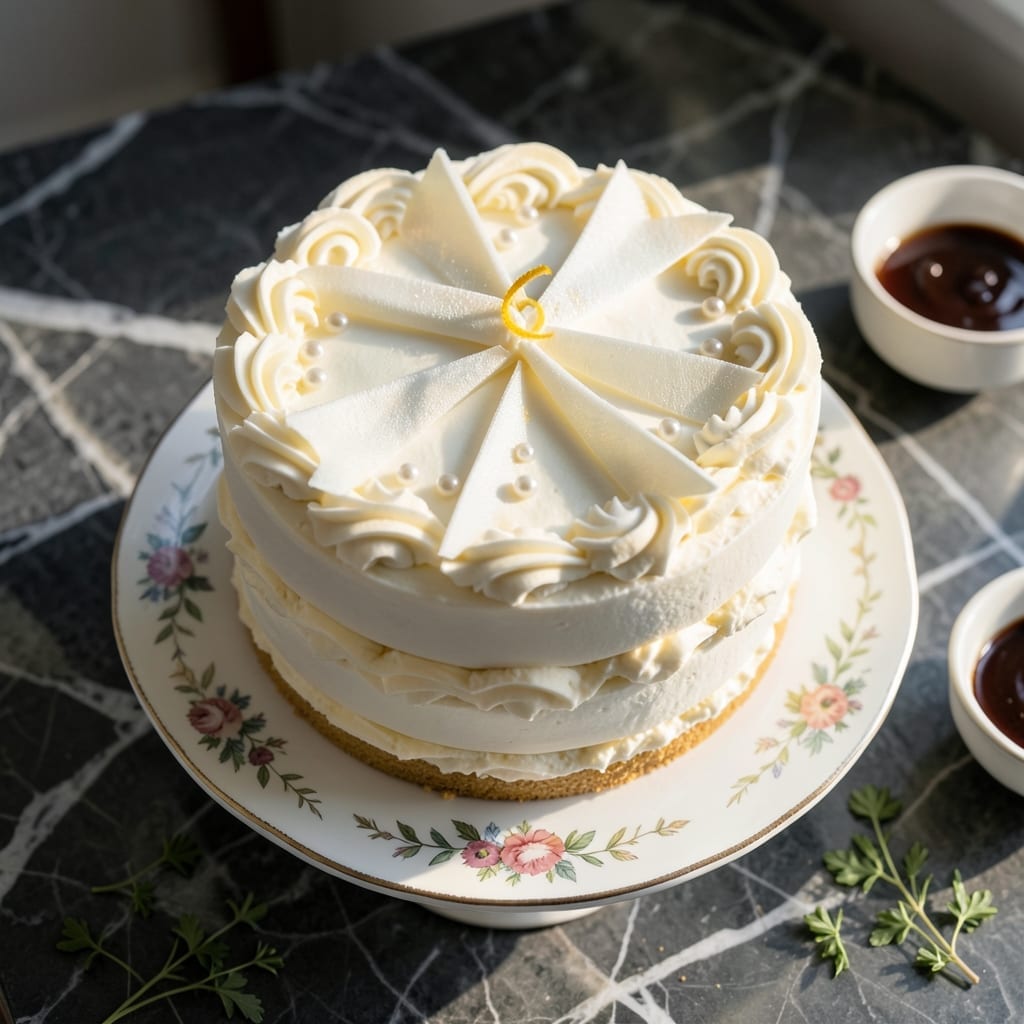
There’s something timeless about a classic white cake—tender, moist, and delicately flavored with vanilla. This from-scratch recipe delivers light and airy layers that are perfect for any celebration.
With a few simple ingredients and precise mixing, you’ll achieve a texture that’s soft yet sturdy enough for layering. The result is a cake that tastes as good as it looks, with a fine crumb and pure vanilla flavor.
Ingredients for White Cake Recipe from Scratch
Classic ingredients for a timeless, delicate vanilla cake with perfect crumb and structure.
| Ingredient | Amount | Notes |
|---|---|---|
| Cake Flour 🌾 | 2 ½ cups | Sifted for light texture |
| Granulated Sugar 🍚 | 1 ¾ cups | Fine white sugar preferred |
| Unsalted Butter 🧈 | 1 cup | Room temperature, softened |
| Large Egg Whites 🥚 | 6 whole | Room temperature for volume |
| Whole Milk 🥛 | 1 cup | Room temperature preferred |
| Pure Vanilla Extract 🌿 | 2 tsp | High-quality for best flavor |
| Baking Powder 🧂 | 1 tbsp | Ensures proper rise |
| Salt 🧂 | ½ tsp | Fine sea salt recommended |
| Almond Extract 🌰 | ½ tsp | Optional for depth |
| Buttermilk 🥛 | ½ cup | For extra tenderness |
| Vegetable Shortening 🧈 | ¼ cup | For stable structure |
The cake flour is non-negotiable for that fine, tender texture—King Arthur or Swans Down are top choices. Use room-temperature butter (not melted) for proper creaming. Egg whites at room temperature whip to greater volume, which is key for those light and airy layers. For vanilla, Nielsen-Massey or Rodelle extracts deliver the purest flavor (worth the splurge).
No cake flour? All-purpose flour minus 2 tbsp per cup, replaced with cornstarch, works in a pinch. Buttermilk can be swapped with milk plus 1.5 tsp lemon juice or vinegar. For a dairy-free version, use coconut oil instead of butter and almond milk for the liquid. The almond extract is optional but adds a lovely depth—omit if you prefer pure vanilla.
Store cake flour in an airtight container to prevent clumping. Baked layers keep at room temperature for 2 days or refrigerated for 5 days. Unbaked batter? Unfortunately, it doesn’t hold well—bake immediately for best results. Freeze layers wrapped tightly for up to 3 months.
Why You’ll Love This Recipe
- One Bowl Wonder: I love that I can mix everything in one bowl—no fancy equipment, just cake flour, sugar, and butter creamed together.
- Melt-in-Your-Mouth Lightness: The egg whites and whole milk make it absurdly tender, like biting into a cloud.
- Birthday-Ready Anytime: I’ve used this for everything from last-minute cupcakes to a fancy layer cake with jam filling.
- Keeps Like a Champ: Here’s what sold me—it stays moist for days, so I can bake ahead and frost when I’m ready.
Step-by-Step Instructions for White Cake From Scratch
Master the technique for achieving a fine crumb and delicate vanilla flavor in every slice.
Step 1: Cream Fats and Sugar for Optimal Aeration
In a stand mixer fitted with the paddle attachment, beat the 1 cup Unsalted Butter and 0.25 cup Vegetable Shortening on medium-high speed for 2 minutes until smooth and pale. The shortening adds stability to the structure while the butter provides flavor.
Gradually add the 1.75 cups Granulated Sugar and continue beating for another 4-5 minutes until light and fluffy. This step is crucial—the mixture should nearly triple in volume and appear almost white in color. Stop occasionally to scrape the bowl with a silicone spatula to ensure even mixing.
Step 2: Incorporate Dry and Wet Ingredients Alternately
In a separate bowl, whisk together the 2.5 cups Cake Flour, 1 tbsp Baking Powder, and 0.5 tsp Salt. This ensures the leavening agent is evenly distributed throughout the dry ingredients, preventing pockets of undissolved baking powder in the finished cake.
With the mixer on low speed, add one-third of the dry ingredients to the butter mixture, mixing just until combined. Pour in half of the 1 cup Whole Milk and 0.5 cup Buttermilk mixture, then repeat, ending with the final third of dry ingredients. The batter will be thick but smooth.
Step 3: Fold in Egg Whites for Lightness
In a clean bowl, beat the 6 whole Large Egg Whites using a hand mixer or whisk until they reach stiff peaks. This step introduces air, which is essential for the cake’s light texture. Be careful not to overbeat, as this can cause the egg whites to become dry and grainy.
Gently fold the beaten egg whites into the batter using a silicone spatula in three additions, being careful not to deflate the mixture. Rotate the bowl as you fold to ensure even distribution. The final batter should be light and airy, with no visible streaks of egg white.
Step 4: Add Flavorings and Bake to Perfection
Fold in the 2 tsp Pure Vanilla Extract and 0.5 tsp Almond Extract until just combined. The almond extract enhances the vanilla flavor without overpowering it. Pour the batter evenly into prepared cake pans, filling them no more than two-thirds full to allow for rise.
Bake in a preheated 350°F oven for 25-30 minutes, or until a toothpick inserted into the center comes out clean and the tops spring back when lightly pressed. Avoid opening the oven door during the first 20 minutes to prevent the cakes from collapsing.
Pro Tips For Making White Cake Recipe From Scratch
- Room Temp Egg Whites: Pull your egg whites out 30 minutes before starting—cold ones won’t whip up as tall, and I learned this the hard way after a few flat cakes.
- Sift the Flour: Cake flour clumps easily, so sift it twice. After burning three batches with lumpy flour, I finally figured out this actually changes the outcome.
- Cream Butter Longer: Beat the butter and sugar for a full 5 minutes—not 2—until it’s pale and fluffy. My grandmother swore by this, and she was right.
- Check at 25 Minutes: Start testing for doneness 5 minutes early; white cake overbakes fast. Sounds weird, but it works.
Pro Cooking Tips for This Recipe
Room Temperature Matters
Always start with room temperature butter, egg whites, and milk. Cold ingredients won’t cream properly, leading to a dense cake. I pull mine out 1-2 hours before baking. The difference in texture is noticeable. 💡
Precision Mixing
Beat the butter and sugar for 4-5 minutes until pale and fluffy—this aerates the mixture for a lighter crumb. Use a timer to ensure you don’t under or overmix. A stand mixer with a paddle attachment works best.
Fold Egg Whites Gently
When adding beaten egg whites, fold in three additions to maintain air. Use a silicone spatula and rotate the bowl for even distribution. Overmixing here will deflate the batter, ruining that airy texture.
Panning and Baking
Line your cake pans with parchment paper and grease lightly. Fill pans ⅔ full to allow for rise. Bake at 350°F for 25-30 minutes, but don’t open the oven for the first 20 minutes. 🔥
Test for Doneness
A toothpick inserted in the center should come out clean. The cake should spring back when lightly pressed. If it sinks slightly in the center, it needs more time. Let it cool in the pan for 10 minutes before transferring to a wire rack.
Pro Equipment Tip
Invest in an oven thermometer to verify your oven’s accuracy. I use a Taylor Classic—many ovens run hot or cold. Also, a kitchen scale ensures precise measurements for consistent results every time.
Frequently Asked Questions
Why use cake flour instead of all-purpose?
Cake flour has a lower protein content, creating a finer, more tender crumb. All-purpose can make the cake denser. For best results, stick with brands like King Arthur or Swans Down.
Can I make this without a stand mixer?
Yes, but it’ll require more effort. Use a hand mixer for creaming butter and sugar, and whisk egg whites by hand until stiff peaks form. Expect 10-15 minutes of vigorous mixing.
How do I prevent a dense cake?
Ensure all ingredients are room temperature and beat butter and sugar until light and fluffy. Fold egg whites gently to maintain air. Overmixing deflates the batter, so stop once combined.
What’s the best way to store leftovers?
Wrap cooled layers tightly in plastic and store at room temperature for 2 days or refrigerate for up to 5 days. For longer storage, freeze wrapped layers for 3 months.
Nutrition Facts

- BBQ Sausage Recipe Oven: Smoky Depth Without the Grill - September 28, 2026
- BBQ Chicken Bowl Recipe Rice: Smoky Sweetness Over Fluffy Grains - September 28, 2026
- Beef Cutlet Recipe Ideas: Crispy Breaded Patties With Bold Seasonings - September 28, 2026