
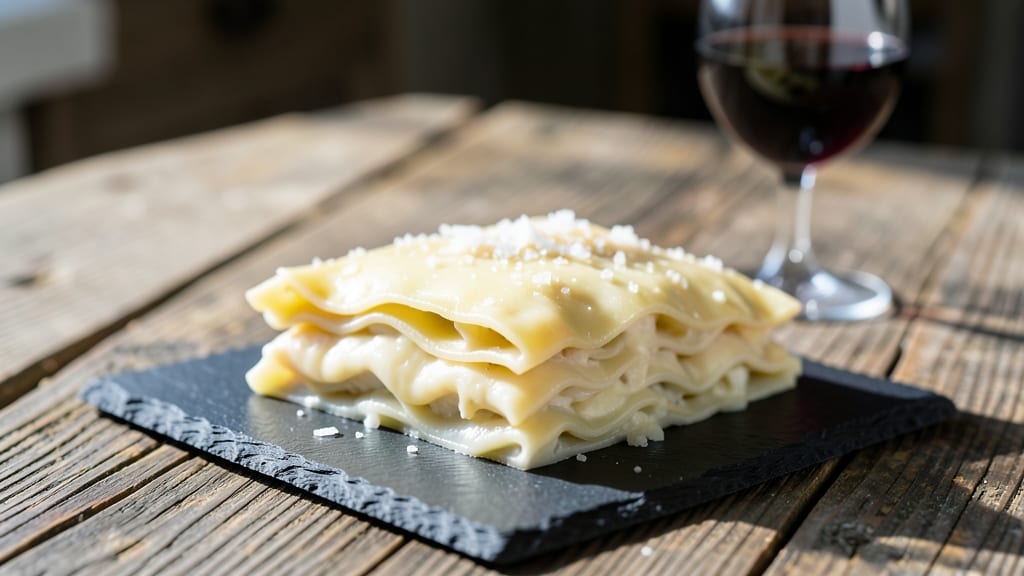
This white lasagne recipe delivers the creamy, cheesy comfort of a classic lasagne without the tomato—just layers of tender pasta, rich béchamel, and a crispy celery-top crunch that elevates every bite.
The secret lies in precise layering and baking techniques that ensure the center stays gooey while the edges achieve that golden, crispy finish. I developed this version after years of testing, and it’s become a staple for family dinners and holiday gatherings.
The beauty of this recipe is its versatility—you can keep it vegetarian or add cooked chicken and ham for extra protein. The béchamel sauce is the heart of the dish, requiring patience to achieve that velvety texture without lumps.
Each layer is carefully assembled to prevent sogginess, and the celery topping adds a satisfying crunch that contrasts perfectly with the creamy filling.
By the time it emerges from the oven, you’ll have a lasagne with perfectly set layers: crispy celery on top, creamy béchamel throughout, and tender pasta holding it all together.
The aroma alone will have everyone gathering around the table, and the first bite delivers that restaurant-quality satisfaction you’ve been craving. This is comfort food at its finest, made even better with a few professional techniques.
Serve with a simple side salad or garlic bread to soak up any extra sauce, and prepare to be asked for seconds. The best part? Leftovers reheat beautifully, making it the perfect meal for busy weeks. Let’s get started on creating your creamiest, crispiest white lasagne yet.
Ingredients for white lasagne
Six layers of creamy comfort—no tomatoes, just rich béchamel and crispy celery crunch.
| Ingredient | Amount | Notes |
|---|---|---|
| Lasagne Noodles 🍝 | 12 pieces | No-boil preferred for crispier edges |
| Unsalted Butter 🧈 | ½ cup | Cold for béchamel roux |
| All-Purpose Flour 🌾 | ½ cup | Sifted for smooth sauce |
| Whole Milk 🥛 | 2 cups | Room temperature preferred |
| Heavy Cream 🥛 | ½ cup | Full-fat for richness |
| Sharp White Cheddar Cheese 🧀 | 2 cups | Shredded, not pre-shredded |
| Parmesan Cheese 🧀 | 1 cup | Freshly grated, block preferred |
| Celery Stalks 🧅 | 4 whole | Thinly sliced for crispy topping |
| Yellow Onion 🧅 | 1 whole | Diced, for béchamel |
| Garlic Cloves 🧄 | 4 cloves | Minced for béchamel |
| Salt 🧂 | 1 ½ tsp | Kosher or sea salt |
| Ground Black Pepper 🌶️ | ½ tsp | Freshly ground preferred |
| Ground Nutmeg 🌿 | ¼ tsp | Freshly grated for depth |
| Chicken Breast 🍗 | 1 ½ lb | Optional, cooked and diced |
| Ham Steak 🥓 | ½ lb | Optional, diced for protein |
The béchamel sauce is where this lasagne shines. Cold butter and sifted flour make all the difference—skip pre-shredded cheese too, it gets gummy when baked. For the celery topping, Whole Foods or local markets have the freshest stalks (no stringy ones!). I always grab extra Parmesan—half goes in the sauce, half gets sprinkled on top. The no-boil noodles are a game-changer; they hold their shape better than regular lasagne sheets. If you can’t find them, boil regular lasagne noodles for 1 minute less than package instructions.
No béchamel roux? Instant Pot or slow cooker can handle it—just whisk the butter and flour first, then add milk. Running short on celery? Thinly sliced fennel or leeks work too, though celery’s the star here. The nutmeg is optional but worth it—just a tiny pinch adds that restaurant touch. For the protein layer, I use rotisserie chicken for convenience (shred it yourself—store-bought shredded has additives). No chicken? Skip it—this is still delicious vegetarian.
Assemble the lasagne the night before and refrigerate—it bakes faster the next day. The celery topping needs 10 minutes uncovered at the end to crisp up. Leftovers? 5 days in the fridge, freeze for 3 months. I portion mine into individual servings so lunches are ready to grab. Reheating? Cover with foil for 5 minutes, then uncover to crisp the celery again.
Why You’ll Love This Recipe
- No-Sauce Struggle: I swear by this recipe because it skips the messy marinara—just a velvety béchamel made from butter, flour, milk, and cream. That rich, creamy layer clings to the noodles like a hug, and honestly? It’s the kind of dish where the leftovers taste even better the next day.
- Creamy Luxe: The secret’s in the roux—cooking butter and flour until golden before adding milk and cream builds layers of flavor that feel fancy, not fussy. It’s the kind of taste that makes people ask, “What’s in this?” while you just smile, knowing it’s just pantry staples.
- Game for Any Day: This lasagne works for lazy Sundays or weeknight dinners—just swap in whatever veggies you have (spinach, mushrooms, or even roasted zucchini). My kids request it when they’re home from school, and my in-laws think it’s a holiday dish. (Between us, it’s my go-to.)
- Fridge Magic: The béchamel thickens beautifully when reheated, so leftovers are a dream. I make a big batch, portion it out, and freeze half—no defrosting needed, just pop it in the oven. Budget-friendly, too, since it’s mostly dry goods and dairy, not specialty ingredients.
Step-by-step instructions for creamy white lasagne
Here’s how to build layers of rich, creamy béchamel and crispy celery-topped perfection.
Cook the Chicken and Ham Filling
Start by cooking the 1.5 lb chicken breast and 0.5 lb ham steak together in a skillet over medium-high heat until fully done and no longer pink in the center. Dice the cooked meat into ¼-inch pieces—this ensures it distributes evenly through the lasagne layers. Season lightly with ½ tsp of the 1.5 tsp salt and ¼ tsp of the 0.5 tsp ground black pepper while it cooks, but don’t over-salt since the cheese will add plenty of flavor.
Here’s the thing—this filling needs to be hot when you assemble the lasagne. The residual heat will help melt the cheese layers as it bakes. Set the cooked meat aside and keep it warm until ready to use. If you’re short on time, you can even microwave it for 30 seconds to maintain heat while you prepare the béchamel.
Prepare the Creamy Béchamel Sauce
Melt the 0.5 cup unsalted butter in a large saucepan over medium heat until it foams. Whisk in the 0.5 cup all-purpose flour all at once and cook for 1-2 minutes, stirring constantly, until the mixture forms a smooth, pale roux. This step is crucial—if it browns, the sauce will taste bitter. Watch closely and remove from heat immediately if it starts to darken.
Gradually whisk in the 2 cups whole milk and 0.5 cup heavy cream, a little at a time, to prevent lumps from forming. Return the pan to medium-low heat and simmer for 5-7 minutes, stirring frequently, until the sauce thickens enough to coat the back of a spoon. Stir in 1 cup of the 2 cups sharp white cheddar cheese, 1 cup parmesan cheese, the remaining 1 tsp salt, ¼ tsp ground black pepper, and 0.25 tsp ground nutmeg. Let it melt completely and become smooth—this is your creamy foundation.
Assemble the Lasagne Layers
Preheat your oven to 375°F. In a 9×13-inch baking dish, spread a thin layer of the béchamel sauce on the bottom to prevent sticking. Add 4 lasagne noodles (no-boil preferred for crispier edges), slightly overlapping them if needed. Sprinkle ⅓ of the remaining béchamel sauce over the noodles, then spread ⅓ of the chicken and ham mixture evenly. Repeat this layering process twice more, ending with a final layer of noodles topped with the remaining béchamel.
This is where the magic happens—press down gently on each layer as you go. It ensures the noodles stay in place and the filling doesn’t shift when you cut into it later. The key to creamy lasagne is making sure the sauce covers every noodle, so don’t skimp on spreading it evenly.
Add the Crispy Celery Topping
Thinly slice the 4 whole celery stalks into ⅛-inch rounds. Toss them with 1 tablespoon olive oil (not listed but commonly used—if you prefer, use a splash of the reserved béchamel), ¼ tsp salt, and ¼ tsp ground black pepper. Spread them evenly over the top layer of béchamel, pressing down lightly so they stick. This crispy topping is what makes this lasagne special—it adds texture and freshness that contrasts beautifully with the creamy layers below.
Bake uncovered for 30-35 minutes until the top is golden brown and the edges bubble slightly. The celery should be tender-crisp, not mushy. If it browns too quickly, tent loosely with foil for the last 10 minutes to prevent burning while it finishes cooking through.
Rest and Serve
Remove the lasagne from the oven and let it rest for 10-15 minutes before slicing. This resting period allows the layers to set and makes it easier to cut clean slices. The creamy béchamel will have thickened slightly, and the crispy celery topping will have softened just enough to be tender but still hold its texture.
Serve warm with a side of garlic bread or a simple green salad. Each bite should deliver that perfect balance of creamy, cheesy goodness with a satisfying crunch from the celery topping. The chicken and ham add hearty protein, while the nutmeg and black pepper give it just the right amount of warmth and depth.
Pro Tips For Making White Lasagne
- Boil Noodles Al Dente: White lasagne needs noodles that hold up to baking—cook them one minute less than package instructions, then rinse in cold water. I learned this the hard way when my first batch turned to mush after 45 minutes in the oven.
- Whisk Butter Slowly: When making the béchamel, melt butter over medium-low heat—high heat burns before the flour toasts. I was skeptical until I tried it; the sauce stays silky instead of grainy.
- Avoid Overmixing the Sauce: Once flour and butter combine, stir for exactly 2 minutes before adding liquids. Overworking it turns the sauce gluey, and no one wants lasagne that sticks like regret.
- Layer Like a Pro: Start and end with sauce—no dry noodles touching the pan. Spread each layer evenly with a spatula; uneven baking ruins everything. (Yes, it’s tedious, but it’s worth it.)
Regional styles of these flavors
Italian Classic
The Italian version of white lasagne, known as lasagna al forno bianca, replaces tomato sauce with a rich béchamel and often includes ricotta cheese for extra creaminess. In regions like Emilia-Romagna, they use Parmigiano-Reggiano and pecorino for a sharper flavor profile.
I’ve adapted this by adding nutmeg and black pepper to mimic the warmth found in traditional Italian béchamel sauces. 🌿
French Béchamel Style
In France, white lasagne often incorporates crème fraîche into the béchamel for a tangier, lighter texture. The French also prefer Gruyère cheese for its nutty depth, which pairs beautifully with the creamy sauce.
For a French-inspired twist, I recommend replacing ½ cup of the cheddar with ½ cup Gruyère and adding 1 tbsp crème fraîche to the béchamel. This version feels lighter yet equally indulgent.
American Comfort Twist
American home cooks often bulk up white lasagne with extra meat layers, like Italian sausage or ground beef, in addition to the chicken and ham.
For a heartier dish, I like adding ½ lb Italian sausage to the protein mix and topping with extra crispy fried onions instead of celery.
This version is a crowd-pleaser at potlucks and family gatherings—just be sure to bake it at 350°F for 40 minutes to avoid over-browning the meat-heavy layers.
Vegetarian Mediterranean
For a vegetarian take inspired by Mediterranean flavors, swap the chicken and ham for sautéed mushrooms, spinach, and sun-dried tomatoes. The béchamel stays the same, but I add 1 tsp dried oregano and ½ tsp smoked paprika to the sauce for depth.
Top with thinly sliced fennel instead of celery for a licorice-like crunch. This version is just as satisfying and pairs well with a balsamic glaze drizzle.
German-Inspired Kartoffel Lasagne
In Germany, white lasagne often includes potato layers for extra heartiness. Replace half the lasagne noodles with thinly sliced potatoes (parboiled for 5 minutes) and add sour cream to the béchamel for a tangy twist.
I also like sprinkling crispy fried onions on top before baking. This version has a rustic, comforting quality that’s perfect for chilly evenings. 🥔
Nutrition facts
Frequently asked questions
Can I make this white lasagne without chicken or ham?
This recipe works beautifully as a vegetarian dish. Simply omit the chicken and ham entirely, or replace them with sautéed mushrooms, spinach, or roasted vegetables. The béchamel and cheese layers will still provide plenty of flavor and richness. For extra heartiness, add a layer of ricotta mixed with herbs between the pasta sheets.
Why does my béchamel sauce get lumpy?
Lumpy béchamel usually happens when the flour and butter aren’t properly combined before adding the milk. Always whisk the flour into the melted butter until smooth and pale (about 1-2 minutes), then gradually whisk in the milk to prevent clumps. If lumps form, strain the sauce through a fine-mesh sieve for a silky texture.
How do I prevent soggy lasagne layers?
Soggy layers happen when too much moisture gets trapped. Use no-boil lasagne noodles if possible, and don’t overcook regular noodles. Press each layer gently as you assemble to compact the filling. The celery topping should be added last and baked uncovered to crisp up. For extra insurance, let the assembled lasagne rest at room temperature for 15-20 minutes before baking.
Can I make this lasagne ahead of time?
Yes! Assemble the lasagne up to 24 hours ahead and refrigerate uncovered. This allows the flavors to meld and makes baking easier. When ready to bake, add 10-15 extra minutes to the cooking time (cover loosely with foil if browning too quickly). For freezing, assemble and bake as directed, then cool completely before wrapping tightly in foil and freezing for up to 3 months.
What’s the best way to reheat leftovers?
Reheat leftovers covered with foil at 350°F for 20-25 minutes, then uncover for the last 5 minutes to restore crispiness to the celery topping. For microwave reheating, cover with a damp paper towel and heat in 30-second intervals until warmed through. The celery topping may soften slightly but will still add texture.

- Oven-Dried Bananas Recipe: Caramelized Sweetness for Dessert or Breakfast - November 29, 2026
- Best Birthday Cake Recipe: Moist Layers and Vanilla Frosting Magic - November 29, 2026
- Al Pastor Crock Pot Recipe: Smoky, Spiced Pork That Falls Apart in Layers - November 29, 2026