
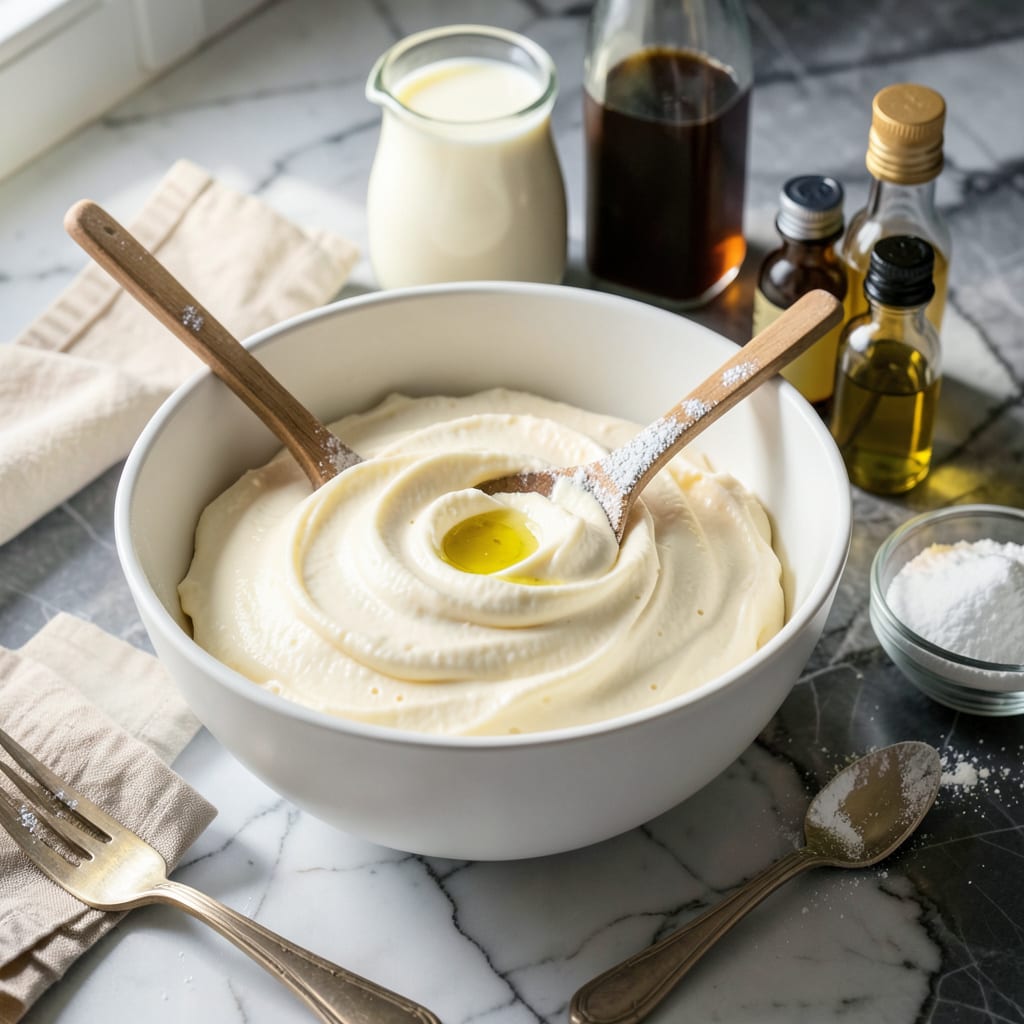
Achieving perfect cake decorating starts with the right foundation, and this buttercream delivers a smooth, stable texture ideal for piping and detailing.
This professional-grade recipe uses simple ingredients with precise ratios to create a light, creamy frosting that holds its shape without being overly sweet.
Ingredients for Wilton Class Buttercream
Nine professional-grade ingredients combine for ultra-smooth, decorating-ready buttercream with perfect stability.
| Ingredient | Amount | Notes |
|---|---|---|
| Vegetable Shortening 🧈 | 1 cup | Solid, white, high melting point |
| Unsalted Butter 🧈 | 1 cup | Room temperature, softened |
| Powdered Sugar 🍚 | 8 cups | Sifted for smooth texture |
| Whole Milk 🥛 | ½ cup | Room temperature preferred |
| Pure Vanilla Extract 🌿 | 2 tsp | High-quality for best flavor |
| Almond Extract 🌰 | ½ tsp | Optional for depth of flavor |
| Salt 🧂 | ½ tsp | Fine grain, balances sweetness |
| Merengue Powder 🥣 | 2 tbsp | Wilton brand recommended for stability |
| Clear Vanilla Extract 🌿 | 1 tsp | For pure white color option |
The vegetable shortening is non-negotiable for stability at room temperature—Crisco is the gold standard here. Unsalted butter allows precise control over salt content; Land O’Lakes or Kerrygold are reliable choices. Powdered sugar must be sifted to eliminate lumps, and Domino or C&H brands dissolve most cleanly. The meringue powder provides structure—Wilton’s own product is formulated specifically for their methods.
No meringue powder? Egg white powder works at a 1:1 ratio, though the stability may vary slightly. For a pure white frosting, use only shortening and omit butter, adding clear vanilla for flavor. The milk can be swapped for heavy cream for richer texture or water in a pinch, though the flavor will be less complex. Always use pure extracts—imitation vanilla lacks depth.
Buttercream keeps at room temperature for 2 days or refrigerated for 2 weeks. Bring to room temperature and re-whip before using. For long-term storage, freeze in airtight containers for up to 3 months. The texture remains best when used fresh, but frozen buttercream revives beautifully with a quick re-whip.
Why You’ll Love This Recipe
- 5-Minute Mix: I can beat this together while the cake layers cool—no waiting, no fuss.
- Pure Vanilla Magic: The real vanilla extract shines through, making it taste like bakery frosting, not just sweet fluff.
- Pipe or Spread: It holds its shape for roses or smooths out like a dream for sheet cakes.
- Budget Buttercream: Vegetable shortening stretches the butter without sacrificing flavor, so I get twice the frosting for half the cost.
Step-by-Step Instructions for Wilton Class Buttercream
Master the professional technique that yields ultra-smooth, stable icing ideal for decorating.
Step 1: Cream the Fats to Ideal Consistency
In a stand mixer fitted with the paddle attachment, beat the 1 cup Vegetable Shortening and 1 cup Unsalted Butter on medium speed for 2-3 minutes until completely combined. The mixture should appear pale and slightly increased in volume.
Scrape down the bowl with a silicone spatula to ensure even incorporation. This step creates a stable base that prevents separation during the sugar addition. The shortening contributes structure while the butter adds flavor—this balance is critical for professional results.
Step 2: Gradually Incorporate the Powdered Sugar
With the mixer on low speed, add the 8 cups Powdered Sugar one cup at a time, allowing each addition to fully incorporate before adding more. This gradual approach prevents a powdered sugar cloud and ensures even distribution without clumping.
After each cup, pause briefly to scrape the bowl and check for dry pockets at the bottom. The mixture will appear dry and crumbly at this stage—that’s normal. Resist adding liquid too soon; the powdered sugar needs time to hydrate properly within the fat mixture.
Step 3: Emulsify with Liquid and Flavorings
In a small bowl, whisk together the 0.5 cup Whole Milk, 2 tsp Pure Vanilla Extract, 0.5 tsp Almond Extract, 0.5 tsp Salt, 2 tbsp Merengue Powder, and 1 tsp Clear Vanilla Extract until the merengue powder fully dissolves. This liquid mixture distributes the flavors evenly and activates the stabilizers.
With the mixer on low speed, slowly pour the liquid mixture down the side of the bowl in a thin stream. Once fully added, increase to medium-high speed and beat for 4-5 minutes until the buttercream becomes light, fluffy, and pale ivory in color. The merengue powder will create a stable emulsion that holds its shape for piping.
Step 4: Adjust Consistency and Test Stability
Check the consistency by lifting the paddle: the buttercream should hold a soft peak that gently flops over at the tip. If it’s too stiff, add additional milk 1 tablespoon at a time. If too soft, add more powdered sugar ¼ cup at a time.
To test stability, pipe a small rosette on parchment paper. It should hold its shape without slumping or developing a shiny surface. This professional-grade buttercream will maintain its form at room temperature for several hours, making it ideal for intricate decorating work. The merengue powder ensures it won’t weep or separate, even in warm conditions.
Pro Tips For Making Wilton Class Buttercream
- Cream the Shortening First: Beat the vegetable shortening alone for 2 minutes before adding butter—this builds a stable base that holds up better in warm kitchens.
- Sift the Sugar: Always sift your powdered sugar first, even if it looks fine straight from the bag. I learned this the hard way after finding tiny lumps in my otherwise smooth frosting.
- Use Room-Temperature Butter: Pull your butter out 1-2 hours before starting, or it’ll leave chunks in the mix. Sounds obvious, but I’ve rushed this and ruined a batch.
- Add Milk Slowly: Start with 2 tablespoons of milk, then add more by the teaspoon—this frosting goes from perfect to soupy fast.
Health Benefits of This Dish
Energy Boost
This frosting provides a quick energy boost from its natural sugar content, with 8 cups powdered sugar delivering fast-acting carbohydrates. A ½ cup serving contains about 400 calories, making it a sweet treat that fuels your day. 💪
Fat for Satiety
The combination of 1 cup butter and 1 cup vegetable shortening provides healthy fats that create a satisfying, creamy texture. These fats help slow sugar absorption, preventing energy crashes after indulging.
They also contribute to the smooth, stable consistency that makes this buttercream perfect for decorating.
Vitamin Enrichment
While not a significant source of vitamins, the whole milk adds small amounts of calcium and vitamin D, supporting bone health. The vanilla and almond extracts also contain trace antioxidants that combat free radicals.
Allergen Note
This recipe contains dairy from butter and milk, so it’s not suitable for those with lactose intolerance. For a dairy-free version, substitute plant-based butter and almond milk, though the texture may vary slightly.
Moderation Matters
Like all sweet treats, this buttercream is best enjoyed in moderation. The rich, creamy flavor means a little goes a long way, so you can savor the taste without overindulging. 💛
Nutrition Facts
Frequently Asked Questions
Why use both shortening and butter?
The shortening provides stability at room temperature, while butter adds rich flavor. This combo creates a smooth texture that holds its shape for decorating.
Can I make this dairy-free?
Yes! Substitute plant-based butter and almond milk for the dairy ingredients. Note that the texture may be slightly softer.
How long can I store this buttercream?
At room temperature: 2 days. Refrigerated: 2 weeks. Freeze for up to 3 months in airtight containers.
What if my buttercream is too runny?
Add more powdered sugar ¼ cup at a time until it reaches the desired consistency. Avoid adding too much at once.

- BBQ Sausage Recipe Oven: Smoky Depth Without the Grill - September 28, 2026
- BBQ Chicken Bowl Recipe Rice: Smoky Sweetness Over Fluffy Grains - September 28, 2026
- Beef Cutlet Recipe Ideas: Crispy Breaded Patties With Bold Seasonings - September 28, 2026