
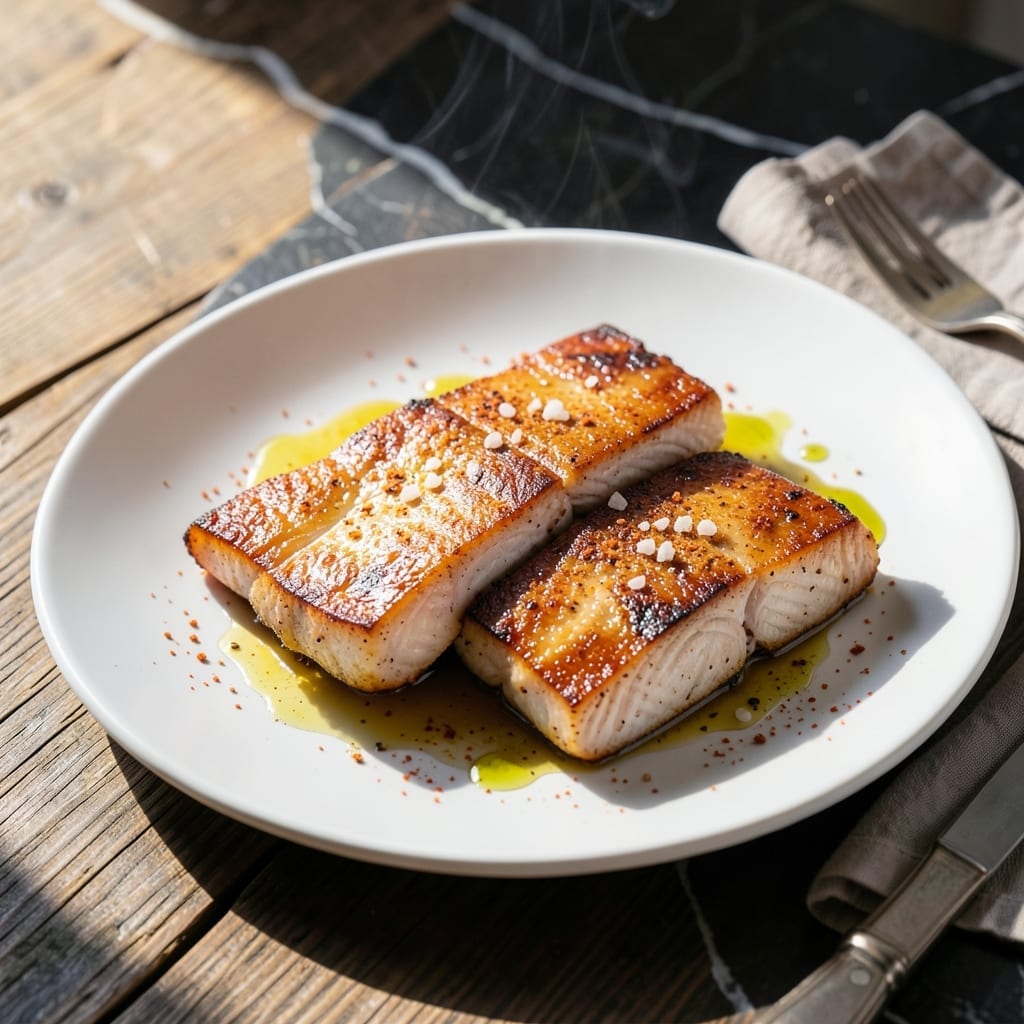
Achieving crispy skin and flaky white fish with yellowtail requires precision in pan-frying. This method ensures both texture and flavor in every bite.
The key is starting with a hot pan and dry fish to create that golden, shatteringly crispy exterior. A light dusting of seasoned flour helps form the perfect crust.
Inside, the flesh stays moist and flaky, separating effortlessly with each forkful. The contrast between textures makes this dish truly special.
Serve immediately with lemon wedges and fresh herbs to highlight the fish’s natural sweetness. This technique delivers restaurant-quality results at home.
Ingredients for Yellowtail Recipe Pan Fried
Quality fish and a few pantry staples create this restaurant-worthy dish with perfect texture contrast.
| Ingredient | Amount | Notes |
|---|---|---|
| Yellowtail Fillets 🐟 | 1 ½ lb | Skin-on, boneless, patted dry |
| All-Purpose Flour 🌾 | ½ cup | For dredging fish fillets |
| Kosher Salt 🧂 | 1 ½ tsp | Divided for seasoning and flour |
| Freshly Ground Black Pepper 🌶️ | ½ tsp | Divided for seasoning and flour |
| Paprika 🌶️ | 1 tsp | Sweet or smoked variety |
| Garlic Powder 🧄 | ½ tsp | For seasoned flour mixture |
| Olive Oil 🫒 | ½ cup | High smoke point for frying |
| Unsalted Butter 🧈 | 4 tbsp | For basting while cooking |
| Fresh Lemon 🍋 | 1 whole | Cut into wedges for serving |
| Fresh Parsley 🌿 | ¼ cup | Chopped, for garnish |
| Fresh Thyme Sprigs 🌿 | 4 pieces | Optional for added aromatics |
| Vegetable Oil 🫒 | 2 tbsp | For pan preparation |
The yellowtail is non-negotiable here. Look for skin-on fillets at Whole Foods or a trusted fishmonger—ask when it arrived (ideally same-day). The skin should be iridescent, not dull. For flour, King Arthur or Bob’s Red Mill give consistent results. The paprika adds color and subtle sweetness—Hungarian sweet paprika is my go-to for its vibrant hue (worth the extra minute to seek out).
No yellowtail? Halibut or cod work well, though their texture differs slightly. Swap paprika for cayenne for heat or omit entirely for a milder crust. Fresh herbs can be dill or chives if parsley isn’t available. The butter basting is key for flavor—vegan butter works at a 1:1 ratio. Don’t skip drying the fillets thoroughly; moisture is the enemy of crispy skin.
Cook immediately after prepping—yellowtail degrades fast. Store raw fish in the coldest part of your fridge for no more than 1 day. Leftovers (if any) keep 2 days max. Reheat gently in a 300°F oven to preserve texture, but honestly, this is best eaten fresh.
Why You’ll Love This Recipe
- One Pan Wonder: I love that this comes together in a single skillet—just dredge the yellowtail in seasoned flour and fry.
- Crispy Perfection: The paprika and black pepper give it this warm, slightly smoky crust that’s ridiculously good with every bite.
- Weeknight Hero: Honestly, it’s my go-to for busy evenings when I need something quick but still impressive.
- Budget Friendly: Yellowtail fillets stretch further than you’d think, and the pantry staples keep costs low without sacrificing flavor.
Step-by-Step Instructions for Pan Fried Yellowtail
This method delivers perfectly crispy skin and tender, flaky white fish with every bite.
Step 1: Season and Dredge the Yellowtail Fillets
Pat the 1.5 lb Yellowtail Fillets completely dry with paper towels—this is critical for achieving crispy skin. Season both sides with 1 tsp Kosher Salt and 0.25 tsp Freshly Ground Black Pepper, pressing the seasoning into the flesh.
In a shallow dish, combine the 0.5 cup All-Purpose Flour with the remaining 0.5 tsp Kosher Salt, 0.25 tsp Freshly Ground Black Pepper, 1 tsp Paprika, and 0.5 tsp Garlic Powder. Dredge each fillet in the seasoned flour, shaking off any excess. The flour creates a light crust that locks in moisture while frying.
Step 2: Preheat the Pan and Add Oils
Place a large, heavy skillet (cast iron works best) over medium-high heat. Add the 2 tbsp Vegetable Oil and 0.5 cup Olive Oil, swirling to coat the pan evenly. The oils should shimmer but not smoke—this indicates the perfect temperature for searing.
Add the 4 pieces Fresh Thyme Sprigs to the hot oil, if using. They’ll infuse the oil with subtle herbal notes as the fish cooks. Let the oils heat for 1-2 minutes before adding the fillets to ensure they’re fully preheated.
Step 3: Pan Fry the Fillets to Golden Perfection
Carefully lay the dredged fillets in the hot oil, skin-side down. Press down gently with a fish spatula for 10 seconds to ensure full contact with the pan—this prevents curling. Cook undisturbed for 4-5 minutes until the skin is deep golden brown and crisp.
Flip the fillets and add the 4 tbsp Unsalted Butter to the pan. Tilt the skillet slightly and baste the fillets with the foaming butter for 1-2 minutes using a spoon. Cook until the flesh is opaque and flakes easily with a fork, about 3-4 minutes per side total.
Step 4: Rest and Garnish for Serving
Transfer the fillets to a paper towel-lined plate to drain any excess oil. Let them rest for 2-3 minutes—this allows the juices to redistribute, ensuring moist, flaky fish.
Garnish with the chopped 0.25 cup Fresh Parsley and serve immediately with wedges of the 1 whole Fresh Lemon for a bright, citrusy finish. The lemon’s acidity cuts through the richness of the butter and oil, balancing every bite.
Pro Tips For Making Yellowtail Recipe Pan Fried
- Pat Dry Thoroughly: Press the fillets between paper towels until they’re bone-dry—any moisture left on the surface steams the fish instead of searing it, and you’ll lose that crisp, golden crust.
- Hot Pan, Quick Flip: Get the pan screaming hot before adding the fish, then resist the urge to move it. I learned this the hard way—flipping too soon tears the delicate flesh and ruins the crust.
- Season the Flour: Mix the salt, pepper, and paprika directly into the flour before dredging. It sticks better than sprinkling seasoning on the fish, and every bite gets even flavor.
- Rest Before Serving: Let the fillets rest 2-3 minutes on a warm plate after cooking—this keeps the juices from pooling on the plate when you cut into them. Sounds fussy, but it actually changes the outcome.
Essential Equipment for Perfect Results
The Right Pan
For pan-frying yellowtail, a heavy cast iron skillet is my top choice—it retains heat beautifully and creates an even crust. I use my Lodge 12-inch for perfect searing. Stainless steel works too, but avoid nonstick for this high-heat method.
Thermometer Matters
An instant-read thermometer ensures perfect doneness. I check that the fish reaches 145°F internal temperature at its thickest part. The ThermoWorks ThermoPop gives accurate readings fast, preventing overcooking. 🌡️
Essential Utensils
A fish spatula with a thin, flexible edge is non-negotiable for flipping delicate fillets without breaking them. I also keep tongs handy for handling hot thyme sprigs. Both tools make the process smoother and more precise.
Oil Handling
Use oils with a high smoke point like vegetable or avocado oil. I measure with a glass measuring cup for accuracy. Have paper towels ready for draining excess oil after cooking—this keeps the skin crispy.
Basting Tools
A large metal spoon works best for basting with butter. I tilt the pan at a 45-degree angle to pool the butter for easy spooning. This technique adds rich flavor while cooking.
Serving Setup
Warm plates prevent the fish from cooling too quickly. I use a wire cooling rack on a baking sheet to keep fillets elevated while resting. This maintains crispiness until serving time. 💡
Nutrition Facts
Frequently Asked Questions
What oil works best for pan frying?
Use oils with a high smoke point like vegetable or avocado oil. Avoid olive oil if heating above 375°F. These oils prevent burning and maintain crispy skin.
How do I prevent the fish from sticking?
Ensure the pan is very hot before adding fillets and don’t move them for 4-5 minutes. A well-seasoned cast iron skillet works best for easy release.
Can I substitute another fish?
Yes, try halibut or cod as alternatives. They have similar firm textures but may need 1-2 minutes less cooking time. Adjust seasoning to taste.

- BBQ Sausage Recipe Oven: Smoky Depth Without the Grill - September 28, 2026
- BBQ Chicken Bowl Recipe Rice: Smoky Sweetness Over Fluffy Grains - September 28, 2026
- Beef Cutlet Recipe Ideas: Crispy Breaded Patties With Bold Seasonings - September 28, 2026