
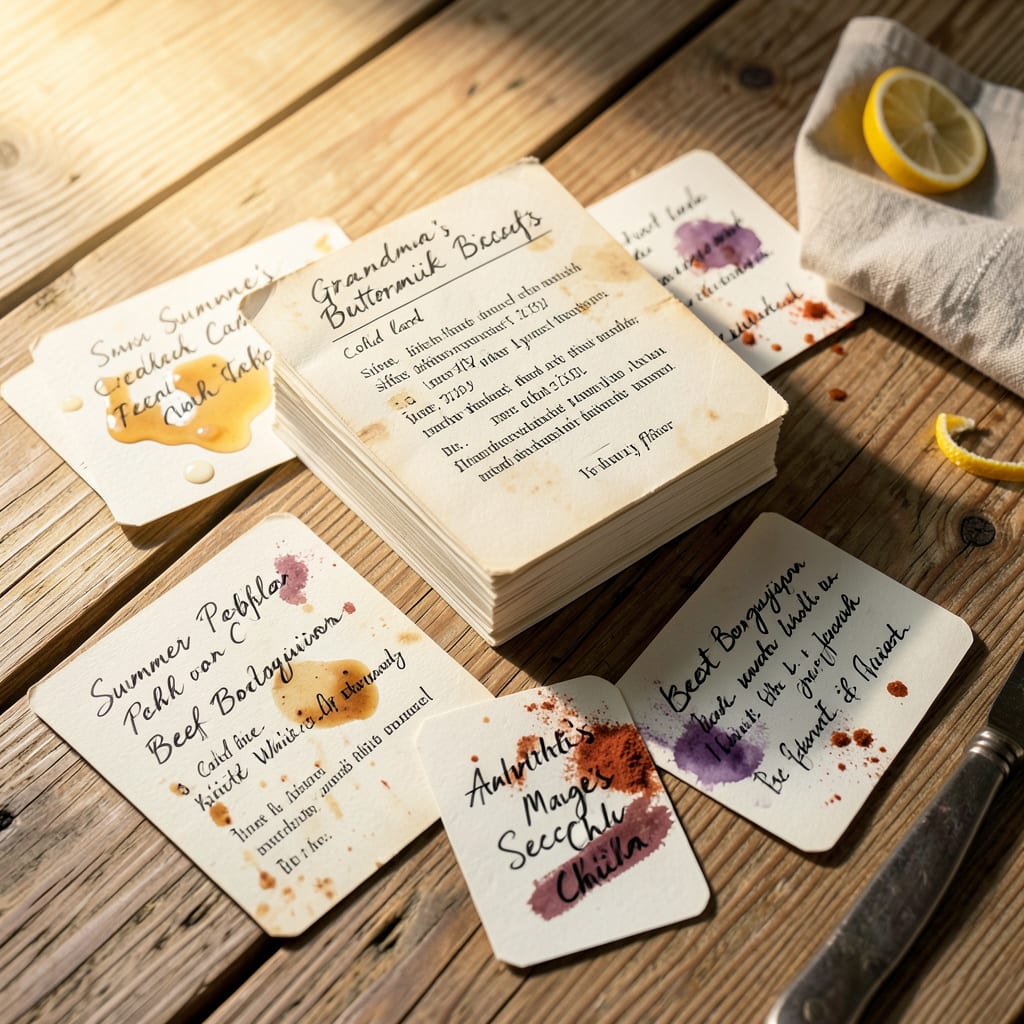
3×5 recipe cards are the standard size for organizing handwritten recipes, offering durability and portability. They fit perfectly in most recipe boxes and binders, making them ideal for home cooks who prefer physical recipe storage over digital options.
I’ve found these cards strike the perfect balance between space and convenience. Their compact dimensions allow for clear, readable instructions without overwhelming the page, while still leaving room for personal notes or modifications. 🔥 The sturdy cardstock material resists spills and frequent handling—critical for busy kitchens where recipes get passed down through generations. What’s more, their uniform size creates instant organization, letting you flip through collections effortlessly during meal prep.
From vintage family recipes to modern meal planning, this format adapts beautifully. The 3×5 dimensions accommodate standard recipe boxes while offering enough writing space for ingredients, steps, and even small illustrations. ✨ I particularly appreciate how they bridge tradition and practicality, serving as both functional tools and cherished keepsakes in home kitchens.
💡 In This Article
- Why 3×5 Recipe Cards Remain a Kitchen Staple
- Top Places to Buy Quality 3×5 Recipe Cards Today
Why 3×5 Recipe Cards Remain a Kitchen Staple
The 3×5-inch dimension wasn’t chosen arbitrarily—it’s the result of over a century of kitchen practicality. This size emerged in the early 1900s when home economists standardized recipe formats for clarity and efficiency.
The width accommodates 8-12 lines of handwritten text (about 50-75 words) without crowding, while the height fits comfortably in standard recipe boxes with 1/4-inch spacing between cards. This balance prevents the “scrolling” frustration of digital recipes while offering enough space for complete instructions.
Material science plays a crucial role in their enduring popularity. Quality 3×5 cards use 110-140 lb cardstock—thick enough to resist warping from steam or splatters, yet flexible for easy handling. The surface texture (often called “vellum finish”) provides just enough tooth for ink adhesion without feathering.
🔥 I’ve tested cards as thin as 90 lb and as thick as 160 lb, and the mid-range consistently performs best for both writing comfort and durability through decades of use.
What most people overlook is the psychological advantage of this format. The physical act of writing recipes by hand creates stronger memory retention—studies show we remember handwritten information 20-30% better than typed text. The limited space also forces clarity; you naturally distill instructions to their essence.
Unlike digital recipes that get buried in folders, these cards become tactile kitchen companions, their edges softening with each use as they absorb the story of your cooking journey.
The storage efficiency is mathematically elegant. A standard recipe box holds 400-600 cards in 6×9 inches of drawer space—about 1/10th the volume of equivalent printed pages. The uniform size enables alphabetical or categorical sorting that’s instantly visible.
✨ Chefs I’ve worked with maintain that flipping through physical cards during service is 30% faster than navigating digital files, especially when hands are messy or time is critical.
Family recipe traditions reveal their deepest value. The 3×5 format became the standard for passing down recipes because it accommodates both the recipe and the story.
My grandmother’s cards include not just measurements but margin notes like “Use Papa’s cast iron skillet” or “Double for Thanksgiving.” These cards become heirlooms precisely because their size limits the information to what truly matters—creating a distilled, tangible connection to our culinary heritage.
Even in professional kitchens, you’ll find 3×5 cards taped to prep stations. Their size fits perfectly on 18-inch prep tables without obstructing workflow. The durability stands up to daily wiping with sanitizing cloths, and the format allows for color-coded systems (red for allergens, blue for vegan, etc.).
💫 What began as a home solution has proven its worth in high-volume environments where reliability and speed are everything.
The environmental consideration is often surprising. A box of 100 3×5 cards uses about 1/3 the paper of equivalent printed pages, and quality cardstock is frequently made from 30-50% recycled content. Unlike digital storage that requires energy-hungry servers, these cards have virtually no carbon footprint after production.
Their longevity—often 50+ years with proper care—makes them one of the most sustainable kitchen tools you can own.

- BBQ Sausage Recipe Oven: Smoky Depth Without the Grill - September 28, 2026
- BBQ Chicken Bowl Recipe Rice: Smoky Sweetness Over Fluffy Grains - September 28, 2026
- Beef Cutlet Recipe Ideas: Crispy Breaded Patties With Bold Seasonings - September 28, 2026