
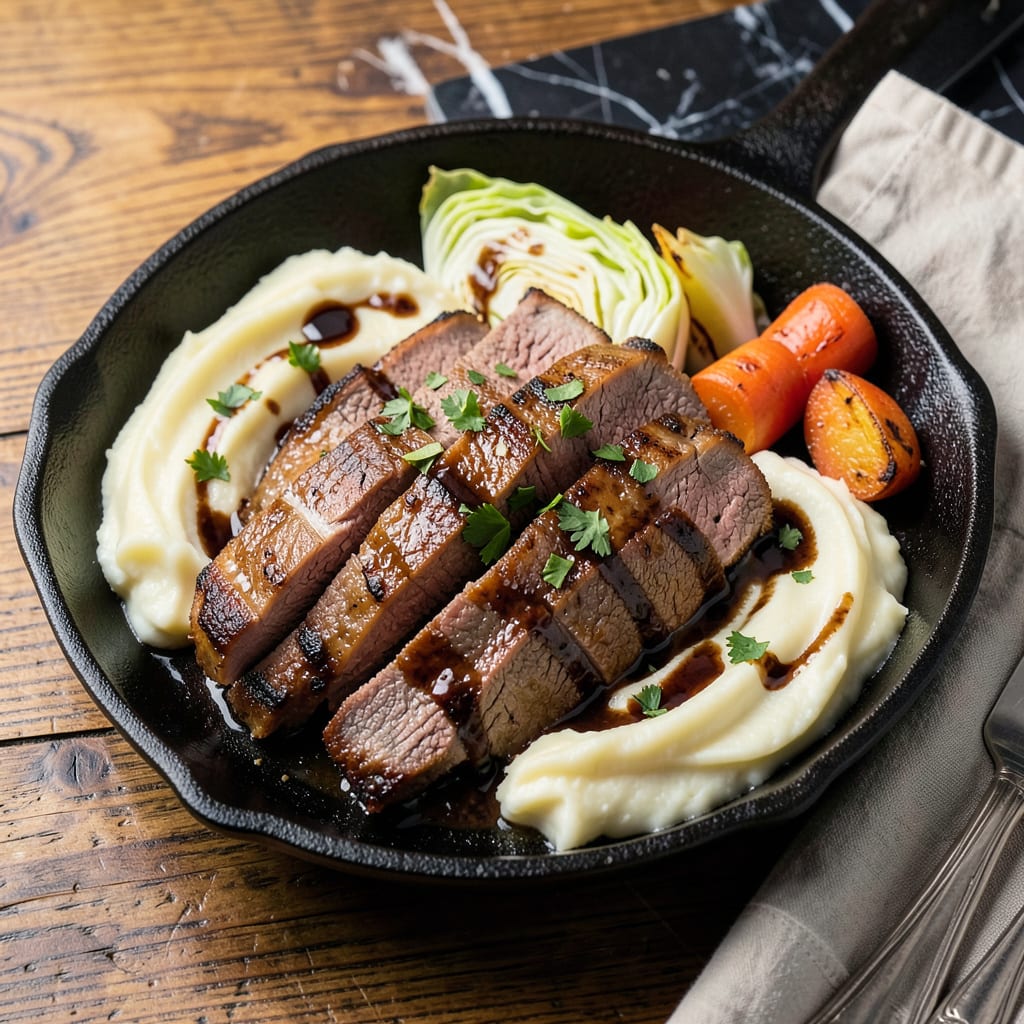
Yes, you can make corned beef at home by brining beef brisket in a saltwater cure with spices like mustard seeds, coriander, and pink curing salt for 5–7 days. Slow-cooking yields tender, flavorful results perfect for sandwiches or dinners.
What’s exciting about homemade corned beef is the control you gain over flavor and texture. The curing process isn’t just about preservation—it’s a transformation where salt and spices penetrate the meat, breaking down proteins for that signature tenderness. I’ve found that using a non-reactive container and keeping the brine at 38°F ensures even curing without over-salting. 🔥
The real magic happens during cooking, where the brined brisket absorbs moisture and develops its iconic savory-sweet profile. Whether you’re aiming for classic Reuben sandwiches or a hearty dinner centerpiece, the homemade version lets you adjust spice levels and cooking times to match your preferences. It’s easier than most people think, with minimal hands-on effort.
💡 In This Article
- How the Corned Beef Brining Process Works
- Step-by-Step Guide to Homemade Corned Beef Success
How the Corned Beef Brining Process Works
The science behind corning beef starts with osmosis. When you submerge brisket in a saltwater brine, the 20% salt concentration creates a hypertonic environment that draws moisture out of the meat initially. This is counterintuitive, but within 24 hours, the process reverses as salt and spices begin penetrating the muscle fibers.
The key is using pink curing salt (sodium nitrite), which prevents botulism while giving corned beef its signature pink hue and distinctive cured flavor.
What most people don’t realize is that the brining time isn’t arbitrary. A 5-7 day cure allows the salt to break down tough collagen proteins into gelatin, which later melts during cooking to create that unmistakable silky texture. The spices—typically 1 tablespoon each of mustard seeds, coriander, and black peppercorns—infuse differently based on their solubility.
Mustard seeds release their pungent oils slowly, while coriander’s citrusy notes permeate faster. Keeping the brine at 38°F ensures even penetration without bacterial growth. 🔥
The magic happens at the cellular level. Salt ions disrupt the meat’s protein structure, causing myofibrils to unwind and retain more moisture. This is why properly corned beef stays juicy even after long cooking. The nitrites from curing salt also inhibit oxidation, preserving the meat’s fresh flavor for weeks.
Without this chemical reaction, you’d end up with gray, bland boiled beef instead of the vibrant, tangy corned beef we love.
Temperature control during brining is non-negotiable. Above 40°F, harmful bacteria can multiply, while below 34°F slows the curing process too much. I use a simple trick—placing a zip-top bag of ice in the brine container to maintain that sweet spot.
The weight of the bag also keeps the brisket fully submerged, which is critical for uniform curing. What starts as a tough cut transforms through this precise balance of science and patience. ✨
Here’s what’s actually happening with the spices: Whole spices like allspice berries and cloves release their flavors gradually, while ground spices would make the brine murky and overpowering. The brine’s acidity (often from adding 1 cup of brown sugar) helps tenderize the meat further by partially denaturing proteins.
This is why homemade corned beef often tastes more complex than store-bought—the flavors develop in layers over days rather than hours.
Consider these key factors when monitoring your brine:
- Meat thickness: A 4-pound brisket needs the full 7 days, while thinner cuts may finish in 5 days
- Brining vessel: Glass or food-grade plastic prevents metallic reactions that can alter flavors
- Spice freshness: Toast whole spices for 2 minutes before adding to release essential oils
The final texture depends on how the brine interacts with connective tissue. Collagen in brisket requires 160°F+ internal temperature to fully convert to gelatin, which is why slow cooking methods work best. This transformation is what gives corned beef its characteristic “melt-in-your-mouth” quality while keeping the slices intact.
The entire process is a beautiful example of how traditional food preservation techniques create entirely new culinary experiences. 💫

- BBQ Sausage Recipe Oven: Smoky Depth Without the Grill - September 28, 2026
- BBQ Chicken Bowl Recipe Rice: Smoky Sweetness Over Fluffy Grains - September 28, 2026
- Beef Cutlet Recipe Ideas: Crispy Breaded Patties With Bold Seasonings - September 28, 2026