
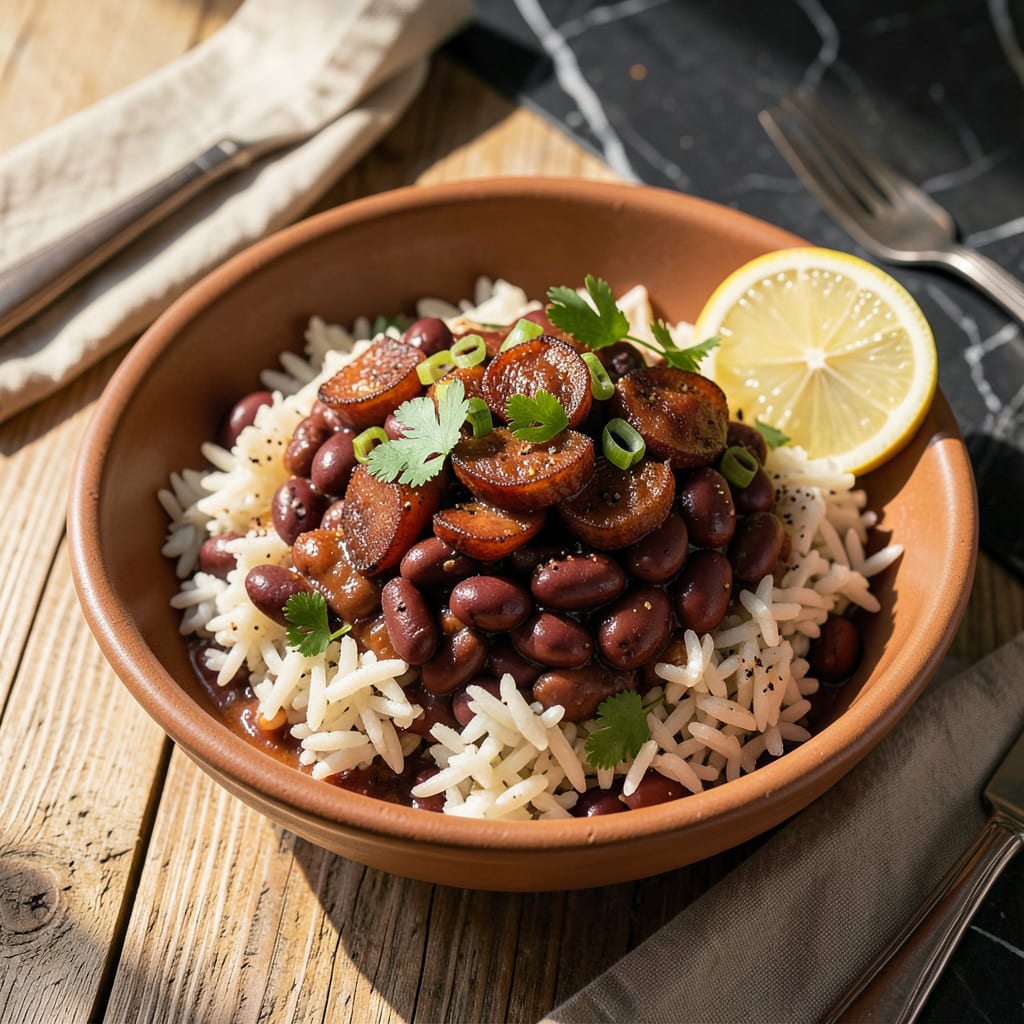
Start by soaking red kidney beans overnight, then simmer with smoked ham hock, the Holy Trinity (onion, bell pepper, celery), garlic, and Cajun spices for 2-3 hours. Serve over steamed white rice with a dash of hot sauce for authentic Louisiana flavor.
This dish carries deep cultural roots in New Orleans, where Monday was traditionally wash day—and red beans simmered all day while laundry was done. The slow cooking process transforms humble ingredients into something extraordinary, with the ham hock infusing smoky richness while the vegetables create a flavor base. 🔥 I’ve found that the key to that signature creamy texture lies in stirring occasionally and maintaining a gentle simmer, not a rolling boil. The rice acts as a neutral canvas, letting the beans’ complex flavors shine.
💡 In This Article
- Why Traditional Louisiana Red Beans and Rice Uses These Key Ingredients
- Pro Tips for Perfect Red Beans and Rice Every Time
Why Traditional Louisiana Red Beans and Rice Uses These Key Ingredients
The smoked ham hock isn’t just for flavor—it’s a historical necessity. In Creole and Cajun kitchens, every part of the pig was used to stretch meals further. The collagen in the hock breaks down during the 2-3 hour simmer, transforming into gelatin that gives the beans their signature silky texture.
This slow process also allows the smoky, salty depth to penetrate each bean, creating layers of flavor you can’t achieve with quicker cooking methods. 🔥
Kidney beans became the standard because of their ability to hold shape while absorbing flavors. Unlike pintos (which turn mealy) or black beans (which stay too firm), kidneys strike the perfect balance—creamy interior with intact skins.
The Holy Trinity (onion, bell pepper, celery in 1:1:1 ratio) forms the aromatic base, but here’s the science: their cell walls break down differently, creating a complex flavor foundation that’s sweeter than a French mirepoix due to the bell pepper’s natural sugars.
Garlic and Cajun spices enter at specific times for reason. Garlic added too early turns bitter, while paprika and cayenne bloom best in the initial sauté. The 1 teaspoon cayenne per pound of beans ratio isn’t arbitrary—it’s calibrated to cut through the richness without overwhelming.
This spice blend evolved from African, French, and Spanish influences, with filé powder (ground sassafras) sometimes added at the end for an earthy finish.
The rice serves a crucial textural purpose. Long-grain white rice (steamed separately) provides a neutral base that contrasts the beans’ creaminess. The standard 1:2 beans-to-rice ratio by volume ensures each bite gets equal representation. Hot sauce isn’t just condiment—its acidity brightens the dish, balancing the smoky, starchy components.
Traditionalists use Crystal or Louisiana brand for their vinegar-forward profiles.
Monday’s wash day tradition explains the long cook time. While laundry was done, beans simmered unattended, allowing starches to fully release and create that “gravy”-like consistency. Modern cooks replicate this by maintaining a gentle simmer (small bubbles, not rolling) and stirring every 30-45 minutes.
The beans should glisten with just enough liquid to coat them—never soupy, never dry.
What most don’t realize is how the dish reflects New Orleans’ cultural melting pot. African slaves contributed the bean-cooking techniques, French settlers brought the Holy Trinity concept, and Spanish influences appear in the smoked meat tradition. Every ingredient tells a story of adaptation and resourcefulness that’s still tasted in every bowl today. ✨

- BBQ Sausage Recipe Oven: Smoky Depth Without the Grill - September 28, 2026
- BBQ Chicken Bowl Recipe Rice: Smoky Sweetness Over Fluffy Grains - September 28, 2026
- Beef Cutlet Recipe Ideas: Crispy Breaded Patties With Bold Seasonings - September 28, 2026