
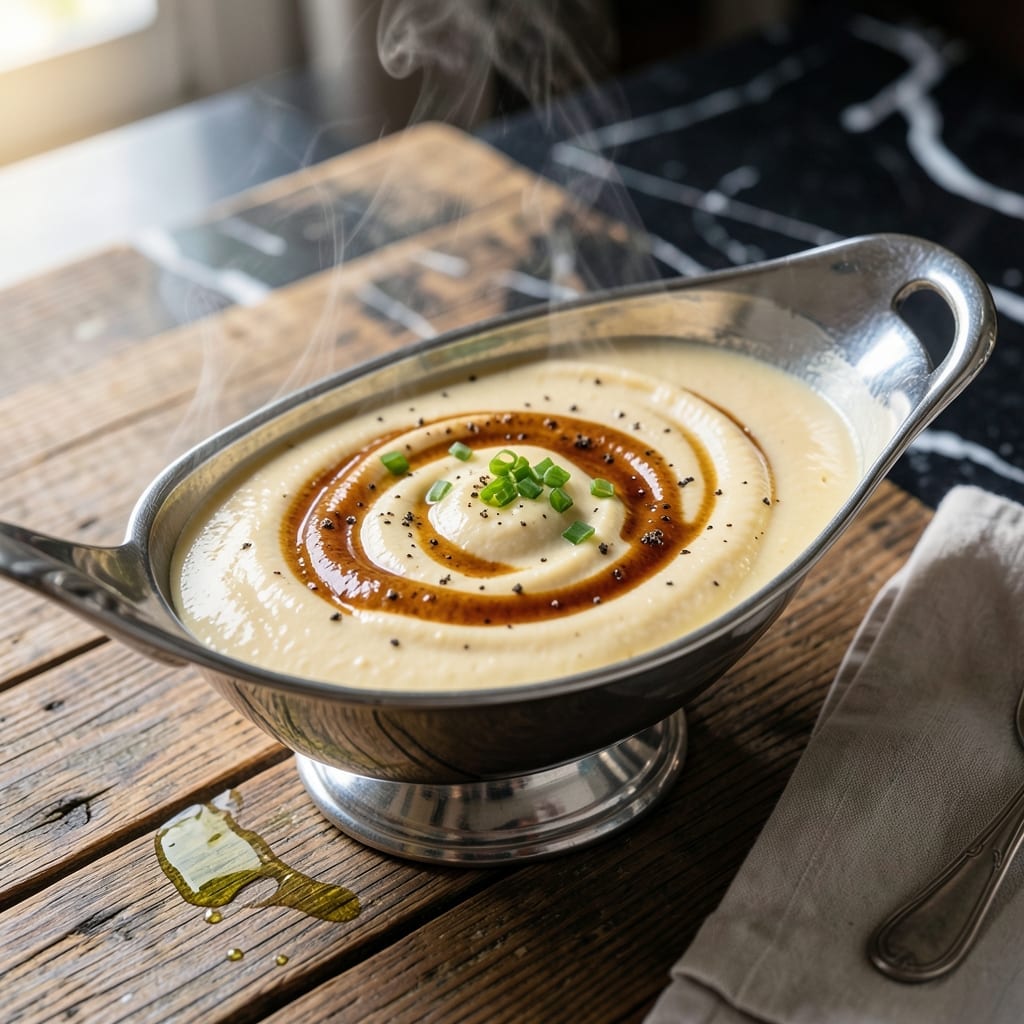
There’s a reason Spanish cuisine has captivated food lovers for centuries, and this sauce is a prime example. Albufera sauce transforms simple ingredients into a creamy, indulgent masterpiece that elevates any dish it touches.
What makes this sauce special is its balance of richness and depth. A few basic ingredients come together through careful technique to create something far greater than the sum of its parts.
You’ll end up with a velvety, golden sauce that clings beautifully to meats, vegetables, or pasta. Its smooth texture and complex flavor make it a versatile addition to any kitchen repertoire.
Perfect for special occasions or everyday meals needing a touch of elegance. Here’s how to make it.
Ingredients for Albufera Sauce
Classic Spanish ingredients create this velvety, golden sauce with complex depth and richness.
| Ingredient | Amount | Notes |
|---|---|---|
| Unsalted Butter 🧈 | ½ cup | High-quality for richness |
| All-Purpose Flour 🌾 | 2 tbsp | For roux base |
| Whole Milk 🥛 | 1 cup | Full-fat for creaminess |
| Chicken Broth 🍲 | 1 cup | Low-sodium preferred |
| Egg Yolks 🥚 | 3 whole | Large, room temperature |
| Dry Sherry Wine 🍷 | ¼ cup | Spanish variety ideal |
| Salt 🧂 | ½ tsp | Fine sea salt preferred |
| White Pepper 🌶️ | ¼ tsp | Freshly ground for subtle heat |
| Lemon Juice 🍋 | 1 tsp | Freshly squeezed |
| Nutmeg 🌰 | 0.125 tsp | Freshly grated preferred |
The butter sets the foundation here. Opt for high-fat European-style for superior mouthfeel—Plugrá or Keller’s Creamery are professional choices. The chicken broth should be homemade or premium quality like Bonafide Provisions, as weak broth dilutes the sauce’s depth. Sherry wine is non-negotiable; a dry Fino or Amontillado from Jerez delivers authentic Spanish character.
No sherry? Dry white wine with a pinch of salt approximates the flavor. Whole milk can be swapped for half-and-half at half the quantity for extra richness. For a gluten-free version, cornstarch slurry replaces the flour. Egg yolks are essential for the silky texture—do not substitute whole eggs. The nutmeg should be freshly grated for optimal aroma.
Sauce keeps 3-4 days refrigerated in an airtight container. Reheat gently over low to avoid curdling. For longer storage, freeze up to 1 month—thaw slowly in the fridge before reheating. The velvety texture is best used fresh.
Why You’ll Love This Recipe
- One-Pot Magic: I melt the butter, whisk in flour, then slowly add milk and broth—no extra pans, no fuss.
- Rich and Velvety: The egg yolks turn this into a luscious, restaurant-quality sauce that clings perfectly to pasta or chicken.
- Dinner or Lunch: Honestly, it works over roasted veggies, as a soup base, or even for dipping crusty bread.
- Budget Stretch: A handful of pantry staples makes a sauce that feels fancy but costs pennies per serving.
Step-by-Step Instructions for Albufera Sauce
Master this classic technique for a velvety, restaurant-quality Spanish sauce that elevates any dish.
Step 1: Create a Light Roux Base
In a heavy-bottomed saucepan, melt the 0.5 cup Unsalted Butter over medium heat. The butter should foam but not brown—this indicates the water has evaporated and the butter is ready for the flour.
Add the 2 tbsp All-Purpose Flour all at once and whisk constantly for 2-3 minutes until the mixture turns pale yellow and has a faint nutty aroma. This light roux will thicken your sauce without adding color or strong flavor. Keep the heat moderate to prevent browning.
Step 2: Gradually Incorporate Warm Liquids
In a separate saucepan, warm the 1 cup Whole Milk and 1 cup Chicken Broth together until just steaming. This prevents temperature shock when added to the roux.
Slowly pour the warm liquid mixture into the roux while whisking vigorously. Continue whisking until the mixture is smooth and lump-free. The sauce will thicken noticeably as the roux absorbs the liquid. This gradual incorporation ensures a silky, homogeneous base.
Step 3: Temper and Enrich with Egg Yolks
In a small bowl, whisk the 3 whole Egg Yolks until smooth. Slowly ladle about 1 cup of the hot sauce into the yolks while whisking constantly—this tempers the eggs and prevents curdling.
Pour the tempered egg mixture back into the saucepan with the remaining sauce. Cook over low heat for 3-4 minutes, stirring constantly with a wooden spoon, until the sauce thickens enough to coat the back of the spoon. This step transforms the sauce into its signature creamy consistency.
Step 4: Finish with Sherry and Seasonings
Remove the saucepan from heat and stir in the 0.25 cup Dry Sherry Wine. The alcohol will cook off as you return the pan to low heat, leaving behind its rich, nutty depth.
Season with 0.5 tsp Salt, 0.25 tsp White Pepper, 1 tsp Lemon Juice, and 0.125 tsp Nutmeg. Taste and adjust the seasoning—remember that nutmeg is potent, so add it judiciously. The sauce should have a balanced richness with a subtle brightness from the lemon.
Step 5: Strain and Serve Immediately
For the smoothest texture, strain the sauce through a fine-mesh sieve into a clean saucepan. This removes any potential lumps from the flour or cooked bits of egg.
Keep the sauce warm over very low heat until ready to serve. Albufera sauce thickens significantly as it cools, so serve it promptly over poached chicken, veal, or pasta. The final product should be luscious, velvety, and deeply flavorful with a glossy sheen.
Pro Tips For Making Albufera Sauce
- Temper the Yolks: Slowly whisk a ladle of hot sauce into the egg yolks before adding them to the pot—I learned this the hard way after scrambling my first three batches.
- Use Warm Milk: Heat the whole milk gently before adding it to the roux; cold milk makes the sauce seize up and look lumpy, no matter how hard you whisk.
- Skip the Boil: Keep the heat at a gentle simmer once the broth goes in—boiling breaks the emulsion and turns your silky sauce into a greasy mess.
- Finish with Butter: Stir in an extra tablespoon of cold unsalted butter at the end for that restaurant-quality shine and richness—sounds simple, but it actually changes the outcome.
Flavor Customization for These Flavors
Herb Infusions
Add 1 tbsp finely chopped fresh tarragon or 1 tsp dried to the warm liquids for a subtle anise note. I love tarragon with chicken dishes. Strain before adding to the roux to avoid bits in your final sauce.
Citrus Variations
For a brighter profile, increase the lemon juice to 1 tbsp and add 1 tsp orange zest. The citrus lifts the richness beautifully. This works especially well with seafood pairings.
Spice Adjustments
Replace white pepper with ½ tsp smoked paprika for a Spanish twist. It adds warmth without overpowering. I’ve also used a pinch of cayenne for gentle heat when serving with grilled meats.
Creamier Version
Substitute ½ cup heavy cream for part of the milk for extra decadence. The sauce becomes even more velvety and luxurious. Perfect for special occasions when you want that extra indulgence. ✨
Wine Swaps
Try dry Marsala instead of sherry for a deeper, fruitier note. Or use dry vermouth as a budget-friendly alternative. Both maintain the sauce’s complex character while offering subtle variations.
Umami Boost
Stir in 1 tsp fish sauce or 1 tbsp grated Parmesan at the end for extra depth. These additions enhance the sauce’s savory qualities without altering its fundamental nature. 💡
Nutrition Facts
Frequently Asked Questions
Can I make this without sherry?
Yes! Use dry white wine with a pinch of salt, or dry vermouth for a budget option. Marsala works too for a fruitier depth.
Why does my sauce curdle?
Curdling usually happens if eggs are added too quickly or cooked at high heat. Always temper yolks slowly and keep heat at low.
How long can I store leftovers?
It keeps 3-4 days refrigerated in an airtight container. Reheat gently on low heat to avoid separating.
What’s the best way to reheat?
Use a double boiler or warm on low heat while stirring constantly. Add a splash of milk if it thickens too much.

- BBQ Sausage Recipe Oven: Smoky Depth Without the Grill - September 28, 2026
- BBQ Chicken Bowl Recipe Rice: Smoky Sweetness Over Fluffy Grains - September 28, 2026
- Beef Cutlet Recipe Ideas: Crispy Breaded Patties With Bold Seasonings - September 28, 2026