
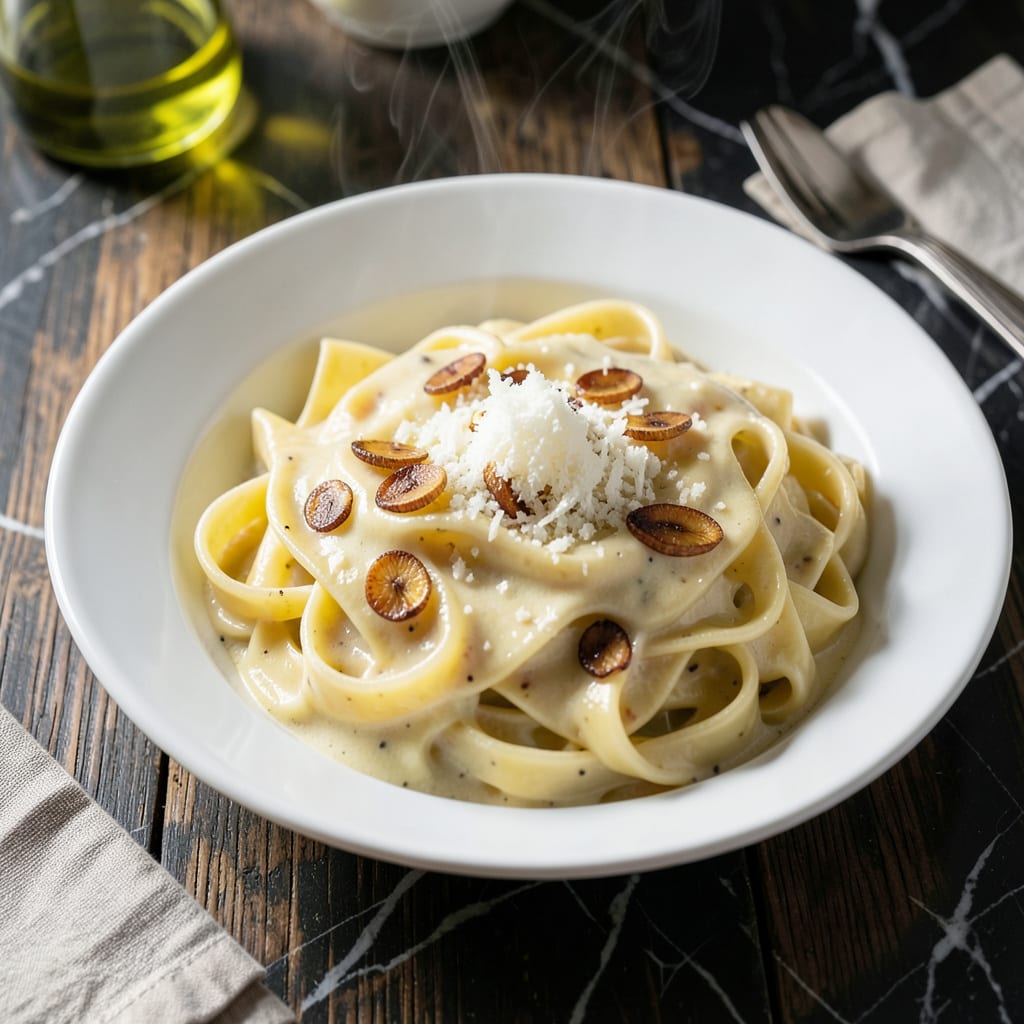
This homemade alfredo sauce redefines creamy with a simple yet brilliant addition of cream cheese. The result is a velvety texture that clings perfectly to pasta.
With just a handful of ingredients and 15 minutes, you’ll create a sauce so rich and smooth, it rivals any restaurant version. The cream cheese adds depth without overpowering the classic flavors.
Ingredients for Alfredo Recipe with Cream Cheese
A handful of rich ingredients transforms into velvety pasta perfection in minutes.
| Ingredient | Amount | Notes |
|---|---|---|
| Fettuccine Pasta 🍝 | 12 oz | Fresh or dried, al dente |
| Unsalted Butter 🧈 | ½ cup | 1 stick, high quality |
| Heavy Cream 🥛 | 1 ½ cups | Full-fat for richness |
| Cream Cheese 🧀 | 8 oz | Full-fat, softened at room temperature |
| Parmesan Cheese 🧀 | 1 ½ cups | Freshly grated from wedge |
| Garlic Cloves 🧄 | 4 cloves | Minced or pressed |
| All-Purpose Flour 🌾 | 2 tbsp | For thickening sauce |
| Whole Milk 🥛 | ½ cup | To thin sauce as needed |
| Salt 🧂 | 1 tsp | Kosher or sea salt |
| Black Pepper 🌶️ | ½ tsp | Freshly ground |
| Fresh Parsley 🌿 | 2 tbsp | Chopped, for garnish |
| Nutmeg 🌰 | ¼ tsp | Ground, optional enhancement |
The cream cheese is key here—Philadelphia brand gives the smoothest texture. Use full-fat heavy cream from a reputable dairy like Organic Valley. For Parmesan, seek out Parmigiano-Reggiano at Whole Foods or a specialty grocer. Their deli counters often let you sample before buying. The butter should be unsalted so you control the seasoning. Fresh pasta from the refrigerated section cooks faster than dried.
No heavy cream? Half-and-half plus a splash of melted butter works in a pinch. For a lighter version, whole milk plus cornstarch can mimic the thickness. Cream cheese substitutes like Neufchâtel (lower fat) will still yield good results. If avoiding dairy entirely, cashew cream makes a passable vegan alternative. The nutmeg is subtle but freshly grated makes a noticeable difference.
Sauce keeps 3-4 days refrigerated in an airtight container. Reheat gently with a splash of milk to restore creaminess. Freezing isn’t recommended as it can separate. For best results, cook pasta fresh and combine with sauce immediately before serving.
Why You’ll Love This Recipe
- No-Fuss Cooking: I melt the butter, whisk in cream cheese, and the sauce practically makes itself.
- Velvety dream: The cream cheese gives it this rich, smooth texture that clings to every noodle.
- Crowd pleaser: My picky nephew and my foodie sister both ask for seconds.
- Leftovers reheat: Honestly, it tastes even better the next day after the flavors meld.
Step-by-Step Instructions for Alfredo With Cream Cheese
Master the technique for a restaurant-quality sauce that is luxuriously smooth and creamy.
Step 1: Cook the Fettuccine Pasta to Al Dente
Bring a large pot of salted water to a rolling boil. Add the 12 oz fettuccine pasta and cook according to package instructions until al dente. This typically takes 8-10 minutes for dried pasta or 2-3 minutes for fresh.
Reserve ½ cup of pasta water before draining. The starchy cooking liquid is essential for adjusting the sauce consistency later. Drain the pasta but do not rinse it—the surface starch helps the sauce cling to the noodles.
Step 2: Create the Cream Cheese and Butter Base
In a large, deep skillet, melt the ½ cup unsalted butter over medium heat until it begins to foam. Add the 8 oz cream cheese and whisk continuously for 2-3 minutes until the mixture is completely smooth and free of lumps.
This step creates the foundation for your sauce. The cream cheese must be fully softened at room temperature before starting to prevent a grainy texture. You want a velvety, homogeneous mixture that looks like a thick, glossy liquid.
Step 3: Incorporate the Heavy Cream and Garlic
Pour in the 1½ cups heavy cream and add the 4 cloves garlic cloves, minced or pressed. Stir well to combine. Cook for 3-4 minutes, stirring frequently, until the mixture just begins to simmer around the edges.
Add the 2 tbsp all-purpose flour and whisk vigorously for 1-2 minutes to eliminate any lumps. This creates a roux-like thickener that will help the sauce coat the pasta beautifully without being too heavy.
Step 4: Finish with Parmesan Cheese and Seasonings
Reduce heat to low and gradually add the 1½ cups Parmesan cheese, whisking constantly until melted and fully incorporated. Stir in the ½ cup whole milk, 1 tsp salt, ½ tsp black pepper, and ¼ tsp nutmeg.
Taste and adjust seasoning as needed. If the sauce is too thick, add a splash of the reserved pasta water, 1 tbsp at a time, until it reaches your desired consistency. The sauce should be rich and velvety, coating the back of a spoon.
Step 5: Combine Pasta and Sauce, Garnish, and Serve
Add the drained fettuccine to the skillet with the sauce. Toss gently to coat every strand evenly. If the sauce thickens too much during this process, add more reserved pasta water as needed to maintain a creamy texture.
Transfer to serving plates and garnish with the 2 tbsp fresh parsley, chopped. Serve immediately while hot, as the sauce will continue to thicken as it cools. Each serving should be generously coated with the rich, creamy sauce.
Pro Tips For Making Alfredo Recipe With Cream Cheese
- Soften the Cream Cheese: Let the cream cheese sit at room temperature for 30 minutes before mixing—it blends smoothly into the sauce instead of leaving lumps. I learned this the hard way after stirring cold cream cheese into hot cream and ending up with a clumpy mess.
- Reserve Pasta Water: Save about a cup of the starchy pasta water before draining. A splash or two helps loosen the alfredo sauce if it thickens too much, and it binds everything together better than plain water.
- Low and Slow Heat: Keep the heat at medium-low when melting the butter and cream cheese. After burning two batches, I finally figured out that high heat makes the dairy separate and the sauce break.
- Freshly Grate Parmesan: Skip the pre-shredded stuff and grate your own Parmesan—it melts faster and tastes sharper. Sounds weird, but it works: the anti-caking agents in pre-grated cheese can make your sauce grainy instead of silky.
Pro Cooking Tips for This Dish
Perfect Cream Cheese Temperature
Always bring your 8 oz cream cheese to room temperature before starting. Cold cream cheese creates lumps that are nearly impossible to smooth out. I leave mine on the counter for 1-2 hours before cooking. 💡
Low and Slow Heat
Cook your sauce over medium-low heat maximum. High heat can cause the dairy to separate or scorch. I use a heavy-bottomed pan like All-Clad for even heat distribution. Patience ensures that velvety texture.
Whisking Technique
Whisk constantly when adding the 1½ cups heavy cream and 1½ cups Parmesan. This prevents hot spots and keeps the sauce emulsified. I switch to a silicone spatula once it thickens to scrape the bottom.
Pasta Water Magic
Reserve at least ½ cup pasta water before draining. The starch helps the sauce cling to the noodles. Add it 1 tbsp at a time if your sauce thickens too much. This is my secret for restaurant-quality results.
Finishing Touches
Always taste before serving. The ¼ tsp nutmeg adds depth, but start with less and adjust. A final sprinkle of fresh parsley adds color and freshness. Serve immediately—the sauce thickens as it cools. 🌟
Equipment Matters
Use a large, deep skillet for even cooking. I prefer stainless steel for better heat control. A good whisk and wooden spoon are essential tools for this recipe.
Nutrition Facts
Frequently Asked Questions
Can I use low-fat cream cheese?
It’s not recommended as it can make the sauce grainy. Full-fat 8 oz cream cheese gives the smoothest texture. If you must, add 1 tbsp extra butter to compensate for the missing fat.
Why did my sauce turn out lumpy?
Cold cream cheese or insufficient whisking is usually the culprit. Ensure all dairy is room temperature and whisk continuously. Add 1 tbsp reserved pasta water at a time to smooth it out.
How long can I store leftovers?
Sauce keeps well in an airtight container in the fridge for 3-4 days. Reheat gently on low heat with a splash of milk to restore creaminess.
Can I freeze this sauce?
Freezing isn’t ideal as it can cause separation. If necessary, freeze for up to 1 month and thaw slowly in the fridge. Stir vigorously when reheating.

- BBQ Sausage Recipe Oven: Smoky Depth Without the Grill - September 28, 2026
- BBQ Chicken Bowl Recipe Rice: Smoky Sweetness Over Fluffy Grains - September 28, 2026
- Beef Cutlet Recipe Ideas: Crispy Breaded Patties With Bold Seasonings - September 28, 2026