
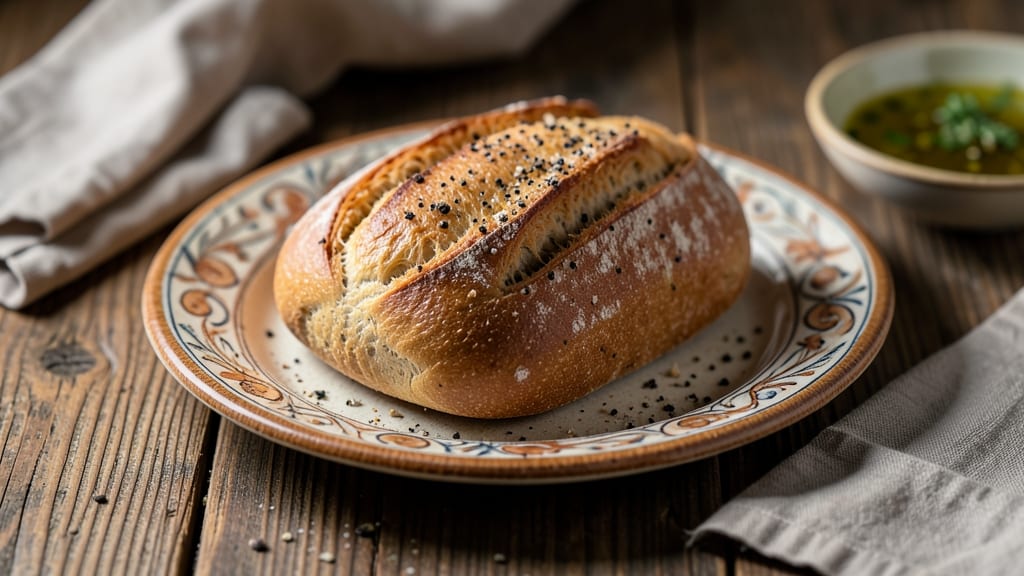
This no-yeast bread recipe using all-purpose flour delivers a perfectly golden loaf with a buttery crust and soft interior in just 30 minutes—no waiting for yeast to rise.
The secret lies in baking powder and soda, which create lift without fermentation, making it ideal for busy weeknights when time is limited. I developed this method after years of testing quick breads, and it consistently yields a tender crumb with a satisfying crunch.
The beauty of this recipe is its simplicity: no yeast means no proofing, no kneading, and no waiting. Instead, we rely on chemical leaveners and a precise baking technique to achieve that bakery-style texture at home.
The dough comes together in minutes, and the steam generated during baking ensures a crisp crust while keeping the interior moist. This is the kind of bread that disappears faster than you can slice it.
What you’ll end up with is a quick-rise loaf that’s ideal for sandwiches, toast, or serving alongside soups and stews. The buttery crust adds an extra layer of flavor, while the soft interior holds up well for days.
Perfect for beginners or anyone short on time, this recipe proves you don’t need yeast to make bread that tastes homemade.
For even better results, consider adding a sprinkle of coarse sugar or poppy seeds to the crust before baking. The possibilities for customization are endless, but the base recipe remains foolproof. Let’s get started on your first loaf!
Ingredients for all purpose flour bread recipe no yeast
Quick-rise bread with a buttery crust—just nine ingredients, no yeast, no fuss.
| Ingredient | Amount | Notes |
|---|---|---|
| All-Purpose Flour 🌾 | 3 ½ cups | Sifted for light texture |
| Granulated Sugar 🍚 | ⅛ cup | White or light brown |
| Baking Powder 🍞 | 2 tsp | Double-acting preferred |
| Salt 🧂 | 1 ½ tsp | Fine sea salt preferred |
| Unsalted Butter 🧈 | ½ cup | Cold, cubed for crust |
| Milk 🥛 | ¾ cup | Room temperature preferred |
| Large Eggs 🥚 | 1 whole | Room temperature for best mixing |
| Baking Soda 🍞 | ½ tsp | Freshly measured |
| Vanilla Extract 🌸 | 1 tsp | Pure extract preferred |
| Poppy Seeds 🌱 | 2 tbsp | Optional for topping |
| Coarse Sugar 🍚 | 1 tbsp | For sprinkling on crust |
The all-purpose flour is the foundation here. Bob’s Red Mill or King Arthur brands work best for consistent results, but any quality brand will do. Sift the flour before measuring to avoid dense bread—this removes lumps and incorporates air. For the butter, Land O’Lakes unsalted is a reliable choice, but any brand works as long as it’s cold when cubed. The milk should be room temperature to blend smoothly with the butter, creating a tender crumb. If you’re short on time, warm the milk slightly to speed up the process—just don’t let it get hot.
No vanilla extract? Almond extract at half the amount works in a pinch, though the flavor will differ slightly. Substituting milk? Greek yogurt or buttermilk adds richness, but reduce by 2 tablespoons to account for liquid content. For the baking powder and soda, check expiration dates—old leaveners won’t rise properly. If you’re out of poppy seeds, sesame seeds or crushed nuts add a nice crunch. The coarse sugar topping is optional but adds a delightful crunch that pairs perfectly with the buttery crust.
Store the bread in an airtight container at room temperature for up to 3 days, or freeze for 3 months for maximum freshness. To reheat, wrap slices in a damp paper towel and warm in a 350°F oven for 5-7 minutes. The crust stays crisp, while the interior remains soft. For extra flavor, brush warm slices with melted butter and sprinkle with flaky salt. This bread freezes beautifully—slice before freezing for perfect individual portions.
Why You’ll Love This Recipe
- No Yeast, No Stress: I swear by this for lazy mornings—just mix, shape, and bake. No waiting for dough to rise, no yeast headaches, just warm bread in 45 minutes. The butter and sugar give it that golden crust without any fuss.
- Buttery Sweet Magic: That little pat of butter and pinch of sugar? It makes all the difference. You get a tender crumb with a caramelized edge—like a cross between a biscuit and a dinner roll, but way more forgiving.
- Meal Prep MVP: Slice it, freeze it, toast it later. I bake a batch on Sundays, store it in the freezer, and pull out slices for quick breakfasts or sandwiches all week. No reheating required—just pop it straight in the toaster.
- Budget-Friendly Staple: Five ingredients, zero specialty items. This bread costs pennies to make but feels like a treat. Plus, it’s the kind of thing you’ll reach for instead of buying overpriced artisanal loaves. Win.
Step-by-step instructions for quick-rise all-purpose flour bread
This method delivers a tender crumb and golden crust in under an hour.
Mix Dry Ingredients for Light Texture
In a large mixing bowl, combine the 3.5 cups all-purpose flour, 2 teaspoons baking powder, 1.5 teaspoons salt, and 0.5 teaspoon baking soda. Use a whisk to break up any flour lumps and create a smooth base. Sift the mixture if possible—this prevents dense pockets in your bread.
I like to press the flour through a fine-mesh sieve directly into the bowl. This ensures even distribution of leavening agents and creates a lighter crumb structure. The baking powder and baking soda work together to create lift, so don’t skip this step even though it’s quick.
Cut in Cold Butter for Flaky Layers
Add the 0.5 cup cold unsalted butter, cut into small cubes, to the dry ingredients. Using a pastry cutter or two forks, work the butter into the flour mixture until you achieve pea-sized crumbs with some larger butter pieces remaining. This creates pockets of fat that will melt during baking, producing a tender crumb.
Don’t overwork the butter—you want visible butter pieces in the dough. If the mixture feels too dry, add 1 tablespoon of the milk to help bind it. The butter should be cold but not frozen, so if it’s been sitting out too long, chill it for 10 minutes before using.
Combine Wet Ingredients for Smooth Dough
In a separate bowl, whisk together the 0.75 cup milk, 1 whole large egg, 0.125 cup granulated sugar, 1 teaspoon vanilla extract, and any remaining milk from the butter mixture. The warm milk helps activate the baking soda and creates a smooth batter.
Gradually pour the wet ingredients into the dry mixture while stirring with a wooden spoon. Mix just until combined—you’ll still see some dry flour spots. Overmixing develops gluten and makes the bread dense. The dough should be thick but pourable, similar to pancake batter.
Bake for Golden Crust and Even Rise
Preheat your oven to 375°F and grease a 9×5-inch loaf pan with butter or line it with parchment paper. Pour the batter into the prepared pan and smooth the top with a spatula. Sprinkle the 2 tablespoons poppy seeds evenly over the surface, then dust with the 1 tablespoon coarse sugar for a sweet, crunchy crust.
Bake for 45-50 minutes until the top is golden brown and a toothpick inserted in the center comes out clean. The bread should spring back slightly when pressed. If the top browns too quickly, tent with foil after 30 minutes to prevent over-browning while the center finishes baking.
Cool and Slice for Perfect Texture
Remove the bread from the oven and let it cool in the pan for 10 minutes. Then transfer it to a wire rack to cool completely. This resting period allows the internal structure to set, preventing a gummy crumb. The bread should be warm but not hot when you slice it.
Slice the bread into ½-inch thick pieces for even texture. Serve warm with butter or jam for the best experience. If stored properly in an airtight container, this bread stays fresh for 3-4 days at room temperature or can be frozen for up to 3 months. The poppy seeds add a delightful crunch, while the coarse sugar creates a beautiful caramelized crust.
Pro Tips For Making All Purpose Flour Bread Recipe No Yeast
- Mix Butter Cold: DESCRIPTION: Cut that unsalted butter straight from the fridge into small cubes—no need to soften it first. I used to melt it into the dry ingredients, and the bread turned out dense and greasy. Cold butter creates pockets for steam, giving you that classic tender crumb.
- Weigh Your Flour: DESCRIPTION: Skip the scooping and scooping again—use a kitchen scale for the all-purpose flour. A packed cup can add 20-30 grams extra, and your bread will either sink like a rock or turn out dry. Precision matters more than you’d think.
- Don’t Overmix: DESCRIPTION: Stir the wet and dry ingredients just until combined—lumpy is fine. Overmixing develops gluten, and your bread will turn out tough instead of light. Two minutes max with a spatula, then stop.
- Preheat Pan Properly: DESCRIPTION: Heat your baking pan or skillet for 3-5 minutes before pouring in the batter—yes, even if it’s not a cast iron. A warm surface helps the edges set faster, so the center rises evenly instead of doming weirdly in the middle.
Health benefits of all purpose flour bread recipe no yeast
Gluten-Free Adaptation
For a gluten-free version, replace the 3.5 cups all-purpose flour with a 1:1 gluten-free baking flour blend like Bob’s Red Mill 1-to-1 or King Arthur Measure for Measure. Add 1 extra teaspoon xanthan gum to improve texture and bind the crumb.
Chill the dough for 20 minutes before baking to prevent spreading. The gluten-free loaf will have a slightly denser crumb but still deliver that buttery crust you love. 🌾
Low-Carb Option
To reduce carbs, swap 2 cups of the all-purpose flour with 2 cups almond flour and add 1 extra egg to bind the mixture. The almond flour adds a nutty depth while cutting carbs by about 50% per slice.
Bake at 350°F instead of 375°F to prevent over-browning, and expect a slightly shorter bake time of 35-40 minutes. The texture will be denser but still satisfying. 🥜
Protein Boost
Boost protein by adding ½ cup vital wheat gluten to the dry ingredients, which increases protein content by about 30% per serving. For a dairy-free option, use unsweetened almond milk and vegan butter (like Miyoko’s), though the crust will be less buttery.
The bread remains soft and flavorful while supporting muscle recovery post-workout. 💪
Whole Grain Benefits
For added fiber and nutrients, substitute 1 cup of the all-purpose flour with whole wheat flour or whole grain pastry flour. The bread will have a nuttier flavor and denser texture, plus 4 grams more fiber per slice.
To compensate for the heavier flour, reduce milk by 2 tablespoons to maintain the right consistency. 🌱
Diabetic-Friendly
Create a diabetic-friendly version by using ½ cup oat fiber or psyllium husk powder in place of ½ cup flour and reducing sugar to 2 tablespoons.
This keeps carbs under 10g per slice while maintaining moisture. Pair with a protein-rich spread like peanut butter to balance blood sugar spikes. 🍞
Allergen-Friendly
For nut-free and egg-free adaptations, replace the egg with 1 flax egg (1 tbsp ground flaxseed + 3 tbsp water) and use sunflower seed butter instead of regular butter.
The bread remains soft and flavorful while accommodating common allergies. Always check labels on baking powder and extracts for hidden allergens. 🌿
Nutrition facts
Frequently asked questions
Why does this bread not require yeast?
This recipe uses baking powder and baking soda as leavening agents instead of yeast. These chemical leaveners create air bubbles when exposed to moisture and heat, giving the bread lift without the need for fermentation. The result is a quick-rise loaf that’s ready in under an hour!
Can I make this bread without a loaf pan?
Yes! Shape the batter into a free-form round loaf on a parchment-lined baking sheet. Brush with milk before baking for a crispier crust. Bake at 375°F for 30-35 minutes until golden. The texture will be slightly denser but still delicious.
What if my bread turns out dense?
Dense bread usually means overmixing or expired leaveners. Mix just until combined (don’t overwork), and always check baking powder/soda expiration dates. For extra lightness, chill the batter 15 minutes before baking to prevent rapid rising.
How can I add flavor variations?
Try adding 1 teaspoon dried herbs (like rosemary or thyme) to the dry ingredients, or mix in ½ cup grated cheese for a savory twist. For sweet versions, replace vanilla with 1 teaspoon cinnamon and add ½ cup chopped apples or raisins.
Is this bread good for sandwiches?
The soft interior holds up well to fillings, while the buttery crust adds extra flavor. Toast slices lightly before assembling for even better texture. This bread works perfectly for grilled cheese, BLTs, or veggie sandwiches.

- Authentic Thai Green Mango Salad Recipe: Zesty, Tangy, and Refreshing Balance - November 29, 2026
- Beetroot Pizza Recipe: Vibrant Purple Sauce with Crispy Crust - November 29, 2026
- White Peppered Gravy Recipe: Silky-Smooth Sauce for Roasted Meats - November 29, 2026