
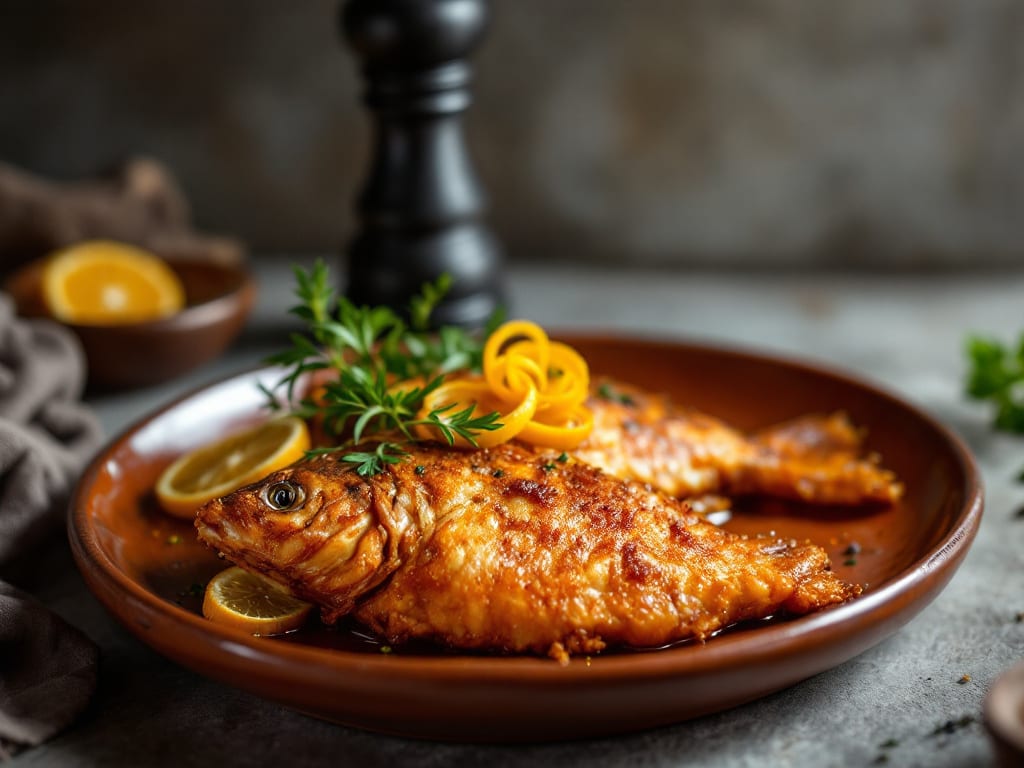
This Ghanaian fried fish recipe delivers the perfect balance of crispy spiced crust and flaky inside, just like the dishes served at roadside eateries across Accra.
The secret lies in the marinade—black pepper, Scotch bonnet, and a touch of ginger—that infuses the fish while the double-frying technique creates that signature crunch.
I first tasted this version at a local chow-chow, where the sizzle of hot oil and the aroma of frying fish drew crowds, and I’ve been perfecting it ever since.
The process begins with a simple marinade that transforms ordinary fish into something extraordinary—just 15 minutes of soaking unlocks layers of flavor. You’ll need firm white fish like tilapia or cod, cut into even portions for consistent cooking.
The double-frying method, though it requires patience, ensures that crust stays crispy while the inside remains tender. This isn’t just a recipe; it’s a taste of home, whether you’re serving it with fried plantains, jollof rice, or a side of shito for dipping.
What makes this dish truly special is how the spiced crust shatters with every bite, revealing moist, flaky fish beneath. The Scotch bonnet adds a subtle heat that lingers, while the black pepper brings depth without overpowering.
It’s the kind of meal that feels like a hug—comforting, familiar, and impossible to resist. Once you try this method, you’ll never settle for anything less than that perfect crunch and melt-in-your-mouth texture.
Pair it with classic Ghanaian sides like fried plantains or waakye for a complete meal that transports you straight to West Africa. The recipe serves four, making it ideal for family dinners or gatherings where the centerpiece is always the star of the show.
Let’s get cooking—your taste buds will thank you.
Ingredients for ghanaian fried fish
Four ingredients transform plain fish into Ghanaian fried fish magic—crispy outside, flaky inside.
| Ingredient | Amount | Notes |
|---|---|---|
| White Fish Fillets 🐟 | 1 ½ lb | Tilapia or cod, cut into 4 even pieces |
| All-Purpose Flour 🌾 | 1 cup | For dredging and crust |
| Black Peppercorns 🌶️ | 1 tbsp | Freshly ground, coarse |
| Scotch Bonnet Peppers 🌶️ | 1 whole | Seeds removed, finely chopped |
| Fresh Ginger 🌿 | 1 tbsp | Grated, finely |
| Vegetable Oil 🫒 | 3 cups | For frying, high smoke point |
| Salt 🧂 | 1 tsp | Kosher or sea salt |
| Lemon Juice 🍋 | 2 tbsp | Freshly squeezed |
| Garlic Cloves 🧄 | 4 cloves | Minced, for marinade |
| Dried Thyme 🌿 | ½ tsp | Or 1 tbsp fresh thyme |
| Vegetable Oil (for double-fry) 🫒 | 2 cups | Additional for second fry |
| Shito or Pepper Sauce 🌶️ | ¼ cup | For dipping, optional |
The fish is everything here. Tilapia or cod works best—firm enough to stay together but tender enough to flake. Grab the freshest fillets from the seafood counter (the ones with the brightest color and no fishy smell). Whole Foods or local fish markets usually have the best quality, but any grocery store’s frozen section works in a pinch. Cut the fillets into even 4 pieces—this ensures they cook uniformly. The Scotch bonnet is key for that signature heat, but if you can’t find it, jalapeño or habanero in a pinch (just reduce the amount to half). Fresh ginger and thyme add depth, so don’t skip them if you’ve got them.
No Scotch bonnet? Red pepper flakes or cayenne at half the amount will give you a similar kick. The double-frying method is non-negotiable for that perfect crunch—first fry to set the crust, then rest and fry again for maximum crispiness. If you’re short on time, a single fry still works (just add an extra 1/2 cup flour to the dredge). The shito or pepper sauce is optional but worth it—African grocery stores carry it, or you can find it online. For the oil, vegetable or peanut oil works best (high smoke point, neutral flavor). No need to reuse oil—frying fish once keeps it fresh for next time.
This fish reheats surprisingly well—just pop it in a 350°F oven for 5-7 minutes to revive the crisp. Keeps for 2 days in the fridge, wrapped tightly in foil. For longer storage, freeze the fried fish (without the sauce) for up to 3 months. I always make extra—it’s perfect for lunches or leftovers with rice or plantains. The crust loses crispiness when reheated, so enjoy it fresh if possible.
Why You’ll Love This Recipe
- No-Fuss Fridays: I swear by this recipe when I’ve got zero energy—just pat the fish dry, toss in flour, and fry. The Scotch bonnet’s heat does all the work while you sip your drink.
- Spice That Sticks: That ginger and black pepper blend? It clings to the fish like glue, giving every bite a zesty punch without overpowering. Honestly, the first time I made it, I ate the whole pan.
- Party or Pantry: Works for Sunday suppers or packed lunches—crispy enough to reheat (briefly!) or serve straight from the fryer. My roommate’s a picky eater, but even he asks for seconds.
- Budget Crispy Win: Cheap fish fillets get a gourmet upgrade with pantry staples. I’ve fed four people for under $15, and the leftovers? Still delicious cold the next day. (Yes, even on a Tuesday night.)
Step-by-step instructions for Ghanaian fried fish
Here’s how to create that perfect Ghanaian fried fish—crispy on the outside, light and flaky within every bite.
Prepare the Marinade for Maximum Flavor
In a small bowl, combine the 2 tablespoons lemon juice, 4 minced garlic cloves, 0.5 teaspoon dried thyme, and 1 tablespoon freshly grated ginger. Mix well until the thyme is fully dissolved and the garlic is evenly distributed. This bright, aromatic marinade will infuse the fish with layers of flavor before frying.
Transfer the marinade to a shallow dish large enough to hold the 1.5 lb white fish fillets (cut into 4 even pieces). Gently place each fish piece into the marinade, ensuring every surface is coated. Let the fish marinate for at least 30 minutes—this step guarantees tender, flavorful meat that won’t dry out during frying. For best results, marinate up to 2 hours in the refrigerator.
Create the Spiced Crust for Extra Crispiness
In a medium bowl, combine the 1 cup all-purpose flour, 1 teaspoon salt, and 1 tablespoon freshly ground black peppercorns. The peppercorns will add a subtle heat and aromatic depth to the crust. Add the 1 whole Scotch bonnet pepper, seeds removed and finely chopped, to the flour mixture. Mix thoroughly until the Scotch bonnet is evenly distributed—this is what gives Ghanaian fried fish its signature kick.
Remove the fish from the marinade (letting any excess drip off) and gently dredge each piece in the flour mixture. Press the flour mixture firmly onto the fish, coating all sides completely. Tap off any excess flour—you want a thin but even layer that will create a crispy crust without being too heavy. Place the coated fish on a plate and let it rest for 10 minutes before frying. This resting period allows the flour to adhere better and prevents the crust from falling off during cooking.
First Fry for Golden Crust Formation
Heat 3 cups vegetable oil in a deep, heavy-bottomed pot or Dutch oven to 350°F. Use a deep-fry thermometer to monitor the temperature—this is crucial for achieving a crispy crust without burning the fish. Once the oil reaches the correct temperature, carefully add the fish pieces, working in batches if necessary to avoid overcrowding.
Fry the fish for 3-4 minutes per side until the crust is golden brown and the fish releases easily from the pot. The crust should be crispy to the touch, but be careful not to overcook—the fish will continue cooking slightly during the second fry. Remove the fish from the oil and place it on a wire rack set over a baking sheet to drain excess oil. Let it rest for 2 minutes before proceeding to the second fry.
Double-Fry for Ultimate Crispiness
Increase the oil temperature to 375°F using the 2 cups vegetable oil (for double-fry). The higher heat ensures the crust becomes extra crispy without making the fish dry. Return the fish to the hot oil and fry for an additional 1-2 minutes per side, just until the crust is deep golden brown and shimmering. The fish should be fully cooked through with a crispy, flaky exterior.
Remove the fish from the oil for the final time and transfer it back to the wire rack. Let it drain for 3-4 minutes to allow any remaining oil to evaporate. The crust should be so crispy it’ll crackle when you touch it gently. Serve immediately with the 0.25 cup shito or pepper sauce on the side for dipping—this adds a tangy, spicy contrast to the rich, crispy fish.
Rest and Serve for Perfect Texture
While the fish is resting, keep it warm by tenting loosely with aluminum foil. This prevents the crust from losing its crispiness while you prepare any accompanying sides. The fish should be served immediately after frying to maintain its ideal texture—crispy on the outside and light, flaky within.
Slice the fish into portions if desired, but I recommend serving it whole for that authentic Ghanaian experience. The contrast between the crispy, spiced crust and the tender, flavorful fish is what makes this dish so special. Pair it with fried plantains, jollof rice, or a fresh salad for a complete meal. Enjoy the satisfying crunch with every bite!
Pro Tips For Making Ghanaian Fried Fish
- Pat Dry First: Wet flour sticks like glue to damp fish—no matter how much you shake the bag. Grab paper towels and press firmly on both sides, even if it feels tedious. The extra 30 seconds saves you from soggy, uneven coating later.
- Grate Ginger Fine: I used to chop ginger roughly, thinking it’d blend in. Wrong. For this dish, you want it almost paste-like—grate it directly into the flour mix or pulse it in a food processor. That way, every bite gets the bright, zesty kick without chunks.
- Don’t Overcrowd the Pan: Three fillets at once? Your oil will drop 50 degrees, and the fish will steam instead of fry. Work in batches—two max—so the oil stays hot and the crust gets crispy. Patience here means the difference between “homemade” and “restaurant-quality.”
- Toast the Flour First: Sounds weird, but it works: Dry-toast the flour in the same pan you’ll fry the fish for 30 seconds before adding oil. The nutty aroma deepens, and the coating sticks better. Just don’t walk away—it burns faster than you’d think.
Essential equipment for ghanaian fried fish
Deep Fryer Essentials
For authentic Ghanaian fried fish, a deep fryer is my go-to tool—it gives you precise temperature control and even cooking. I recommend the Ninja Foodi Deep Fryer for its 360-degree air fry function, which helps crisp the fish without excess oil.
If you prefer a traditional pot, a heavy-bottomed Dutch oven (like Lodge Cast Iron) prevents oil from overheating. Both options work, but the deep fryer makes double-frying easier. 🔥
Temperature Control Tools
Monitoring oil temperature is non-negotiable—too hot and the crust burns; too cool and the fish turns greasy. A deep-fry thermometer (like Thermoworks Smoke) is a game-changer. I keep the first fry at 350°F and the second at 375°F for that signature crunch.
No thermometer? Use the cold water test: Drop a small piece of bread into the oil—if it sizzles and turns golden in 30 seconds, you’re ready. ⚡
Wire Rack & Draining
After frying, a wire cooling rack (like OXO Good Grips) is essential for draining excess oil. Place it over a baking sheet to catch drips. I skip paper towels—they make the crust soggy. For extra crispiness, let the fish rest on the rack for 3-4 minutes before serving.
Pro tip: Use a slotted spatula (like Mercer Culinary Genius) to handle the fish without breaking the crust. 💪
Oil Selection Matters
Vegetable or peanut oil is ideal—both have high smoke points and neutral flavors. Avoid olive oil (it burns too easily). I use Crisco Vegetable Oil for its consistency and affordability. For double-frying, keep the oil fresh between batches—reused oil can make the second fry greasy. Store leftover oil in an airtight container for up to 1 month in the pantry. 🫒
Marinade & Prep Tools
A shallow glass dish (like Pyrex) works best for marinating—it lets me see the fish and ensures even coating. For the crust, a whisk (like OXO Good Grips) blends the flour, pepper, and Scotch bonnet perfectly.
I also keep a fine-mesh strainer handy to drain excess marinade before dredging. A microplane (like Bergschmidt) is perfect for grating ginger and garlic quickly. ✨
Optional: Shito Sauce Prep
If making shito from scratch, a mortar and pestle (like Amazon Basics) crushes the peppers and spices into a smooth paste. Store-bought shito works too—just heat it gently in a small saucepan with 1 tbsp oil to thin it out.
Serve warm for the best flavor contrast with the crispy fish. 🌶️
Nutrition facts
Frequently asked questions
What type of fish works best for this Ghanaian fried fish recipe?
Firm white fish like tilapia or cod are ideal—they hold their shape during frying while staying tender inside. Avoid delicate fish like sole or flounder, as they may fall apart. For extra flavor, some Ghanaians use mackerel or herring, but these have stronger natural oils that can affect the crust.
Can I substitute Scotch bonnet pepper if I can’t find it?
Yes! Use jalapeño or habanero instead, but reduce the amount to half (1/2 pepper) since they’re less potent. For a milder kick, try red pepper flakes or cayenne powder (1/2 teaspoon)**—just adjust to taste. The key is balancing heat with the black pepper in the crust.
Why does the crust fall off when frying?
This usually happens if the fish isn’t properly dried before dredging or if the oil temperature isn’t high enough. Pat the fish very dry with paper towels after marinating, and ensure the oil reaches 350°F before frying. Also, don’t skip the 10-minute rest after coating—this helps the flour adhere.
How do I keep the fish from getting greasy?
Use fresh oil for each frying session (don’t reuse) and maintain the correct temperatures (350°F first fry, 375°F second fry). Overcrowding the pot also causes greasiness—fry in batches if needed. A wire rack for draining is crucial to prevent soggy crusts from residual oil.
What are the best sides to serve with Ghanaian fried fish?
Classic pairings include fried plantains (kelewele), jollof rice, or waakye (rice and beans). For a lighter option, serve with coleslaw or cucumber salad. The spicy crust pairs perfectly with shito or pepper sauce for dipping—essential for that authentic experience!

- Yoder Prime Rib Roast Recipe: Smoked Low and Slow to Fall-Apart Tender - November 29, 2026
- Breaded Cheese Balls Recipe: Crispy Golden Bites With Gooey Centers - November 29, 2026
- Minced Meat Spaghetti Recipe: One-Pan Italian Comfort with Rich Ragù - November 29, 2026