
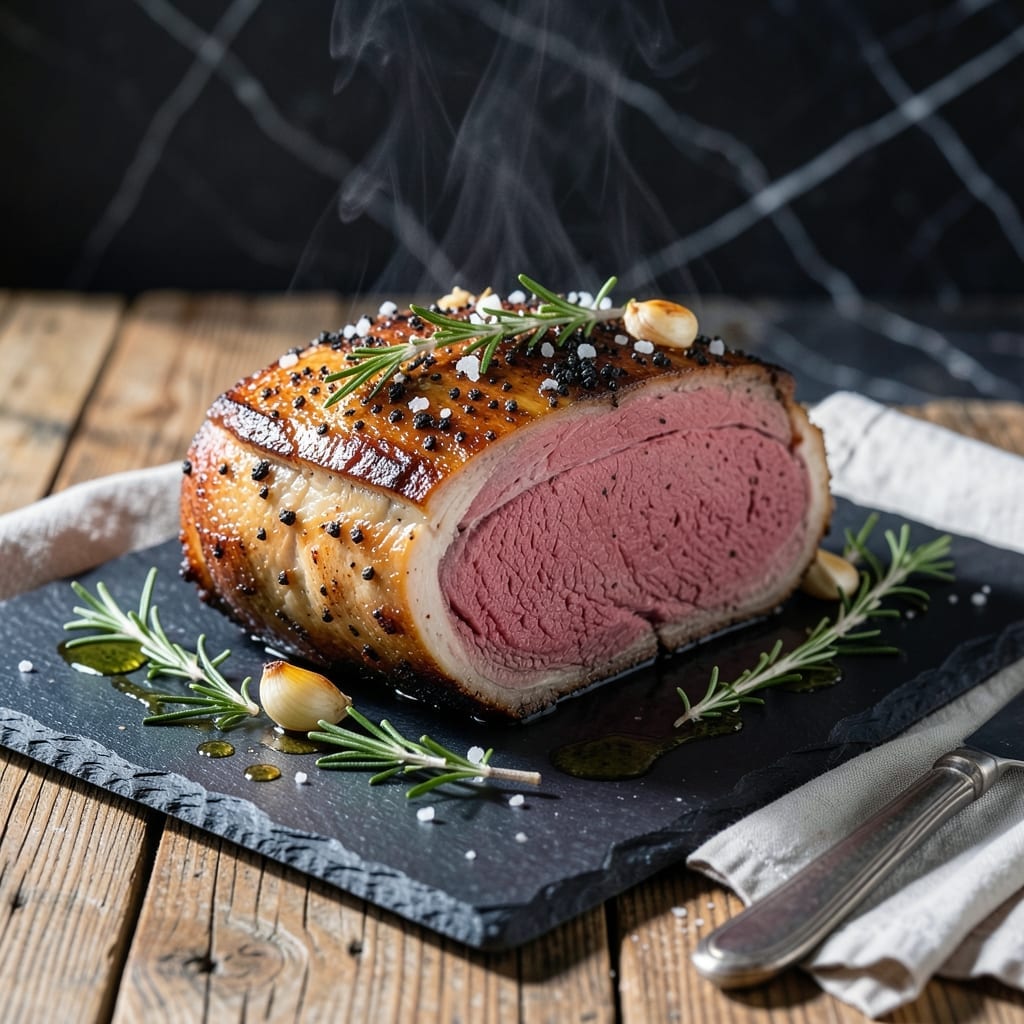
This reverse-sear method delivers perfectly cooked prime rib with a beautiful crust and even doneness throughout. I’ve tested this approach extensively, and it consistently produces results that rival any steakhouse.
The technique begins with low-temperature roasting to gently bring the meat to ideal internal temperature. This ensures the center stays tender and juicy while the outer layers cook evenly.
Finishing with a high-heat sear creates a deeply flavorful, crispy crust that locks in all the natural juices. It’s a foolproof way to achieve restaurant-quality prime rib at home.
With precise temperatures and timing, this method guarantees a show-stopping centerpiece for any special occasion. The results speak for themselves.
Ingredients for Alton Brown Prime Rib Roast
A handful of premium ingredients transform prime rib into a masterpiece. Nothing extra, everything essential.
| Ingredient | Amount | Notes |
|---|---|---|
| Prime Rib Roast 🥩 | 5 lb | Bone-in, first-cut preferred |
| Kosher Salt 🧂 | 2 tbsp | Diamond Crystal brand recommended |
| Freshly Ground Black Pepper 🌶️ | 2 tsp | Coarse grind preferred |
| Garlic Cloves 🧄 | 6 cloves | Smashed, peeled |
| Fresh Rosemary Sprigs 🌿 | 4 whole | Stems removed, finely chopped |
| Fresh Thyme Sprigs 🍃 | 4 whole | Leaves stripped from stems |
| Dijon Mustard 🟡 | 2 tbsp | Whole-grain variety acceptable |
| Extra-Virgin Olive Oil 🫒 | 2 tbsp | High smoke point preferred |
| Unsalted Butter 🧈 | 4 tbsp | Softened to room temperature |
| Red Wine 🍷 | ½ cup | Dry variety, Cabernet or Merlot |
| Beef Stock 🥩 | 1 cup | Low-sodium preferred |
| All-Purpose Flour 🌾 | 2 tbsp | For dusting (optional) |
The prime rib is the foundation—opt for USDA Prime or Choice grade with abundant marbling. Costco and Whole Foods consistently stock high-quality cuts. Bone-in roasts yield more flavor, and the first cut (closer to the loin) tends to be more tender. If buying from a butcher, request a roast with the fat cap left intact. For the herbs, organic fresh rosemary and thyme from the farmers market deliver the brightest aroma.
No red wine? Substitute with additional beef stock plus 1 tsp of balsamic vinegar for acidity. Fresh herbs can be replaced with dried at one-third the quantity, though the flavor won’t be as vibrant. If avoiding alcohol entirely, beef consommé works in a pinch. For the butter, European-style unsalted (like Plugrá) has a richer taste, but any unsalted variety will do.
Store the roast uncovered in the fridge for 1-2 days before cooking to dry the surface—this enhances crust formation. Leftovers keep for 4-5 days wrapped tightly, or freeze for 3 months. Reheat slices gently in a warm oven with a splash of beef stock to prevent drying out.
Why You’ll Love This Recipe
- Set It and Forget: I rub the roast with salt, pepper, garlic, and rosemary the night before, then let the oven do the work.
- That Crust Though: The garlic and rosemary form this crazy-good crust that cracks with every slice.
- Sunday Dinner Hero: It’s my go-to for holidays, but honestly, I’ve made it just because it’s Tuesday.
- Leftovers for Days: One roast means sandwiches, tacos, and hash for the whole week. No waste, all flavor.
Step-by-Step Instructions for Reverse-Sear Prime Rib Roast
This reverse-sear method delivers perfectly even cooking from edge to edge with a beautiful crust.
Step 1: Season and Prepare the Prime Rib Roast
Pat the 5 lb Prime Rib Roast completely dry with paper towels—this is essential for proper browning. I use a clean kitchen towel for the final pass to ensure every surface is moisture-free.
Rub the roast all over with the 2 tbsp Extra-Virgin Olive Oil, then apply the 2 tbsp Kosher Salt and 2 tsp Freshly Ground Black Pepper aggressively, pressing it into the meat. The salt should form a visible crust. In a small bowl, mix the 2 tbsp Dijon Mustard with the 6 cloves Garlic Cloves (smashed to a paste), 4 whole Fresh Rosemary Sprigs (finely chopped), and 4 whole Fresh Thyme Sprigs (leaves stripped). Spread this mixture evenly over the roast.
Let the seasoned roast sit uncovered at room temperature for 2 hours before cooking. This step ensures the salt begins to penetrate the meat and the surface dries further for optimal browning.
Step 2: Slow-Roast in the Oven
Preheat your oven to 250°F. Place the roast bone-side down on a wire rack set in a rimmed baking sheet. This elevation allows hot air to circulate beneath the roast, promoting even cooking.
Insert a probe thermometer into the thickest part of the meat, avoiding the bone. Roast until the internal temperature reaches 110-115°F for medium-rare, which will take approximately 2 to 2.5 hours for a 5 lb roast. The meat will continue cooking during the searing step, so resist the temptation to pull it at a higher temperature.
Baste the roast with the rendered juices every 45 minutes to enhance flavor and moisture retention. The exterior should develop a light crust but won’t brown significantly at this low temperature.
Step 3: Sear to Develop the Crust
Remove the roast from the oven and increase the temperature to 500°F. Once preheated, return the roast to the oven and sear for 10-15 minutes until the exterior is deeply browned and a rich crust has formed.
Monitor closely during this phase—the goal is a dark, flavorful crust without overcooking the interior. The internal temperature should rise to 125-130°F for medium-rare. Remove the roast when it hits 120°F internal, as it will carry over to your target temperature during resting.
Step 4: Rest and Prepare the Au Jus
Transfer the roast to a cutting board, tent loosely with foil, and let it rest for 20-30 minutes. This resting period allows the juices to redistribute, ensuring a moist, flavorful result.
While the roast rests, place the baking sheet with the drippings on the stovetop over medium heat. Add the 0.5 cup Red Wine and deglaze, scraping up all the browned bits. Reduce by half, then whisk in the 1 cup Beef Stock and 4 tbsp Unsalted Butter. Simmer for 5 minutes until slightly thickened. For a richer sauce, stir in the 2 tbsp All-Purpose Flour to create a light roux before adding the liquids. Strain and serve alongside the carved roast.
Pro Tips For Making Alton Brown Prime Rib Roast
- Salt Overnight: I learned this the hard way—dry-brine the prime rib with kosher salt at least 12 hours before cooking, uncovered in the fridge. The meat absorbs the seasoning deeply and develops a better crust.
- Start Hot, Finish Low: Sear the roast at 500°F for 15 minutes to get that perfect brown crust, then drop the temp to 325°F to finish slow and even. Sounds extreme, but it works every time.
- Skip the Water Pan: After burning a few batches, I realized Alton’s method doesn’t need a water pan—just let the roast cook directly on the rack for even heat and no soggy bottom.
- Rest 30 Minutes: My grandmother swore by this, and she was right: let the prime rib rest under foil for a full 30 minutes after cooking so the juices redistribute. Yes, even if you’re starving.
Creative Variations of alton brown prime rib roast
Herb-Crusted Classic
For a more traditional approach, mix ½ cup breadcrumbs with the chopped herbs, 2 tbsp olive oil, and 1 tbsp Dijon mustard. Press this mixture onto the roast before slow-roasting. It creates a textured crust that’s packed with aromatic flavor. 🌿
Coffee-Rubbed Boldness
Add 2 tbsp finely ground coffee and 1 tbsp brown sugar to your salt and pepper rub. The coffee enhances the beef’s natural richness while adding a subtle earthy depth. I love this variation for its complex, slightly smoky notes.
Garlic-Horseradish Kick
Combine ¼ cup prepared horseradish with the 2 tbsp Dijon mustard and an extra 2 minced garlic cloves for your paste. This adds a spicy, tangy layer that pairs beautifully with the rich prime rib. It’s my go-to for holiday meals.
Smoked Paprika Twist
Incorporate 1 tbsp smoked paprika and 1 tsp cayenne pepper into your dry rub. This gives the crust a subtle barbecue-like flavor without overpowering the beef. The reverse-sear method really amplifies these smoky notes. 🔥
Red Wine Reduction
Replace the au jus with a rich red wine reduction. Simmer 2 cups dry red wine, 1 cup beef stock, and 1 tbsp balsamic vinegar until reduced by half. Strain and drizzle over slices for an elegant finish.
Nutrition Facts
Frequently Asked Questions
Why use the reverse-sear method?
It ensures even cooking from edge to edge, with a perfect medium-rare center. The low oven temp gently cooks the meat, while the final high-heat sear creates a flavorful crust.
How do I know when it’s done?
Use a probe thermometer: pull at 120°F internal temp for medium-rare. It’ll rise to 125-130°F during resting. Never rely on visual cues alone.
Can I skip the resting step?
No! Resting for 20-30 minutes lets juices redistribute. Slicing too soon causes dry meat and lost flavor. Patience pays off.
What’s the best way to store leftovers?
Wrap tightly in foil or an airtight container. Refrigerate for 4-5 days or freeze for up to 3 months. Reheat gently in the oven.

- BBQ Sausage Recipe Oven: Smoky Depth Without the Grill - September 28, 2026
- BBQ Chicken Bowl Recipe Rice: Smoky Sweetness Over Fluffy Grains - September 28, 2026
- Beef Cutlet Recipe Ideas: Crispy Breaded Patties With Bold Seasonings - September 28, 2026