
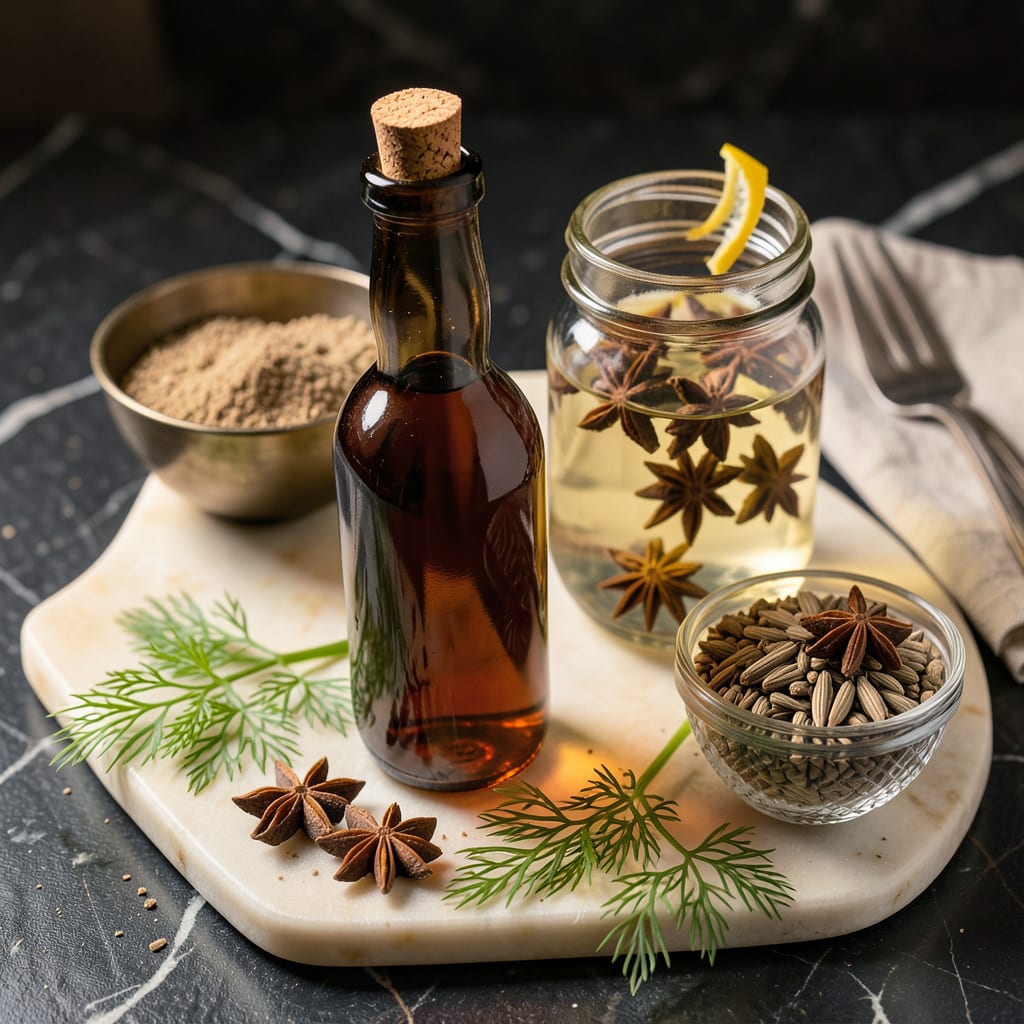
Make anise extract by steeping 1/4 cup crushed anise seeds in 1 cup high-proof vodka for 4-6 weeks in a dark place. Strain through cheesecloth and store in an airtight glass bottle for baking and flavoring.
Creating your own extract unlocks a depth of flavor that store-bought versions can’t match. The alcohol acts as a solvent, pulling out the essential oils from the seeds over time—this is why high-proof vodka works best for maximum potency. I’ve found that patience pays off here: the longer you steep (up to 6 weeks), the more complex and aromatic your extract becomes. This homemade version shines in delicate pastries where you want that authentic licorice note to come through clearly. ✨
The beauty of this method lies in its simplicity and customization potential. Unlike commercial extracts that may contain artificial additives, your homemade version will be pure and concentrated. I recommend using it in recipes where anise is the star—like Italian pizzelle cookies or French pastis—where the quality difference is most noticeable. The airtight glass storage preserves the potency for up to 2 years when kept in cool, dark conditions. 💫
💡 In This Article
- How Anise Extract Infusion Process Works
- Best Uses for Homemade Anise Extract in Cooking
How Anise Extract Infusion Process Works
The magic happens when ethanol molecules in vodka break down the cell walls of anise seeds, dissolving the essential oils that contain anethole—the compound responsible for that distinctive licorice flavor. High-proof alcohol (at least 80-proof/40% ABV) works best because it’s more efficient at extracting these oils than lower-proof options.
The process is similar to making vanilla extract, but anise seeds release their flavor compounds more quickly due to their smaller size and higher oil content.
During the 4-6 week steeping period, the alcohol gradually pulls out three key components: anethole (90% of the oil), estragole, and foeniculin. These compounds create that complex sweet-spicy profile. Temperature matters too—storing in a cool, dark place (around 60-70°F) prevents the alcohol from evaporating while allowing slow, complete extraction.
I’ve noticed the flavor peaks around week 4, with diminishing returns after week 6. ✨
The crushing step is crucial because it increases the surface area, exposing more oil-containing cells to the alcohol. Whole seeds would take months to extract properly. A mortar and pestle works best for crushing—you want the seeds broken but not pulverized into powder.
The ideal particle size is about 1-2mm, which balances extraction speed with easy straining later. This is why commercial producers use specialized milling equipment.
What’s fascinating is how the extraction changes over time. In the first week, you’ll mostly get the lighter, sweeter notes. By week 3, the deeper, spicier elements emerge as the alcohol penetrates the seed’s core.
The final product should have a golden-amber color and a potent aroma that’s noticeable from 6 inches away when you open the bottle. The viscosity will be slightly thicker than plain vodka due to the dissolved oils.
For those wondering about alcohol alternatives, glycerin can work but requires 8-12 weeks of steeping and yields a weaker extract. The science shows ethanol is simply more effective at dissolving the non-polar oil compounds. That’s why professional flavor chemists always use high-proof alcohol for commercial extracts.
The 1:4 seed-to-alcohol ratio I recommend provides the perfect balance between potency and shelf life. 🔥
An interesting comparison: anise extract made with 100-proof vodka will extract about 20% more anethole than one made with 80-proof, but the difference in flavor intensity is actually closer to 30-40% due to how the compounds interact.
This is why I always recommend using the highest proof alcohol you can find for maximum flavor impact in your baking and cooking. ⚡

- Beef Cutlet Recipe Ideas: Crispy Breaded Patties With Bold Seasonings - September 28, 2026
- Bluefin Tuna Recipe Ideas: Sushi-Grade Seared and Sesame-Crusted - September 28, 2026
- Blue Zone Recipe Ideas: Longevity-Boosting Meals for Vibrant Living - September 28, 2026